
Rosy McEwen as Claire in ‘Mission.’
Courtesy of EIFF


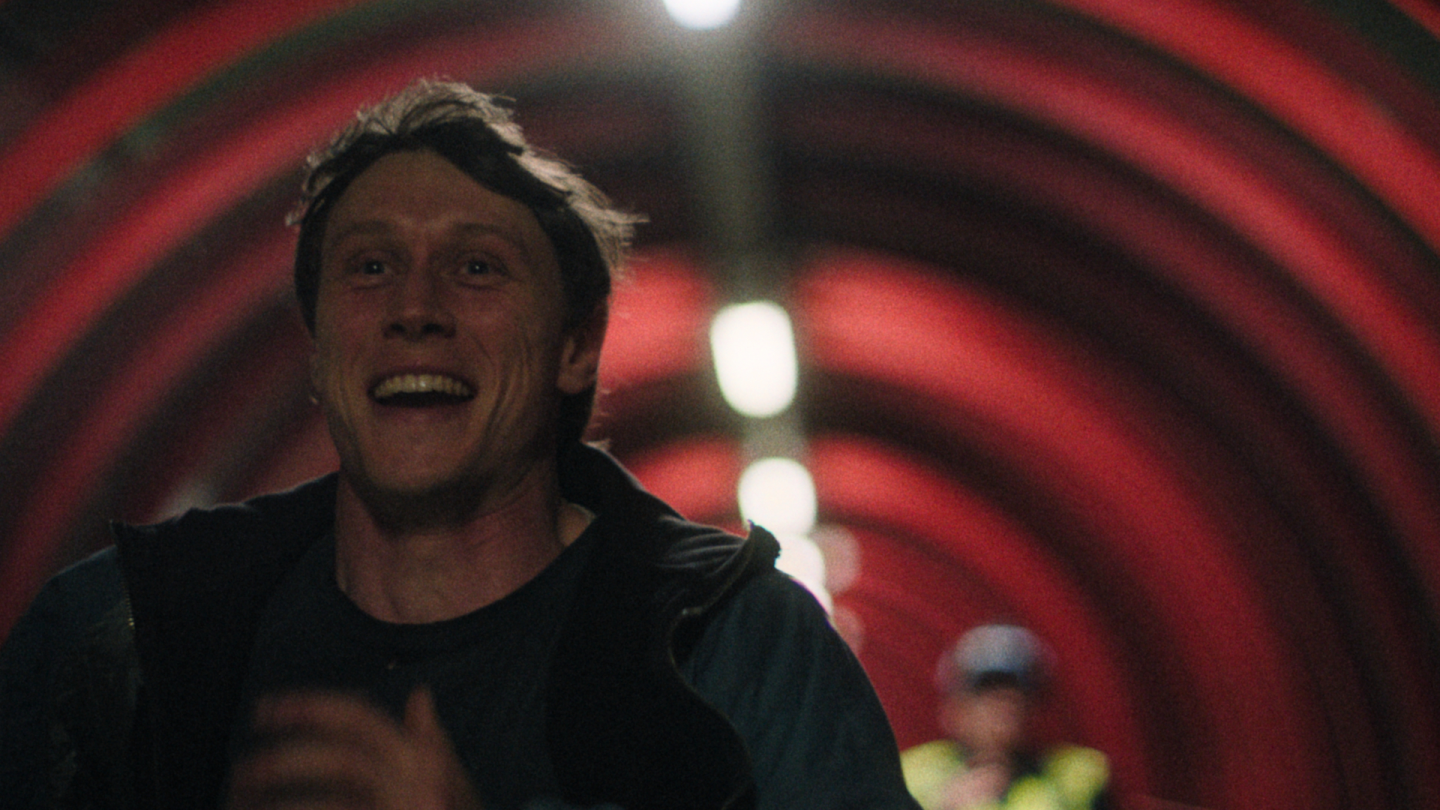
British stars George MacKay and Rosy McEwen can admit: Mission was one of the least conventional shooting experiences they’ve ever had. It also happened to be one of the most liberating.
Director Paul Wright (Arcadia) throws caution to the wind in his latest feature film, set to premiere in competition at Edinburgh Film Festival on Saturday. The Glasgow-set Mission follows Dylan (MacKay), a young Scot who has reached the end of his tether with a dead-end job and lonely, unfulfilling existence. Over the course of a week, he seeks meaning in the wake of extreme chaos — such as breaking a monkey out of the local zoo, attacking a police officer and experimenting in some X-rated BDSM — as he attempts to feel alive. Dylan regularly gets in touch with his sister, Claire (McEwen), who is shocked by her sibling’s existential angst and frenetic energy.
The final product is, impressively, mostly improv. Wright didn’t have an initial script. “Paul made a huge lookbook of images to give a sense of the film tonally,” MacKay explains, “and then there were a series of circumstances and incidents for the characters to be in.” Much of the meaning of this film — to MacKay’s delight, having had his life “changed” by Wright on the set of 2013’s For Those in Peril — was discovered in the making of it. “[We were] exploring how much of a story or a character we could create by almost making an archive of material, and then have him discover a lot of it in the edit,” says MacKay. “It was, creatively, a really interesting idea.”
McEwen had never quite done a job like it. “You’d have a slight context for the scene — we knew exactly what was happening and what our characters were feeling — [but] there was so much scope to play with,” she tells The Hollywood Reporter ahead of the film’s world premiere. “The freedom of that I’ve never experienced before. Just not knowing where it was going to go and the options being limitless.”
The pair also just so happen to be two of the most in-demand Brits working right now. MacKay, star of 1917, has the hotly anticipated Sense and Sensibility adaptation out in October, as well as Margot Robbie’s untitled Ocean’s Eleven prequel coming up. Blue Jean and Black Mirror‘s McEwen, meanwhile, is currently playing a young Nicole Kidman on Prime Video’s Scarpetta. Below, they talk to THR about ad-libbing, absurdism and what keeps bringing them back to independent film: “These big studio [films], it’s a totally different beast… The freedom you get on these smaller sets. This is where I become a better actor. And if you’re not growing, what are you really doing?”
George, I know that you and Paul have worked together before. Was that a big draw for you with Mission?
GEORGE MACKAY It was everything. The film we did together was a wee while ago now. It was called For Those in Peril, and it genuinely was life-changing. It was such a wonderful working experience. It was so exciting and invigorating and creative and I’m so proud to be a part of that film. I think the film itself is really great and it went on to do cool things. It went to the Directors Fortnight in Cannes and Paul and I just became and stayed firm friends. It taught me so much about a way of working and his directing style. With that first film, there was a fair amount of improv with certain sequences, and he shot quite economically, but shot a lot of footage. Rather than do six two-minute takes, we’d do one 10-minute take, and so you learn that a lot of this won’t be used. You felt comfortable to really explore beyond what your first offering would be, but it also had that momentum.
So when this came around, I think we both felt that there was an element of [experimentation]… something that was made really with process [prioritized] ahead of what it would be after. [There was] this film he made, Arcadia, which was this archive documentary where he found the narrative out of archive material. Exploring how much of a story or a character we could create by almost making an archive of material, and then have him discover a lot of it in the edit as well, was just, creatively, a really interesting idea. That was a big part of wanting to do Mission.
What a playground for you guys. Rosy, did you find it was quite a different directorial style to what you’re used to?
ROSY MCEWEN Yes, and one of my favorite experiences ever. It was so freeing, so liberating. Firstly, the crew was really small. The whole thing felt very intimate. I was only there for a few days at the beginning and a few days at the end. So I didn’t even really get the whole experience. But my days that I was there, I felt like I lived a whole life because sometimes it would just be Paul and then the DOP and you in a room, and he would just roll, and 20 minutes would go by. You’d have a slight context for the scene — we knew exactly what was happening and what our characters were feeling — [but] there was so much scope to play with. The freedom of that I’ve never experienced before. Just not knowing where it was going to go and the options being limitless.
Rosy McEwen as Claire in ‘Mission.’
Courtesy of EIFF
Going back to the writing of this, what attracted you to the script?
MACKAY The initial idea was not to have a script. The first thing was a series of images. Paul made a huge lookbook of images to give a sense of the film tonally, and then there were a series of circumstances and incidents for the characters to be in… And as the film becomes a reality, you have to narrow what you’re doing because of all the logistical elements. Like, okay, to do that, we need to book that location. What kit do we need to make that location? Do we really need that? So things get distilled.
Then the narrative is born out of the trajectory of the character. So the initial idea was very energetic. It was images and tone and character more so than a fixed narrative, and then we came to hone it into a script for the practicalities of shooting. Then you put your thumb on the end of the hose trying to get the accuracy and the pressure of the story.
How unconventional. Were you ad-libbing a lot? Was there a lot of improv? There was so much realism to Claire and Dylan’s interactions, especially.
MACKAY Yeah, yeah. Loads of improv. There’s the big scene we have at the end, and that was very scripted. But there’s so much of it that is improv, really.
MCEWEN And I would come back to set and hear wild stories about what George had done, because the setup of the scene would be like, you were in a zoo, and then suddenly [crew members] were like, “George got in this thing, and then suddenly he was running down the street, and then there was a monkey!” (Laughs.) We never quite knew where it was going to end up, and the freedom of that, that’s all down to Paul because you have to be inspired to be able to be that free. You can’t just plop someone in a room and be like, “Go for it.” The idea behind it — these people who just want to break free of convention — was fizzing inside. I imagine you felt the same thing, George, but Paul had just set us up so well that it was always easy to just let the flow take over.
George, do you recall how Paul relayed to you the journey that Dylan is going on through in this film? What is he trying to depict, at its core?
MACKAY At its core, it’s someone who’s trying to get back to [something]. I think he reached a high in his early years. He had a spiritual experience, for want of a better term, that took him to the edge of life, and there was something so extraordinary about that. He’s just in the time in between — in the workings of the world and the world he exists in hasn’t been able to ever get close [to that experience]. He’s been moving the opposite way of getting close to reaching that extraordinary feeling again. I think it’s as pure as that. So he basically gives himself a window of time, and the mission is to commit to feeling as much as possible — at whatever cost — and then the story is about [what happens] once you commit to that. It sounds easy and flippant, but the reality of what that involves… The reality of that chaos is quite troubling, even if you’re wanting it. He’s simultaneously lost and totally clear on what he wants to do.
How do you begin to find relatability there? What do you tap into as an actor, and how do you shake that off at the end of the day? I can imagine this was pretty intense at times.
MACKAY I wouldn’t go as far as Dylan goes in my own life, but I think there is a lot to question. Also, Paul is so incredibly well-read. He got me to read a bunch of books and texts and [listen to] music. I think so much of the extraordinary discoveries in history about people pushing beyond boundaries and going, “Well, why is it only this? Why not this way?” There are so many things like that. In my own head, I’m confounded by it still. I’m trying to think of the term. (Pauses.) I’m on the hamster wheel as much as everyone else, trying to make a good living, do good work and the steps that that takes. But reading the text, capitalism does not make sense. It’s a race to the bottom, and so many things that we participate in… we do that knowingly. What I loved about this story is it really looks at someone who’s deemed, essentially, to be off the track and wayward for having a very clear understanding of [his path].
So much of what we do does not make sense and I think if you put it to most people, they would agree. How we live our lives, what we value, how we value it, the means with which we go about it. The imbalance of the world is so extraordinary and yet we are thrilled to continue participating it, and I include myself in that bracket. But this is why the character was so interesting, because there’s a bunch of things which I think I feel, but don’t go towards. It’s so worthwhile to explore them in this rather extreme example. [Mission] is almost at the end of the story. It becomes about an understanding of compromise and things that were maybe there all along, or things that went too far. But the attraction of Dylan was, I guess, playing an extreme example of someone who was committed to a way of thinking and experimenting within that, without saying it’s right or wrong necessarily.
And Rosy, what angle is Claire coming at this from? How do you envision they’ve become estranged?
MCEWEN I think they are examples of people feeling probably the same thing, but dealing with it in very different ways. I don’t think Claire has the fearlessness that Dylan ends up personifying. I think she feels probably more saddened by life. I see the irony of that, because obviously what happens to Dylan at the end, but I think she accepted her fate, and she feels like quite a sad person to me because of that. I think she feels like life is about going through the motions, and, “Yes, I feel everything that you’re feeling, Dylan, but there’s nothing that you can do about that. This is just life.”
We talked a lot about what trauma they have been through. I don’t know if we ever put full buttons on exactly what they’d experienced, but there was obviously something there in their childhood which had bonded them and dampened any magic that they’d found as kids. There are a lot of layers there. She’s probably a bit jealous of Dylan that he deals with it in the way that she doesn’t really know how to break free from. And when we were shooting a lot of the scenes of Claire in her bedroom, there was a lot of crying and there was a lot of screaming and there was a lot of internalizing everything that Dylan externalizes in the end. I think they’re cut from the same cloth. But yeah, they’re just two examples of how you cope. Neither one right nor wrong, really.
Had you guys worked together before this?
MACKAY We hadn’t! Had we even met? I think it was the first time.
MCEWEN No! It was the first everything. George and Paul are the reason I did it. I didn’t know anything about it. I hadn’t seen the script. They were like, “Do you want to do a few days on a film with George?” and I was like, “Yeah, absolutely. I think I can do that. When do you need me?” Then I learned about everything, I got up there and it was explained [to me]. I didn’t even really know how it was going to be shot. I didn’t know the freedom we were going to have. So the whole thing was this very beautiful surprise.
Also: A great Scottish accent from both of you in this. Did you guys have an accent coach?
MACKAY Yes, yes, but also that was one of the biggest things about working with Paul the first time. I played a Scottish character in Paul’s first film many, many moons ago. It was the first time that I did an accent for a whole job. From when I got in the car to leaving the set, I was always in the accent. So there was a fundamental Scottish connection with Paul. It was nice to dust it off.
MCEWEN I’m sure [MacKay’s] is much better than mine.
MACKAY No, no! You’re sweet.
MCEWEN I think there were many times during this that I was like, “Paul, this is really bad. You’ll cut it, right?” So I think the editors helped me out.
What do you hope resonates with audiences watching Mission in Edinburgh?
MACKAY I hope that people question a way of being. There are no answers in it really, just more questions. I think genuinely, the biggest thing is about a process of work. Whatever people think of the film, it was endeavored to be made with purely with the process at its heart. The most important thing was the way the film was made, rather than what the film became, and I think that is so so valid. And films like that need festivals to hold them because they are harder to grasp some of the time. I’m so grateful that Edinburgh is celebrating it and championing it. But I hope that people are thrilled by the experimentation.
MCEWEN I think you’re right. I hope people leave with questions. And to me, the film is about freedom. Are you asking yourself questions about the way you’re living your life? Are you actually happy? Are you doing the things you really want to be doing? I think the literal context of what Dylan gets up to is not necessarily the most important nor the right answer, as you said. But I think it’s more like, what if I just said that thing that I’m really wanting to say? What if I actually break up with that person? We can get so subdued in the monotony of life and big changes feel scary. I hope it helps people ask themselves questions about freedom.
Both of you have extremely big projects currently out or coming out — big studio stuff. George, you have Sense and Sensibility. Rosy, you have Scarpetta. What pulls you back to independent film?
MACKAY For me, this project was really about Paul. I’m so grateful to Paul for the first project that we did together 14 years ago. It really did change my life in four weeks. It was so special. So I always want to work with Paul, and I feel so privileged that he’d asked to work with me again. In terms of independent film, the very nature of independent film is they are oftentimes smaller, and inherently in the way they’re put together, you can be a bit autonomous in your creative choices. Because you’re not bound financially to a higher power, and that has its merits for creative experimentation. And I think it’s really important that we keep experimenting, whether those experiments always come off perfectly or not. The value is in the experimentation in itself. Without those experiments, you don’t get new stuff. So I think that’s a reason to always come back to it
MCEWEN To be honest, I think you’d be hard-pressed to find an actor who wouldn’t want to solely do great indie films. I just feel like that’s actually most people’s dream. But the reality of life is that you have to make money. And I’m not downplaying these studio things. We endeavor to pick jobs that inspire us, but these things that happen in a more intimate setting — that is where I learn. You’re right, George. Experimentation. It’s where I feel like I grow. That’s where I feel like I’m not just moving through the motions. These big studio ones, it’s a totally different beast. It uses a different skill set, whereas the freedom you get on these smaller sets. This is where I become a better actor. And if you’re not growing, what are you really doing?
This interview has been shortened and edited for clarity. The 2026 Edinburgh International Film Festival runs Aug. 13-19.
>
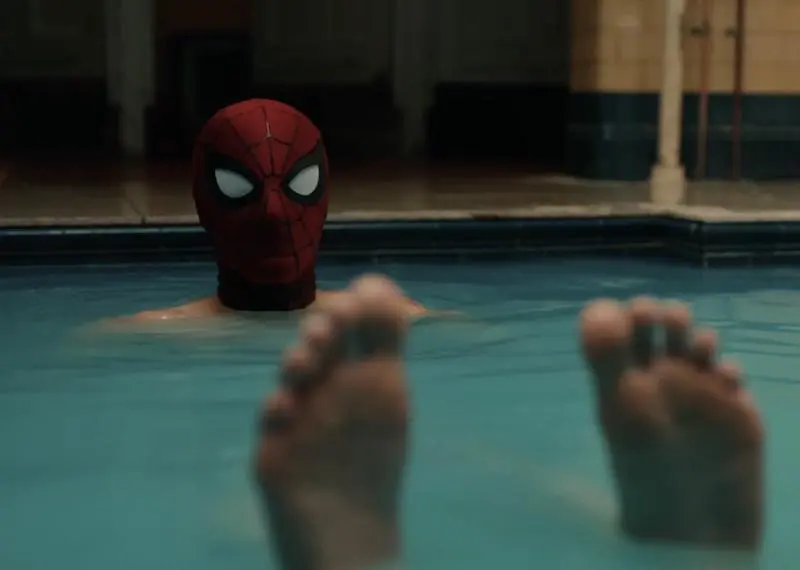
For a movie about a superhero who can literally climb walls, Spider-Man: Brand New Day is seemingly interested in what happens when Peter Parker (Tom Holland) puts them up himself. Still reeling from the loss of the people closest to him, Peter has convinced himself that being alone is the price of being Spider-Man, and production designer Charles Wood had the task of making that isolation visible.
That meant giving Peter a new apartment that could feel like both a refuge and a prison, with a view of the New York life he can see but can’t quite join. Elsewhere in the concrete jungle, Wood and his team also had to build and stylize another part of New York through Yelena’s (Florence Pugh) elaborate bathhouse, built from scratch and based on spaces Wood discovered while scouting the city. And it meant creating Jean Grey’s (Sadie Sink) containment unit as a room that initially feels almost domestic before revealing itself to be something much more sinister.
Wood, whose production-design credits include several MCU projects such as Doctor Strange, Black Widow and both Avengers: Infinity War and Endgame, also had to account for Holland’s famously immersive approach to his performance by creating sets and props that didn’t just look real, but actually worked just as Peter Parker would hope.
Below, Wood spoke to Deadline about the making of Brand New Day and the web-crawling details hidden within its narrative walls.
DEADLINE: What was the briefing from Destin Daniel Cretton about what this Spider-Man world should feel like?
CHARLES WOOD: I think he wanted it very street level. It’s a very grounded feel. Everywhere we went into this place we created, he wanted the audience to feel that Peter Parker could really be around the corner. So, in the creation of New York in the U.K., he wanted to make sure it felt natural. Given that this is based on fantastic comics, there’s a twist of that sort of graphic iconography applied to it.

‘Spider-Man: Brand New Day’ behind the scenes bodega production design by William Dixton, graphics assistant.
William Dixon / @williamd1123
DEADLINE: Let’s jump into a few locales now. First and foremost, this bodega that Peter constantly visits. Talk about creating that New York bodega, and did you have to import all those American snack goods?
WOOD: We might have flown some things in, but I’m not entirely sure. There are actually quite a lot of American products available in London because many Americans live there. But there’s also a bit of product placement here [laughs]. Honestly, we did an awful lot of research on that. I went to New York a lot, and the team photographed a lot of bodegas because places like this you really have to work hard to try and be as authentic as you can, because you can lose the audience if it doesn’t work. And we had an awful lot of Americans coming in and looking at these sets—a tough bunch [laughs].
‘Spider-Man: Brand New Day’ behind the scenes bodega production design by William Dixton, graphics assistant.
William Dixon / @williamd1123
DEADLINE: What was the flavor profile of creating Ned and MJ’s shared apartment?
WOOD: Destin and I went back and forth on whether or not it would be set in Astoria or Queens. We ultimately wanted to say that it was Queens above a shop, and we wanted it set in an old tenement building. So we gave the set a lot of history – like maybe this building was around a hundred years old. It’s supposed to be set in a well-trodden, fun neighborhood, but not in one that depicts huge wealth.
DEADLINE: I don’t think we ever get to see MJ’s room. Did you all have any discussions about what her room would look like?
WOOD: There is actually a little bedroom for her in there. When Tom first enters the apartment, I mean, to be really prescriptive here, on the left. I don’t even know if it made it into the movie, but there was a little bedroom for her. It just wasn’t a place where the story naturally played out. Even on the day we were changing things around, when Tom came in and wanted to work on it to make it work for them both. And then, quite frankly, the rest of the apartment was really more about the idea that it was just somewhere they could all come together – which was by the window.
MJ’s room, I believe, had something to do with stuff from her past and education, but I can’t quite remember [laughs].
Tom Holland as Peter Parker in Spider-Man: Brand New Day
Sony/Marvel
DEADLINE: Was Yelena’s bathhouse a location or built set?
WOOD: That’s a built set. There’s a nice story there, because I went to New York with Destin, Brett Pawlak, the cinematographer, Jerome Chen, the visual effects supervisor, and David Kane, our producer. We happened to go to a place called Brighton Beach, and there was this building that we thought could have been an old bathhouse. Then when we thought we were going to film in Manchester, we found this old Victorian bathhouse that felt right. So, we took the ideas from that.
The guys built this really beautiful, hand-tiled set, and the pool was also all made.
DEADLINE: I don’t know how online you are, but –
WOOD: Not at all, they would eat me alive on there.
DEADLINE: I want to ask on the fans’ behalf—the water. There’s a running joke about the MCU having the most magical water that clouds everything.
WOOD: Ultimately, we needed to cloud the water.
DEADLINE: Right.
WOOD: Florence obviously wears a bodysuit, so there’s nothing there. But, I mean, we have to do these things because of the ratings.
DEADLINE: Of course. The question is less about that and more about the water’s composition. For example is it like 15% soap suds, 30% dye, 40% milk, etc?
WOOD: It’s a type of dye, I think. In the old days, when I first started in the business, you used milk because it worked very quickly to cloud something. But, interestingly enough, we ran all sorts of tests to figure out the right consistency. And ultimately that’s what we came up with. Also, it was all heated and very comfortable, with lots of benches underwater that Tom was floating around on, and it was funny. I love that sequence, a very good scene.
I should also mention that we spent a lot of time chipping tile and making sure the grout matched to bring that level of reality to it. These characters are big, so if you drop the ball, you don’t make these spaces feel truly real. And if you can do that, then I think that’s a good place to be in because it’s all about the performance. If you produce a set which feels like a set, you can pull the audience away from that. So it’s an important thing. We spend a lot of time, a lot of money, a lot of effort to bring authenticity to these places.
Spider-Man (Tom Holland) in Yelena’s (Florence Pugh) Bathhouse in Spider-Man: Brand New Day
Sony/Marvel
DEADLINE: What was the biggest challenge in designing this Spider-Man movie?
WOOD: Making New York, because it is a fabulously interesting city. It’s incredibly layered. It’s so interesting culturally. Its heritage is extraordinary. And as a non-New Yorker, but as someone who, for instance, lives in London and has spent a lot of time there, bringing all of that detail, cultural realism, and history to a place in London, in England, is really difficult. And we spend an awful lot of time photographing. I spent a lot of time photographing New York, getting a lot of advice from New Yorkers, and trying to make it feel natural. That was the biggest challenge in that movie.
Tom Holland as Peter Parker in Spider-Man: Brand New Day
Sony/Marvel
DEADLINE: What is your favorite prop that you built for a set?
WOOD: The fabricator, I suppose. That’s a big prop because it’s the machine that built the inhibitor. Like Peter, we felt like we needed to apply a lot of mechanical detail too. We wanted to create something that could have come in 500 Amazon boxes, but that was also something you could build and a great mind could build. And we wanted it to be very tactile. It worked, it buzzed, it did all the things. It actually was this mad kind of almost sewing machine. We wanted everything to be tactile.
It helped because Tom is completely immersive. Once he gets into a space, he starts to understand what his world is, and he then wants to react with it. We try to do all of those things to make that interesting for him.
DEADLINE: Jean Grey’s containment cell was pretty massive, it seems. What went into making that room within a glass containment?
WOOD: The whole idea of it was that Jean’s sister was taken to this room by Damage Control. We looked at all these strange rooms from all sorts of places. We found this wooden space. And we wanted it to be odd enough to not sit well with you, but real enough to say, “This is clearly where she is and is it her bedroom, question mark, because all of her stuff’s near, but why are the walls glassy?” So, when you are first in there, if you look at the walls, they are actually glass. There’s glass in front of them. And then it became this idea where actually at some point during the sequence, we realize the room isn’t the room. It’s actually a glass cell that is housed within a larger room.
And then we decided to actually do this reveal because it was all in camera; that’s not visual effects. All the walls lifted to reveal this much larger space where she was housed.
Tom Holland as Spider-Man/Peter Parker in Spider-Man: Brand New Day
Sony/Marvel
DEADLINE: What was your favorite set to build?
WOOD: Probably the New York backlot. We built two or three city blocks of New York: 40 big buildings. I love building the rooftops. I like the Silver Cup rooftop because we built that big sign and the big rooftop. I always love doing those wells above New York. I think that’s a really interesting thing to do. But people don’t generally go. And being in New York and having access, it’s a lovely thing about my job to all of these brilliant buildings and actually getting up top, going out some fire escape somewhere many hundreds of feet up in the building was brilliant. And recreating those worlds to display the historical nature of them…lots of things are forgotten on New York rooftops, and I loved getting into all of that; the eccentricity was really interesting.
Peter Parker’s (Tom Holland) apartment washing machine.
Sony/Marvel
DEADLINE: What was an environment that looked ordinary on screen, but was incredibly complicated to build?
WOOD: Peter’s apartment was complicated, believe it or not. There were a lot of surfaces. There’s a lot in that place, and that was with all the skylights and all the different finishes and the history. We really wanted to come up with some crazy old pad. It was tricky because we had to think about New York, because everywhere’s valuable. Everywhere’s worth something and most places are worth an awful lot. And so it was odd coming up with a cinematically interesting place, but didn’t look as though it was worth a few million. So we had to sort of play with it quite a lot to make it feel really neglected. But not so neglected that it felt non-authentic or you couldn’t have a place like that. It was difficult to find the sweet spot.
And when he walks in, and it’s all full of that junk, and we’ve cleared the junk away, we wanted something to be there but not trying to grandstand anything. But you could feel its history and neglect, which, in a way, very much suited the scene we were trying to convey.
From a narrative viewpoint, we wanted to do something where Peter had these great big windows, but actually, if you were to look at the windows just beyond, we were actually on the other side of the East River. And in the distance, we did have these lights on these big backings where you could see New York and the Queensboro Bridge. The idea was all about being somewhere he had this view of the city he could never join. He could look at families across the way, but he could never be part of that. This place represented a barrier between him and, in a sense, the happiness, all the togetherness he missed.
Then the way it was designed with materials, you wanted the rain to hit the skylight above him, the clitter clatter and all the awnings which gave different lighting moods, and the coldness of the brick and the heat of the pipes. Then there was us having the clattery old washing machine that wasn’t quite working.
>
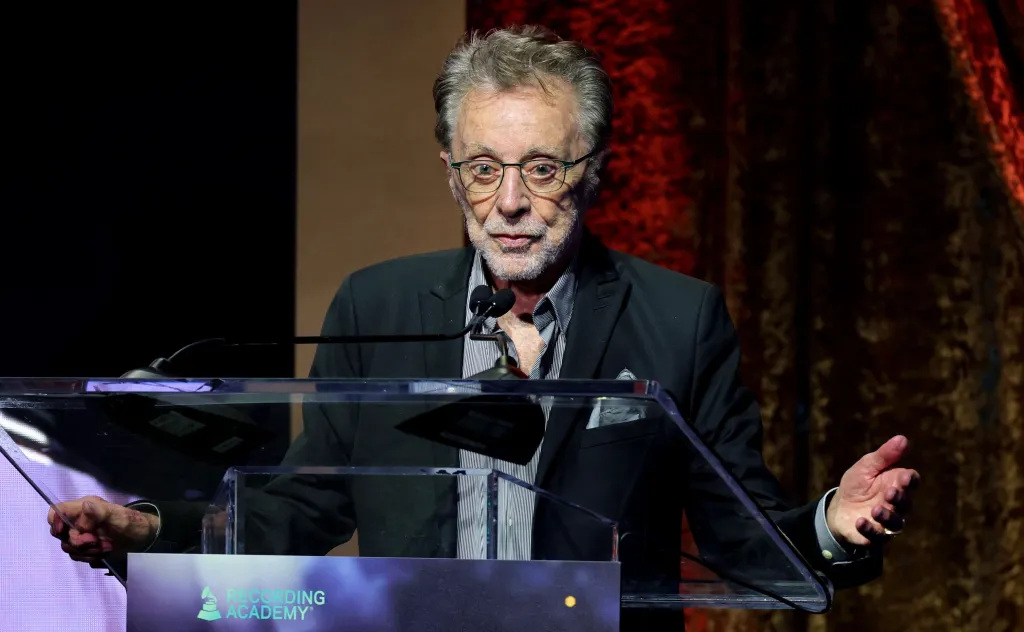
Frankie Valli has a message for anyone predicting his imminent retirement: Not so fast.
After Bobby Valli, the Four Season singer’s brother, recently posted a Facebook message announcing the ailing Frankie’s retirement, the 92-year-old pop icon slapped back. Yesterday, Frankie posted a short and sweet Instagram message: “In spite of what you might have heard, I am not retired. – Frankie.”
The confusion follows Frankie Valli’s decision in May to cancel a 2026 farewell tour due to his ongoing health challenges. He announced at the time, “I’m so sorry to disappoint the folks who have purchased tickets to my shows but I have decided to take the rest of the year off from touring to focus on my health. I’m looking forward to getting healthy and seeing you all again soon. Thank you for all your good wishes.”
Photos of the frail looking singer have since done viral on social media.
Earlier this week, Bobby Valli posted a Facebook message, alongside a 2025 photo of the two brothers, stating, “He has millions of fans who love him dearly. He is now 92 years old. In his illustrious career, he has sold over 100 million records, R&R Hall of Fame. He will now retire. We will always have special memories of Frankie Valli. He has reached a place in his life where his family is there to love, cherish and to be there for him.”
A short time later, Bobby had amended the message, changing “He will now retire” to “In my humble opinion there is the possibility he will stop touring.” The line now reads, “We are all hoping for a speedy recovery and that he can continue to tour and perform his music around the world.”
Yesterday, Bobby posted a message on his now-private Instagram page saying, “I apologize. I was misinformed. I was under the impression my brother Frankie was retiring. Hoping for him to have a speedy recovery to continue his illustrious career!”
All three versions of Bobby’s Facebook messages end with, “He has reached a place in his life where his family is there to love, cherish and to be there for him. We appreciate your love and concern.”
The exact nature of Valli’s health challenges has not been disclosed.
Frankie Valli has been performing for 75 years, reaching his most sustained and widespread success in the 1960s as the lead singer for the hit-making The Four Seasons (“Sherry,” “Walk Like a Man,” “Big Girls Don’t Cry,” among many others songs). The group’s rags to riches story and music was depicted and celebrated in the hit Broadway stage musical Jersey Boys and its subsequent 2014 film adaptation directed by Clint Eastwood.
>
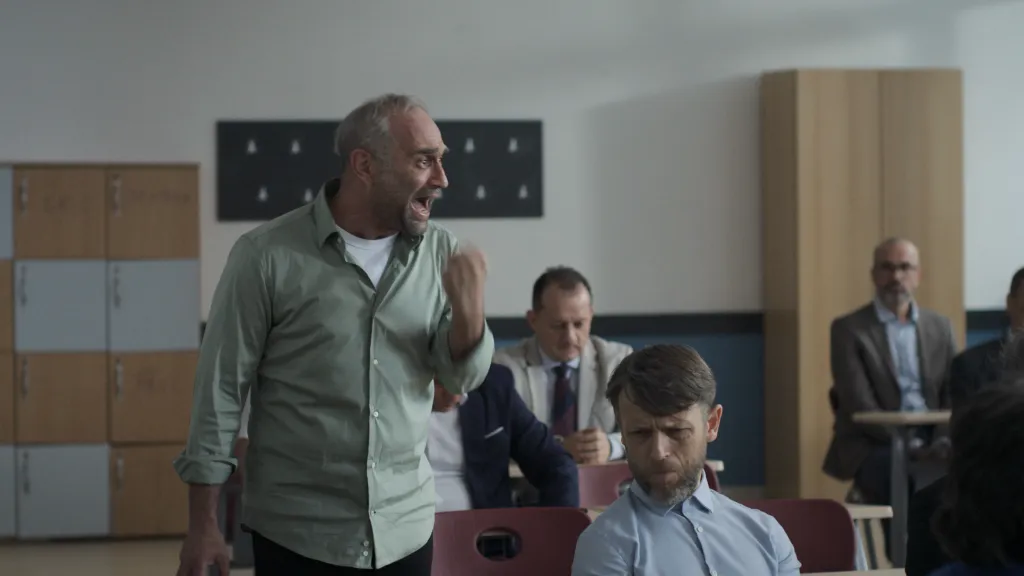
The Pardo d’Oro at the 79th Locarno Film Festival has gone to Florin Șerban’s drama You Don’t Belong Here (Nu E Locul Tau Aici). Scroll down for full list of winners.
The film marks the acclaimed Romanian director’s return to feature filmmaking after eight years. A father-and-son drama, the film was awarded the Pardo d’Oro by the Official Concorso Internazionale Jury “for the strength of its writing, the singularity of its vision, and its exceptional command of cinematic language.”
The movie follows a physician who is crushed when police suspect his teenage son of murdering an old Romani man. He then discovers his son has a secret life vandalizing cars with masked vigilantes.
Meanwhile The Riverbank (A Margem do Rio) by Matheus Farias and Enock Carvalho won the Special Jury Prize, while the Pardo for Best Direction went to Hong Sangsoo for Nowhere to Lay My Eyes (Nun Dul Dega Eomne).
The two Best Performance Awards were given respectively to Kim Minhee for Nowhere to Lay My Eyes and to Monica Bellucci for Ketticè by Giovanni Tortorici. The Pardo d’Oro in the Concorso Cineasti del Presente and the Swatch First Feature Award were both awarded to The Illusion of an Everlasting Summer (La Iusión de un Verano Sin Fin) by Alessandra Sanguinetti.
Giona A. Nazzaro, Artistic Director of the festival, said: “A vital and contemporary slate of awards, in close dialogue with the transformations in the industry and in our world today. Whether in highlighting the Romania of You Don’t Belong Here, or the Brazil of The Riverbank, or the South Korea of Nowhere to Lay My Eyes, the jury upheld the primacy of form and of language, while remaining, in its choices, completely accessible, as the packed and engaged screenings of all competitions demonstrated throughout the festival.”
The closing night in Piazza Grande, on Saturday August 15, will be rounded off with the ceremony for the Prix du Public UBS before the screening of the closing film Ni Vue, Ni Connue (All About Corinne) by Marc Fitoussi with Isabelle Huppert and Sandrine Kiberlain.
This year’s international competition jury was overseen by Belgian filmmaker Fabrice Du Welz.
The 80th Locarno Film Festival has been set to take place from 4 to 14 August 2027.
Full list of Locarno winners (as provided by the festival)
Official Awards
LOCARNO79 OFFICIAL SELECTION
Concorso Internazionale
Concorso Cineasti del Presente
Pardi di Domani
Locarno Kids Screenings
CROSS-SECTION AWARDS
Swatch First Feature Award
Pardo for Change
Independent Juries Awards
Ecumenical Jury Prize
FIPRESCI Prize
Europa Cinemas Label
Junior Jury Awards
Semaine de la Critique Awards
Concorso Internazionale
The official Concorso Internazionale Jury of the 79th Locarno Film Festival composed of:
Jury President
Fabrice Du Welz, Director (Belgium)
Jury Members
Marco Alessi, Producer (Italy)
Lolita Chammah, Actress (France, Italy)
Paulina García, Actress (Chile)
Olivier Père, Executive Director – ARTE France Cinéma and Head of the Cinema Unit – ARTE France (France)
awarded the following prizes:
Pardo d’Oro – Grand Prize of the Festival and City of Locarno
CHF 75,000 to be shared equally between the director and the producer, to:
NU E LOCUL TAU AICI (YOU DON’T BELONG HERE) by Florin Șerban, Romania
Special Jury Prize – Cities of Ascona and Losone
CHF 30,000 to be shared equally between the director and the producer, to:
A MARGEM DO RIO (THE RIVERBANK) by Matheus Farias, Enock Carvalho, Brazil/Germany
Pardo for Best Direction – City and Region of Locarno
CHF 20,000 to the director, to:
Hong Sangsoo for NUN DUL DEGA EOMNE (NOWHERE TO LAY MY EYES), South Korea
Pardo for Best Performance
to Kim Minhee for NUN DUL DEGA EOMNE (NOWHERE TO LAY MY EYES) by Hong Sangsoo, South Korea
Pardo for Best Performance
to Monica Bellucci for KETTICÈ by Giovanni Tortorici, Italy
Special Mention
to Xavier Bergeron for VIOLENCE DU CORPS DE L’AUTRE by Denis Côté, Canada
Special Mention
to Teodor Butănescu for NU E LOCUL TAU AICI (YOU DON’T BELONG HERE) by Florin Șerban, Romania
Concorso
Cineasti del Presente
The official Concorso Cineasti del Presente Jury of the 79th Locarno Film Festival
composed of:
Jury Members
Afef Ben Mahmoud, Actress, director, producer (Tunisia)
Radovan Síbrt, Producer and director (Czech Republic)
Margherita Spampinato, Director, screenwriter, editor (Italy)
awarded the following prizes:
Pardo d’Oro – Concorso Cineasti del Presente
CHF 35,000 to be shared equally between the director and the producer, to:
LA ILUSIÓN DE UN VERANO SIN FIN by Alessandra Sanguinetti, Argentina/USA
Best Emerging Director Award – City and Region of Locarno
CHF 20,000 to the director to:
Beatrice Gibson for AT NIGHT, United Kingdom/France
Special Jury Prize CINE+OCS
A promotional campaign to the value of CHF 25,000 on CINE+OCS channels at the time of its theatrical release in France, to:
REVOLUTIONARIES NEVER DIE by Mohanad Yaqubi, Palestine/Belgium/Qatar
Pardo for Best Performance
to Idrissu Tontie Jr. for EGO REACH WE ALL (OUR TIME WILL COME) by Amartei Armar, Ghana/France/Saudi Arabia
Pardo for Best Performance
to Manal Issa for L’ESTIVE by Naël Khleifi, Lisa Debauche, Belgium/France
Special Mention
to LOS DÍAS LIBRES by Lucila Mariani, Argentina/Brazil/Mexico/France
Special Mention
to HANABI by Ana Vaz, France/Brazil
Pardi di Domani
The official Pardi di Domani Jury of the 79th Locarno Film Festival
composed of:
Jury Members
Mounia Akl, Director (Lebanon)
Steven Markovitz, Producer (South Africa)
Antonio Piazza, Director (Italy)
awarded the following prizes:
Concorso Corti d’Autore
Pardino d’Oro WePresent by WeTransfer for the Best Auteur Short Film
CHF 15,000 to the director, to:
THE BOVINE COMEDY by Ratchapoom Boonbunchachoke, France
Special Mention
to ET SI THUY N’EXISTAIT PAS by Carlo Francisco Manatad, Philippines/France/Indonesia
Concorso Internazionale
Pardino d’Oro Arts3 Foundation for the Best International Short Film
CHF 10,000 to the director, to:
MELK by Filip Anthonissen, Belgium
Pardino d’Argento Arts3 Foundation for the International Competition
CHF 5,000 to the director, to:
KHUFU by Mahmoud Assi, Egypt/France/Sweden/Canada
Pardino for the Best Direction WeShort for the International Competition
CHF 5,000 to the director, to:
MUTRION by Marco Cavazzin, Italy
Locarno Short Film Candidate for the European Film Awards
to MELK by Filip Anthonissen, Belgium
Special Mention
to LAS DAMAS by Camille Zéhenne, France
Concorso Nazionale
Pardino d’Oro SRG SSR for the Best Swiss Short Film
CHF 10,000 to the director, to:
TYPHOON MAMBO by Domenico Singha Pedroli, Switzerland/France/Thailand
Pardino d’Argento SRG SSR for the National Competition
CHF 5,000 to the director, to:
ALLES GUTE by Patricia Strübin, Switzerland
Best Swiss Newcomer Award
which provides equipment and services offered by Downtown Studio (CHF 10,000) and Taurus Studio (CHF 2,000), to:
RESPIRER UNE FOIS SUR TROIS by Charlyne Genoud, Switzerland
Locarno Kids Screenings
The official Locarno Kids Screenings Jury of the 79th Locarno Film Festival composed of:
13 young Jury Members aged between 11 and 15
Carolina Bubba
Maeva Caterino
Leone Cofrancesco
Teresa Faré
Massimo Keller
Elia Longhi
Serena Lydon
Valentina LydoGiacomo Perrone
Mikaela Riaboshtan
Jacopo Rigoni
Viola Rigoni
Anna Zitarelli
awarded the following prizes:
Locarno Kids Award la Mobiliare
CHF 15,000 to the director, to:
PARADEISA by Marleen Valien, Germany
First Feature
The official First Feature Jury of the 79th Locarno Film Festival
composed of:
Jury Members
Matthieu Darras, Film lab director (France)
Sung Moon, Programmer (Republic of Korea)
Klaudia Reynicke, Filmmaker (Switzerland/Peru)
awarded the following prizes:
Swatch First Feature Award
CHF 15,000 to the director, to:
LA ILUSIÓN DE UN VERANO SIN FIN by Alessandra Sanguinetti (Argentina/USA)
Pardo for Change
Founded together with WWF, supported by ARX and Wyss Academy For Nature
The official Pardo for Change Jury of the 79th Locarno Film Festival
composed of:
Jury Members
Gianluca Grossi, Reporter and writer (Switzerland)
Mo Harawe, Filmmaker and screenwriter (Somalia/Austria)
Seta Thakur, Head of Communications and Social Innovation,
Wyss Academy for Nature (Switzerland)
awarded the following prize:
Pardo for Change
CHF 20,000 to the director, to:
EGO REACH WE ALL (OUR TIME WILL COME) by Amartei Armar, Ghana/France/Saudi Arabia
Special Mentions (Feature Film)
to LOS NUEVOS by Rodrigo Plá, Mexico/Spain
Special Mentions (Short Film)
to PRIVATE PROPERTY by Deepak Rauniyar, USA/Nepal/France/Australia
Independent Juries and Awards
Ecumenical Jury Prize
Jury Members
Viera Pirker, Jury President (Germany)
Jean-Luc Gadreau (France)
Juha Rajamäki (Finland)
Sarah Stutte (Switzerland)
The Ecumenical Jury awarded its prize, offered by the Reformed Churches and the Catholic Church of Switzerland, to the value of CHF 10,000 to the director:
Hong Sangsoo for NUN DUL DEGA EOMNE (NOWHERE TO LAY MY EYES), South Korea
FIPRESCI Prize
(International Federation of Film Critics)
Jury Members
Sona Karapoghosyan, Jury President (Armenia)
Mihai Fulger (Romania)
Virat Nehru (Australia)
Georgios Papadimitriou (Greece)
Anne-Sophie Scholl (Switzerland)
The International Federation of Film Critics awarded the International Critics’ Prize (FIPRESCI Prize) to:
LEJOS DE LOS ÁRBOLES (FAR FROM THE TREES) by Meritxell Colell Aparicio, Spain/Peru/Italy
Europa Cinemas Label
Jury Members
Züleyha Azman (The Netherlands)
Erika Borsos (Austria)
Joyce Palmers (Belgium)
Tomasz Poborca (Poland)
The Jury has awarded the Europa Cinemas Label, intended to enhance the circulation of a European film chosen amongst those of the Concorso Internazionale and the Concorso Cineasti del Presente on the screens of the Europa Cinemas network, to:
NU E LOCUL TAU AICI (YOU DON’T BELONG HERE) by Florin Șerban, Romania
Junior Jury Awards
The jury members are selected from the participants in the Cinema & Gioventù initiative, organized by Bellinzona’s Castellinaria Festival del cinema giovane on behalf of the Dipartimento dell’educazione, della cultura e dello sport (DECS) of the Canton Ticino.
The first Junior Jury, composed of Vittorio Di Angelo, Francesco Maria Ippoliti, Virginia Barbacini, Alessia Nunziante, Vittoria Soldaini, Julian Muller, Edoardo Ravina, awarded the following prizes to the three best directors in the Concorso Internazionale:
First Prize (CHF 6,000)
NU E LOCUL TAU AICI (YOU DON’T BELONG HERE) by Florin Șerban, Romania
Second Prize (CHF 4,000)
VIOLENCE DU CORPS DE L’AUTRE (NOBODY’S VIOLENCE) by Denis Côté, Canada
Third Prize (CHF 2,000)
MANHUNT by Wayne Wapeemukwa, Canada
“The Environment is Quality of Life” Prize (CHF 3,000)
offered by the Ticino Department of Internal Affairs:
I RARELY WAKE UP DREAMING by Isabelle Stever, Germany/Ukraine
Special Mention
to D’ICI LÀ by Sarah Leonor, France
The second Junior Jury, composed of Ginevra Gennari, Valentina Verre, Elia Privet, Linda Jam, Maïa Monnet, Clement De Castelberg, Letizia Marrone, assigned a prize of CHF 2,000 to the best film shown in the section Concorso Cineasti del Presente, to:
TEAR GAS by Uta Beria, Georgia/France/Germany
Special Mentions
LA ILUSIÓN DE UN VERANO SIN FIN (THE ILLUSION OF AN EVERLASTING SUMMER) by Alessandra Sanguinetti, Argentina/USA
The third Junior Jury, composed of Ilaria Bosco, Amy Negro, Tania Bignasca, Zoe Thunman, Veselina Tchimova, Beatrice Cereda, awarded the following two prizes, worth CHF 1,500, to the best short films in the Concorso Internazionale and in the Concorso Nazionale of the Pardi di Domani section, one prize to the best short film in the Concorso Corti d’Autore, and the “The environment is quality of life” Prize – worth CHF 2,000 and offered by the Ticino Department of Internal Affairs of the Cantone Ticino – to a short film in the section Open Doors Screenings to:
Pardi di Domani
Concorso Internazionale
HERSHEWE FAZANAWERD (FORGOTTEN SPACEMAN) by Elham Ehsas, United Kingdom/Afghanistan
Concorso Nazionale
RESPIRER UNE FOIS SUR TROIS by Charlyne Genoud, Switzerland
Concorso Corti d’Autore
ÃSHEGHETAM by Filmsaazs, France/Switzerland/Iran
Special Mention – Concorso Internazionale
PREMIER FEU by Blanca Camell Galí, France/Spain
Special Mention – Concorso Corti d’Autore
THE BOVINE COMEDY by Ratchapoom Boonbunchachoke, France
Open Doors Screenings
“The Environment is Quality of Life” Prize
CONCRETE MOVES by Fagamou Fama Ndiaye, Senegal
Semaine de la Critique Awards
Jury Members
Olmo Cerri (Switzerland)
Barbara Miller (Switzerland)
Bettina Oberli (Switzerland)
The Jury has awarded the following prizes:
Grand Prix Semaine de la Critique – Prix SRG SSR
CHF 5,000 to the director and the producer, to:
A TERAZ WIOSNA (BLOSSOMING) by Kamila Serwicka, Poland
Marco Zucchi Award
CHF 2,000 to the formally and most aesthetically innovative documentary, to:
SEUL LE SERPENT SAIT (ONLY THE SERPENT KNOWS) by Olivier Séror, Martin Verdet, France
>


Search For Canadian TV Actor Stewart McLean Now Homicide Investigation


These ’90s fashion trends are making a comeback in 2017
According to Dior Couture, this taboo fashion accessory is back
Model Jocelyn Chew’s Instagram is the best vacation you’ve ever had
Emily Ratajkowski channels back-to-school style
Your comprehensive guide to this fall’s biggest trends
9 Celebrities who have spoken out about being photoshopped
A photo diary of the nightlife scene from LA To Ibiza