
Tech
Oura faces lawsuit accusing it of misleading consumers about sleep-tracking accuracy


A proposed class action lawsuit is accusing smart ring maker Oura of deceiving consumers about the accuracy of its sleep tracking features.
The lawsuit, filed on Thursday by Clarkson Law Firm in San Francisco, alleges that Oura rings are unable to measure any of the physiological signals needed to assess sleep quality or determine sleep stages, and that they instead rely on AI-generated estimates that have “a coin flip’s chance of being correct,” according to the complaint.
The lawsuit follows years of Oura users taking to the internet to share their frustration with the smart ring’s sleep accuracy, with some saying they felt they slept poorly but were told their sleep had been optimal. Some have also expressed doubts about the device’s ability to monitor and detect sleep cycles.
“To capitalize on consumers’ desire for a tracker that could actually track sleep and monitor their sleep cycles, Oura sold expensive tracking rings, priced at $300 and up, advertising exactly that: that Oura rings are capable of seeing what only a hospital sleep lab can see, including the four different stages of sleep,” the complaint reads. “Oura did not just claim to measure a heartbeat or a temperature, but the exact stage of sleep the wearer is in—which in reality requires electrodes in the scalp and sensors on the eyes, as only a hospital or other clinical setting can do.”
Despite this, the complaint alleges that Oura marketed its ring as being “built for accuracy” and offering “unparalleled accuracy.” It says Oura told customers its smart rings could achieve 79% accuracy in their measurements, and more recently claimed that the rings offered 95% sleep-staging accuracy compared with clinical sleep labs.
The complaint goes on to allege that Oura cannot measure sleep or cycles because “sleep happens in the brain, not on one’s finger.”
Oura did not immediately respond to TechCrunch’s request for comment.
“When people rely on a device to guide decisions about their health, misinformation cannot be tolerated,” said Ryan Clarkson, co-founder and managing partner at Clarkson Law Firm, in an emailed press release. “Oura users trust that the numbers on their screen reflect reality. People structure their days, interpret the way they feel, and design their lives around inaccurate figures spit out by these devices. Marketing an inaccurate sleep tracker as precise and reliable is dangerous because people believe it – and change their behavior accordingly.”
The complaint calls on Oura to stop deceiving consumers by falsely advertising its wearables as having capabilities they don’t deliver. It also seeks injunctive relief to prevent Oura from continuing to misrepresent its products, as well as restitution for consumers who purchased the products based on those allegedly false claims.
When you purchase through links in our articles, we may earn a small commission. This doesn’t affect our editorial independence.
>

Apparently, hell has frozen over. Walmart on Friday said it will finally accept payments via both Apple Pay and Google Pay at its stores, including Walmart and Sam’s Club.
The retail giant says that beginning August 24, it will begin adding Tap to Pay to its payment options at select Walmart stores and Sam’s Club locations. It expects the feature to reach all stores and clubs by the end of the year, and will then roll it out to all its fuel stations by the middle of 2027.
The news is a surprise, as Walmart has long refused to adopt the ubiquitous payment technology to instead promote its own in-house solutions, like Walmart Pay and Scan-and-Go. In years past, Walmart even teamed up with other big retailers in an attempt to take down Apple Pay entirely with an alternative mobile payment system of their own, called CurrentC. The effort failed and was shut down back in 2016.
All the while, Walmart customers have begged the company to support modern tap-and-pay technology, like Apple Pay, which is now accepted at 85% of retailers across the U.S., including most larger stores.
For Walmart, the decision reads as a defeat. As one of the world’s largest retailers, it believed it could push customers to its own payment solutions despite the growing adoption of Apple Pay and others of its kind. Ultimately, it had to admit that it was disadvantaging its own customers in the process.
The company is trying to spin the news as giving consumers more choice.
“Tap to Pay is a great addition to the other payment options already offered like cash, credit card or Walmart Pay…,” the company’s announcement stated. “And giving customers and members more choice at checkout is part of a broader effort to make managing and using their money easier.”
When you purchase through links in our articles, we may earn a small commission. This doesn’t affect our editorial independence.
>
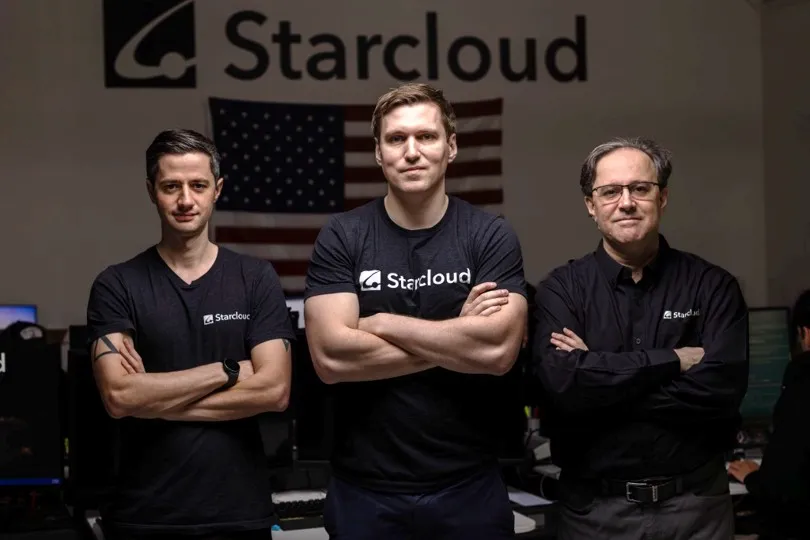
Starcloud, a startup developing satellites that can perform AI inference in orbit, told TechCrunch that it has added a $250 million extension to its March $170 million Series A funding round. The extension values the company at $2.3 billion.
The additional capital will allow the company to open a larger manufacturing facility and advance its largest orbital data center spacecraft, Starcloud-3, which is intended to fly on SpaceX’s forthcoming Starship rocket. CEO Philip Johnston is also amassing capital to ensure that he can launch his satellites as the market for rocket transportation tightens up.
“We can see what’s coming—we’re going to need to book an enormous amount of launch,” Johnston told TechCrunch. Starcloud has already requested permission from the FCC to operate 88,000 spacecraft.
“As soon as we can, we want to get under contract with things like Starship,” Johnston said. “One of the biggest costs is now on securing your launch capacity….launch is pretty constrained right now because [SpaceX’s] Falcon 9 program is scheduled to end in 2028.”
Launch costs were already one of the biggest challenges for orbital data center startups, to the point that one startup has decided to build its own rockets.
SpaceX is now planning to phase out its workhorse vehicle and bring the much larger, but still unproven, Starship rocket online, making planning more difficult for satellite operators. That’s especially true while competing rockets, like Blue Origin’s New Glenn and ULA’s Vulcan, are not flying regularly, and new vehicles like Rocket Lab’s Neutron are not yet on the pad.
For now, Starcloud is focused on launching two of the company’s new generation of 8 kw compute satellites (dubbed Starcloud-2) on rideshare flights in 2027. These will perform orbital inference tasks for customers including US government agencies. Starcloud is considering buying a dedicated Falcon 9 launch to launch more spacecraft and signing contracts with other providers, as well, to support future missions.
Still, Starcloud is ultimately built around the potential of SpaceX’s Starship to drive down launch costs enough to build out an orbital inference layer that can compete with terrestrial data centers. Johnston says he remains confident in SpaceX’s ability to demonstrate that the world’s most powerful rocket can be reused quickly and often.
This week, SpaceX CEO Elon Musk said his company will delay an attempt to catch a returning Starship rocket for a few months, and will attempt to re-fly the vehicle for the first time at the end of the year or early 2027.
“Obviously if we can’t book any SpaceX launch capacity in 2029, that will be that will be challenging for us,” Johnston said.
Starcloud’s funding extension was led by Manhattan West Ventures and included participation from Nvidia and Cisco; a person familiar with the deal said Nvidia ponied up $25 million to back Starcloud. Other participants included Benchmark, EQT, Soma, NFX, 776, Cedar Capital, Goanna Capital, and Standard Capital.
Johnston points to the Nvidia investment as a key signal of Starcloud’s advantages in the nascent space compute sector. Starcloud is the only company (that we know of) currently operating a Nvidia H100 terrestrial data center GPU in orbit, and the first to train a model using it; most other space GPUs are designed for edge processing. Starcloud is sharing those learnings with Nvidia as the chipmaker develops its first purpose-built GPU for space, the Vera Rubin Space-1 chip.
“The reason they’ve chosen to do this investment now is because of all of this data that we got from Starcloud One,” he told TechCrunch. “They, more than any other VC, did way more technical duty on this than anybody else.”
The space-ready chip hasn’t even been built yet, but Starcloud hopes to fly it into orbit sometime in late 2028. Johnston says his engineers are tracking a few key design choices: the relationship between the running temperature of the chip and the size of the radiators that dispel that heat, the placement of radiation shielding, and the ruggedizing required for the chips to survive the violence of a rocket launch.
The company, currently 25 employees strong and growing, is developing production lines at a 100,000 square foot facility in Woodinville, Washington, near where SpaceX and Amazon build satellites for their communications networks.
When you purchase through links in our articles, we may earn a small commission. This doesn’t affect our editorial independence.
>

Tesla is recalling just shy of 3 million vehicles in China as part of a nationwide effort to alert vehicle owners to hidden emergency door releases, which can trap occupants in the event of a crash or a fire.
Reuters reported on Friday that 11 carmakers in China are issuing recalls related to the problem. Nine manufacturers, including Tesla, will install warning labels on their vehicles that help occupants identify the emergency door releases. Xiaomi, Xpeng, and Geely brands Zeekr and Lynk & Co. are also recalling EVs. All 11 companies will also push software updates as part of the recall.
Manual door releases have become a problem in recent years as automakers like Tesla made electronic door latches the standard way of getting in and out of a car.
Electronic latches make it easier for owners to use their smartphone or an NFC tap card to open doors. But they can fail in the event of a collision. Automakers that use electronic latches typically install a manual handle that can be used in the event of an emergency, but these are often tucked away in unexpected places or hidden behind door panels.
Following a two-year review, China in February said it would ban hidden, electronically-actuated exterior door handles from 2027.
Late last year, the U.S.’s top automotive safety regulator opened an investigation into Tesla’s door-latching system after Bloomberg reporting put a spotlight on the issue. The agency is also looking at creating a new rule that could change the safety requirements for such systems. One lawmaker has even proposed legislation that would require manual releases to be “intuitive to use and readily accessible for the occupant.”
Tesla is not the only company that has leaned on hard-to-locate manual releases as a backup to electronic door latches. Rivian’s customers and employees raised concerns last year about the company’s own manual release on its R1 vehicles, which requires passengers to remove a panel and pull a cord. The company subsequently said it would move that release to a more accessible spot on the newer, cheaper R2, which launched this year.
In 2025, Ford briefly stopped sales of the Mustang Mach-E and issued a recall to reduce the chances of its electronic door latches malfunctioning if the vehicles lost power.
Tesla, which popularized the use of these flush exterior handles and electronic latches, has said it is working on redesigning its door handles moving forward.
When you purchase through links in our articles, we may earn a small commission. This doesn’t affect our editorial independence.
>

Oura faces lawsuit accusing it of misleading consumers about sleep-tracking accuracy

Joshua vs Fury: Anthony Joshua fight doesn’t look like it will happen – Tyson Fury

Walmart to finally start accepting Apple Pay and Google Pay
-

 movies3 months ago
Search For Canadian TV Actor Stewart McLean Now Homicide Investigation
-

 Fashion9 years ago
These ’90s fashion trends are making a comeback in 2017
-
Fashion9 years ago
According to Dior Couture, this taboo fashion accessory is back
-
Fashion9 years ago
Model Jocelyn Chew’s Instagram is the best vacation you’ve ever had
-
Fashion9 years ago
Emily Ratajkowski channels back-to-school style
-
Fashion9 years ago
9 Celebrities who have spoken out about being photoshopped
-
Fashion9 years ago
Your comprehensive guide to this fall’s biggest trends
-
Fashion9 years ago
A photo diary of the nightlife scene from LA To Ibiza