
Politics
Politics Home | TUC Head Urges Government To Reject Choice Between Defence Spending And Public Services


Paul Nowak, general secretary of the Trades Union Congress, addressing a rally in 2023 (Alamy)

6 min read
Paul Nowak, general secretary of the Trades Union Congress (TUC), has urged the government to “reject the right-wing argument” that there is a choice to be made between increasing defence spending and investing in public services.
Speaking ahead of the TUC conference that begins on Sunday, Nowak told PoliticsHome: “We should fundamentally reject the right-wing argument that somehow it is a choice between investing in our national and collective security, and investing in our schools and hospitals and infrastructure. I just reject that choice out of hand.”
Andy Burnham told MPs at Prime Minister’s Questions on Wednesday: “Yes, we do everything to support our national security, but it can’t come at the expense of social security.”
Although the Prime Minister restated the government’s commitment to defence as “absolute”, his comments were criticised by the Conservatives, who accused him of “prioritising the ballooning benefits bill over our national security”.
The TUC passed a “Wages not weapons” motion at its conference last year, which opposed immediate rises in defence spending and noted that “in the current political context, ever-higher expenditure on arms will inevitably mean less money for our education, health, and councils, and the green transition”.
Asked whether he had since been lobbying the government not to increase defence spend, Nowak replied: “That wasn’t what we agreed last year, and I, the TUC, we are not going to campaign on ‘this is the right level of spending on defence’. I’m not a defence expert.”
Trade unions including the University and College Union (UCU), which proposed the motion at TUC last year, would like to see a clearer position against government increases to military budgets.
UCU general secretary Jo Grady said: “TUC policy is clear and we will be looking to reaffirm that this year via the unions movement’s democratic processes. We would then expect the TUC to fully support the democratic will of the movement.”
In a wide-ranging interview, Nowak – who is from Merseyside – welcomed Burnham as Prime Minister, joking: “I’m always keen to see Evertonians in positions of power… We’re finally getting the recognition on the international stage that we deserve.”
He said that under Keir Starmer’s leadership trade unions had a “sense” of “being managed as political stakeholders” by the government, but with Burnham at the helm he hoped “unions feel that this is a government that sees them as legitimate partners”.
Nowak warned Burnham against calling a general election before the Employment Rights Act changes are implemented, however.
The union leader described himself as “pretty agnostic” about the possibility of an early snap election, but added: “Do I think that the public is champing at the bit for another general election? I really don’t…
“It’ll be down to Andy Burnham as Prime Minister and his government to think, ‘Have we got enough room for manoeuvre within the manifesto commitments that we’ve got?’
“I certainly think on things like employment rights, for example, there is still a huge amount of unfinished business, and what I wouldn’t want to see is that business remaining unfinished because we had an early general election.”
Nowak said he wanted the Employment Rights Act to be implemented “further and faster”, flagging that “the first big test for the government” will be on guaranteed hours for workers.
“It would be an absolute travesty if we ended up in the situation where people, for example, on nine-hour contracts are excluded from the scope of the guaranteed hours provision,” he said.
“There will be some employers who are just addicted to one-sided flexibility… and they are going to fight tooth and nail against proper right-guaranteed hours. I think the Prime Minister’s got to be prepared to face them down.”
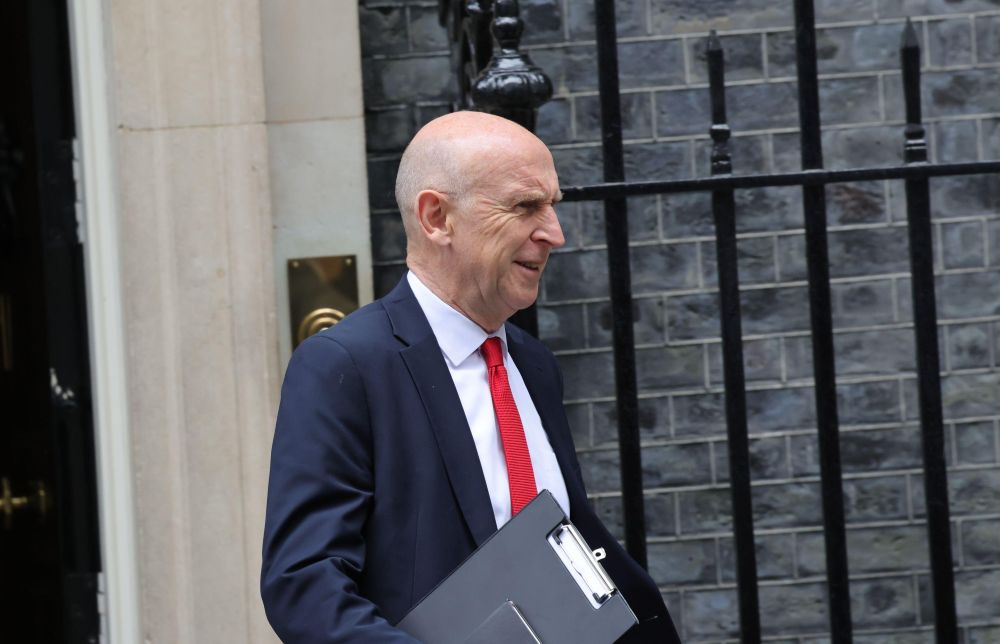
The TUC general secretary said the other “unfinished business” included “the biggest wave of public sector insourcing”, “the fair pay agreement in social care” and “the school support staff negotiating body”.
He added that the unions are “serious about Employment Rights Act Two” – the demand for a second instalment of the workers’ rights legislation already passed – which he specified should include measures on corporate governance.
“It’s bizarre that 19 European countries have some sort of provision for workers on boards, but we don’t,” he said.
Speaking to PoliticsHome, Nowak also urged Chancellor John Healey ahead of the Budget to give himself “more flexibility to invest in our infrastructure and in public services because we are desperately going to need it”.
The TUC head advised that the bank surcharge should be increased, saying: “If you put it up to 35 per cent – which is the level the Tories put the windfall tax on the energy companies at the height of the energy price spikes – that generates £60bn over the next four years.”
While refusing to “prejudge” the upcoming TUC conference debate on changing the fiscal rules, he called on the government to reform the Office for Budget Responsibility (OBR), describing the watchdog as being “established by George Osborne as a tool of austerity”.
“I want the remit of the OBR reviewed. I think at the moment it’s acting as a break on growth rather than a driver of growth,” he said.
Nowak also criticised the National Wealth Fund’s aim to break even by 2031, saying: “Infrastructure investments don’t pay off in three or four years, or even five years, or sometimes 10 years… You’ve got to take a much longer-term view.”
And he said the government should ensure that when it takes a stake in a company through GB Energy or the National Wealth Fund, it is counted as a public sector asset – enabling more investment.
The TUC general secretary backed further action on the water industry, including putting Thames Water into special administration.
“Why the hell are we rewarding big outsourcing companies with hundreds of millions of pounds in dividends each and every year when they are failing to deliver our basic public services?” Nowak asked.
“I think especially Thames Water should be placed into a special administrative regime. I am absolutely convinced that that not a single pound of taxpayers’ money or bill payers’ money should be spent on rewarding Thames water shareholders and senior management for continued failure.
“You’ve got to put in place safeguards for the taxpayer, you’ve got to put in place safeguards for the people reliant on Thames Water services, and you’ve got to put in safeguards for the workforce as well because there’s big issues about pensions and pay. But I don’t think anyone thinks that we should bail them out with another single pound.”
New Environment Secretary Angela Eagle recently said the move would be more complicated than assumed by some activists, saying: “Whatever people think of Thames at the moment, it isn’t technically insolvent.”
>


(Alamy)
4 min read
Exclusive: The Conservatives are developing a policy to distribute pamphlets to every UK household advising how to respond to a civilian emergency.
The plans are inspired by European countries like Denmark, where the government uses literature to instruct the public on what steps to take within the first 72 hours.
The Tories say they also want the government to be more honest with the country about threats facing the nation, which could include declassifying information held by the state.
Shadow defence minister David Reed is leading on the party’s national resilience policies.
In an interview with PoliticsHome, the Conservative MP for Exmouth and Exeter East said the coronavirus pandemic had created a public mindset that the state can do everything for them, when, in the event of a national emergency, people will need to take steps themselves, especially in the first hours and days.
“The onus needs to be pushed back onto the citizen to say, if things are coming down the track… you need to start thinking more about yourselves and your families, and start preparing so that you can be more resilient and really start to reinvigorate that idea of being a citizen, contributing, and being part of the community,” Reed said.
“By physically giving something to someone, posting it through their door, what I want to see is the narrative in people’s minds change.”
The government is preparing to launch a public awareness campaign around household resilience later this year, with a spokesperson telling PoliticsHome: “The campaign will bring the UK in line with European countries that run similar campaigns already. We’ll announce further details in due course.”
Last month, the Financial Times reported that people would be encouraged to stockpile emergency supplies, including tinned food and bottled water, as part of the push to help households prepare for hostile state acts, cyber warfare, and extreme weather.
In an interview with Sky News Defence Insider, published on Thursday, Defence Secretary Wes Streeting said the UK does “need to have a national conversation about resilience”.
Streeting pointed not just to state-based threats but climate-based disruption, too, and said people should consider practical questions, like “in the event you have a power cut, would you know where you keep your torch? Have you even got matches or candles?”
Last week, the National Audit Office warned that government had not done enough to engage with households and businesses to strengthen resilience to supply chain shocks.
Reed, a former Marine, is concerned that the planned comms campaign will “fall flat” unless it goes as far as giving every household in the country a readiness pamphlet.
A version being drawn up by Conservatives, seen by PoliticsHome, seeks to communicate that, for a short period after a national emergency or major disruption, it will be up to people to take action where the government cannot help. It sets out a three-point household response, based on stockpiling supplies, making a plan and checking on each other, and lists key items to have in an emergency kit.
The European Commission has encouraged citizens to stockpile enough supplies to last for 72 hours to increase readiness, following in the footsteps of Germany and Nordic states.
“If you look at the Danes, if you look at the Dutch, and if you look at some other European countries, they produce a pamphlet, and they deliver it to every single house in the country, and it just goes through really simply in a nice, civilian-digestible way,” Reed said.
At the same time, the shadow minister said the government should look for non-military figures to communicate the importance of preparedness, especially to young people, and said ministers should “definitely” consider influencers as campaign spokespeople.
The Conservative MP argued that due to the UK having experienced peaceful decades since the mid-20th century, resilience has become “such an abstract concept”, especially for younger generations, “that you can’t even have the conversation at all”.
He referred to the experience of his 84-year-old father, born in 1942 during the Blitz in Plymouth: “That’s the last generation that has any sort of real semblance, that physical idea of border insecurity and things not being right in terms of security”.
“Work does need to be done with the younger generation because they will be helping out. They will have to help out with all these efforts,” Reed stressed.
He also called for a greater central government focus on resilience, pointing to Denmark, where they have their “own ministry for national resilience and preparedness, and they’ve got a centralised minister that has been able to work with the different departments to be able to have the conversation about what needs to be done, to be able to set targets”.
>

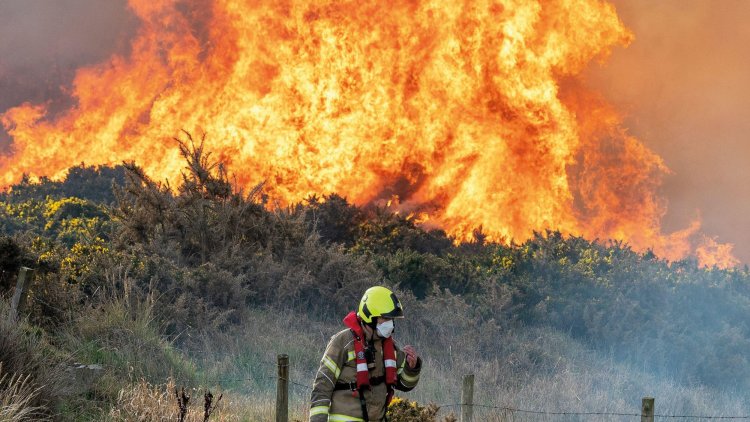
(JASPERIMAGE/Alamy)
6 min read
A summer of relentless heatwaves, spiking mortality and wildfires brought home the reality of climate change to many Brits. Just how hot must it get before we actually start to do something? Ros Taylor reports
First, the good news: the summer of 2026 is “at the upper end, but not quite at the worst end” of climate projections that have circulated for decades.
And now for the less good news: “next year will probably be as bad”.
Experts like Richard Dawson, the professor of earth systems engineering at Newcastle University, and Sam Fankhauser, a professor of climate change economics at the University of Oxford, were less surprised than most as we sweltered.
For Fankhauser, the dawning realisation that climate change is no longer something to be feared in the future but to be faced in the present is welcome.
“In a sense – this will sound very cynical – it was a good warning shot… Never waste a good crisis.”
Now the climate has our attention, the question is: what we are going to do about it?
At one extreme of climate adaptation is the scenario portrayed in the Danish drama Families Like Ours, where forecasts of rising sea levels and flooding force the government to abandon most of the country and resettle Danes elsewhere. At the other is a Cobra meeting and an emergency message warning people not to start unnecessary fires. The government is going to have to think more urgently about the policies in between.
The key document ministers rely on to draw up policy is the 554-page report of the Climate Change Committee (CCC) ‘Independent Assessment of UK Climate Risk’, which was snappily renamed A Well-Adapted UK last year. The title is aspirational, not a description. The chair of the CCC’s Adaptation Committee, Baroness Brown of Cambridge, says none of the government’s adaptation plans have been fit for purpose. The next plan is due in 2028.
Adapting to much hotter weather demands a cognitive shift. The principle that people should be able to heat their homes, especially if they are elderly, is deeply embedded in public policy.
The Warm Homes Plan, the winter fuel payment and energy subsidies when fuel bills rise, all testify to our fear of the cold. Change has to start with the recognition that heatwaves, especially in England, are now routine events and not 1976-like outliers. (Even if the Atlantic ocean currents that keep the UK relatively warm do collapse, the CCC thinks that is unlikely until late in the century.) Unlike heating, cooling is not yet regarded as a need, still less a right.
The Green Party’s campaign to legislate for maximum temperatures in the workplace, which is one of the CCC’s recommendations, suggest this is starting to change. But while businesses will have to pay towards adaptation, the challenges that go beyond the immediate health harms of extreme heat – like avoiding water shortages, preventing mosquito-borne disease and persuading farmers to switch crops – rely on a combination of government investment and behavioural change.
“We can’t think about climate adaptation as a nice-to-have – it’s a must-have,” says Dawson.
“We can’t have our water supplies threatened in the way they currently are. About half the country’s population is under a drought order.
“One of the things we’ve been very good at in this country is writing a lot of plans. You don’t have to look too hard to find a lot of documents saying all the right things… Where we’ve been less diligent is in acting on those.
“These plans do not have very clearly defined targets of where we’re trying to get to and tracking progress towards that. What is the volume of water we want to have? What is the level of flood risk we’re prepared to have as a country? And what does a step-by-step action to achieve that look like?”
The experts who study adaptation say it is vital to start work on new reservoirs now, because they take so long to build. Nine new sites have been identified, but the challenge is to speed up the planning process. “It’s one-third new reservoirs, one-third fixing leaks and one-third behaviour change,” says Fankhauser.
Change has to start with the recognition that heatwaves, especially in England, are now routine events and not 1976-like outliers
“Reservoirs are wildly expensive. They will probably be paid for by water consumers. The leaks will end up on our water bills, although they will eventually show up as savings. The behaviour change, more efficient showerheads and that sort of stuff – that’s going to be cheap.”
And anything cheap will appeal to a government with little financial room for manoeuvre. In July, the Government Office for Science put out a little-noticed report on “putting people at the centre” of climate adaptation. Trying to learn from the Covid pandemic, it noted that people were sometimes reluctant to take advantage of government help and advice for emotional and social reasons.
In Appleby-in-Westmorland in Cumbria, which floods frequently, people usually turned to sandbags – which are not particularly effective – and did not accept the offer of flood barriers or water-resilient furniture. Interviews and focus groups revealed that they were worried about acting alone and feeling foolish if measures turned out to be unnecessary.
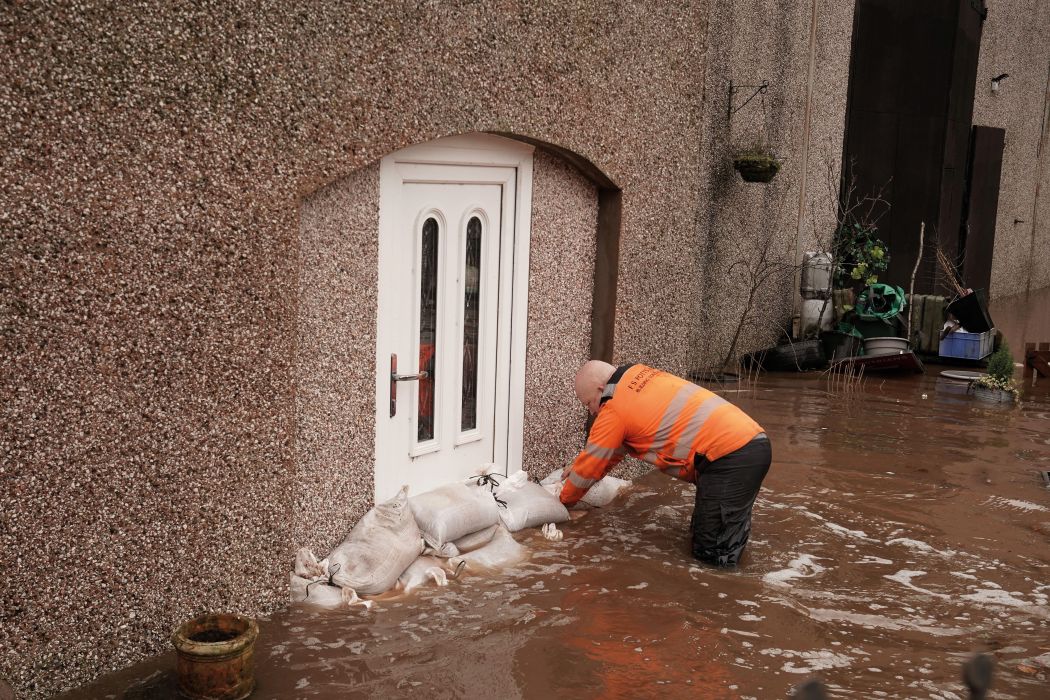
Another early win, says Fankhauser, is to make sure new infrastructure and housing projects can handle high temperatures and are not built on flood plains. “It’s cheaper to do the adaptation now rather than the retrofit in 10 years’ time.” This was the thinking behind Eurostar’s order for new trains that can cope with temperatures of up to 55C. It will also be important to learn from how wildfire-prone regions like Canada and the Mediterranean handle fire risk. More challenging will be urban fires like Stourbridge, which the CCC did not anticipate.
Planners will also hope that things like air conditioning – which experts accept will be necessary – do not become divisive. Mark Maslin, the professor of earth system science at University College London, says that the extra demand for electricity must be met by a massive rollout of solar panels. Decisions about which areas should get more protection against floods will be difficult. Later in the century, when sea levels are predicted to rise further, some coastal areas may have to be abandoned to the water.
As for the emergency alarm sent to mobiles in the UK last month, which shocked many Britons, Dawson says it was “absolutely right to get that message out”, though he was surprised it went to everywhere in the country. “That learning can be hugely powerful,” says Fankhauser. “Drink water, stay in the shade, don’t light fires. Those are all things we can ingrain in culture, and we should.”
>



As the challenge of childhood obesity persists, Dr Sarah-Elizabeth Bennett, Senior Nutritionist at Slimming World examines the vital role of families and communities in obesity care and prevention
The recent publication of the Health and Social Care Committee’s report, Food and Weight Management: Fixing the Food Environment1 and the findings from the All-Party Parliamentary Group (APPG) on Obesity policy paper on Childhood Food Environment, Planning and School Food2 has brought renewed focus to childhood health, children’s food environments and the urgent need to support families to live healthier lives.
With obesity among reception-aged children at its highest recorded level, there’s a very clear message: tackling obesity is not simply about individual choices but about creating environments that help whole families thrive. And while the systemic changes recommended by the Committee and APPG, such as restrictions on advertising of high fat, salt and sugar products and mandatory healthy food sales reporting, are vital, sitting them alongside measures that recognise and harness the influence parents can have on children’s health behaviours could have the potential for further widespread benefits.
New independent research3 published in BMJ Paediatrics Open provides compelling evidence of the relationship between parents addressing their own weight concerns and the health behaviours of their children. The study, conducted by the University of Bristol and funded by the National Institute for Health and Care Research (NIHR), explored the experiences of 396 Slimming World members with children aged between five and 11 years old.
The findings reveal the powerful link between parental behaviour change and positive outcomes for children:
- more than two-thirds (67 per cent) of parents who were concerned about their child’s weight felt more motivated to support their child after addressing their own weight
- almost half (48 per cent) of parents reported healthier improvements in what their child ate after they joined a weight management programme
- more than a quarter (27 per cent) said their child had become more physically active
These findings are particularly significant at a time when global projections suggest that by 2050, one in three children, teenagers and young adults could be living with overweight or obesity.4 Research also consistently shows that children with parents living with obesity are more likely to experience obesity themselves.5
Through our understanding of the significant influence parents have on their child’s habits, our Family Affair programme acknowledges the important role family can play in the health of children. It provides our members with a set of resources to support them in encouraging their children to have a healthy, varied balanced diet and form life-long healthy habits.
As policymakers consider how best to address rising childhood obesity rates, recognising the role of families and communities in obesity care and prevention is crucial. In doing so, family influence can become one of the most powerful tools available – putting family at the heart of all adult weight management programmes could help to break the cycle of intergenerational obesity.
Moreover, as the number of people using weight loss medication continues to increase, we should consider whether this could lead to the loss of family influence and what impact this could have on the younger generation, if those using medication aren’t making or being encouraged to make, healthy lifestyle changes alongside it.
Whether our members lose weight with Slimming World alone or alongside medication, they are fully welcome in our groups to receive evidence-based, cost-effective support that ensures they make lasting changes to their diet, activity levels and mindset. We would welcome the opportunity to meet with the government to discuss our commitment to supporting its efforts to help people whose lives are adversely impacted by obesity and introduce them to our members who have lost weight and created lasting healthy habits for their entire family.
For more information on our latest research and outcomes or our programme, please visit slimmingworld.co.uk/health
- https://publications.parliament.uk/pa/cm5902/cmselect/cmhealth/223/report.html
- https://obesityappg.com/inquiries
- Mears R, Sharp D, Searle A, Salway R, Hamilton-Shield J. Effect of parent attendance at an adult commercial weight management programme on their children. BMJ Paediatrics Open. 2026;10:e004417. https://doi.org/10.1136/bmjpo-2025-004417
- Global, regional, and national prevalence of child and adolescent overweight and obesity, 1990–2021, with forecasts to 2050: a forecasting study for the Global Burden of Disease Study 2021 – The Lancet
- https://www.gov.uk/government/publications/childhood-obesity-applying-all-our-health/childhood-obesity-applying-all-our-health
>

U.S. Open quarterfinal recap: Women’s semifinals are all chalk as men’s draw opens up

How to watch Astros vs. Phillies: TV channel and streaming options for September 10

Resident Evil 2, 3, 4 Remake Games Get Switch 2 Digital Release on October 16 – News
-

 movies4 months ago
Search For Canadian TV Actor Stewart McLean Now Homicide Investigation
-

 Fashion9 years ago
These ’90s fashion trends are making a comeback in 2017
-
Fashion9 years ago
According to Dior Couture, this taboo fashion accessory is back
-
Fashion9 years ago
Model Jocelyn Chew’s Instagram is the best vacation you’ve ever had
-
Fashion9 years ago
Emily Ratajkowski channels back-to-school style
-
Fashion9 years ago
9 Celebrities who have spoken out about being photoshopped
-

 Anime3 months ago
Rurouni Kenshin: Hokkaido Arc Manga Takes 1-Issue Break – News
-

 Anime2 months ago
HIDIVE to Stream English Dubs for The World Is Dancing, The Forsaken Saintess and Her Foodie Roadtrip in Another World, The Dangers in My Heart: The Movie Anime – News