
Entertainment
‘Manhood’ Trailer: Penis Enlargement Doc Is Both Bizarre and Sensitive

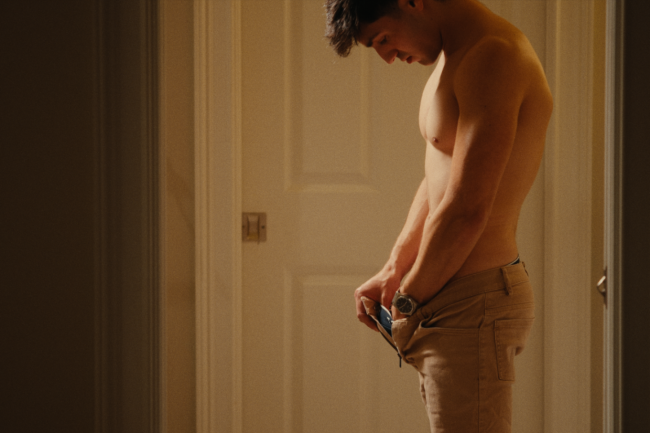
In the SXSW documentary “Manhood,” one man is trying to make penis enlargement procedures as easy and commonplace as a few spritzes of Botox. Dallas entrepreneur Bill Moore’s PhaloFILL procedure offers a solution to men’s worst insecurity. But it’s not without complications of its own, as the film shows an OnlyFans star and a father of five who put their bodies on the line — and face a complex emotional aftermath. IndieWire shares the exclusive trailer for the film, directed by “White Noise” filmmaker Daniel Lombroso. Executive producers include Penny Lane, Sheila Nevins, and Fenton Bailey and Randy Barbato for World of Wonder.


“The manosphere and its brand of toxic masculinity is taking over America, from social media to the White House,” said director Daniel Lombroso, who spent two years in male enhancement clinics to make the film, in a statement. “I wanted to explore the tremendous well of male shame and insecurity it all comes from.”
“Masculinity, and what makes a man, is a headline topic these days,” said executive producers Fenton Bailey and Randy Barbato of World of Wonder. “Size matters, but as Daniel so powerfully demonstrates, it’s the dimensions of the story that count. ‘Manhood’ is a story full of heart, humor, and humanity.”
More from IndieWire’s SXSW review: “‘I can fill your penis with filler, but I cannot fill the hole in your heart,’ Moore tells his patient/lover David. The patient-doctor relationship here is certainly ethically questionable, but at what point are ethics just sort of tossed out the window when we’re talking dicks? Still, Lombroso takes his subject and his subjects seriously, and treats them with respect. David, marveling near-tears at the results of his reconstructive surgery, makes for a moving moment — who knew a documentary about penile enhancement could touch a nerve and the heart, too?”
“Manhood” will open at the Laemmle NoHo in Los Angeles on October 28 and the Village East by Angelika in New York on October 30, with a week-long engagement at each, followed by a nationwide theatrical release. The film will be available on digital platforms November 17, with more details to be announced at a later date.

>
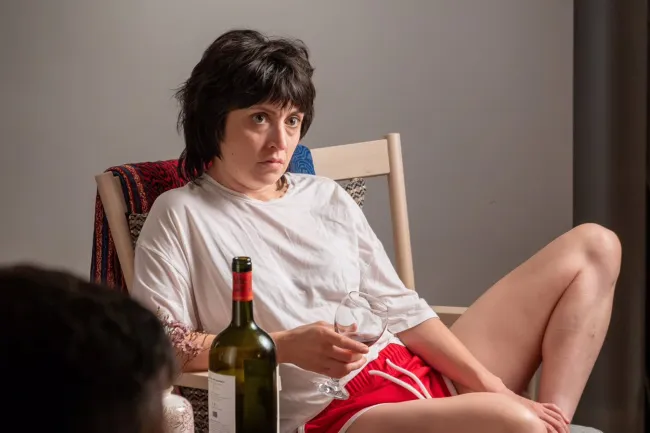
“In the spring of 2011, at the age of 18, my brother Matthew got his first real girlfriend,” explains Jackie (Tallie Medel) in voiceover at the beginning of “The Unspeakable Act,” written, edited, and directed by Dan Sallitt in 2012. “I had somehow thought that he and I had an unspoken agreement that we belonged to each other,” she continues, “which was really pretty stupid of me.”
Those words kick off Jackie’s final year of high school as she confronts her longstanding unrequited desire for her brother. Matthew (Sky Hirschkron), who’s aware of and patient with his sister’s feelings for him, and understandably wants to put some distance between them to explore other relationships, including some he might actually consummate. His decision to set boundaries sends Jackie into a spiral. She has trouble keeping food down, she can’t sleep, and she constantly badgers her brother for information about his new girlfriend, that is until he dumps her. Jackie’s yearning for Matthew still burns bright after he departs for college, but his absence forces her to build a life outside of her attraction to him, even if she thinks about him while sleeping with guys in her class.


Sallitt’s greatest coup in “The Unspeakable Act” is his refusal to treat his characters as pawns in service of a “shocking” premise. Jackie and Matthew are mostly typical teenagers with full social lives and creative hobbies. They have opinions on literature, music, and sex. They’re close with their mother but distant from their older siblings. Medel and Hirschkron portray their characters as intelligent, self-aware people guaranteed to chart respectively fruitful paths, even if they occasionally get in their own way. They are profoundly regular, except for that one thing.
But as much as Sallitt doesn’t sensationalize Jackie’s amour fou, a provocation unto itself, he also approaches her unconventional infatuation, and Matthew’s responsive equanimity, with appropriate gravity. Her feelings for her brother are real, which means that she has to actually deal with them if she wants to be a part of society. Her emotional tumult stems from her realization that she can’t continue into adulthood still pining for Matthew, which inevitably means that she won’t remain as emotionally close to him. With “The Unspeakable Act,” Sallitt honed in on a crucial coming-of-age lesson: you can’t always get what you want.
Fourteen years later, Sallitt returns with “What Can’t Be Mentioned,” a sequel to “The Unspeakable Act” that picks up roughly a decade later when Jackie, now in her late-twenties, learns that Matthew is about to have a child with his partner Lily (Kit Zauhar, director of “Actual People” and “This Closeness”). While Jackie exhibits all the outward trappings of stable adulthood, mainly a good job as a professional therapist and a shared apartment with her boyfriend Anthony (Kyle McCormack), Sallitt quickly reveals cracks in the façade. She experiences newfound sexual incompatibility with Anthony that eventually pushes them both into sex therapy, complete with awkward take-home exercises that Jackie struggles to take seriously. She seems to excels at her job, yet she also admits to feelings of countertransference with a forty-something client who privately worries that her two children might be exploring their sexuality with each other.
Sallitt depicts Jackie’s personal and professional struggles as specific hiccups that might manifest for anybody. But he also casts them in the shadow of her youthful attraction to Matthew, which may still be lingering in her subconscious like a party guest that has overstayed their welcome. When she receives news about Matthew’s impending child, she treks upstate for a week ostensibly to reconnect with him and her partner, whom she describes to Anthony as “okay, but totally not good enough for him.” Instead of ingratiating herself to the couple, however, she spends the week getting tanked on red wine and probing Lily with deliberately provocative questions about her bisexuality and how pregnancy has impacted her sex life with her brother.
Lily responds with monk-like composure in response to Jackie’s rude queries. (“My parents are hippies,” she says calmly. “Talking about sex is like talking about the laundry.”) Sallitt crucially abstains from underlining the irony that Jackie can’t process that Matthew and Lily’s shared disposition makes them compatible. Zauhar matches Hirschkron’s even-keeled temperament even when Lily tries to coax more information about Jackie from Matthew. Is she an alcoholic? “She just likes to cut loose some times. She’ll be fine when she’s back home,” Matthew calmly responds. Is she gay? After all, people hide it from those closest to them all the time. “Believe me, she’s not gay,” Matthew insists. A secret that can’t be uttered forms a small fracture between the happy couple that might balloon over the years.
“Mentioned” runs a little over an hour, making it the rare film where you wish the filmmaker expanded his work by even 10 or 15 minutes, maybe to further enrich some of its muted conflicts, or even just to give the viewer a little more time with the characters. Sallitt replicates the formal style of “Unspeakable” in “Mentioned” (static compositions, no camera movement), but changes the editing rhythm to sharper cuts that capture the more rigid routine of professional young adulthood. He also deepens the world of “Mentioned” by peppering in references to characters from “Unspeakable”: Jackie’s childhood therapist Linda (Caroline Luft) makes an appearance over Zoom to offer advice, and Matthew mentions speaking to their mother and eldest sibling Will. (Meanwhile, their second-oldest sibling Jeanne, whom Jackie predicts will one day leave and never look back in “Unspeakable,” is never mentioned.) Sallitt strives for an understated continuity that signals a fully lived-in world bursting with unspoken history.
“Unspeakable” and “Mentioned” are distinct enough entities that one could conceivably watch the latter without having seen the former and still feel fulfilled. However, “Mentioned” is obviously a richer text in the context of “Unspeakable,” if only to fully appreciate how Medel reinterprets Jackie between the two films. They convincingly develop their character’s previously restrained adolescent instability into matter-of-fact adult neuroticism without sacrificing any complexity. They bring a familiar but ultimately more mature charge to Jackie’s scenes with Matthew, who Hirschkron commits to portraying as almost defiantly unflappable. (He may have moved on from reading Mueller to “Stoner,” but he’s still basically the same person as he was in “Unspeakable.”) Medel lends Jackie a spiky, unpredictable quality even when they’re sitting in a chair and glaring at whomever will catch their eye. Most of the acclaimed, visible performances this year can’t muster that level of intrigue.
In a Filmmaker interview upon the release of “Unspeakable,” Sallitt perceptively comments that he doesn’t “see Jackie’s incestuous desire as a transitory thing or part of her passage to adulthood.” Instead he thinks “it’s just the way she is, and she will have to keep a lid on that desire in order to live comfortably, will have to cultivate other aspects of herself.” “Mentioned” effectively progresses from this specific vantage point, with Mendel at times depicting Jackie like she’s managing a chronic condition, and Hirschkron capturing a sibling’s unique sympathies for their sibling’s pain. The final couple scenes of “Mentioned” illustrate Sallitt’s updated perspective over the interim near-half decade, which feels discomforting but ultimately hard won. It turns out that if you try sometimes, you just might find that you get what you need.
Grade: B
“What Can’t Be Mentioned” premiered at the 2026 New York Film Festival. It is currently seeking U.S. distribution.
>
>
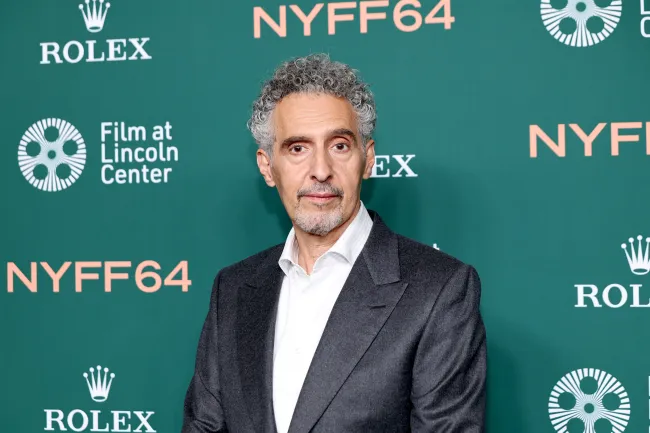
We all know our favorite John Turturro roles. Maybe it’s the Cannes actor-prize-winning purist screenwriter in “Barton Fink,” one of several memorable Coen brothers characters. (Turturro’s crossing his fingers they are getting back together, as we all are.) Maybe it’s purple-jumpsuited Jesus Quintana in “The Big Lebowski,” whose motto is “Nobody fucks with the Jesus.” Or pizza worker Pino in Spike Lee’s “Do the Right Thing,” another frequent collaborator. He’s also directed a number of delicious indies, from Cannes Camera d’Or winner “Mac” to “Illuminata” and “Romance & Cigarettes.”
This year Turturro scored raves in a leading role in “The Only Living Pickpocket in New York” (Sony Pictures Classics, October 23) which broke out at Sundance and is playing the fall festival circuit from Telluride to New York. That’s because SPC believes they have a shot at landing Turturro a Best Actor Oscar nomination. He’s long overdue. Shockingly, he’s never been nominated. But this 69-year-old Italian American New York theater, film, and television actor has built affection and respect from his peers.

You felt the Turturro love at the October 3 press screening of Tom McCarthy’s “A Statement” (Sony Pictures Classics, Spring 2027) at the New York Film Festival. (The press conference is here.) Turturro proved the MVP among the sprawling ensemble of 24 actors, nabbing the most applause. During filming, they sat across from each other at a square table, having memorized their dialogue, a transcription of the actual conference of climate change experts in 1980. The back and forth is fascinating and disturbing, as you can see exactly why the world could never come together to address this existential crisis.
Turturro’s MIT nuclear expert projects a series of charts that show how rising temperatures from CO2 in the atmosphere will explode if fossil fuels aren’t cut back dramatically. And later on, he crashes a wedding and hits the dance floor, dancing with the sexy stenographer (Nina Arianda). The movie is challenging but fun.
We sat down at the Telluride Film Festival over Labor Day Weekend.

Anne Thompson: Your new movie “A Statement” is playing the New York Film Festival but won’t come out until next spring.
John Turturro: This was the week before Reagan became president. So the words are the words of the real people. 75 percent of the movie is a transcript edited down, so we were all in a room most of the time. 24 actors, Amy Ryan, Nina Arianda. It’s really about democracy: How can people come to some kind of consensus, if not unanimity, and how difficult it is. And it’s funny. My character is an MIT nuclear engineer and anthropologist. I had to do a deep dive into scientific research about why people do or don’t solve large sociotechnological problems. [Tom McCarthy] made it entertaining. It creeps up on you.
I’m an old New Yorker, so I got a big kick out of “The Only Living Pickpocket in New York,” which I saw at Sundance. What did you think of writer-director Noah Segan’s screenplay?
It was a beautiful script about aging, the analog world, how everything is changing. I thought, “Let me read this again. Is this as good as I think it is?” It had a delicacy to it, and I also liked the time frame because it was Aristotelian, it wasn’t 24 hours but it’s 36 hours: “Well that makes it a pressure cooker and it’s still delicate.” I met Noah and he said, “I wrote it with you in mind.” And I said, “Let’s start talking about it.”
So you dove into the world of pickpockets?
He gave me all these books. “Whiz Mob” was by an anthropologist. He interviewed pickpockets in the 30s, 40s, 50s, men and women, sometimes teams, and it was interesting where they came from. And then I read about the history of pickpockets: they were everywhere, and a lot of them were abandoned orphans. It was the idea of not doing heavy crime and you take the money, but you could throw away the wallet or put it in the mailbox or whatever. And then I worked with this guy Apollo Robbins. He’s a magician pickpocket, and he was helpful too.
You had to practice?
Yeah, but his hands are like a concert pianist’s. He can take your watch off. You don’t feel it. It’s got to be with one hand, and you can’t just let it flop, and you can’t press. So you have to let it go, or you put your finger in someone’s pocket, and you don’t take it, just hold it. And they worked in teams. Sometimes the woman would be the setup. Sometimes it was two women.
Your pickpocket is taking care of his incapacitated wife. I found that moving.
This guy never has taken care of anyone. Maybe he blew all his money on good clothes or gambling, and now he’s actually taking care of someone. We talked a lot about the previous relationship, and as you get older, you do take care of people, and I’ve been an official guardian and an unofficial guardian, so I understand that’s an unsung, isolating position to be in, but it means something to someone who’s led not an admirable life.
And his daughter [Tatiana Maslany] is letting him know that. She’s not going to let him off the hook when she confronts him.

That’s right. Tatiana brought it. People want forgiveness, they want something, and she doesn’t. And I thought, “well, then you have to find someone else to be generous to.” And that was a tricky scene, but it could be a good one. We were nervous about rehearsing, and we blocked it, and we shot it. Tatiana, who I’m working with now, again, we’re doing “Rhinoceros” the play [in Cambridge] with Paul Giamatti. [It closed September 27.] It’s good to go back and do your humble rituals. [Both Maslany and Giamatti are also in “A Statement.”]
You shot all over the city.
We went to every borough. I grew up in Hollis, Queens, Rosedale, and I had relatives on the Lower East Side and in Brooklyn too. I’ve lived all over the city, with school upstate and New Haven [Yale Drama School]. During filming a lot of times I was in these new ethnic neighborhoods where I was in a hair salon, and that was my dressing room, or in a little store, or in someone’s apartment we rented. So it was that kind of movie. We had 26 days to shoot. It was one of those collaborative experiences. And so you want to give everything you have, and you want to take the elevator down to the subbasement if you can.
The prime prop in this movie is your big overcoat.
The coat. Well, that’s because I did a Zegna show. We were going to do a peacoat, and Noah fell in love with it, but the collar was too big. We talked to them, and they said, “Hey, we’ll make you a coat.” And they made me a coat. It reminds me of all these black and white movies, like “Out of the Past.” I’m a big Robert Mitchum fan.
It is a Robert Mitchum coat!
His shoulders are that big. But Robert Mitchum had this vulnerability, he had a lot of self-doubt in who he was. In a book about him, he turned down so many great parts because he thought, “I’m not good enough to do it.” Well, there’s a noirish aspect to this, without it being overt.
I agree. Your character is vulnerable and sad.
He’s at the point in his life where he’s at these crossroads, and how can he survive and take care of this person that he cares about? I felt there was a humanity to it. It’s a hard thing to do on film sometimes, because people aren’t that interested in it. Out of delicacy, there’s discovery. And you discover things about yourself too.
I left my house in L.A. as these bricklayers were working on our exterior wall. I thought of your movie “Mac,” a tribute to your dad.
Yeah, and to workers, builders, people who don’t destroy things. But it drives me crazy when I think how many movies have been made about the Titanic, and no movie was ever made about the Brooklyn Bridge, which stands and serves people every day. So, the working class is unexplored. There are certain professions in movies, and then there’s other things that just aren’t. People have seen “Mac,” but not a huge group. I think, “Okay, I made it, I did it, I did something.” And maybe if Bingham Ray’s October Films would have released it instead of Samuel Goldwyn— they wanted it. I got outvoted. That film was shown a lot on HBO for a while.
Where does that movie live now?

It lives somewhere. Sony owns it now. It was on Criterion for a while. They had a few of my films on Criterion; they lease them for a period of time. They had “Illuminata,” “Mac,” and “Romance & Cigarettes.” They disappear. You don’t know where. You used to go to the video store, and you could rent or buy a VHS.
Do you keep a DVD collection at home?
I still have DVDs. I even have some laser discs, but I don’t have a laser disc player.
I finally got rid of my VHS.
I tried to replace all of them with DVDs. Couldn’t do it. You can’t necessarily find everything, even old popular movies.

Anything coming up with you and Spike?
Well, there were talks. There were things that he wanted to do that he didn’t do, and I have something that I don’t know if he’ll want to executive produce or not. The things I’m interested in, I always think they’re entertaining, but they’re always a little bit off the beaten track. And so, people are gun shy for a lot of things. You write something about, class, race, sex? We see it every day. You know, why not? Why not explore it a little bit? I’m trying to do the things I really want to do now. I’ve always tried to do that as best I could. I still did some stupid movies. You know what I mean? Which people enjoy.
>
$1.2M live bet cashed: How Chiefs, Rams comebacks swung key NFL Week 4 betting results

What Can’t Be Mentioned Review: A Beloved Incest Drama Gets a Sequel
Seahawks escape Chargers with sloppy win, vow to be better with 49ers showdown looming
-

 movies5 months ago
Search For Canadian TV Actor Stewart McLean Now Homicide Investigation
-

 Fashion9 years ago
These ’90s fashion trends are making a comeback in 2017
-
Fashion9 years ago
According to Dior Couture, this taboo fashion accessory is back
-
Fashion9 years ago
Model Jocelyn Chew’s Instagram is the best vacation you’ve ever had
-
Fashion9 years ago
Emily Ratajkowski channels back-to-school style
-
Fashion9 years ago
9 Celebrities who have spoken out about being photoshopped
-

 Anime4 months ago
Rurouni Kenshin: Hokkaido Arc Manga Takes 1-Issue Break – News
-

 Anime3 months ago
HIDIVE to Stream English Dubs for The World Is Dancing, The Forsaken Saintess and Her Foodie Roadtrip in Another World, The Dangers in My Heart: The Movie Anime – News