
Tech
Researchers are tracking a Chinese AI ‘agent fleet’

A new fleet of AI agents is making its presence felt on the Internet. On Sunday, a group of independent researchers posted preliminary findings about the agents, observing that they seem to be running on Tencent’s infrastructure and targeting Alibaba’s map service, Amap.
Researchers, however, resisted the term “swarm,” noting that there seems to be little coordination between their different queries. “‘Agent fleet,’ not ‘swarm:’” one researcher wrote in the preliminary report, “many parallel agents on the same kind of task, with no sign of communication between them.”
The agents were discovered by monitoring traffic to the domain-scanning service, URLquery, a technique that previously revealed long-running activity by OpenAI agents. AI agents often use URLquery to load websites that they cannot access directly, leaving a record of their activities that can be valuable to researchers.
In this case, the record showed queries to Alibaba’s Amap service, seeking directions to different entrances of various public places, including a park, a zoo, and a hospital.
The research is ongoing and so few details are available, but the behavior shows how persistent AI agent activity has become on the internet. In the wake of the Hugging Face incident, many researchers are actively monitoring for rogue agent activity on the internet. Much of that activity has been easy to find because agents tend to use the same techniques and make little effort to conceal themselves.
In this case, the agents don’t seem to have been doing anything more nefarious than side-stepping Alibaba’s API rules — but we may not always be so lucky.
>
Thousands of startups applied. Just 200 made Startup Battlefield. Only 20 will pitch on the Disrupt Stage across all three days. Competition goes from October 13-15 at TechCrunch Disrupt 2026. It all comes down to one final decision.
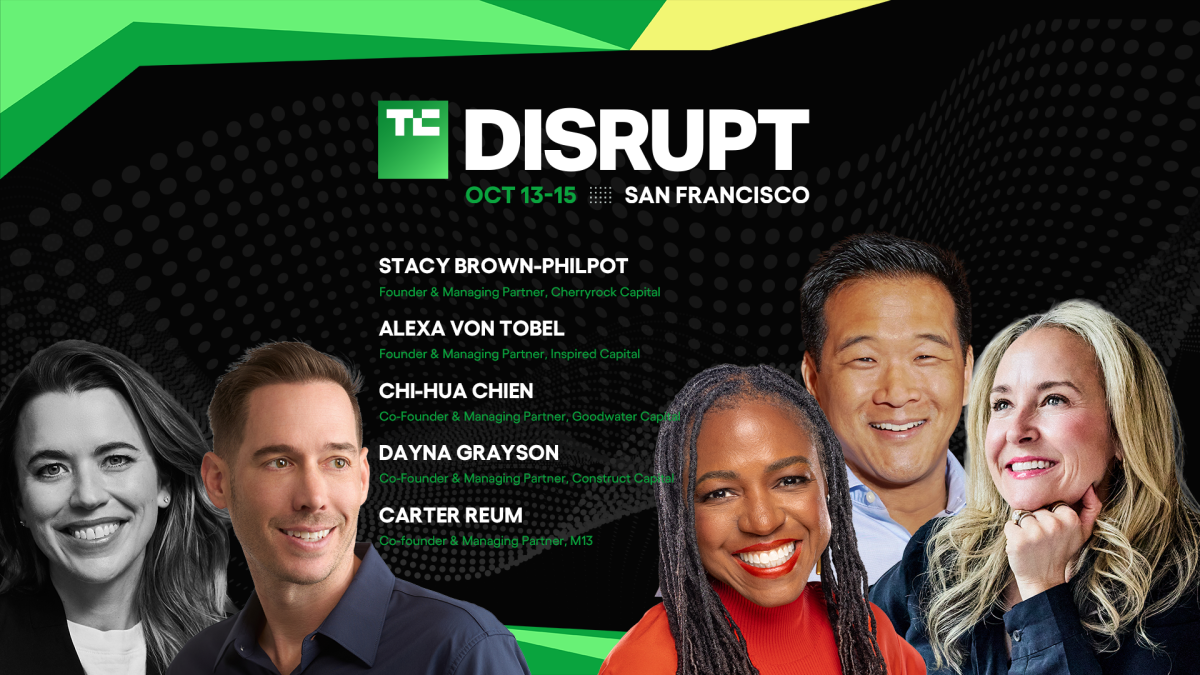
For our Startup Battlefield finalist judges, we set a particularly high bar: Each has founded or co-founded the investment firm they now lead. Collectively, they bring decades of experience backing ambitious founders, building and scaling companies, and making the big bets that can define a venture firm. They know what separates a great pitch from a potentially great company — and they’ll be the five people deciding who becomes this year’s Startup Battlefield champion.

And the conversation won’t end with the final pitch. Later that afternoon, all five judges will reunite on the Builders Stage for a live AMA, where the audience can ask them anything — from what stood out in the competition and what they look for in founders to fundraising, company building, and where they’re looking to invest next.
Grab your pass now and save up to $100 and get a second pass at 50% off. Or bring a group of four or more, saving up to 30%.
Meet the five investors who will decide this year’s Startup Battlefield winner

Stacy Brown-Philpot, Founder and Managing Partner, Cherryrock Capital
Stacy Brown-Philpot is the founder and managing partner of Cherryrock Capital, a venture fund focused on Series A and Series B software companies built by Black and Latinx founders. Her portfolio includes Coactive AI, a multimodal AI platform for media and entertainment, and Vitable Health, which provides primary care plans for hourly workers. Brown-Philpot previously served as CEO of TaskRabbit, which was acquired by IKEA, and spent more than a decade in senior roles at Google. She holds an MBA from Stanford University.
Chi-Hua Chien, Co-Founder and Managing Partner, Goodwater Capital
Chi-Hua Chien is a co-founder and managing partner of Goodwater Capital, where he invests exclusively in consumer technology — including mobile, fintech, e-commerce, digital health, and consumer AI — across the United States and Asia. With more than 17 unicorns backed across his career, his portfolio includes Spotify, Chime, Monzo, TikTok/Musical.ly, Coupang, Toss, and Udemy. Before co-founding Goodwater, Chien was a general partner at Kleiner Perkins and a principal at Accel.
Dayna Grayson, Co-Founder and General Partner, Construct Capital
Dayna Grayson is a co-founder and general partner at Construct Capital, a Washington, D.C.-based early-stage fund focused on technology for foundational American industries, including manufacturing, logistics, transportation, supply chain, and defense. Her portfolio includes Veho, Hadrian, Copia Automation, Arkestro, and Verve Motion. Before co-founding Construct, Grayson was a partner at NEA, where she led early investments, including Desktop Metal, which went public on the NYSE. She holds a degree in systems engineering from the University of Virginia and an MBA from Harvard Business School.

Carter Reum, Co-Founder and Managing Partner, M13
Carter Reum is a co-founder and managing partner of M13, a consumer technology venture firm with $1.9 billion under management that invests in seed to Series B companies shaping the future of work, commerce, health, and money. Across more than 200 investments, M13 has backed companies such as Lyft, Pinterest, Ring, Daily Harvest, and Tonal — with 15 unicorns in the portfolio. Before launching M13, Reum co-founded VEEV Spirit, one of the fastest-growing independent spirits brands in the country, which was acquired in 2016. He is co-author of the national bestseller “Shortcut Your Startup” and holds a BA from Columbia University.
Alexa on Tobel, Founder and Managing Partner, Inspired Capital
Alexa Von Tobel is the founder and managing partner of Inspired Capital, which she co-founded with former U.S. Secretary of Commerce Penny Pritzker. Her portfolio includes MosaicML, acquired by Databricks, as well as Chief, Finix, and Dandy — with nine unicorns backed across her investing career. Before launching Inspired Capital, Von Tobel founded LearnVest, a financial planning platform acquired by Northwestern Mutual. She is a New York Times bestselling author and a certified financial planner.

One week until Startup Battlefield begins — grab your ticket now
Don’t miss the ultimate pitch competition if you’re currently scaling a startup or have an idea you’re ready to launch. Startup Battlefield is a masterclass in how to pitch and scale a viable startup. VC judges will determine what it takes to scale, and you’ll hear firsthand what VCs look for when backing the next big innovation.
You can only witness this competition on the Disrupt Stage at TechCrunch Disrupt 2026, where 10,000+ founders, investors, operators, and tech enthusiasts gather to see what’s next and hear from 250+ tech leaders who’ve made waves across 200+ sessions spanning six industry stages, roundtables, and breakouts. See what’s next at one of the most anticipated tech conferences of the year.
Grab your ticket now, save up to $100, and get a second pass at 50% off before doors open on October 13. Laid off? Get your $75 Expo+ Pass before they’re gone.

When you purchase through links in our articles, we may earn a small commission. This doesn’t affect our editorial independence.
>
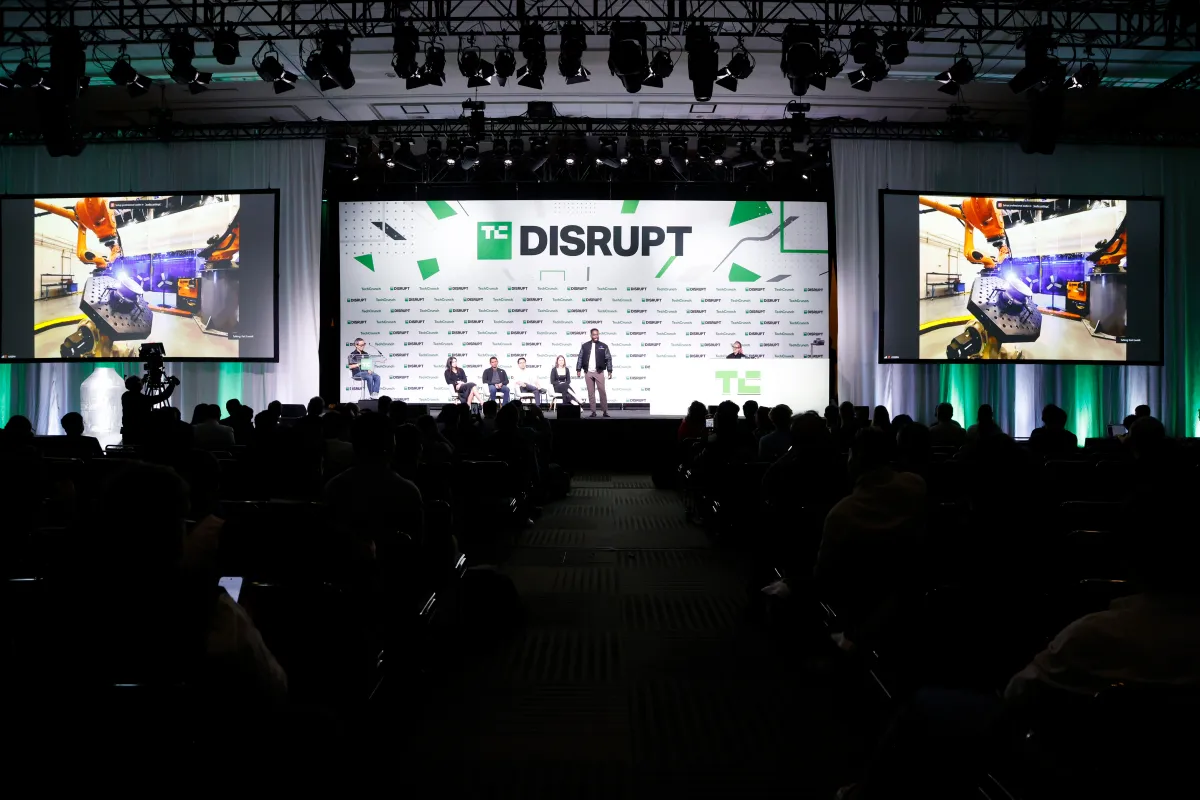
The biggest stage at TechCrunch Disrupt is where the people building the future come to talk about what happens next in the tech ecosystem.
Across three days, from October 13 to 15, at Moscone West in San Francisco, the Disrupt Stage will bring together some of the biggest game-changing founders, CEOs, and investors shaping everything from AI and robotics to transportation, social media, biotech, and venture capital, alongside the next generation of founders competing live in Startup Battlefield 200.
Don’t miss a single moment of these conversations shaping the future of the tech ecosystem. Get a front-row seat by registering for your pass here. Bring your co-founder, partner, colleague, or peer and save 50% on their second pass. Have more people who should be there? Save even more with bundle passes.

Meet the entire Disrupt Stage lineup
Rivian CEO RJ Scaringe will unpack what it takes to build the seemingly impossible: turning an ambitious idea into a company capable of designing, manufacturing, and scaling complex physical products.
Cerebras CEO Andrew Feldman will tackle one of the biggest questions hanging over the AI boom: Can AI keep scaling? As models demand ever more compute, energy, and capital, Feldman will explore where the current trajectory leads and what could break it.
Science Corporation founder Max Hodak looks beyond screens at a future in which technology increasingly interacts directly with the human body, while Flock Safety CEO Garrett Langley joins us for a candid conversation about AI, surveillance, and the future of public safety.

And in a rare appearance, all five partners of Benchmark — Jack Altman, Peter Fenton, Chetan Puttagunta, Everett Randle, and Eric Vishria — will take the stage together, sharing what one of Silicon Valley’s most closely watched venture firms sees coming next.
Ricursive Intelligence co-founders Anna Goldie and Azalia Mirhoseini will take us inside an even more radical possibility: AI systems that can design the hardware they run on, potentially collapsing the traditional divide between software and silicon.
On Thursday, Amazon’s Panos Panay asks what comes after the smartphone. And he’ll bring some new tech with him. Bluesky CEO Toni Schneider and COO Rose Wang will explore whether social media can start over, while Replit CEO Amjad Masad tackles what happens to software, and the people who build it, when AI makes creating software accessible to almost anyone.
Finally, Hollywood star, entrepreneur, and investor Mark Wahlberg takes the Disrupt Stage alongside Keebeck’s Bruce K. Lee to reveal how one of the world’s most recognizable celebrities is turning decades of influence, relationships, and business-building into his next act: becoming a serious investor.
Sit front and center at the Disrupt Stage to hear directly from the leaders shaping tech. Register now and get a second pass at 50% off.
And then there’s Startup Battlefield
Throughout Disrupt, founders will compete live across space and physical AI, energy and manufacturing, health tech and life sciences, and enterprise and security — facing questions from some of the world’s leading investors as they fight for a place in the Startup Battlefield final.

Before this year’s finalists take the stage, Cellino co-founder and CEO Nabiha Saklayen, who won Startup Battlefield in 2021, returns to unveil her new product and ask a provocative question: Can you bank your biology?
Then three more Battlefield alumni — Molecule.one’s Piotr Byrski, Nephrogen’s Demetri Maxim, and Glīd’s Kevin Damoa — return to talk candidly about what happens after the pitch: the bets that paid off, the plans that changed, and what they wish they’d known when they were standing where this year’s finalists are now.
Finally, the 2026 finalists take over the Disrupt Stage, and one company walks away as the next Startup Battlefield winner, taking home $100,000 in equity-free funding and the coveted Disrupt cup.
Grab your pass and hear directly from today’s tech leaders at Disrupt
The Disrupt Stage isn’t only about hearing from the people who built today’s defining companies. It’s where you’ll meet and hear from some of the tech leaders building the next ones.
TechCrunch Disrupt 2026 is where 10,000+ founders, VCs, operators, and tech enthusiasts from around the globe come together to gain valuable insights, make impactful connections, and get a first look at next-gen breakthroughs shaping the tech industry. Explore 200+ sessions led by 250+ tech leaders across six industry stages, plus roundtables and breakouts. Meet 300+ exhibiting startups and get hands-on with their latest products. This is where big ideas take shape and deals get sparked.
Don’t miss a moment. Register for your pass and save up to $100. Bring someone with you and save 50% on their pass. If you’ve been affected by a layoff, you can get an Expo+ Pass for just $75. Don’t wait. Lock in your pass now.

When you purchase through links in our articles, we may earn a small commission. This doesn’t affect our editorial independence.
>


Christos Cassandras has spent more than 40 years studying how computers and machines make decisions. Lately, his work has focused on a problem nearly every driver knows well: sitting at a red light with no cross traffic in sight, wondering why it takes so long for the light to turn green.
Cassandras, an IEEE Life Fellow, is a professor at Boston University, where he headed its systems engineering division, a graduate program he helped create.
Christos Cassandras
Employer
Boston University
Title
Professor
Member grade
Life Fellow
Alma maters
Yale, Stanford, and Harvard
He is the recipient of this year’s IEEE Intelligent Transportation Systems Society Outstanding Research Award for his work on autonomous vehicles and the systems that help them drive—work that could one day get rid of traffic lights altogether.
That idea—proving with mathematical models and intelligent algorithms using cars’ relative speeds, mass, and distance as inputs that self-driving cars will behave safely before they are ever let loose on the streets—has become the foundation of Cassandras’s career and the reason his name keeps coming up in conversations about transportation.
In the 1990s he theorized that a machine such as a car could be understood as two things at once: an object obeying the laws of physics and a computer processing information and making decisions. This led to what we now call cyber physical systems. That framework is still the standard way engineers describe a car’s mechanical behavior.
“Ultimately, the key word is safety,” Cassandras says. “You would not buy a self-driving car unless the manufacturer could guarantee that it’s safe for you.”
Growing up in Greece during a dictatorship
Born in Athens, Cassandras was a teenager during Greece’s military dictatorship, a period he says scarred him and many others but also taught him some hard lessons. His father was a partner in an insulation manufacturing company, and his mother was a homemaker.
His friends pulled Cassandras toward engineering. As a teenager, he ran with a group of classmates who read about philosophy, history, and science. They were especially struck by the 1969 Apollo 11 moon landing and the questions it raised about the technology that made it possible.
That same year also marked the first time a piece of data was sent from one computer to another—an early step toward the creation of the Internet. Several inspiring teachers pushed his curiosity about technology even further.
He was awarded a scholarship to study in the United States, and he enrolled at Yale, where he first studied physics and philosophy before switching to engineering. He earned his bachelor’s degree in engineering and applied science in 1977. At the time, Yale didn’t yet offer separate degrees in fields such as electrical or mechanical engineering.
From there, Cassandras went to Stanford, earning a master’s degree in electrical engineering in 1978. There, he became interested in game theory, the mathematical study of decision-making and strategy.
A mentor pointed him to Harvard, home to a leading game theory researcher at the time. His new mentor, Professor Yu-Chi “Larry” Ho, now an IEEE Life Fellow, advised him to abandon game theory, which Ho considered a scientific dead end at the time. Ho suggested a newer, less-explored area of research, that of emerging dynamic systems in modern technology whose behavior could be understood and managed through occurrences of discrete events.
Cassandras took the advice. He earned a second master’s degree from Harvard the following year and completed his Ph.D. in applied mathematics there in 1982. He and Ho remain friends and colleagues.
Fiat assembly line births of a new kind of engineering
Ask people in intelligent transportation systems circles why Cassandras’s name carries so much weight, and the answer traces back to a theoretical shift he helped pioneer starting in the 1980s. Cassandras recognized that human-made systems—computers, factory machines and, eventually, vehicles—operate on a different kind of logic than the one that governs the natural world.
The physical world runs on time-driven physics, the same math Isaac Newton used centuries ago. But machines built by people, he realized, are better understood as event-driven: They mostly sit still until something happens, like a button click or a part arriving on a conveyor belt.
That insight didn’t come from a textbook. It took shape during Cassandras’s early graduate work, when he was handed a real-world problem. He was assigned to figure out how to manage the buffers—the temporary holding areas for car parts—on an assembly line for Fiat, the Italian carmaker.
Solving that concrete, practical puzzle helped him see how event-driven thinking could describe an entire class of systems that classical physics-based math couldn’t handle well. This came to be known as discrete event systems.
By the early 1990s, that insight had matured into a formal framework: hybrid systems theory, now known as cyber physical systems theory. The idea is that a machine can be understood as an object obeying the laws of physics and as a computer obeying event-driven dynamics.
Building “event-driven” systems
After completing his doctorate, Cassandras wanted to test himself outside of academia. He spent about a year and a half as a systems engineer at Information and Technology for Production (ITP), a small manufacturing-automation startup in the Boston area. The experience convinced him that the “real world” wasn’t so different from academic life, and he returned to research while continuing to consult for the company for roughly a decade. He has kept up the habit of staying connected to industry throughout his career.
In 1984 he joined the University of Massachusetts Amherst as a faculty member in the electrical and computer engineering department. Building on the ideas born out of the Fiat project, he helped pioneer research into event-driven systems.
That was a shift away from the traditional math used to describe the physical world toward systems built around discrete events. The transition, driven by the rise of computers, became the backbone of Cassandras’s research for the next three decades.
In 1997, after years of commuting weekly between Amherst and Boston for his consulting work, he joined Boston University as a tenured full professor in what was then its manufacturing engineering department. As the field evolved in the early 2000s with the rise of the Internet and sensor technology, Cassandras helped establish the university’s systems engineering division. In 2008 he became the research program’s first director, a role he held until stepping down two months ago.
Using math to show that self-driving cars are safe
Cassandras’s recent research has focused on mathematically proving vehicle safety before a car is road-tested. He has developed models built around measurable quantities: a vehicle’s position, speed, and distance to nearby vehicles. That lets connected and automated vehicles cooperate during tricky maneuvers such as changing lanes on a highway in traffic.
He has extended the approach to a bigger idea: eliminating traffic lights. One of his more striking projects involves a chronically congested intersection near his office in Boston, where Commonwealth Avenue meets the Boston University Bridge. Using computer simulations, he and his team modeled what would happen if they removed all the traffic lights, and cars simply coordinated with each other instead. The results, he says, showed improvements not only in how smoothly traffic would flow but also in safety and energy efficiency.
Cassandras acknowledges that widespread adoption is still far off. For now, only a small percentage of vehicles on the road are capable of that kind of communication. But he’s testing similar coordination systems using small robots in his BU lab, working to bring the idea closer to reality and to exploit the intelligence of cooperating autonomous vehicles even when they are only a small fraction of the actual cars on the road.
He says his perspective has evolved in recent years from viewing humans as obstacles to smooth automation toward designing technology that actually works for people.
Through projects with Boston on smart city initiatives, he learned that not everyone can afford or access new technology—a lesson that reshaped how he approaches his research.
“It’s not just about technology,” he says. “It’s really about technology and people.”
A legacy passed on through his students
His influence in the field has been amplified by some of his students. Several of his Ph.D. students have developed safety algorithms at companies including Aptiv and Zoox, both of which build technology for autonomous and connected vehicles. He wrote a book, titled Safe Autonomy with Control Barrier Functions: Theory and Applications, with one of his former students. It lays out the mathematical foundations of autonomous-vehicle safety, with specific applications to intelligent transportation.
A long relationship with IEEE
Cassandras joined IEEE as a student member while he was a graduate student. He was drawn in by the discounted student conference registration fees, he says.
That early, practical decision grew into something bigger: a professional community with which he has stayed connected for more than 40 years.
He has served as president of the IEEE Control Systems Society, his primary professional home within IEEE. He has served on the conference publications committee and is currently involved with IEEE Publishing Ethics.
IEEE’s greatest value to his career, he says, has come through the relationships he has built at its conferences and serving on committees. Connections with colleagues and IEEE leadership have shaped his thinking and opened doors throughout his career, he says.
Looking back on more than four decades of work, Cassandras says the goal has never really been about the technology for its own sake.
“After all,” he says, “we’re doing all this to make society better and facilitate the comfortable lives of all of humanity.”
From Your Site Articles
Related Articles Around the Web
>
$1.2M live bet cashed: How Chiefs, Rams comebacks swung key NFL Week 4 betting results

What Can’t Be Mentioned Review: A Beloved Incest Drama Gets a Sequel
Seahawks escape Chargers with sloppy win, vow to be better with 49ers showdown looming
-

 movies5 months ago
Search For Canadian TV Actor Stewart McLean Now Homicide Investigation
-

 Fashion9 years ago
These ’90s fashion trends are making a comeback in 2017
-
Fashion9 years ago
According to Dior Couture, this taboo fashion accessory is back
-
Fashion9 years ago
Model Jocelyn Chew’s Instagram is the best vacation you’ve ever had
-
Fashion9 years ago
Emily Ratajkowski channels back-to-school style
-
Fashion9 years ago
9 Celebrities who have spoken out about being photoshopped
-

 Anime4 months ago
Rurouni Kenshin: Hokkaido Arc Manga Takes 1-Issue Break – News
-

 Anime3 months ago
HIDIVE to Stream English Dubs for The World Is Dancing, The Forsaken Saintess and Her Foodie Roadtrip in Another World, The Dangers in My Heart: The Movie Anime – News