
Entertainment
David Ellison Bets Skydance’s Film Chiefs Can Make 30 Movies a Year

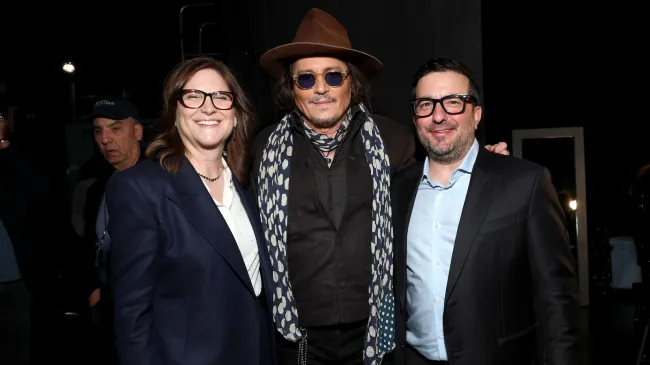
In 2010, Josh Greenstein met Dana Goldberg for the first time. He was a hot-shot marketing executive at Paramount Pictures, she was a new hire at Skydance, a production company looking to take the next leap in its Hollywood ambitions. The pair were sitting down to work out the release strategy for “True Grit,” a Western remake from the Coen brothers that was one of the first films produced under a financing deal between Paramount and Skydance.
It was, Greenstein later recounted, “the first glimmer of what was to come,” one that would see them forge a close working relationship. They’ll need to lean on each other as they get their biggest promotion yet. When Warner Bros. and Paramount formally merge this week, Greenstein and Goldberg will oversee the two film studios and with it an aggressive mandate to release 30 theatrical films each year. Netflix may approach that output, but that volume of moviemaking — and the marketing push that comes with it — is unprecedented in the streaming era.


Having not run a studio at this scale before, neither Goldberg nor Greenstein is an obvious choice for the gig, and they haven’t yet developed the name recognition among the general public that even Michael De Luca and Pamela Abdy, who were jettisoned as Warner Bros. film chiefs last week, earned after a banner 2025. But they have more than a few admirers who believe they can achieve this lofty goal at a time when their rivals are struggling to make a dozen movies for cinema annually.
One former studio chief who has known and worked with Greenstein and Goldberg for decades told IndieWire that to reach the level — and quality — of films they need to hit, the two have to build a consistent process of development and trust in talented filmmakers to make something good. They “have to have conviction” to continually say yes, and the executive was adamant that even in their short time as Paramount’s film chiefs, “I’ve seen that.”
“I can’t tell you the number of conversations I hear about how hard it is to make money as opposed to ‘this is so cool, how do we do it,’” the executive said. “They’re going to get more out of the creative people because they are enthusiasts, not pencil pushers.”
Goldberg has been at Skydance for 16 years, helping the company move from bankrolling movies to producing its own films and shows. Greenstein, who left Paramount in 2014 to oversee marketing and distribution for Sony, is known for his innovative campaigns for everything from the Tom Holland “Spider-Man” movies to “Once Upon a Time…in Hollywood” and “Sausage Party.” However, the two executives, who are said to have a close personal bond, hadn’t run a major studio before they were tapped by Ellison nor do they have the auteur relationships De Luca and Abdy did.
So what gives Skydance CEO David Ellison, the owner of the combined Warner Bros. and Paramount, confidence in his team? It appears to be a combination of loyalty and personal comfort.
“They have a strong reputation, and the key is they work well with David Ellison,” said Jason Squire, host of The Movie Business Podcast and Professor Emeritus at USC School of Cinematic Arts. “Ellison made a strong move by expanding the portfolio of his tried and true executives.”
Greenstein and Ellison were friends for over a decade, having bonded over their love of racing and aviation (Greenstein has a driving simulator in his office). And Ellison credits Goldberg with helping Skydance scale up its operations. She’s been a key lieutenant in his rise to mogul-dom.
Both also have key skills. Greenstein isn’t just known for his snappy marketing hooks and for embracing digital platforms before they became ubiquitous. He’s also credited with running cost-efficient promotional blitzes. At Paramount, for instance, Greenstein has dialed back spending when it has appeared that a movie was headed for a rough opening instead of throwing more money after bad. Goldberg may not have Abdy and De Luca’s Rolodex, but she does boast strong creative relationships of her own, having worked with the likes of Tom Cruise, Shawn Levy, and John Krasinski. She’s known as a producer’s producer, with a keen story sense.

The pair also has impressed Ellison with their aggressive approach at Paramount, where they increased the output in their first year from under 12 films to 18. They’ve also managed to land some splashy projects, such as “High Side,” an action thriller reuniting Timothée Chalamet with his “A Complete Unknown” director James Mangold; a film adaptation of “Call of Duty” for which Paramount royalty Taylor Sheridan is involved; and a new “Longlegs” film.
One focus for the duo has been reviving or reimagining some of Paramount’s franchises. To that end, they’ve brought in Danny McBride to oversee a new G.I. Joe film that will star Bradley Cooper, backed a live-action “Teenage Mutant Ninja Turtles” movie, brought back James Wan and Jason Blum for a new “Paranormal Activity,” and enlisted Cruise and Anne Hathaway for a “Days of Thunder” sequel. They also convinced the producers of CBS’s “Survivor” to let them develop an animated feature film based on a series (CBS, like Paramount, is owned by Skydance).
“They are incredibly smart, incredibly warm, love artists, and that already is huge, and they have a mission for those 30 movies: some are going to be IP, some are going to be original, most will be commercial, some will be geared more toward auteurs, but it allows for all kinds of movies,” a producer with close ties to Goldberg told IndieWire. “It’s a balance for sure that they will have to reach, but they are very smart people, and I do believe in the intention of really getting theatrical back on its feet.”
The immediate challenge though is that with the exit of De Luca and Abdy, a massive slate has been dropped in Goldberg and Greenstein’s laps, and they have to figure out how to merge two different studio cultures and maintain each studio’s distinct identity. Under De Luca and Abdy, Warner Bros. gave out big budgets to the likes of Paul Thomas Anderson (“One Battle After Another”), Ryan Coogler (“Sinners”), Maggie Gyllenhaal (“The Bride!”), and Alejandro González Iñárritu (“Digger’). The first two were awards darlings and, in the case of “Sinners,” a massive hit. The latter two were painful flops that cost them their jobs.
Looking ahead to 2027 Greenstein and Goldberg now have to shepherd expensive original films from M. Night Shyamalan, Sam Esmail, J.J. Abrams, and Nancy Meyers, not to mention new movies in the “Ocean’s” and “Lord of the Rings” franchises. They’re not exactly in line with Skydance streaming plays like “The Old Guard,” “The Adam Project,” and “The Family Plan” on which Goldberg made her name. Moreover, many of those Skydance films were frostily received by critics and some wonder if they would have survived a traditional theatrical rollout.
“It’s not that [Goldberg and Greenstein] don’t have qualifications, it’s just a massive job that’s in front of them,” said Joe Pichirallo, a professor at NYU and former studio executive at Searchlight. “You have to delegate and have people working for you that share your vision and also be able to manage productions and attract talent and get things going. The size and the scope is much bigger than two people. They probably didn’t feel comfortable having De Luca and Abdy, but when you yank them out of there, all these films will fall in their laps. They have to start developing relationships with talent and producers and selling themselves to the agent and management world. It will require a lot of hands on deck beyond just the two of them.”
While Greenstein and Goldberg probably won’t be the default choice for art house filmmakers looking to score a $100-million budget, they have landed overall deals with the likes of “Wicked’s” Jon M. Chu, musician Travis Scott, and “Stranger Things” creators Matt and Ross Duffer. They’ve also shown a talent for fiscal discipline. Paramount will have one of it most profitable years in more than 15 years, but that’s come more from trimming costs than fielding blockbusters. Only two movies Paramount released so far this year, “Scream 7” and “Scary Movie,” have surpassed $100 million at the domestic box office.

The other difficulty is that unlike in the case of Disney absorbing Fox, Goldberg and Greenstein are bound by consent decrees agreed to with the state AGs to settle an antitrust lawsuit. They don’t have the luxury of consolidating and merely making a larger version of Paramount as it is today. As Pichirallo explains, they have to maintain and service two distinct slates, and they have to live up in quality and box office results to executives like Tom Rothman and Donna Langley who have done this forever. Oh, and they have to do it while making twice as many films as a Rothman or Langley.
The good news is that the former studio executive believes Goldberg and Greenstein have already developed a buttoned-down process with clear messaging about their mandates, and the executive adds that not only is the process they’ve developed in a year at Paramount “more functional” than some of Paramount’s prior regimes, it’s “more transparent.”
“What I have found already…the process has been driven by the creative, not the finance,” the executive said. “That’s not to say they haven’t been very clear [on financing], but once they set that out, they’re presuming you’ve heard and they’re only focused on the quality.”
For Warner Bros. employees, there’s at least some relief that the M&A purgatory the company has been trapped in for nearly a year will soon be over, even if many are bracing for deep staffing cuts as a result of the $80 billion in debt Skydance has to pay down.
“Everybody here thinks they’re going to lose their jobs,” said an insider. “But that’s how we’ve operated for years.”
Indeed, Goldberg and Greenstein inherit a demoralized team. Warner Bros. has been involved in three tumultuous mergers in less than a decade. It was sold to AT&T in 2018, then offloaded to Discovery in 2022, and now is about to welcome its latest corporate overlords. The staffers who have managed to hang on through each transaction feel like they’ve been competing on an endless season of “Survivor.” And each new merger has meant that projects are abandoned or don’t receive the kind of rigorous development they would under stable leadership. De Luca and Abdy teased an ambitious slate at this year’s CinemaCon of dozens of films planned out through 2028 and beyond. Some of them won’t survive the transition.
But the former studio chief believes Greenstein, Goldberg, and Ellison have already overseen a cultural shift that positions them for success.
“You feel the difference in what they’ve done to make it such a vibrant culture,” the executive said.
Now, they just need a few blockbusters.
>

The biggest media merger in history is now complete. Paramount and Warner Bros. Discovery are combined in a deal that could transform Hollywood. Paramount closed its transaction to acquire WBD on October 6 as part of a $111 billion pact. To get to this point, the company had to clear several regulatory hurdles dating back to February when the deal was first reached, as well as form alliances with the Trump administration that concerned parts of the creative community.
The new parent company will now be called Skydance. David Ellison, who founded Skydance in 2006 primarily to finance films before starting off on his path toward moguldom, will be the combined company’s chairman. Former Mattel CEO Ynon Kreiz will be co-CEO, and will be tasked with cutting costs as the company looks to pay down roughly $80 billion in debt.

“Today is a historic day, not just for Skydance but for our entire industry,” Ellison said. “From the start, our ambition was to bring these two storied studios together and create a stronger competitor, with the talent, resources, and reach to tell great stories in every genre, on every platform, for audiences everywhere. Now that ambition is a reality.”
“Our focus now turns to the future: building a company that empowers creatives, entertains audiences and rewards shareholders,” he added. “We couldn’t be more excited to get to work.”
It’s a defining moment for Ellison, the son of Oracle founder Larry Ellison, one that required him to outmaneuver Netflix, which originally had an agreement to buy WBD. Despite his wealth and savvy, there are questions about whether or not Ellison can make a merger of the scale financially viable at a time when the cable business is atrophying, the theatrical film business remains volatile, and the competition for streaming subscribers has never been more fierce. Before buying Paramount and WBD, Skydance produced hits such as “Top Gun: Maverick” and several “Mission: Impossible” films, but the company typically operated at a loss, according to SEC filings.
Ellison will have help as he tries to make his takeover pay off. Skydance announced its full leadership team on Monday. Former HBO and HBO Max chief Casey Bloys will be leading the streaming division of the company following the exit of Cindy Holland. George Cheeks is leading Skydance TV, which encompasses Warner Bros. Television, CBS Studios, and Paramount Television Studios. Dana Goldberg and Josh Greenstein, who currently lead Paramount Pictures, are the Co-Chairs of the Skydance Motion Picture Group, with Warner Bros. Pictures film chiefs Michael De Luca and Pamela Abdy now out. James Gunn and Peter Safran are still leading DC Studios. And Mark Thompson is continuing to lead CNN under Skydance while Bari Weiss will solely lead CBS News and not also have oversight of CNN.
The deal finally came together after overcoming and settling an antitrust lawsuit brought by a coalition of 12 states, led by California Attorney General Rob Bonta. The lawsuit argued that a combined Paramount and Warner Bros. would consolidate too many of the top theatrical releases and too many cable companies all under one roof, thus harming consumers and other companies in their ability to negotiate terms. And while the deal faced enormous pressure from a grassroots coalition of organizations in Hollywood hoping to block the merger altogether, Paramount and Ellison ultimately received the support of stars like Tom Cruise, auteurs like James Cameron, and the leaders of all the major theater chains. But there are concerns that the sale of Warner Bros. will result in rounds of layoffs that could lead to thousands of job losses. Given the history of past media mergers, there’s good reason to be fearful.
The settlement agreement binds a combined Paramount to meet some terms over the course of the first five years of the transaction. Though it wasn’t required to divest anything, it must pay penalties if it fails to release 30 to 32 movies per year as it has promised and must ultimately divest its ownership of film studio Miramax. It also needs to commit to invest $300 million annually in production in the United States, it must sustain its current levels of theatrical and cable terms, and it must even set aside a small amount of funds, $5 million annually, to the acquisition of indie films, among other terms.
The combination of Paramount and Warner Bros. Discovery gives Skydance two legacy film studios, two major streaming services, a plethora of cable channels and sports rights, a broadcast network in CBS, and two news outlets in CNN and CBS News. But Paramount-WBD still pales in comparison to Netflix’s subscribers and in viewing hours spent on YouTube, and the hope is that the new scale will help it compete with the tech giants who have made their way into the media sphere.
Ellison says he has identified $6 billion-plus in synergies over the next three years across the companies. Skydance said merging the media conglomerates will give it nearly $70 billion in revenue. Under the deal, WBD shareholders receive an amount in cash of just over $31 a share. The company’s stock will stop trading on NASDAQ on Tuesday. At the same time, Skydance Class B shares will begin trading on the New York Stock Exchange under the new ticker symbol “SKYD.”
>
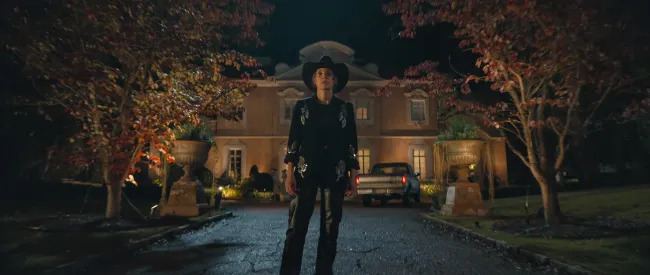
Jessica Chastain is no stranger to the world of country crooning. Between “The Eyes of Tammy Faye” and “George & Tammy,” the actress seems pretty comfy kicking back in cowboy boots and tense situations, all set to some dulcet tones of the two-step. For her latest role, Shana Feste‘s “Heartland,” Chastain again returns to country roads, but this time, it comes with some very dark undertones.
In Feste’s latest, the “Country Strong” and “Run Sweetheart Run” filmmaker combines those exact same sensibilities for mystery thriller set in the world of country music-making. In the film, Chastain plays former icon Misty Jones, who is forced back into the Nashville world she very much left behind, all thanks to the terrible news that her niece (also a rising singer) has gone missing (and she’s played by actual rising singer Carter Faith). Chastain will contribute her own vocals to the film’s soundtrack.

Per the film’s official logline, “Former country legend, Misty Jones, comes out of seclusion to investigate the disappearance of her missing niece, a rising country musician, and must grapple with her own past and Nashville’s seedy underbelly. Her search uncovers a murky side of Nashville where no one, including Misty, is who they seem.” The film also stars Feste’s “Country Strong” star Garrett Hedlund, plus Ross Lynch, Paul Sparks, Jennifer Nettles, John Hawkes, Hill Harper, Norbert Leo Butz, Wynn Everett, Isabelle Kusman, and David Rysdahl.
The film’s soundtrack features original performances from the film’s cast, including Chastain, three-time Grammy winner Nettles, Lynch, and CMA nominee Faith, alongside Margo Price, Carly Pearce, Eddy Dunlap, Channing Wilson, and Dave “Fergie” Ferguson.
The film will start streaming on Netflix on Friday, November 13, the same day the soundtrack arrives on all streaming services. Take a look (and a listen!) at the film’s first trailer below.
>
Jessica Chastain is no stranger to the world of country crooning. Between “The Eyes of Tammy Faye” and “George & Tammy,” the actress seems pretty comfy kicking back in cowboy boots and tense situations, all set to some dulcet tones of the two-step. For her latest role, Shana Feste‘s “Heartland,” Chastain again returns to country roads, but this time, it comes with some very dark undertones.
In Feste’s latest, the “Country Strong” and “Run Sweetheart Run” filmmaker combines those exact same sensibilities for mystery thriller set in the world of country music-making. In the film, Chastain plays former icon Misty Jones, who is forced back into the Nashville world she very much left behind, all thanks to the terrible news that her niece (also a rising singer) has gone missing (and she’s played by actual rising singer Carter Faith). Chastain will contribute her own vocals to the film’s soundtrack.
Per the film’s official logline, “Former country legend, Misty Jones, comes out of seclusion to investigate the disappearance of her missing niece, a rising country musician, and must grapple with her own past and Nashville’s seedy underbelly. Her search uncovers a murky side of Nashville where no one, including Misty, is who they seem.” The film also stars Feste’s “Country Strong” star Garrett Hedlund, plus Ross Lynch, Paul Sparks, Jennifer Nettles, John Hawkes, Hill Harper, Norbert Leo Butz, Wynn Everett, Isabelle Kusman, and David Rysdahl.
The film’s soundtrack features original performances from the film’s cast, including Chastain, three-time Grammy winner Nettles, Lynch, and CMA nominee Faith, alongside Margo Price, Carly Pearce, Eddy Dunlap, Channing Wilson, and Dave “Fergie” Ferguson.
The film will start streaming on Netflix on Friday, November 13, the same day the soundtrack arrives on all streaming services. Take a look (and a listen!) at the film’s first trailer below.
>

Our Blood Oath’s Kazu Kakazu Launches Yosuga Tagurite Manga Series – News
Why did QB Case Keenum get credited with Bears' win over Jets instead of Tyson Bagent?

China Open: Novak Djokovic claims 102nd career title, Carlos Alcaraz wins Japan trophy
-

 movies5 months ago
Search For Canadian TV Actor Stewart McLean Now Homicide Investigation
-

 Fashion9 years ago
These ’90s fashion trends are making a comeback in 2017
-
Fashion9 years ago
According to Dior Couture, this taboo fashion accessory is back
-
Fashion9 years ago
Model Jocelyn Chew’s Instagram is the best vacation you’ve ever had
-
Fashion9 years ago
Emily Ratajkowski channels back-to-school style
-
Fashion9 years ago
9 Celebrities who have spoken out about being photoshopped
-

 Anime4 months ago
Rurouni Kenshin: Hokkaido Arc Manga Takes 1-Issue Break – News
-

 Anime3 months ago
HIDIVE to Stream English Dubs for The World Is Dancing, The Forsaken Saintess and Her Foodie Roadtrip in Another World, The Dangers in My Heart: The Movie Anime – News