
BBC iPlayer
BBC


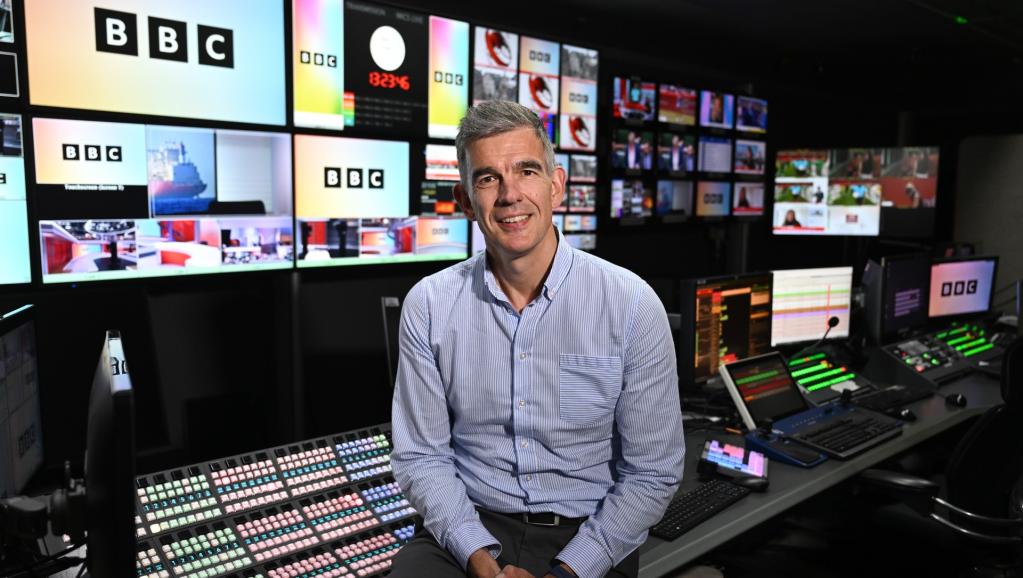
“Move fast and break things.” So goes Mark Zuckerberg’s famous credo for building Facebook. The BBC’s new boss has embraced his own version of this mantra as he seeks to reinvent the British national broadcaster over the coming years.
In a speech to staff from the BBC Radio Theatre, where some anticipated he would announce channel closures, Matt Brittin instead made his most significant remarks yet about his vision for the corporation. The director-general, who spent 20 years at Google and started at the BBC in May, told employees that he wants the broadcaster to “be more Elvis,” by which he meant: “A little less conversation, a little more action.”
Attempting to lift staff from the gloom of corrosive job-cut announcements, Brittin spoke about the BBC radically rethinking how it meets audience needs online by decentralizing decision-making power, embracing a sense that digital — not traditional broadcast — “can be flagship,” building and testing new online products quickly, and recognizing that it’s ok to “experiment and fail.”
In other words, Brittin outlined a Silicon Valley-isation of the BBC.
“We have to recommit to our mission, our public service mission, pursuing truth, bringing people together, boosting homegrown storytelling,” he told staff, per an audio recording obtained by Deadline. “We have to recommit to that mission. We have to reinvent how we do it. [We] have to understand and protect the magic of the BBC and change everything else, in order to serve those audiences.”
He continued: “I love the BBC. It’s full of words and discussion and slide decks and framing and reframing and reconstituting, and going around the houses, and actually, I’d like us to celebrate activity less, and outcomes more. And getting faster to outcomes that make a difference to an audience.
“Not [just], ‘We did this great marketing campaign,’ but actually, ‘It drove up watch time usage and active accounts,’ right? Or, ‘We did this piece of journalism, and it changed the law, and it landed with these audiences.’”
“iPlayer And Chill”
Brittin illustrated this by introducing BBC employees to Manon Dave, the head of future world design in the corporation’s Media Tech unit. Dave told colleagues that he spent time on holiday redesigning iPlayer without any internal limitations. He wants the streaming service to become a place where audience members say, “I want to iPlayer and chill,” though it is not clear if this means retaining the sexual connotations of the original “Netflix and chill” internet slang.
BBC iPlayer
BBC
Dave’s vision for iPlayer included an AI agent called Iggy, which helps recommend and summarize iPlayer content, and can speak to audiences in different languages. Other ideas Dave presented to staff included a personalized “hero” picture at the top of iPlayer’s home screen, which picks out algorithm-led content recommendations based on past viewing habits. He also demonstrated “Vegas mode,” allowing viewers to “roll the dice” and see what iPlayer selects for them.
Brittin said Dave — who at one point during his presentation referred to the director-general as “my big homie” — had captured a “pioneering mindset” that he wants to see more of at the BBC. Brittin added that the BBC plans to begin testing some of Dave’s ideas with audiences “in the coming weeks.”
Some BBC employees told Deadline that they were energized by Brittin’s remarks, while others felt that the corporation’s heavily scrutinized public service remit limits risk-taking. He was challenged on this during the town hall.
“One of the challenges in this organization is managing risk, and I think we are naturally quite a risk-averse organization,” a staff member said. “People are understandably cautious about risk, particularly reputational risk, and particularly because when it goes wrong, it can be quite painful and quite expensive from a resource point of view, if not from a literal cost point of view.”
Brittin responded: “I don’t believe in fail fast. I think it’s a crazy idea. I think get better fast is a better idea… I do understand the culture and how we think about [that]. We shouldn’t be betting the farm. We don’t bet the BBC on one big risk. Ideally, we need to sort of understand how to do that within a framework. It will take time to build that muscle.”
Some insiders were not convinced. “Google breaks things and can afford to pay the fines or consequences later,” one person said. “He’s trying to implement Google culture in an organization that has nowhere near as many resources whilst simultaneously cutting existing resources. He mentioned getting smaller several times. Google is only getting bigger.”
Brittin’s view is that the BBC has no choice but to change. He did not announce TV channel closures, as was expected this week, but again hinted at a future in which the corporation has to pull away from analogue distribution methods.
“We have to make decisions about when the on-demand consumption of our content starts to go so far ahead of the broadcast consumption that we make choices about. When do we move fully to on-demand?” he said. “And that can be painful for audiences, but it’s our duty to make those choices in service of that value for money for the licensed speaker. And our apps have to work much harder too to personalize, to localize, to aid discovery.”
>
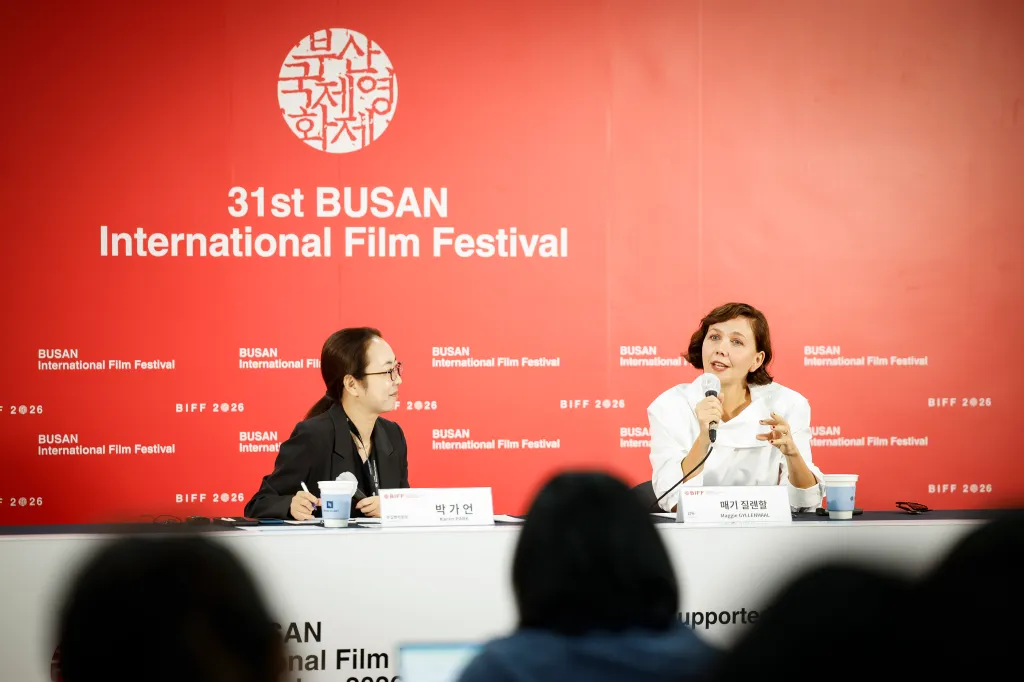
Following her Venice jury chief duty, Maggie Gyllenhaal is attending Busan film festival for the first time with her short film, Flesh Impact, which is showing in Special Screenings.
Starring Ellen Burstyn and Dakota Johnson, the film was commissioned by Korean luxury car brand Genesis to celebrate Marilyn Monroe’s centennial in June this year and had its world premiere in Venice. Burstyn plays an older version of the iconic star, auditioning at a small theatre in New York City, while Johnson plays her as a young woman.
Speaking to press on the first day of the festival, Gyllenhaal said she approached the two actresses despite the fact that neither of them looked like Monroe because she thought they’d appreciate being asked to do something different.
“Having been an actress myself for so many years, I was always fascinated when someone reaches out across the world and offers me something I haven’t done before. That doesn’t happen a lot. You do something then everyone offers you sexy secretaries for the next ten years,” Gyllenhaal said.
“But when someone sees you in a new way, and that new way happens for some kind of magical reason, to match up with what you’re curious about, or is on the edge of what you know about yourself, so that’s what I’m trying to do with actors.”
She added that working with Burstyn was awe-inspiring, as she was watching an actress with 50 years more experience than she had: “I mean, it was like a really expert level; expertise that comes with precision, but also includes something wild beyond what we can imagine, especially when we’re talking about an actress in her ‘90s.”
As for Johnson, who she’d also worked with in The Lost Daughter, Gyllenhaal said she kept pushing her out of mind while writing the project because “she doesn’t look anything like Marilyn” but in the end realised, “who cares?”
“The fact is Marilyn Monroe has been made into such an icon and such a kind of pretend fantasy person,” Gyllenhaal said. “But then I realized what she looks like is much less important than what’s happening inside her heart and her mind. And I wondered if Dakota might relate to some of the things that we touch on in the movie.”
Although she said she had talked enough about gender balance in Venice, where the lack of female directors in competition became a huge issue, Gyllenhaal spoke again on the topic in Busan when pressed by local journalists. Local press also noted that four of the 13 films in BIFF’s competition section this year are directed by women, while women make up four of the seven jury members.
“I think that when women are given an opportunity to express themselves freely, they make very different work,” Gyllenhaal said. “We make different films because we have a very different experience of being alive in this world.”
Noting that she’d seen exceptional films in Venice by male directors – and that some female directors choose to emulate movies made by men, which she couldn’t criticize – she added that there are other women who use it as an opportunity to speak in a new cinematic language.
“Movies made by men are a huge part of the reason why I’m here, but they’re from a male point of view and often require a bit of translation,” Gyllenhaal said. “You think, okay, this guy is interesting, I don’t have the same experience, but I know how to translate because I’ve had to learn how to translate in order to watch all these movies, because there’s really none that were about me..
“And so, if I present a film that is in a different language because I speak a different language, it’s an opportunity for people to make the effort and have the pleasure of learning that language.”
Gyllenhaal also teased that she has two ideas that she’s working on, but they’re not at script stage yet, and that she doesn’t usually know what a project is about until she starts “digging into it”.
Bus Stop (1956), starring Monroe and directed by Joshua Logan, is also playing in Special Screenings in Busan. The festival opened on October 6 and runs until October 15.
>
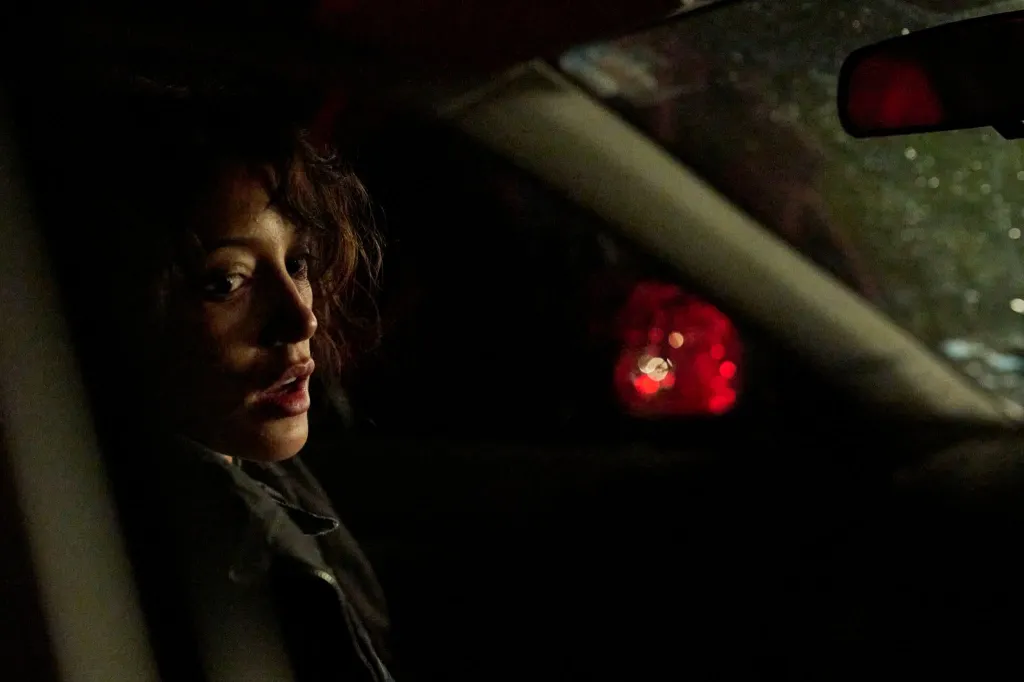
EXCLUSIVE: The Coven has picked up worldwide rights to Michael Schwarz’s slasher directorial debut The Only One ahead of its premiere at the Brooklyn Horror Film Festival this month.
Described as an ode to the slashers of the 80’s and 90’s with strong leading women, the film stars Mel Jarnson (Street Fighter) as protagonist Zoe who has returned to her Australian hometown after an unsuccessful attempt to become an actress in L.A..
Her homecoming takes a deadly turn when a mysterious “prince charming” starts murdering all her exes. Teaming up with high school best friend Piper (Saphira Moran), the two race to unmask the twisted killer, in a mission that will see Zoe face all the hearts she broke before prince charming is the only one left alive to claim her heart.
“The Only One taps into the growing appetite for relationship-driven horror films,” says Kendall Anlian of The Coven. “It’s fresh, smart, and wildly fun, Schwarz directs his first feature like a horror veteran, while Jarnson is an absolute force of charisma and badass energy, we’re lucky to be on board.”
The Only One is written by Marek Polgar and Martyn Pedler and directed by producer-turned-filmmaker Michael Schwarz. It is produced by John Schwarz with Australian-based production company Three777 Films as executive producers.
“The Coven are the newest additions to The Only One family, but it feels like they’ve been with us for the whole journey,” says Schwarz. “I couldn’t be more excited to have them introducing it to the market, and allowing this film to find its true audience.”
Female-owned The Coven, co-founded and led by Priscilla Ross Smith and Anlian, is no stranger to the slasher genre.
The Lyon and L.A.-based company handled worldwide sales of on Terrifier 2 and then produced and sold Terrifier 3, and more recently boarded Sunnyside, a dark cannibalism horror currently shooting in France.
The Brooklyn Horror Film Festival runs from October 15 to 22.
>
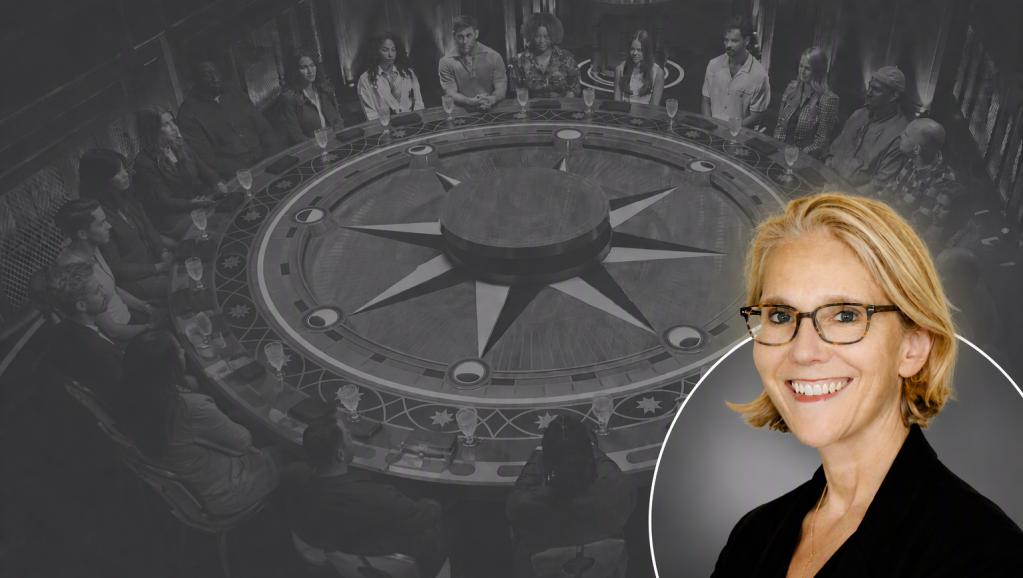
The tectonic plates of the international production world shifted forever on July 9, when the merger between indie giants Banijay Entertainment and All3Media closed. The result created an entity larger than the BBC with annual pro forma revenues of €7.4B ($8.5B) and a catalog including MasterChef, The Traitors, Peaky Blinders, Midsomer Murders and Big Brother.
Banijay boss Marco Bassetti was named CEO of the new-look company, which will be given its true unveiling at a swanky drinks bash on the eve of MIPCOM.
For market watchers, a standout element of the C-suite org chart was All3Media’s long-serving CEO, Jane Turton, who became Deputy CEO of the combined entity. After spending 11 years crafting All3 into a major revenue-generating business, one might assume she would have decided to exit the fray. Given she was widely mentioned as a leading candidate for Director General job at the BBC and retains a reputation among peers and former colleagues as a top strategic thinker, the options elsewhere would surely have been plentiful.
So, is Turton content now the dust has settled? “Of course, I wouldn’t have taken it otherwise,” she responds when she sits down with Deadline down in the lobby of an Edinburgh hotel. “Life is about making choices, and I’ve made a positive choice to stay.”
Turton becomes increasingly passionate as she provides context about her mission. She had spent a decade burnishing All3’s reputation as one of TV’s top players, and now wants to oversee its integration into the Banijay fold. She’s hoping to protect jobs where she can – though Deadline has revealed several exits in the distribution team, where duplication is heavy – and she likes the scale of a wealthy business backed by Jeff Zucker’s RedBird IMI and Stéphane Courbit’s Banijay Group that “isn’t just big for big’s sake.”
Turton is also a proponent of change and is up for the challenge. “It is exciting,” she says. “It’s a big adjustment and that’s fine. It won’t do me any harm.”
She’s also been inspired by Banijay’s ability to supercharge formats and produce them in-house, pointing to how Dutch murder mystery reality hit The Traitors might have rolled out internationally as an example. “If All3 had been in Banijay at the time, we’d have had that going out – bang! – across 25 territories in a week on Wednesday. But we were selling it piecemeal.”
Given how fresh this all is, the focus since July has been hitting the year-end target and integrating with management. Around €50 milliom ($57 million) in cost savings are planned. The long-serving All3 international sales chief Louise Pedersen exited in July, along with others such as All3 group COO Sara Geater. Last week, Deadline revealed Rachel Job was in line for an EVP of Content job Banijay Rights, and this was confirmed later in the week.
At MIPCOM, Banijay Rights will be in town with content from the former All3Media International catalog, with Cathy Payne leading the unit. “Cathy is working incredibly hard to get her team in place for MIPCOM,” says Turton. “She’s got a shiny new Banijay Rights team that hopefully can accommodate for people from both sides assembled in the roles in the right places.”
Buyers might find seeing The Traitors sitting next to Survivor branding on the Banijay stand as initially jarring, but they’ll need to adjust fast. Banijay Rights now has a catalog of more than 265,000 hours from a combined business that owns more than 170 production companies. For context, BBC Studios is around the 45,000-hour mark and ITV Studios comes in near 100,000 hours.
Federal future
Back on the production front, Banijay leadership teams have been set in the U.K., the U.S. and Germany. Collectively, the likes of Studio Lambert, Neal Street Productions, Endemol Shine North America, Filmpool, Initial and Two Brothers Pictures are all in the same house.
A key strategic question for the immediate future is how All3’s well-documented “federal” model, where producers remain siloed and independent of each other, can mesh with Banijay’s geographic approach. Turton says people “overstate” the difference and that both companies are led by the same underlying north star: Creative leadership. “Can they develop and pitch, sell and produce the best shows, yes or no?” she says. “That is the only criteria for success.”
>


Search For Canadian TV Actor Stewart McLean Now Homicide Investigation


These ’90s fashion trends are making a comeback in 2017
According to Dior Couture, this taboo fashion accessory is back
Model Jocelyn Chew’s Instagram is the best vacation you’ve ever had
Emily Ratajkowski channels back-to-school style
9 Celebrities who have spoken out about being photoshopped


Rurouni Kenshin: Hokkaido Arc Manga Takes 1-Issue Break – News


HIDIVE to Stream English Dubs for The World Is Dancing, The Forsaken Saintess and Her Foodie Roadtrip in Another World, The Dangers in My Heart: The Movie Anime – News