
California Film Commission


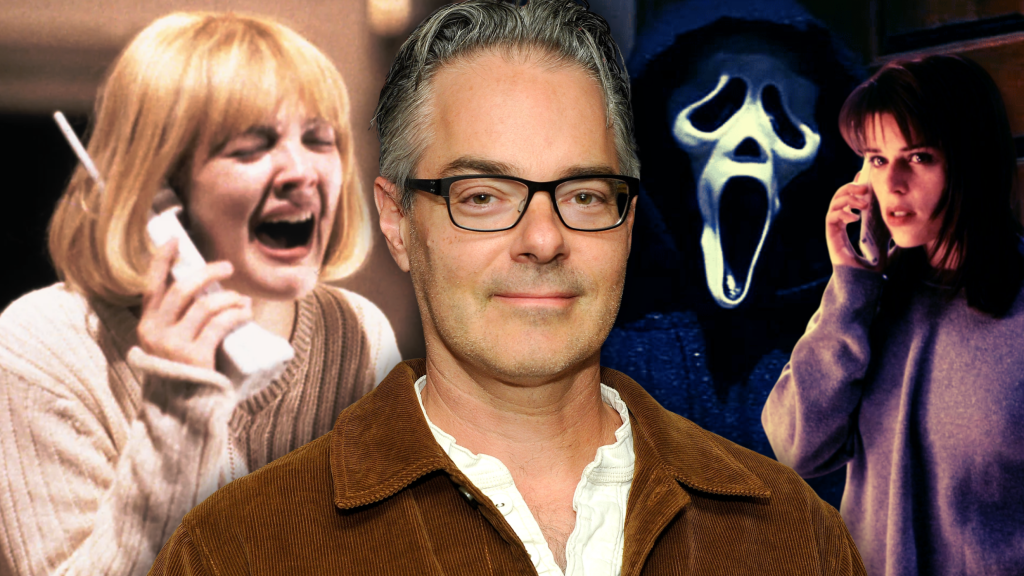
As Gale Weathers would say, it all began with a scream over 911 and ended in a bloodbath that has rocked audiences worldwide since Wes Craven’s iconic slasher flick first hit theaters in December 1996. But just as memorable as Drew Barrymore’s gut-wrenching opening scene was Marco Beltrami’s chilling score, one that heightened the suspense and terror at every turn.
“I had never done a horror movie,” he says. “I had never even seen a horror movie.”
“[Wes Craven] really guided me through the process,” he continues. “I mean, he believed in what I was doing.”
I sat down with Beltrami to discuss Scream’s lasting impact three decades later, his memories of working with the late horror maestro and why he really didn’t want to return for Scream 4. Read our full conversation below.
This interview has been edited for length and clarity.
DEADLINE: We’re here to celebrate the 30th anniversary of the Scream soundtrack, which you scored. Take me back in time a little bit. How did Scream come into your life, and then what did getting that job mean for you at that point in your career?
MARCO BELTRAMI: It was the first movie, first feature film I had done, and so it meant a lot to me. I got the film because I had done a student film, and Wes Craven was working on this really low budget horror movie. And I guess he wasn’t happy with the music he was hearing. He really wanted to find something different. His assistant heard about me through this short film I had done, a student film, and she asked if I had a tape, and I actually sent in a piece of music I had recorded with this singer back when I was in college. I did this kind of voice, manipulated voice, and electronic tape, and it really resonated with Wes. He liked it, and so he asked me to come in and meet him, and I did. He showed me the beginning of the movie and asked me to score the opening scene, which was that scene where Drew Barrymore gets killed. It’s a kind of a long sequence. He gave me like two days to do it, and I sent it in, and I got the job. And I think the thing that was really cool about it was that he really found that the piece of music that I sent him with that voice really resonated with the emotional content of bringing Sidney’s character to life, and that was, I think, what got me the job.
DEADLINE: Talking about Wes Craven, you spoke a little bit about it, but what was he like when you you first met him, when you came on to the job, and if you could elaborate a little bit more of what he was looking from you musically?
MARCO BELTRAMI: He was the sweetest guy, like really soft spoken and sort of the antithesis of working for the newly formed Dimension Films, which was the Weinsteins. I had very little experience. I had never done a horror movie. I’d never even seen a horror movie, just because I’ve always been sort of like a scaredy cat, I guess. I don’t know. So I really had no experience with it, and he really guided me through the process. I mean, he believed in what I was doing, and like I said, a lot of horror movies up to that point, I think they really focused on, you know, having something suspenseful for the killer or all that kind of stuff. You know, if you think about Halloween scores and The Nightmare on Elm Street and all that. What he wanted to do was have the audience identify with Sidney and have the music be able to bring about her emotional vulnerability and inner strength, and I think that’s what that vocal idea, how it resonated with them, and that’s what I developed when I worked on Sidney’s theme, which was the first thing I worked on, and I actually used that same singer, Rose Thompson, so yeah.
DEADLINE: Going back a little bit. You mentioned that the Casey Becker opening was essentially what got you the job. Let’s call it your audition score. Was that the score that ended up being in the film?
MARCO BELTRAMI: No, no, it wasn’t. I think the thing that got me the job is probably because of my naiveness with horror scores. It really struck me as being like this horrific, over-the-top emotional thing, and I think I probably scored it almost a little bit operatically. Like when Drew Barrymore is running out of the house and she sees her parents there, and she’s getting stabbed. To me, it’s like this horrible tragedy, and so I wanted to have the music reflect that emotional intensity, and I think that’s what got me the job.
DEADLINE: Touching on Sidney a little bit more, you really did capture this emotional component with her. If you could just expand a little bit more on how you approached creating her theme.
MARCO BELTRAMI: I had basically a simple melody. It’s funny because the place where you really get to identify with her theme is when the sun is going down over Woodsboro and she’s at home all alone. So the music there is a combination of you know identifying with her, but also it has this sort of creepy surrounding to it. One of the things that I did, and this was strictly out of necessity, I didn’t have the money to have all the string players that I wanted at the time at the session. There’s this opening texture. I wanted it to be string harmonics, but I couldn’t. So I asked if anybody in the crew knew how to whistle, and Wes knew how to whistle, and his editor Patrick [Lussier], and I think maybe two of the producers. So I put them actually out of the string section, and I had them whistle in the beginning of that, and that gave it like this really kind of creepy overtone that became later on something that you know. It became in its own sound.
DEADLINE: Do you have a favorite score? Because, I’ll just tell you, I love Dewey’s Theme so much.
MARCO BELTRAMI: I view Dewey as almost like this Western, and I played it like that, just sort of having fun. I think my favorite scene is the sequence when Sidney is upstairs in her bedroom with Billy, and this whole musical stretch for me was fun, too, because she’s there and then it turns out that she gets chased by the killer. This whole sequence seems very dynamic to me and really, it’s just a great sequence of the movie.
DEADLINE: Now I want to ask about the other Screams. How would you say that the scores evolved over the first four films? Because, personally, as a fan, I always felt like each score kind of built off the last one. But then with Scream 4, and I might be saying something controversial. I mean no offense, but by 4, it felt a little less dangerous than the others. Was that a choice?
MARCO BELTRAMI: I have to be honest. It was not a project I wanted to do. In fact, I’m not even sure Wes really wanted to do it. Like it was something that Dimension was really forcing, and I wasn’t really writing music for Wes then. It was like I was writing these cues, and they would be approved by some clown in an office in New York. And even though the franchise had done really well, they had no budget for orchestral instruments. We had to do some little quick session in Eastern Europe. The whole thing was, I have to say, uninspired. I think the movie, of all the first four, is the weakest, and musically too, it’s the most uninspired. It’s a shame, but it’s the reality.
DEADLINE: You did all of the Wes Craven Scream films, but were noticeably absent from Scream 5 and 6, which were directed by Radio Silence. Was there ever any conversation of you doing those ones?
MARCO BELTRAMI: Very brief, but I never read any scripts. I had a little bit of contact with the directors on it. They did some sort of shout out to Wes at the end of the movie, but it seemed to be his own thing.
DEADLINE: So, then what convinced you to sign on for Scream 7?
MARCO BELTRAMI: You know what brought me back into it was Kevin [Williamson] calling me and telling me that he was doing it. I knew it’d be back to the world that Wes created, and I think that’s why I was eager to get back in. He wanted to really lean into Neve’s character and just make it almost like this family story.
DEADLINE: How did you approach the score this time around?
MARCO BELTRAMI: It’s really interesting. I realized when I was working on Scream 7 that through all these movies, I had never established a theme for the killer. Like it was always, you know, I played it creepy or I played, you know, different things, but there was no like signature sound. And I thought that’s something that I should really do. I guess it was really nerdy, but I based the killer’s theme on the musical interval of a seventh, and so I have these two descending sevenths, and that became a new addition to this, and I think it it makes it fun and holds together and brings a new level to it.
DEADLINE: When you go back and you hear the original score from Scream, do you hear it differently? And is there anything you would change about it?
MARCO BELTRAMI: No, I wouldn’t change it now. There’s things that I would do a little differently, but I wouldn’t change what I did there. It was my first film and I appreciate it for that. In fact, going back when I was working on Scream 7 to go back and listen to Scream again and all that, it was sort of a weird throwback, and it put me into a mental state I was in 30 years ago, which was really an odd thing because music has that ability to just transport you to another time. It was really kind of cool.
DEADLINE: I love that. And then my last question is: Scream 8 has been announced. We don’t know a ton about it, but I’m curious, have you been approached?
MARCO BELTRAMI: I was at the premiere for Scream 7. I was asked if I’d be interested to do it, and I said yes. But since then, I haven’t heard anything, so I really don’t know.
Three decades and six sequels later, Scream remains one of horror’s most enduring (and most profitable) franchises. Plenty of killers have been unmasked over the years, and the bodies have piled up in increasingly inventive ways. But without Beltrami’s score, the film that started it all may never have struck the same chord.
>
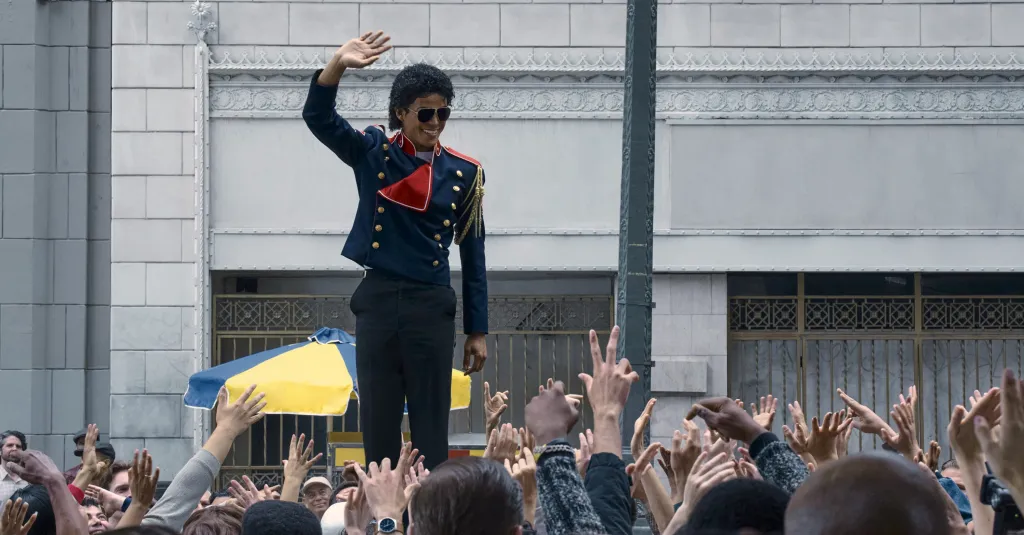
The California Film Commission on Wednesday revealed 35 feature films that have been selected to receive California tax credits in the most recent round of funding. The list includes the sequel to Michael, Lionsgate’s blockbuster Michael Jackson biopic, as well as New Line’s Friday sequel Last Friday and a new project from indie filmmaker Mike Mills.
Gov. Gavin Newsom announced the recipients in a press release, which noted that the new slate of productions is expected to bring in $1.08 billion in California spend and involve almost 30,000 cast, crew and background jobs.
The reveal comes amid an expansion of the state’s film and television tax credit program that included launching a post-production credit and creating guidelines around AI usage.
California Film Commission
Among the 35 films on today’s list includes new untitled movies by Disney, a 20th Century horror pic, a Paramount crime thriller and a Warner Bros comedy. A new untitled Pixar project has scored the biggest credit haul of the bunch with $40.1 million, followed my Michael 2 with $30.8 million.
Of the pics, 28 are indie productions, which has been a focus of the expanded program; eight indies have budgets over $10 million, and 20 have budgets of less than $10 million.
“What makes this latest round so exciting is the mix of independent filmmaking and iconic stories that are part of California’s cultural legacy,” said California Film Commission director Colleen Bell. “From an emerging filmmaker bringing an ambitious new vision to life to the return of beloved franchises like Last Friday, Clueless and The Rockford Files, these are stories with deep roots in California. Through our tax credit program, we’re helping bring these stories to the screen while keeping the jobs, investment, and production that bring them to life right here in California.”
Since July 2025, 179 earmarked projects have generated $7.2 billion in California production spending, including $4.7 billion in qualified expenditures and $2.87 billion in qualified wages, according to the commission. That supported almost 38,000 cast and crew jobs and 237,000 background performers measured in days worked.
>
No Disney-owned has aired the NFL‘s championship game since the George W. Bush administration, but its ABC and ESPN have the 2027 Super Bowl, and the company said Wednesday that Disney+ will stream it for the first time.
Disney also revealed that its streamer will carry a pair of Monday Night Football games this season, starting with the Philadelphia Eagles hosting archrival Dallas Cowboys on October 26. The other Disney+ MNF matchup is TBA.
As for Super Bowl LXI, Disney+ will stream ABC and ESPN’s coverage live on February 14 from SoFi Stadium in Los Angeles. Joe Buck and Troy Aikman will call the game, with Lisa Salters and Laura Rutledge reporting from the sidelines. The streamer also will carry ESPN Deportes’ Spanish-language broadcast.
RELATED: 40 Of The Biggest Super Bowl LX Commercials Featuring Famous Faces
Disney
Disney+ also will stream the Big Game in more than 55 international markets, including Spanish-speaking Latin America, Brazil, the Caribbean, South Africa and Australia/New Zealand. ESPN’s linear platforms will carry the Super Bowl in more than 130 countries and territories.
Back in August, Disney revealed that it had sold out the ad inventory for the 2027 Super Bowl, touting it as the earliest sellout by a network in the Big Game’s history.
RELATED: As NFL Season Kicks Off, Here Are Five Things In The Media Mix For 2026
RELATED: 2026 Premiere Dates For New & Returning Series On Broadcast, Streaming & Cable
>
EXCLUSIVE: The battle over Baby Reindeer is back on.
After legal proceedings were dormant for more than a year, Netflix has suffered a blow in its efforts to get Fiona Harvey‘s lawsuit thrown out of court.
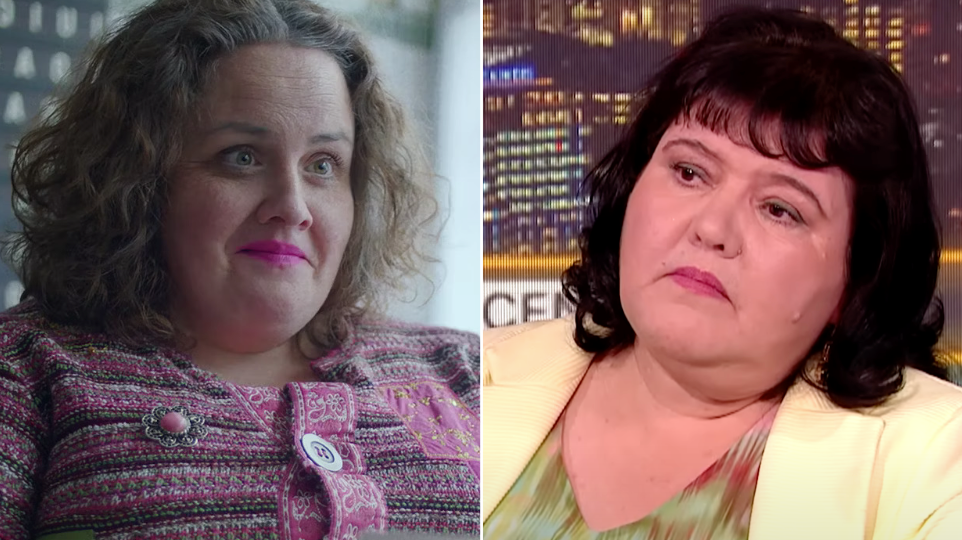
Harvey, a former lawyer from Scotland, hit Netflix with a $170 million defamation lawsuit in 2024 after Baby Reindeer became a global sensation and she was identified as the show’s alleged stalker, Martha, played by Jessica Gunning.
Harvey claimed that the darkly comic series, which was billed as a “true story,” portrayed her as “a twice-convicted stalker who was sentenced to five years in prison.” Harvey has never been convicted of stalking Gadd, and she argued the series was “the biggest lie in television history.”
The case was widely expected to go to trial in May 2025, but an appeal by Netflix put a halt to proceedings at the Central District of California Court. Now, the U.S. Court of Appeals, Ninth Circuit, has ruled that it lacks jurisdiction over the appeal. The ruling was made on technical grounds rather than on the merits of Netflix’s argument.
In its order, the appeals court said Netflix must either “file a motion to voluntarily dismiss this appeal or file a statement explaining why it should not be dismissed.” Netflix declined to comment.
Richard Roth, the attorney representing Harvey, told Deadline: “Netflix is doing everything to avoid a trial of this action. First, it made a motion before the federal district court which it lost. Then it appealed that decision, which was dismissed. Notwithstanding its efforts, there will be a trial in this action where its wrongdoing will be front nd center before a jury.”
U.S. District Judge R. Gary Klausner ruled in September 2024 that Harvey’s case should proceed because Baby Reindeer was wrongly billed as a “true story” after Netflix “made no effort” to fact-check creator Richard Gadd’s experiences and failed to “hide” Harvey’s identity.
Netflix has argued that Harvey’s claim fails because she “does not allege a provably false statement of fact was made about her.” Netflix has said that her reputation has already been tarnished by “past news stories detailing her previous harassment and stalking of public figures.”
Baby Reindeer was a massive and somewhat unexpected hit when it premiered in April 2024. The limited series has amassed 103 million views since its debut, as well as clinching Emmy, BAFTA, and Golden Globe awards.
>


Search For Canadian TV Actor Stewart McLean Now Homicide Investigation


These ’90s fashion trends are making a comeback in 2017
According to Dior Couture, this taboo fashion accessory is back
Model Jocelyn Chew’s Instagram is the best vacation you’ve ever had
Emily Ratajkowski channels back-to-school style
9 Celebrities who have spoken out about being photoshopped


Rurouni Kenshin: Hokkaido Arc Manga Takes 1-Issue Break – News


HIDIVE to Stream English Dubs for The World Is Dancing, The Forsaken Saintess and Her Foodie Roadtrip in Another World, The Dangers in My Heart: The Movie Anime – News