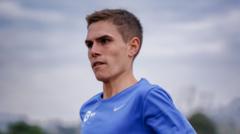
British long-distance runner Jake Smith looked like he was living the dream at 23: a professional contract with Nike and a Great Britain vest on the global stage. But behind the results, his body was falling apart in a vicious cycle of race, illness, injury, repeat — and he had no idea he was under-fuelling. Doctors warned him that if he kept going, he would be “in a wheelchair at 30.”
Jake Smith (Credits: BBC Sport)
Smith, now 28, returned from a running camp in Uganda weighing just eight stone (51kg) at 5ft 5in, with bones so brittle that doctors told him his career could be over. After suffering two stress fractures in the space of four months, he finally sought professional help and was diagnosed with REDs — relative energy deficiency in sport.
REDs is a syndrome that can hit any athlete, causing bone stress injuries, disrupted sleep, fatigue and low mood. Left untreated, it can lead to serious long-term problems including osteoporosis, cardiovascular disease and fertility issues. The symptoms are better documented in women — tennis star Emma Navarro revealed her own diagnosis just last month before stepping away from competition until 2027 — but men are just as susceptible, and stigma plus subtler warning signs mean many suffer in silence.
Why Men Go Undiagnosed
Hormone health expert Dr Nicky Keay explains that insufficient energy intake disrupts hormones across the entire body. Women have what she calls a “free monthly medical check” — the menstrual cycle simply switches off when energy is too low. For men, the signs are subtler: testosterone levels drop, bringing reduced libido and fatigue that are easy to dismiss or hide.
That is why the condition was first known in the early 1990s as the “female athlete triad.” The International Olympic Committee renamed it in 2014 precisely to acknowledge that it harms male athletes too. As Keay puts it, the field realised it was “ignoring the other half of the population.”
“Lighter Is Faster” — The Dangerous Myth
A major driver is the long-standing endurance-sport mantra that lighter is faster. A meta-analysis published last year in the Australian journal Sports Medicine, covering thousands of elite and amateur athletes worldwide, found low energy availability in 44.2% of female athletes — and a staggering 49.4% of male athletes.
For Smith, that belief was where it all started. Now recovered and speaking openly, his story is a warning shot to the endurance world: under-fuelling is not discipline, it is damage.
Also Read: Sonay Kartal’s Remarkable Comeback: From Bedridden With A Back Injury To British No. 1, Sonay Kartal Destroys Jasmine Paolini to Reach Wuhan Open Quarter-Finals
Source: BBC Sport — read the full story there.