
Politics
Politics Home Article | The Greens Look To Get Serious On The Economy

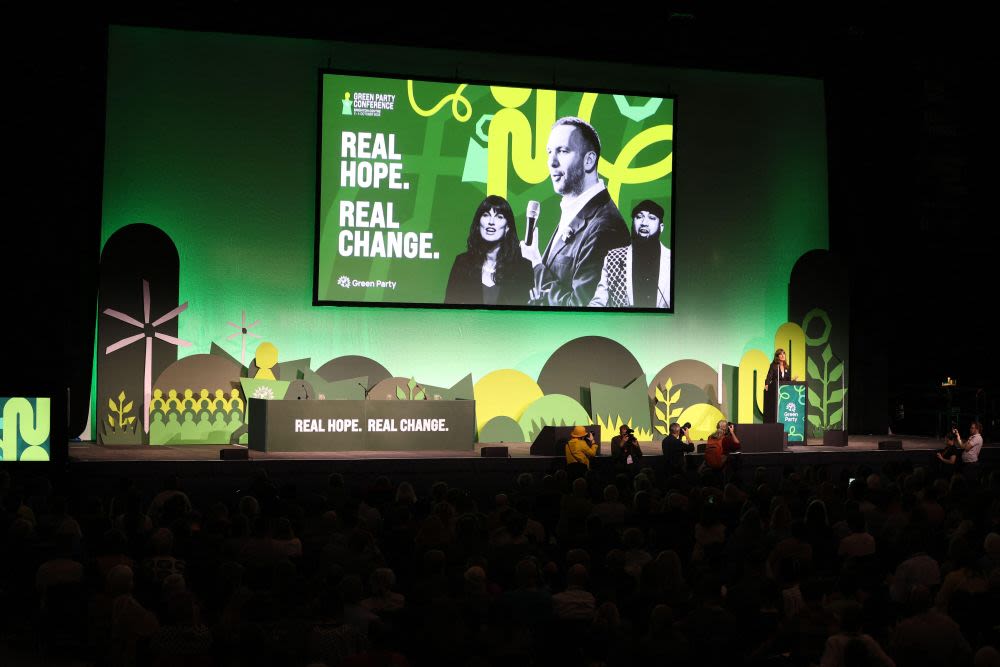
The Green Party conference took place in Brighton this weekend (Alamy)
5 min read
Green Party figures are wrestling with a question: how can they demonstrate economic credibility while maintaining their radical edge?
It was a talking point at their conference in Brighton over the weekend.
Harriet Lamb, Green Party CEO, told a fringe event hosted by More in Common that looking “competent on the economy” would be important to the party’s next steps as it tries to build on the growth it has achieved since Zack Polanski took over as leader.
At the same event, the think tank’s executive director, Luke Tryl, presented data showing that the public views a Green Party focus on the economy almost just as favourably as a focus on the environment. Among a section of avid Green supporters, which More in Common calls Progressive Activists, a focus on the economy is significantly more popular.
Senior Green figures who PoliticsHome spoke to in Brighton said the party must prepare for intense media scrutiny of its economic policies in the months ahead – particularly if there is talk of the role the party could play in a coalition government.
To that end, the Greens are planning to expand their team of economic spokespeople, with councillors elected in May in the pool of people being considered, PoliticsHome understands.
The Secretary of the Greens’ Economy Policy Working Group, Nadine Storey, admitted there is some nervousness within the party about presenting a different economic approach to the Westminster orthodoxy as “you need spokespeople who can defend the policy”.
Speaking to PoliticsHome in Brighton, she said: “Zack has been very good at that.
“He’s been much bolder, braver at being prepared to take on the journalists, but he has been caught out once or twice because he didn’t know the nitty-gritty.”
On Sunday, Green conference voted in favour of a motion setting out what Storey described as “underpinnings” to the party’s radical economic policy.
It includes dropping interest rates as the main means of controlling inflation; no longer using Gross Domestic Product as a measure of economic policy success; and abolishing the Office for Budget Responsibility. Party rules mean that the motion is now official policy.
There’s still this perception that the Green Party are going to protect Britain with healing herbs and herbal tea
James Meadway, economist and co-director of the left-wing think tank Verdant, which hosted an event in Brighton to coincide with the conference, said the debate about Green economic policy is not just about orthodox versus radical.
“There’s another dimension to this, which is radical and workable, and radical and unworkable,” he told PoliticsHome.
Meadway said the Greens are getting closer to the former, radical and workable, as the question of “what would you actually do in government” has become a bigger part of their thinking. He agreed that the Greens also needed to appoint strong spokespeople to publicly defend and explain their economic approach.
Neal Lawson, director of pressure group Compass and co-founder of new Labour group Mainstream, said that the Greens had to keep pushing the boundaries of economic debate: “Clearly, it’s a difficult position for the Greens to be somewhere between Utopia and Narnia, but they need to be out in that place and articulating a new kind of economy.”
He said the Greens had an important role to play in “shifting” the debate.
“If that gets them in some trouble with mainstream economists saying they’re away with the fairies or whatever else, then they should take a bit of that in order to shift the Overton window into new areas,” he told PoliticsHome.
In his conference speech on Friday, Polanski said voting for the Greens was the best way to force the Labour government into more left-wing positions. “Vote Green and watch Labour move,” the London Assembly Member said.
Former Labour mayor turned Green councillor Jamie Driscoll has written his own economic paper he hopes will be party policy by this time next year. Proposals include 100,000 new council homes a year, integrated public transport and retrofitting every home in the country.
Driscoll told PoliticsHome that a key test of whether the public can be persuaded that the Greens should be listened to on the economy is having a good number of economic spokesperson roles and the party needs to “start training a wave of people up”.
“We have to look like a party of government,” he said.
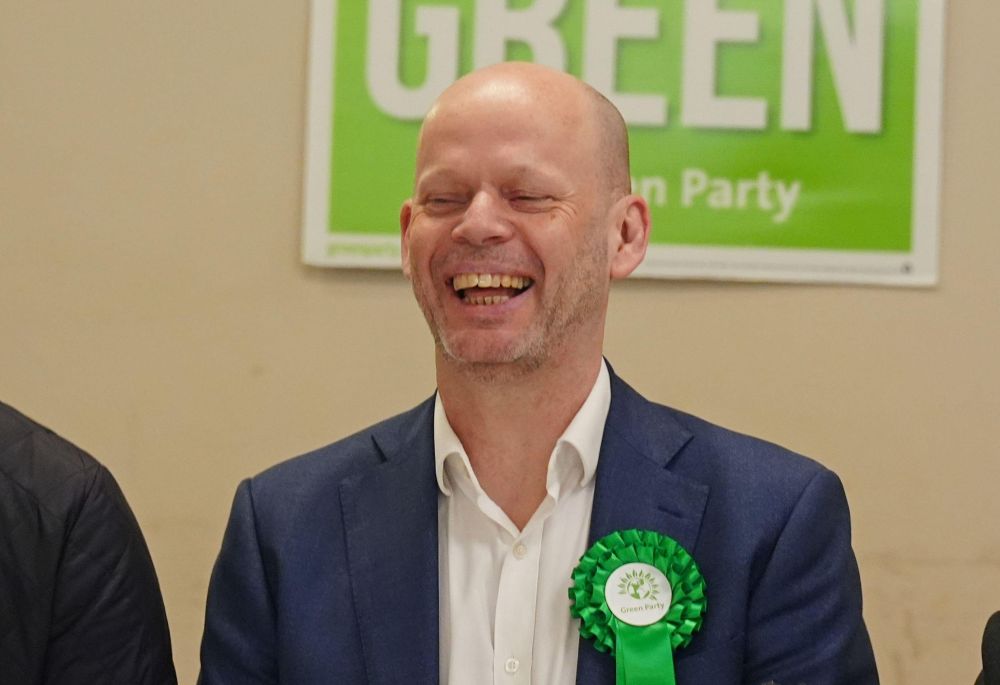
He added that this principle of credibility must apply across the board, from fishing to foreign policy, and not just on the economy, saying “there’s still this perception that the Green Party are going to protect Britain with healing herbs and herbal tea.”
Green figures who stress the importance of building credibility argue Polanski’s party must be even more careful in how they present radical economic ideas after the Liz Truss mini-budget and its impact on public opinion. “It perhaps does make it harder to put more radical ideas across,” acknowledged Storey.
One Green activist involved in policy discussions summarised the challenge as having policies “rooted in economic realities” but “do not take away from our views as progressive”.
The same activist said there was some nervousness within the party about whether the CO5 motion would be taken as a serious economic offer outside the conference hall. However, they stressed that the party must be prepared to make the argument.
Additional reporting by Adam Payne
>
Politics
The House | Former Prison Governor Ian Acheson: The Public Is Right To Be Outraged By Early Release Schemes


11 min read
In a searing critique, former prison governor Ian Acheson says the public is right to be outraged by early release schemes and overcrowding is being used to cover up entrenched administrative and political failure
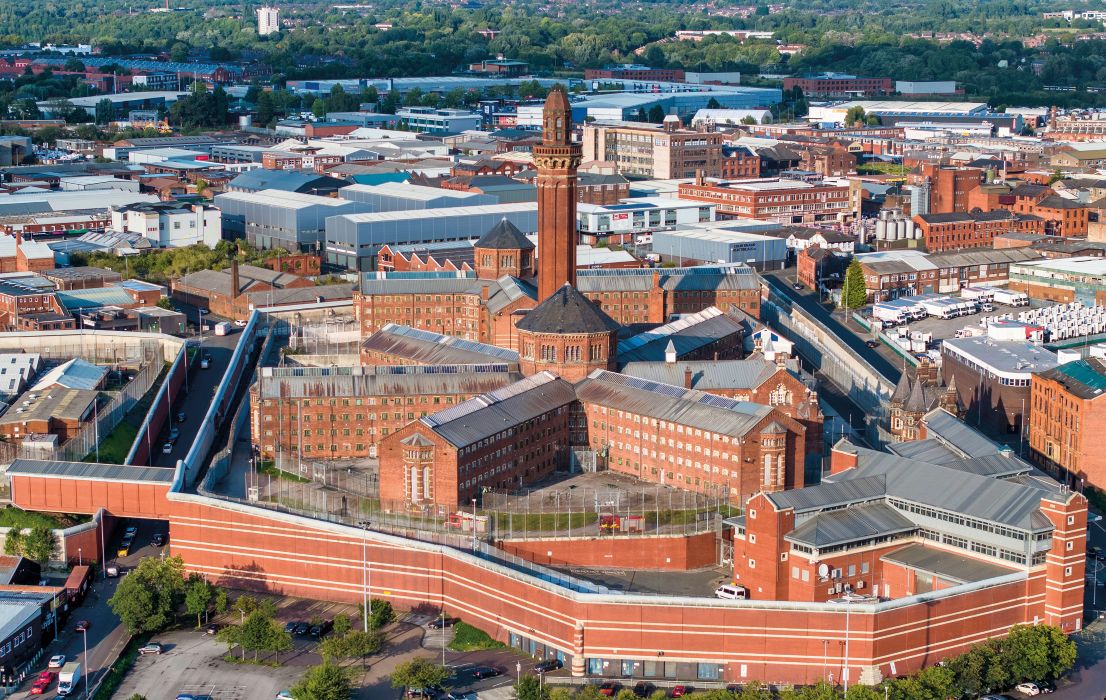
Prison overcrowding is a major issue because it hampers movement, reduces the time offenders can spend outside their cells, interferes with work and education, complicates resource allocation, and makes control much harder to enforce. At the same time, it has turned into a generic excuse used by the Ministry of Justice (MoJ) to explain almost every failure. Whether it is soaring violence, rife drug use, staff shortages, inadequate intelligence, bad management systems or managerial decline, overcrowding is rolled out as the culprit. It has become a convenient substitute for examining whether prisons are being properly managed and run.
That’s a harder truth. A cultural decay exists within the boss class of HM Prison and Probation Service (HMPPS), the last true hermit kingdom in public administration. It shows in their helpless response to a downward slide, and in their readiness to regard basic failure as inevitable, whether a prison is overcrowded or not. The most dangerous failures among our jails are not caused by a lack of cell space. Often, the system rewards the apparatchik who fails upwards because he or she has become skilled in progressive abstractions, rather than the kind of leader who prioritises order, safety, high standards and a purposeful regime.
The public debate has become distorted since ministers have spoken of a capacity crisis.
Reference is made to the tainted Tory legacy, and the only solution proposed is to grant earlier release. The more realistic option – building, staffing, and managing a prison establishment to handle the number of prisoners imposed by the courts’ penalties – has been continually postponed. The most recent official figure available indicates that there were 87,111 people in prison in England and Wales on 14 September 2026. The operational capacity is 88,986, which means the national headroom is 1,875 places.
The global figure by itself does not give the full picture. Prison places are not all the same.
Remand prisoners must be kept within a reasonable distance of the court. High-risk prisoners need high-security jails. Sex offenders must be protected against exploitation and violence. Women, young adults, people with serious mental illness, people with disabilities, prisoners who are subject to gang separation, and terrorists who need confinement all require special types of accommodation. Governors deal with these restrictions every day, but they are not visible when looking at the total number of prisoners.
The most recent population forecasts from the MoJ give the central figure as 100,600 prisoners by March 2030, the range being between 98,000 and 103,600. The department recognises that there is a great deal of uncertainty involved, since its figures are based on assumptions regarding police activity, charging rates, court throughput, sentencing patterns, recalls, policy changes and the speed at which cases progress through the justice system.
Forecasts are needed for the purpose of planning and should not be regarded as definitive proof of a fundamental change in the meaning of sentences.
Even though we are certainly running short of space, the MoJ’s 2024 forecasts predicted 89,100 prisoners by September 2025. The actual total was 87,465. The later central estimate for September 2026 was about 2,100 fewer than the similar forecast that had been made a year before. The ministry explained a large part of this change as being due to policy adjustments, including the greater use of the Home Detention Curfew and the reforms regarding fixed-term recall for some people who are serving shorter sentences.
Those changes make a point that ministers would prefer to avoid. Population projections can change sharply because policy changes sharply. They are models, not destiny. A state that has underbuilt its way out of a capacity problem for more than a decade should not use an uncertain future number as a reason to beg ministers to normalise the early release of thousands of risky prisoners.
That building failure is well-documented. The National Audit Office (NAO) stated that the government’s commitment in 2021 to provide 20,000 extra prison places was unrealistic and had not been given sufficient priority. By September 2024, the HMPPS had delivered 6,518 of these places. The NAO believed that the full number of 20,000 would not be achieved until 2031, which is about five years later than planned.
This is the major failure in public policy. Successive governments have increased policing, introduced tougher sentencing laws, allowed court delays to become longer, and accepted a large number of recall cases – yet they have not built the physical infrastructure needed to accommodate the inevitable increase in prison numbers.
Labour has promised to provide 14,000 new places by 2031 and says it has committed up to £7bn over 2024-25 to 2029-30. This commitment is essential and must be implemented swiftly, with progress to be assessed by the number of prison gates that open to reveal safe, staffed and fully functioning establishments inside. Let’s have no more nonsense spouted by the Justice Secretary Alex Norris on converting laundries. Fatuous press releases, planning applications or artistic impressions can’t securely hold prisoners.
Building cell space is often dismissed as a simplistic law-and-order response. It is an acceptance of responsibility. A state that investigates crime, prosecutes people and asks courts to impose custodial sentences must provide sufficient capacity to enforce the outcome.
Custody should be proportionate. It should be reserved for cases where it is necessary. It cannot be turned into a provisional arrangement whose duration depends on the MoJ’s construction record.
The government’s other option is now becoming more and more chaotic. Emergency release was launched in 2024. The Sentencing Act has altered the automatic release dates for a large number of prisoners who are serving standard determinate sentences. According to the new legislation, individuals who were previously due to be released after 40 or 50 per cent of their sentence can now be released after one third; similarly, those who would have had to serve two thirds can now be released at halfway. The aim of the scheme had been to free up space, but it instead caused a public outcry.
Families, victims’ representatives, and former police colleagues raised alarm when it emerged that two men convicted of the manslaughter of PC Andrew Harper could become eligible for earlier release. Harper was killed in 2019 while investigating the theft of a quad bike. The campaign surrounding his case brought home a simple political fact: the public does not experience early release as a neutral technical adjustment. It sees people convicted in serious and notorious cases leaving prison earlier because the state has not built enough places. One million people signed a petition to show their anger at justice by logistics, not just deserts.
The response was a familiar Whitehall exercise in retrospective exemption. The policy was paused. Ministers reviewed it. They excluded those convicted of unlawful killing, including manslaughter. They added exclusions for death by dangerous driving, indecent assault, historic child-sex offences and causing or allowing a child’s death.
A cultural decay exists within the boss class of HM Prison and Probation Service, the last true hermit kingdom in public administration
The eligibility group reduced from an estimated 6,000 to around 5,000 prisoners. The start date was delayed. Further supervision and protections for victims were promised. Sci-fi magic bracelets for geo-fencing would save us all.
Each individual exclusion here may be defensible. The cumulative result is policy made in public, case by case, only after the consequences become visible and politically embarrassing.
It is a salami-sliced attempt to retain the capacity savings while avoiding the politically intolerable cases. The government is discovering that there is no clean line between the prisoner it is comfortable releasing early and the prisoner whose earlier release will rightly trouble the public.
This matters because the public is at odds with the administrative state on this question. Most people understand that not every offender belongs in prison. Most accept that individual release decisions must be based on risk, progress and law. They understand the value of credible rehabilitation. They also understand that a sentence imposed in open court should carry meaning.
The public sees the contradiction. Ministers promise action on crime, victims are promised confidence in justice, police are expected to make more arrests and courts are urged to deal with cases more quickly. The same state then says that sentences must be cut short because the accommodation has not been built. It is impossible to spin that as an enlightened penal settlement. It looks like a failure to plan and two fingers to victims.
Early release also transfers pressure into a knackered probation service still damaged by years of ideological vandalism, excessive workloads, staff turnover and lethal public protection failures. An offender released earlier than a judge has said they should be locked up needs a credible licence plan, stable accommodation, access to treatment and medication, help into work, and a probation practitioner with sufficient time to assess and manage risk. None of this is remotely in place now, let alone in the coming months as dangerous offenders flood the streets. The police have been crystal clear – managing this additional risk will denude everyday cover, which is hardly flush with capacity as it is.
Recall to custody has become a major driver of population pressure because it shows a system that’s unable to manage instability outside prison: licence breaches, genuine risk, homelessness, addiction, fractured supervision and deficient support.
There are responsible ways to reduce the number of people in prison. Short sentences which involve detention must be used with care. The practice of remand should be subjected to stricter discipline. Non-violent acquisitive offenders in prison because of a drug addiction are a medical problem, not a criminal justice one. The courts need other options than custody which they can rely on. But these reforms need investment, urgency, imagination and competent delivery. And they need public confidence, which is tanking. But they do not make prison capacity optional.
The condition of the estate explains why building and leadership must be addressed together.
In 2024-25, 24.8 per cent of prisoners were held in crowded accommodation. The methodology has changed, so historic comparisons require care. The current figure still means roughly one prisoner in four shares accommodation designed for fewer offenders.
Large parts of the existing estate lie empty because of a failure to recruit and retain staff.
Here’s why: In 2025-26, prisoner-on-prisoner assaults stood at 244 per 1,000 prisoners.
Assaults on staff stood at 113 per 1,000. There were 812 self-harm incidents per 1,000 prisoners and 67 self-inflicted deaths. Drugs, debt, intimidation and violence are harder to control in a crowded system. But they also flourish where leadership is weak, staff are traumatised, and prisoners have nothing to do except wait for the next drone drug delivery.
The workforce situation tells the tale. In March 2026, 21,984 prison staff were employed at Band 3 to 5 levels, down from 22,716 the previous year and fewer than the 23,590 recorded in March 2024. Average sickness absence for front line staff reached an unsustainable 13 working days in the 2025-26 period. The service cannot get to stability just by speeding up the process of shovelling offenders through the gates early.
In 2025-26, 14 prisons were assessed by the MoJ as being ‘of serious concern’ and 25 as being of ‘concern.’ That’s 39 out of 120 establishments requiring great improvement. Many of those jails hold some of the scariest people in Britain. There are good prisons and outstanding staff. There are also too many establishments where the basics of safety, decency, control and purposeful activity are unreliable or completely defunct.
The answer is clear to me. Britain needs a national capacity crisis taskforce led by genuine experts, not retread mandarins and clueless ministers. It needs a genuine operational buffer.
It needs officers recruited, retained and confident to restore order which is foundational to everything hopeful. It needs senior leaders judged openly on safety, order, staff confidence, regime delivery and rehabilitation outcomes. It needs a rebuilt probation service before large-scale early release becomes a normal practice.
Early release may occasionally be necessary. It can’t become a substitute for building a system capable of carrying out the sentences that courts impose. The public is entitled to expect more than an omnicircus of duff projections, panicked exemptions and emergency sticking plasters. It is entitled to a prison system that is properly led, adequately built and worthy of public trust.
>
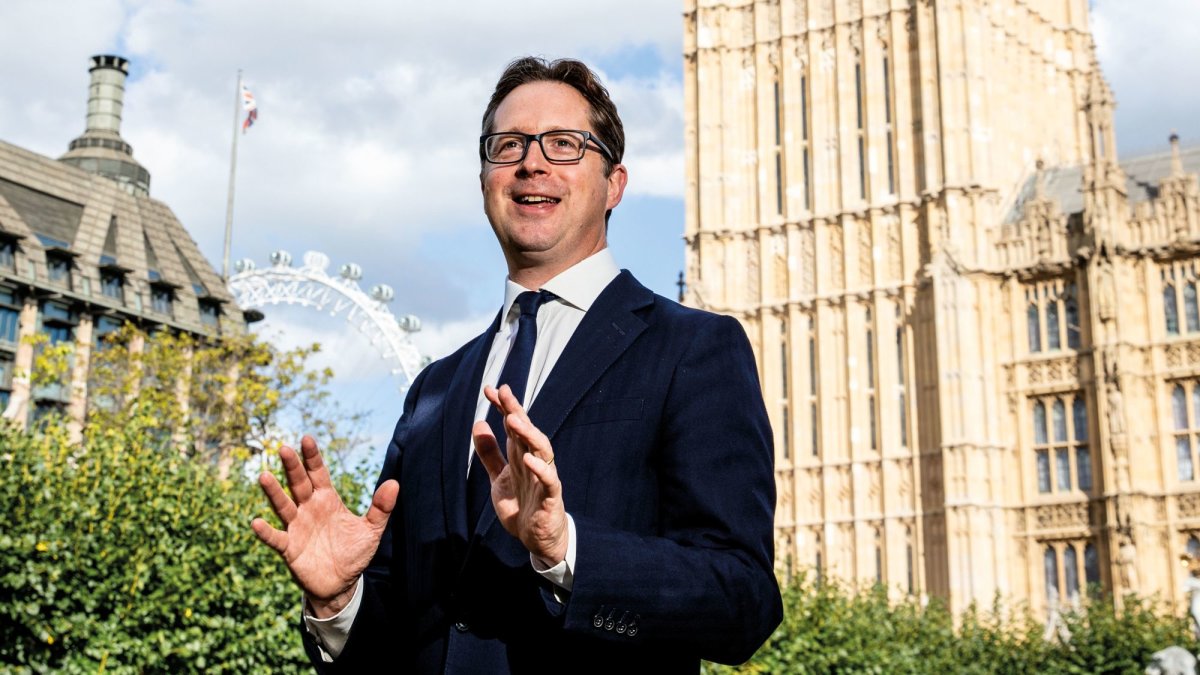

Photography by Louise Haywood-Schiefer

11 min read
Conservative deputy leader Alex Burghart speaks to Noah Vickers about his friendship with Kemi Badenoch, whether his party is still a broad church, and the need for change in Northern Ireland.
The Conservative Party has a new deputy leader and his name is Alex Burghart. The 49-year-old MP for Brentwood and Ongar may not enjoy the highest of public profiles, but he has long been a core member of party leader Kemi Badenoch’s inner circle.
The position of deputy leader has been technically vacant for more than two decades – having last been held by the late Michael Ancram in 2005.
“I think it means more work and the same pay,” quips Burghart, who has added the title to his existing roles as shadow chancellor of the Duchy of Lancaster and shadow Northern Ireland secretary.
“I’ve been a longtime ally and supporter of Kemi’s and I was very pleasantly surprised when she said to me during the reshuffle, ‘I could do with some help at the centre, and I’d like you to come and help me kick the tyres on a few things,’ so that’s what I now do.”
Burghart’s first run for Parliament, in 2015, saw him go up “against a little-known left-winger called Jeremy something” in Islington North.
“That’s where I won my spurs. I went round Islington North standing up for conservative principles and free-market economics and so on.
“At that election, I made the strategic decision to lose by 20,000 votes, and then within a few weeks Jeremy became leader of the Labour party. His career took off rather faster than mine.”
Burghart had to wait until the snap election of 2017 to win his Essex seat – the same intake as Badenoch and representing constituencies which border one another. Since Badenoch’s election as leader, commentators have called Burghart a “key confidant” or even her “policy brain”, though he rejects that label: “Kemi’s got her own policy brain. She’s got plenty of brains herself.”
He accepts, however, that he performs an important role as someone who can speak openly and honestly with her in private.
“Because we’re close and we trust each other, I can speak to her very frankly and she can speak to me very frankly.
“Ultimately, that’s what all good operations need – and she is a very inspiring person to work for, because she always has a very strong sense of right and wrong and the direction the party should be going in. My job is sometimes to kick the tyres on that and sometimes to make it happen.”
And telling her when she’s made a mistake?
“I tell her when I disagree with her. She’s normally right,” he laughs.
Leading the opposition is said to be the worst job in British politics, but Burghart claims Badenoch is “loving” it and is “thriving” in the role.
“It’s incredibly hard being leader of the opposition and being leader of the opposition after a historic defeat is uniquely challenging,” he acknowledges. “When you look at what she’s managed to do over the course of the past year, it’s extremely impressive.”
Burghart’s pre-political background is in medieval history, having taught and lectured in it after completing his PhD on the Anglo-Saxon kingdom of Mercia. He is fascinated by how Mercia existed between the “catastrophic” fall of the Roman Empire and the birth of England as we know it today.
Post-Roman Britain, he points out, had seen “an extraordinary collapse in civilisation, which is probably more profound here than at any other point in Roman Europe”.
Yet from out of the Dark Ages, there came – eventually – a new and longer-lasting order.
“Within a few hundred years emerges the most stable medieval polity, which is England, which is still around today – which is still using [the same] boundaries of local government, the same currency, the same monarchy, and ultimately the same basic system of law. Out of the great collapse emerged something even more durable than the Roman Empire.”
For a Conservative Party still recovering from its worst ever general election result, could there be an analogy here?
Burghart allows the point with a laugh. “Sometimes you have to go through the bad times to get to the good.”
There are certainly more reasons for the Conservatives to be cheerful than there were 12 months ago, as Reform UK has seen its poll ratings slump. Burghart doubts, however, that traditional two-party politics will re-assert itself any time soon.
“We’re certainly in multi-party politics for the time being and my suspicion is that that isn’t going to settle down just yet,” he says. “I think one of the reasons why the system has become more populous is because of the rise of new types of media, which allow people to organise and sit within their own channels and I don’t think that’s going to change.
“But at the same time, that doesn’t mean that the same spread of voting needs to persist. If you look at how the Green vote has shifted up and down quite dramatically – and indeed Reform’s vote has shifted up and down quite dramatically – what it speaks to is a period of high volatility. In that environment, there are opportunities for a party that is firm of purpose and principle.”
When The House speaks to Burghart, his party is facing attacks from Reform’s Robert Jenrick over reports that the Conservatives are preparing to announce a plan to abolish inheritance tax.
Jenrick claims the Tories are “choosing to help the wealthiest five per cent, while we want to raise the tax-free personal allowance to £15,000 to benefit 97 per cent of workers instead”. Is he right?
“As we don’t leave our speeches on photocopiers, Robert doesn’t know what’s in Kemi’s speech at conference and he’ll have to wait until the start of October to find out.
“If Reform want to talk about the Conservatives being a tax-cutting party, they can do so, that’s up to them.”
He smiles and adds: “But I’m not sure how much longer Reform will want to talk about money.”
There is clearly no love lost between the Tories and the MPs who have defected away from them. If any of those MPs were one day to regret their move, would they ever be welcome back in the Conservative fold?
“I think if you start to entertain the idea that people can just come back, what you’re signalling to colleagues 10 or 20 years down the line is that you can just experiment with changing parties and everything will be fine – and it’s not fine.”
Pressed on whether that means the door is closed to them, he replies: “I don’t see any circumstances in which anyone’s coming back.”
As The House starts asking a new question, however, Burghart interrupts with a final caveat: “But I should say, it’s up to Kemi.”
Indeed, the Conservatives are already in the process of selecting candidates for the next election. Liz Truss, according to Badenoch, is among those not welcome to stand.
“I’m not sure how much longer Reform will want to talk about money”
But she has also said that candidates who support policies like net-zero by 2050 or staying in the European Convention on Human Rights (ECHR) will be blocked too. To what extent is Badenoch remaking the party in her own image?
“I think it’s very important that the Conservative Party looks fresh at the next election,” replies Burghart.
“Kemi was keen to build a shadow cabinet which was new, so she is obviously very mindful that, as a basic rule, people who become candidates for the Conservative Party should be on side with the changes that we’re planning, because otherwise it’s harder for us to promise the electorate that we will deliver on them. If you’re looking for ways to prove that you’re serious, this is one of them.”
Asked whether the party is still a broad church where ‘One Nation’ conservatives are welcome, he suggests that may depend on what is meant by ‘One Nation’, as the term can be “ill-defined”.
“If we’re talking about Disraeli and One Nation conservatism, regardless of what badge colleagues may or may not choose to apply to themselves, Disraeli never uses the phrase.
“He says there are two nations – there’s the rich and the poor – and implies that government should govern for everyone. That’s what a future Conservative government will do.
“But running through that are the values that support our work, which is that we’re there for families and people who do the right thing, people who work hard. That’s the sort of country and society we’ll always stand for.”
The House turns to Burghart’s Northern Ireland brief, asking what he made of Donald Trump’s recent claim that a united Ireland would be “fantastic”.
“Well he’s wrong, and it’s not for him to say,” the MP declares, adding: “The President likes to stir things up.”
Is that what Burghart thinks Trump was doing with that comment?
“I do, but I also wouldn’t read too much into it.”

If the Tories win the next election, Burghart will be tasked with ensuring the UK’s exit from the ECHR does not imperil peace in Northern Ireland, as concerns have been raised about whether the move would be compatible with the Belfast/Good Friday Agreement.
The agreement’s wording is explicit that “the British government will complete incorporation into Northern Ireland law of the ECHR, with direct access to the courts, and remedies for breach of the convention”.
Burghart says he is satisfied by Lord Wolfson’s legal advice for the Conservatives on this question, which argues that the “substantive rights embodied in the text of ECHR” could be applied to Northern Ireland through a separate legal framework.
The Irish government may require some convincing of this, The House suggests, as the Tánaiste, Simon Harris, has warned the ECHR is a “fundamental safeguard” and a “core part” of the agreement.
“As a sovereign country, we are entitled to leave the ECHR if we wish to,” Burghart insists.
“There are certain provisions that we would need to make in order to take account of the Belfast Agreement, but that does not prevent us from leaving.”
The Northern Irish Assembly, which operates through an often-paralysed power-sharing arrangement, is meanwhile in one of its states of deadlock – having still not passed its budget more than five months into the current financial year.
As his Labour counterpart Chris Bryant warns it is “time to stop accommodating madness and find a better way of working”, Burghart is clear that he, too, would be open to making reforms to Stormont.
“I’m not going to pretend that the arrangement is as good as it should be,” he says. “That said, it’s very difficult to shift those things without cross-community consent.
“But I think [we are in] a situation in which it is very clear that certain big decisions do not get made, repeatedly, and public services for people in Northern Ireland are worse as a result… At some point, everyone is going to have to acknowledge that this isn’t good enough and we will need to find an alternative.
“It wouldn’t be appropriate for a secretary of state or a shadow secretary of state of Northern Ireland to say, ‘It’s got to change and this is how it must be’. But I think we should certainly be open to reforming the institutions. Equally, I’m not going to pretend that is an easy process.”
In the last government, Burghart served as a Cabinet Office minister, where he was responsible for setting up Whitehall’s first dedicated AI unit.
With recent reports of AI agents going rogue and experts warning of a potential threat to human life, he admits that “the sheer distance that the technology has travelled” is “bewildering”. Does it worry him?
“Yes, but I’m a middle-aged man, I worry about a lot of things.”
More seriously, he adds: “I think everyone who has looked at this – who is honest with themselves – is a bit worried about it, because we simply don’t know where it’s going to end.
“It may be that the technology hits a wall quite soon and we learn to live with it as it is, but there’s no sign of that slowing down.”
He is sceptical about whether there is any meaningful action the UK government could unilaterally take to contain the risk.
“It’s an area where it’s extremely important to have ongoing dialogue between the people who are building the capability, and government and regulators. However, for a country like the UK to think that, alone, we can just regulate our AI and make it safe, I think is crazy. There is no one country that will be able to do it.
The work that Rishi Sunak tried to do was to “make sure there were fora in which people from around the world could raise concerns”, he says. “But it is very difficult to get a handle on something that is changing so fast”.
>



9 min read
Kemi Badenoch is more popular than her party. Harriet Symonds reports on her efforts to remake it in her image – and what her colleagues really think of that endeavour. Illustrations by Tracy Worrall
What is the point of the Conservative Party? After a rocky start, Kemi Badenoch is increasingly confident she can sell an answer – the point of the Conservative Party it is to do what Kemi Badenoch thinks is right.
Pushed into third place in the polls behind Reform UK until recently and leaking voters left and right, the Tories are a long way from power but it is Badenoch, not Nigel Farage, that appears more secure.
She heads into her second conference as leader after a sweeping reshuffle. Among the boldest moves was to replace Mel Stride with Andrew Griffith, a former ally of Liz Truss, as shadow chancellor.
The appointment shows the self-confidence of a leader determined not to be bullied by opponents and to reclaim some of Truss’ economic agenda of supply-side reform.
Then there is the increasingly interventionist approach to candidate selection. It’s been made clear Badenoch will not tolerate those standing for office under her party’s banner who cleave to the government’s net-zero targets or oppose leaving the European Court of Human Rights. These were picked deliberately to appeal to Reform-leaning voters. Other purity tests may follow.
So, how did Badenoch go about transforming the party into her own image?
“Kemi doesn’t look at things in terms of left or right, she asks, are they right or wrong?” says her spokesman, Dylan Sharpe.
That may be, but her brand of ‘common-sense conservatism’ is rooted in the small state rather than One Nation tradition.
If you’re someone like me who joined under David Cameron, then this is not the same party, and you kind of need to get over it
“She is properly on the right of the Tory party,” a former Tory MP who lost their seat at the last election tells The House.
“If you’re someone like me who joined under David Cameron, then this is not the same party, and you kind of need to get over it.”
Although the reshuffle did see some One Nation figures returned to the front bench – Tom Tugendhat and Damian Hinds – Katie Lam’s promotion to shadow Angela Rayner’s housing empire was more typical of the ideological bent. Similarly, Rebecca Paul’s promotion surprised some, but she is understood to have impressed Badenoch and is seen as a younger version of the Conservative leader.
One of Badenoch’s closest allies is Alex Burghart, a fellow MP from the 2017 intake, who was formally given the role of deputy leader of the opposition. He is the political brains behind the operation and will deputise at PMQs instead of the rotating system they had been using.
Burghart joins a small group of trusted MPs – including Griffith, Neil O’Brien and Kevin Hollinrake – who feed in thoughts on policy and direction to Badenoch weekly.
For the last year, O’Brien has been tasked with developing the party’s long-term policy and future manifesto.
In the reshuffle, Badenoch also promoted Jack Rankin to serve as her PPS alongside veteran MP and former minister John Glen. Rankin, who previously endorsed Robert Jenrick to be leader, speaks to the young and heavily online right of the party that Badenoch is increasingly trying to appeal to.
At this year’s party conference in Birmingham, Badenoch’s refreshed top team will continue to make the case for her brand of conservatism.
On the whole, the reshuffle has gone down well among Conservative MPs. Some regard it as a vital step as the party prepares for government. One Tory MP described it as putting the party on “war footing”.
There are three figures central to Badenoch’s grip on the party machine. Her chief of staff, Henry Newman, is regarded as an effective political attack dog. Mark McInnes, the Conservative Party’s chief executive, has been tasked with turning around its fortunes. And Stephen Gilbert, the director of strategy, is charged with working out how the party can win again – as he did for David Cameron in 2015 and Theresa May in 2017.

Part of the strategy involves a clean break with politicians synonymous with the party’s 14 years in government. Lord Barwell, Theresa May’s former chief of staff, was the first to publicly get the boot from the party after criticising Badenoch’s position on the ECHR and net-zero.
“Kemi has completely changed the candidate process. She’s made it much, much tougher. People now have to really prove that they are a Conservative, that they align with the values and principles of the new Conservative Party,” says her spokesman.
A well-informed source puts the number of former MPs who have been rejected, or know that if they apply they will get turned down, at “about a dozen”.
The approach has alarmed some on the party’s left wing.
“I think it’s a risky, possibly dangerous, place to go if you start rejecting potential candidates for their policy views. It’s never been about policy – in the past it’s been about values and principles. A policy position can change,” warns a Tory MP to the left of the party.
Badenoch defended her decision to not allow some former MPs to re-stand in an article for The Telegraph.
“Some people should never have been candidates before. Some do not have the judgement. Some do not have the discipline. Some do not want the Conservative Party to change,” she wrote.
Badenoch has made it clear that she wants new faces in the party and argues the way to do that is not by bringing back faces from their time in government.
Former defence secretary Grant Shapps is among those who have had their application rejected. The House understands no official reason was given but his allies have suggested that the real motive is because he is regarded as a potential leadership rival.
However, some Tory MPs have speculated that it was because he set up Conservatives Together, a group which helps train candidates to go through selection. One MP described it as “gaming the system”.
Former Tory defence secretary Penny Mordaunt is another high-profile figure going through the selection process. A final decision has not yet been made at the time of writing, but many in the party suspect she will also be rejected.
“These are just people that Kemi doesn’t like – that’s all it is,” says a rejected candidate. “It’s a very short-sighted approach.”
“What she has done is create discontent amongst a lot of people…There’s a group of people who are pretty pissed off and quite motivated about it,” they add.
While some MPs question why Badenoch would “pick a fight with her own side”, others argue it’s a necessary step to signal a clean break with figures associated with the party’s historic loss in 2024 and shore up party unity down the line.
Veteran Conservatives remember the endless internal rows that consumed the party during its final years in government, as it cycled through three prime ministers in five years. The factional warfare became so intense that the different groups were dubbed ‘The Five Families’.
There is a lot we got right, but there is also a hell of a lot that we got very wrong
Badenoch does not want her party to return to that state.
Opposition chief whip Rebecca Harris is at the forefront of imposing discipline among the Tory ranks. Most Tory MPs accept that any sniping about the leader or disunity over key policy issues is unhelpful during a period when the party is trying to rebuild.
The Conservative Party has previously welcomed competing traditions within its movement but some now fear there is less space for a broad church of views.
Sir Malcolm Rifkind, former foreign secretary and Conservative grandee, went as far as to describe Badenoch’s approach as “anti-Conservative”.
“I think that’s where a lot of people’s heart is in the parliamentary party. But they’re not going to say it out loud,” says a former MP.
Liberal Democrat leader Ed Davey has thrown open the doors to One Nation Conservatives who no longer feel welcome in the party.
“Come Conservative friends, help us save our country. Come and win with us,” Davey declared at his party conference last year.
A young Conservative, Cody Butler, publicly resigned as chair of the One Nation Conservative Network after reading Badenoch’s op-ed in The Telegraph. Frustrated with the party’s new direction, he has made the decision to join the Liberal Democrats.
“It wasn’t an easy decision,” he admits. “I wouldn’t say the broad church is dead, but I would say it has drastically been shrunk.”
“It’s an inquisition where if you’re not ‘our type’ of Conservative, you’re not a proper Conservative,” he explains.
“No one wants to have an honest conversation about what being a Conservative means. It’s just what the leadership wants, and they will align with whatever they’ve got to do to win back that Reform wing.”
At the start of the year, Andy Street and Ruth Davidson founded Prosper UK, intended as a home for moderate centre-right politicians who feel out of step with the new regime, but it has been resoundingly rejected by Conservative MPs.
Instead, many MPs say they are relaxed about seeing the ‘One Nationers’ go, viewing Badenoch’s changes as an essential step to make the party an election-winning force again.
“The red lines are there to demonstrate that she is someone with opinions and has purpose on big issues where the public has clearly moved,” says a former Tory MP, still weighing up whether to stand again. “The public wants tougher action on immigration and one diagnosis of that is you have to leave the ECHR. The public broadly thinks that ‘net-zero is a good thing – but let’s not go too mad’. That is essentially her policy.”
Her spokesman says: “There is a lot we got right, but there is also a hell of a lot that we got very wrong. Whether it is the enormous immigration, whether it is net-zero, the fact is Kemi is acknowledging those mistakes and saying we’re not going to make those mistakes again.
“If people don’t like that, then the Conservative Party probably isn’t the party for them.”
Last year, Badenoch’s team declared that the party was done apologising and must look to the future. Badenoch knows she will never be more powerful than she is right now and has chosen to use this goodwill to make tough choices that she hopes will pay off down the line.
>
The Chiefs deserved to celebrate their big Week 4 win, but this one still hurt

‘Akazukin, Tabi no Tochuu de Shitai to Deau.’ Reveals Additional Cast, Staff, First Promo for Winter 2027
Mike McDaniel tried to change Justin Herbert, and now the Chargers are 0-4
-

 movies5 months ago
Search For Canadian TV Actor Stewart McLean Now Homicide Investigation
-

 Fashion9 years ago
These ’90s fashion trends are making a comeback in 2017
-
Fashion9 years ago
According to Dior Couture, this taboo fashion accessory is back
-
Fashion9 years ago
Model Jocelyn Chew’s Instagram is the best vacation you’ve ever had
-
Fashion9 years ago
Emily Ratajkowski channels back-to-school style
-
Fashion9 years ago
9 Celebrities who have spoken out about being photoshopped
-

 Anime4 months ago
Rurouni Kenshin: Hokkaido Arc Manga Takes 1-Issue Break – News
-

 Anime3 months ago
HIDIVE to Stream English Dubs for The World Is Dancing, The Forsaken Saintess and Her Foodie Roadtrip in Another World, The Dangers in My Heart: The Movie Anime – News