
Tech
Pluto Security raises $42M as AI gives enterprise security teams a new headache


The problem with giving everyone in a company access to AI tools is that people will use them in unexpected ways. And that fact is steadily seeding fears that companies now have new, gaping security holes in their systems or, at least, will soon.
Illustrating the pace of AI tool adoption within enterprises driving such fears, Shahar Bahat, CEO and co-founder of Pluto Security, says a newly announced AI tool can show up inside companies’ environment within a mere two hours of its release. And about 60% of the risks her company detects across its customer base are in tools vibe-coded by non-developers: Finance departments are the biggest source of such risks, she told TechCrunch, followed by marketing and legal teams. Developers rank fourth, she said.
Her startup’s tools apparently found a vibe-coded app made by a finance employee at a Fortune 500 company to manage customer information and churn, but the app was left exposed to the internet.
Pluto, fresh out of stealth with $42 million in funding, is the latest in a new crop of security startups that have quickly sprung up to help companies address those fears gaps, and all of them are raising big money from investors on the back of the conviction that only using existing security software to monitor and control AI tools, connectors and usage is a square-peg-round-hole approach.
Bahat tells TechCrunch her startup started selling only in April, and has already found some takers for its tech, which helps companies gain context, risk analysis, visibility and control over how their employees use AI tools. She said Pluto began selling in April and has already crossed $2 million in annual recurring revenue, with more than 30 enterprise customers who include Oscar Health, Workato, Sixt and AlphaSense.
Pluto’s funding spans an $8.5 million seed round led by TLV Partners, with cybersecurity firm Armis’ founders also investing. The company recently raised a Series A of $34 million led by Jump Capital, with Skinos (Check Point co-founder Shlomo Kramer’s venture firm), Ansa Capital, and other angel investors participating.
That’s decent traction for a young startup, though not unique in this AI era. But it may be because the breadth of the risk isn’t isolated to large tech companies that lead the AI adoption charts.
When I asked Bahat where she’s seeing the biggest risks, she said the issues are differentiated by the mindset of the CISO and how willing the organization is to adopt AI, but there were risks to be found anyway.
“In general, I’ll say there was not one POC in which we entered and didn’t find malicious stuff,” she said. “Whether those are extension packages or skills — some of them had active live attacks while we did the POC. Which again, for me, product-wise is amazing. For the companies, it’s not very good.”
Pluto’s entire bet is that securing such environments will require security tools to pay attention to what AI agents are doing in real time, in addition to keeping track of what and how employees are building and deploying.
“We’re moving from user behavior to agent behavior,” Bahat said.
In line with that vision, the startup’s software monitors the AI tools employees use, the skills, extensions, MCP servers, and other components those tools rely on, as well as the apps and agents being created. The company says it can identify risky components, spot potentially dangerous agent activity, and enforce security policies without stopping employees from using or making AI tools.
To do all that, Pluto connects to endpoint security and device management systems, and can deploy its own sensors through them or directly onto devices. It gathers information including prompts, commands, running processes, permissions and users’ previous activity, and uses its own “lightweight” models on endpoints to help assess what an agent is trying to do.
What stood out is that Pluto’s system can intervene while an agent is working, Bahat said. If an agent tries to gain permissions beyond what a user intended, for example, the system can stop the action or add instructions into the session that prompt the agent to ask for confirmation.
“We can inject context back to the session, and this way I can change how the agent is working,” Bahat explained.
The startup also takes an unusual approach to finding customers. In April, it launched Plutonium, a free platform that lets anyone check risks associated with publicly available AI skills, connectors and add-ons. There’s also an MCP scanner and a catalog of verified components. Bahat claims thousands of security professionals use Plutonium, and that the community around it has become an important source of feedback and prospective customers.
She said 70% of Pluto’s sales pipeline now comes from inbound interest, although she didn’t break down how much of that comes directly through Plutonium.
Pluto said it plans to invest the new capital in developing its product, expanding its security research efforts, and growing its presence in the U.S. It has 40 employees in the U.S. and Israel.
When you purchase through links in our articles, we may earn a small commission. This doesn’t affect our editorial independence.
>

San Francisco-based startup Niobia is betting big on a critical but often overlooked part of battery and chip making: helping engineers understand how and why things go wrong. Its AI software flags production defects and lets engineers ask a chatbot what caused them, aiming to deliver answers in minutes rather than days.
How it works broadly: The company’s customers place AI agents on their production lines to look for defects, then loop in human engineers to work out what might cause a product to fail. The agents run on self-contained GPUs mounted directly on manufacturing equipment, much like a sensor. They can spot pinhole-sized flaws such as scratches. Niobia’s AI also gathers all the data in one place so engineers can ask a chatbot what went wrong and dig deeper into the cause.
Speed is so critical because chips and batteries are some of the world’s most important products, while also increasingly in short supply. As manufacturers continue to develop and improve their technologies, things inevitably go awry during research and development. Engineers then spend days or longer figuring out a fix before they can restart production. Each flaw or mistake can prove costly — sometimes running into the millions of dollars — and set back manufacturing timelines.
Niobia co-founders Gaurav Jha and Harveen Kaur both have PhDs in chemistry and have worked at chipmakers and battery manufacturers, giving them firsthand experience with the challenges within the industry. In a call ahead of TechCrunch Disrupt 2026, where the company is a Battlefield finalist, Jha explained that while what Niobia does is specialized, it serves a multibillion-dollar market that includes some of the biggest battery and semiconductor makers today.
“It’s extremely niche; maybe people will never know about it,” said Jha, speaking of the battery and chip manufacturing market that his company aims to serve. “But it’s like behind the scenes, this is powering everything… we just don’t see it in the regular world.”
“Every product around you, like glasses or shoes, slippers, wallets, and headphones — these processes touch every single part of it,” added Jha.
Niobia’s agents run on open-source models that the company trains further with battery and chip research and other data. That training is what lets them identify pinhole-sized defects. Jha said that Niobia chose open-source models largely because its customers don’t want their highly sensitive company information going into a public AI cloud where it might be used to train the model.
“None of our customers want their proprietary data to go to the cloud, even if we tell them it’s safe,” said Jha. The startup also outlines how it approaches cybersecurity, given the high-stakes race among adversarial nations to innovate in the battery and chip space. Niobia for instance lets its customers hold their own encryption keys so that the startup cannot decrypt the customers’ data.
Jha said that the company’s priority for now is to focus on three specialties, such as film coating, electroplating (which is coating a surface with metal using an electric current), and fluidized bed reaction (a chemical process where solid particles are suspended in a gas or liquid).
He said that the company also wants its technology to become more autonomous, with the eventual aim of building out a fully self-driving factory for its customers.
If you’re curious to learn more, Niobia will present on stage at TechCrunch Disrupt this afternoon in San Francisco. Join us to catch the company and the 19 startups against which it’s competing as part of our storied Startup Battlefield competition, happening today, Tuesday, through Thursday, October 15.
When you purchase through links in our articles, we may earn a small commission. This doesn’t affect our editorial independence.
>
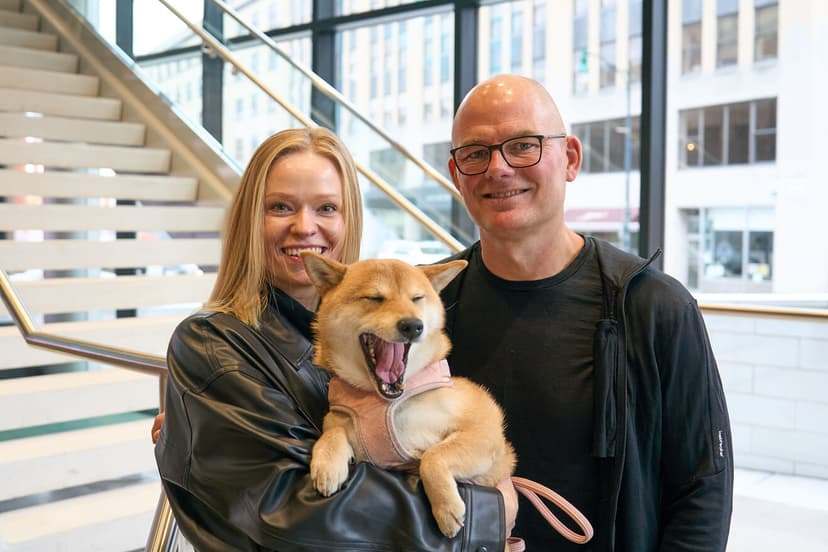
When I was eight, I remember our train to Mumbai ground to a halt with a great noise. When we started moving again, a good eight hours later, someone pointed out a mangled tail, of all things, hanging from a branch close to the tracks.
The train, you see, had apparently hit a wild bison at full speed, and the impact damaged the engine so badly that it had to be towed away for repairs. For a long time, I thought such things only happened in places like rural India, but I learned a few years ago that wildlife and infrastructure do not mix anywhere on the planet.
The FAA estimates that wildlife strikes have cost U.S. civil aviation about $272 million a year on average between 1990 and 2025. In France, the rail operator SNCF says wandering animals affect more than 8,000 trains across the country each year and are among its five leading causes of delays. In Brittany, 120 trains hit animals in 2023 alone, disrupting 660 services and causing more than 15,000 minutes of delays.
Reading about all that damage, to both infrastructure and animals, inspired Sara Nozkova (pictured above on the left) to develop a wildlife deterrent system that works differently from the sirens, lights, fences, falcons and culling traditionally used to keep animals away from roads, train tracks, airports and other infrastructure.
“I was convinced the answer was not a louder deterrent,” she told TechCrunch.
After spending 13 years working in transportation and autonomous vehicles, Nozkova had learned how quickly the systems we build to navigate roads and other controlled environments fail once nature enters the equation.
“We have taught machines to be brilliant, but only inside the environments we engineered for them,” she said. “Cities, factory lines, warehouses. Fixed geometry, known objects. Stepping outside into nature I saw firsthand how the same machines quickly go blind. Because nature is complex and always alive.”
So instead she joined the AI lab at KTH Royal Institute of Technology in Stockholm and started working on a system that could change its deterrent responses based on what an animal nearby is doing, and even which animal it is.
That work turned into Flox Intelligence, which spun out of KTH in 2020 and is one of the finalists at this year’s Startup Battlefield 200 at TechCrunch Disrupt. (The company pitched a panel of VC judges on Tuesday at Disrupt, which is taking place this year at Moscone West in San Francisco through Thursday, October 15.)
Flox makes edge devices that process data on-site rather than in the cloud. Like autonomous vehicles, they use perception systems to sense their surroundings, but theirs are trained on wildlife behavior. A motion sensor wakes the device when it detects movement, triggering a camera that uses on-device models to identify nearby animals. The device then emits a species-appropriate sound to scare them away.
Nozkova says the system learns from experience, too, and varies its responses so animals don’t get habituated to repeated signals.
The company currently sells battery-operated devices that can be mounted on poles, trees and other structures. It also offers a software platform that shows clients where the devices are deployed and what’s happening on the ground. The platform can also generate reports for regulatory compliance and for uses like biodiversity monitoring. The longer-term goal is to make the software portable enough to run on machines that work outside, including trains, cars and drones.
Nozkova says about 150 Flox devices are live in North America, Europe and Australia at sites including airfields and airport perimeters; road and rail corridors (especially fence ends and crossings along wildlife corridors); national parks; agricultural land; urban areas; mining sites; and critical infrastructure such as electrical substations.
The company sells edge units upfront, then charges an annual software and AI subscription after the first year. Flox also has OEM partnerships with companies that pay an annual fee to deploy its software on vehicles, like trains. Train manufacturer Alstom is one such partner.
The company expects to end 2026 with revenue of about $1.5 million, Nozkova said.
Unique as Flox’s product and approach is, the startup is not without competition. Robin Radar’s Scarecrow also uses species-specific distress calls to disperse birds and it records the activity, while iCHASE sells a system that detects birds with computer vision and targets them with a moving laser, adjusting its response as needed.
Nozkova says her moat is the breadth of the system and the data Flox has collected in the field, which she calls “ground truth on what actually makes a moose or a grizzly bear move safely.”
“Physical AI is walking out of the factory and into the messy, alive outdoors,” Nozkova says. “Every machine that operates outside — trains, trucks, drones, tractors, robots — will need to understand nature, and nature intelligence is the next layer of the perception stack. Almost nobody is building it.”
The company has raised about $5 million across pre-seed and seed rounds so far, with the seed round led by Unconventional Ventures and Tilia Impact Ventures. Co-investors across the rounds include GENIUS NY, Norrsken, Satgana and angel investors, Nozkova said.
The company is now opening a $10 million Series A, which would mostly go toward growing from about 150 devices to several thousand deployed units and extending the underlying system beyond its current wildlife use cases.
When you purchase through links in our articles, we may earn a small commission. This doesn’t affect our editorial independence.
>
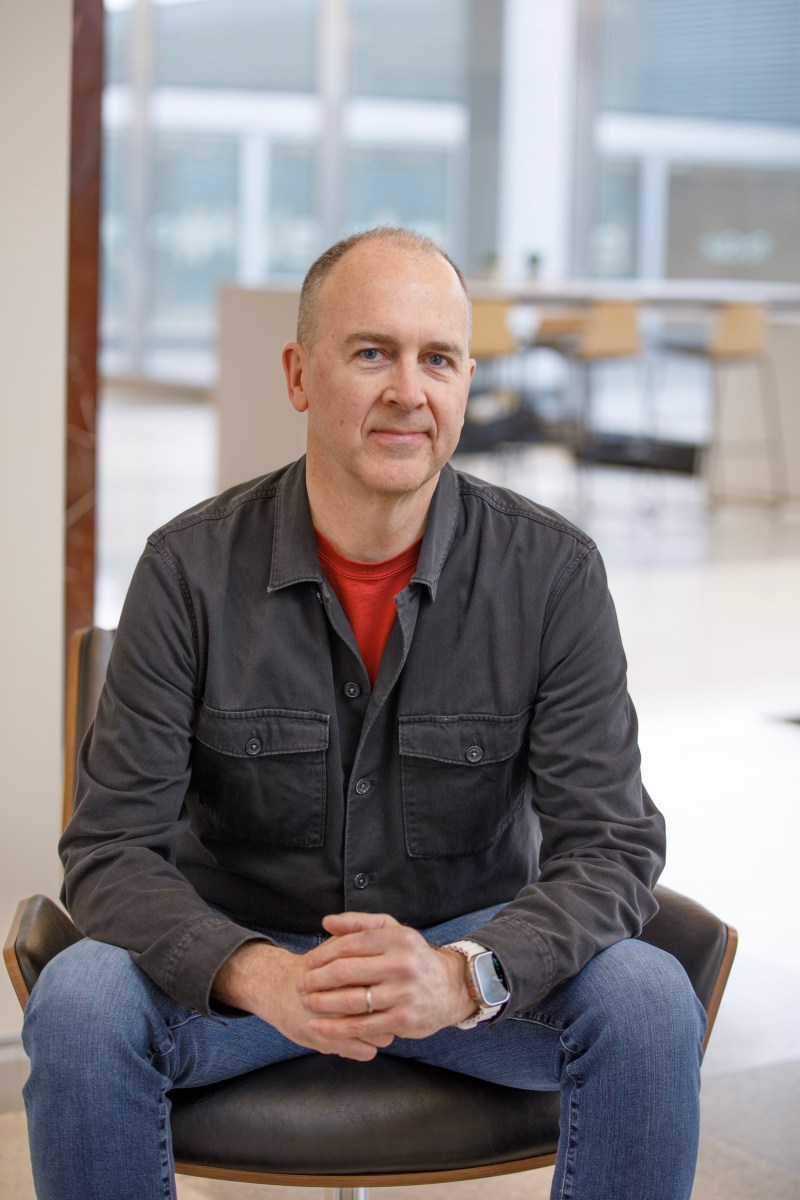
Doug Field has worked on EVs at Ford and Tesla, the not-so-secret car project at Apple, and was employee No. 1 at Segway. Now, the executive is turning his attention to Rivian CEO RJ Scaringe’s latest project: Mind Robotics.
Field has been hired at president of Mind Robotics, an industrial AI and robotics venture that spun out of Rivian last year. The news, shared on stage at Disrupt 2026, is another sign that Mind Robotics is getting ready to scale up its early operations just one year after its founding.
Scaringe will still be involved with Mind Robotics, but the day-to-day aspects of the business, including product, engineering, and operations will be handled by Field.
Mind Robotics, which has already amassed more than $1 billion in backing from Accel, Andreessen Horowitz, Eclipse, Kleiner Perkins and the venture arms of Volkswagen and Salesforce, is building a full stack for industrial manufacturing. The purpose-built robots will run on foundation models with an goal of automating industrial and manufacturing tasks at scale.
Unlike the humanoid-like robots being developed by Tesla and others, Scaringe says Mind Robotics won’t attempt to mimic all the biomechanics of a human. The startup is also using Rivian as “a live, high-volume manufacturing environment for model training and deployment,” with Rivian being Mind Robotics’ first customer.
“It’s incredibly exciting what’s happening in robotics and what we’re capable of doing today, when we think about the progress that’s happened on the hardware, modeling techniques, [and] bringing that together to develop robots that can actually be deployed at scale,” Scaringe said on the Disrupt stage.
Field left Ford in April after five years shaping the automaker’s electric vehicle and technology strategies. His departure was part of a wider reorganization of the automaker’s leadership. Prior to Ford, Field led Apple’s Project Titan, the electric, autonomous car project that was canceled in 2024. He also served as senior vice president of engineering at Tesla, where he oversaw development of the Model 3 and got the sedan through “production hell.”
“Integrating AI and robotics is one of the most important–and difficult–engineering challenges of our time,” Field said in a statement. “Mind has assembled an exceptional team and has a unique advantage: the ability to deploy and learn inside a real, high-volume factory from day one. I’m thrilled to join RJ in building a team, culture, and technology that will redefine what we can make in America.”
Mind Robotics is the second company that Scaringe spun out of Rivian, following Also, a micromobility play that’s starting with high-end e-bikes. Like with Field and Mind Robotics, Scaringe is involved as chairman at Also but has tapped someone to run the day-to-tay: Chris Yu, the former chief product officer of Specialized.
Mind Robotics and Also operate as standalone companies, but Rivian has minority stakes in both. The company reported owning about a third of each startup as of June 30, 2026.
When you purchase through links in our articles, we may earn a small commission. This doesn’t affect our editorial independence.
>

‘Below’ Attracts Record Debut For Netflix Canadian Series
How to watch Flames vs. Ducks: TV channel and streaming options for October 13

‘The Banning Curse’ Iran Film Interview Mohsen Amiryousefi: LFF 2026
-

 movies5 months ago
Search For Canadian TV Actor Stewart McLean Now Homicide Investigation
-

 Fashion9 years ago
These ’90s fashion trends are making a comeback in 2017
-
Fashion9 years ago
According to Dior Couture, this taboo fashion accessory is back
-
Fashion9 years ago
Model Jocelyn Chew’s Instagram is the best vacation you’ve ever had
-
Fashion9 years ago
Emily Ratajkowski channels back-to-school style
-
Fashion9 years ago
9 Celebrities who have spoken out about being photoshopped
-

 Anime4 months ago
Rurouni Kenshin: Hokkaido Arc Manga Takes 1-Issue Break – News
-

 Anime3 months ago
HIDIVE to Stream English Dubs for The World Is Dancing, The Forsaken Saintess and Her Foodie Roadtrip in Another World, The Dangers in My Heart: The Movie Anime – News