
Anime
Inklore Reveals English Print Cover for 1st Volume of Eleceed Webtoon – News


Publisher will release 1st volume on January 19, 2027

Inklore has revealed the first English-language print cover for global webtoon hit ELECEED, marking another step in the series’ expansion beyond digital platforms, along with its upcoming anime adaptation.
Publisher Inklore will release ELECEED, Vol. 1 on January 19, 2027, bringing the action-fantasy series by Jeho Son and ZHENA to English-language print audiences for the first time. The franchise has surpassed 1.4 billion views worldwide.
The milestone comes as ELECEED is also being adapted into an anime, further accelerating its cross-media expansion. Creator Jeho Son previously stated when the anime was announced in June 2025 that the adaptation “feels like a dream” and credited fans for making it possible. Artist ZHENA had released a celebratory illustration expressing excitement over the news last June.
Hiroshi Nishikiori is directing the anime at DandeLion Animation Studio. Yousuke Kuroda is writing and overseeing the series scripts. Minami Sakura is the character designer. The anime is slated to debut this year.
Originally debuting in 2018, ELECEED follows Jiwoo, a kind-hearted boy with super speed, and Kayden, a powerful awakened being forced into the body of a cat. Blending high-energy action with humor and character-driven storytelling, the series has remained a top performer on NAVER WEBTOON across multiple regions and languages.
Son is also known for the Noblesse series.
Source: E-mail correspondence
>
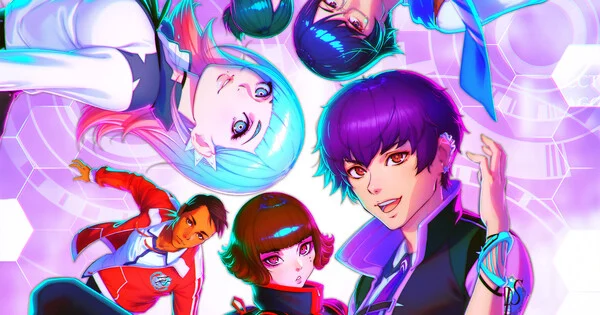

Ilya Kuvshinov is a world-renowned artist, illustrator, and character designer. His stunning work has appeared in many projects since moving to Japan in 2015 to work in the anime industry, including notable titles such as Ghost in the Shell: SAC 2045. Ilya’s latest project is Compile Heart‘s new game Villion:Code, and he was kind enough to take time out of his schedule to answer some of our questions.
Where did you start when developing characters for Villion:Code? Did you start with a particular character and work outward, or do you plan the group out as a whole?
Ilya Kuvshinov:
Yes, the first sketch I ever did for the game was of the group of protagonists lined up together—to grasp the dynamics of their personalities, heights, costume differences and similarities, faces, haircuts, postures, and overall vibes.
Were there any characters that took longer to develop than others? Or did they end up taking a similar amount of time? Could you explain why certain characters took longer than others or why all the characters took the same amount of time?
KUVSHINOV:
Yes, interestingly, some of the characters were basically approved on the spot and remained as they were on the very first sketch, with minor changes and improvements (such as three of the male protagonists). However, some of the characters were redone from scratch a couple of times (like Chloe, whose personality and backstory also changed in the process of finalizing the script). Anastasia went through the greatest number of iterations—we needed her to stand out, so with each revision she gradually became less symmetrical (which I am a big fan of) in both her haircut (diagonal bangs) and in her costume (differences in sleeve length and accessory arrangement).
Presumably, the developers had certain archetypes in mind when planning out Villion:Code‘s narrative, gameplay, and plot points. How much collaboration was there with the developers when creating the main cast? What input did you have?
KUVSHINOV:
My job was to create the characters who live in the story and drive it forward, characters with whom the players will interact and spend hours together. So my responsibility was to grasp the ideas and concepts of this world, story, and gameplay, and reflect them in the characters’ designs and appearances. I didn’t really have any serious input into anything other than writing one sidequest and the visuals.

© IDEA FACTORY/COMPILE HEART/GAIA All rights reserved. Licensed to and published by IDEA FACTORY INTERNATIONAL.
Which portions of the cast were you involved with creating for Villion:Code? Was it the main cast only, or did you also do design work for the supporting cast, GEMs, and so on?
KUVSHINOV:
I worked on the concepts and illustrations for all the characters—protagonists, antagonists, and NPCs—alongside supervising 3D models. I also provided rough concepts for monsters! Other than working on the characters, I also designed the school logo, cutscene illustrations, promotional artwork, cover illustrations, UI portraits, and more.
You have worked on numerous projects, from anime series to films to music videos. Does your character design process change depending on the medium, or do you maintain a consistent approach across all your projects?
KUVSHINOV:
Yes, character design processes for different mediums branch off at a certain point. To give a simple example, 2D anime characters are drawn by hand thousands of times, so their costumes and hair should be less detailed. For 3D (games and/or anime), there are fewer limitations on outfit textures and hair detail, but you need to consider properties uniquely related to polygonal 3D—such as clipping (e.g., long hair, puffy sleeves) or transparent surfaces. For Villion: Code, we also needed some of the characters to move in Live 2D (which was my first experience with it) on top of having them as in-game 3D models, so that was new for me—learned a lot!

© IDEA FACTORY/COMPILE HEART/GAIA All rights reserved. Licensed to and published by IDEA FACTORY INTERNATIONAL.
Are there any unique challenges or opportunities that come with designing video game characters as opposed to anime series, film, etc.?
KUVSHINOV:
In the game, players can freely move the camera around and look at the character from nearly every angle and distance they want, and some characters move around on their own—so I always kept that in mind while designing them. In terms of color and silhouette, characters should be recognizable from any angle and distance, especially with tube-based gameplay where characters could be placed on completely different planes.
How did you come to be involved in working on Villion:Code?
KUVSHINOV:
Kouji Okada-sensei asked me to be involved, and as a big fan of his work, it was a big honor!!
The game is set in a near-future setting, and it’s clear there is a mixture of advanced technology, but also modern-day fashion and concepts. How did you try to capture the futuristic elements without making it seem too far away from the present?
KUVSHINOV:
I was researching a lot about how science has influenced fashion throughout history—the materials, shapes, cost, and even the colors of the clothes were closely dependent on technological advances. I also researched the ways some outfits traditionally stay the same in certain ways, like why serafuku uniforms are shaped how they are or why doctors’ coats are all the same color; it was a lot of fun! The game’s story takes place in a sort of school town, so I researched many things related to school and sports uniforms, as well as many different types of uniforms around the world and throughout history, and imagined how they might look in the near future in a very big, multicultural school environment.
The characters in Villion:Code also appear to have a wide array of strange weaponry and techniques. Were you involved in coming up with those elements as well? Or did the developers send you a list of what they wanted the abilities to look and feel like?
KUVSHINOV:
Weapons and abilities were done without my involvement or supervision, so I haven’t seen all of them myself yet. I’m looking forward to trying them out when the game’s out! (laughing)
Were there any characters that surprised you as they developed, perhaps ending up in an unexpected place versus where you initially conceptualized them?
KUVSHINOV:
Ah yes, there are some characters (nearly most of them, to be honest) whose backstories and development touched me deeply. No spoilers, but those are… moving.

© IDEA FACTORY/COMPILE HEART/GAIA All rights reserved. Licensed to and published by IDEA FACTORY INTERNATIONAL.
Fashion is obviously a huge part of your work. Can you share any insights into how you approached the outfits for the cast of Villion:Code?
KUVSHINOV:
So, back to the school uniform talk! We needed the cast to wear the same school uniform (so, the same clothes basically), while including unique distinctions between the characters at the same time—which is not actually as challenging as it sounds if you know the characters’ personalities, backstories, and unique traits.
The outfits are the same, but how the characters are wearing them can differ drastically: things like rolled-up sleeves, unbuttoned shirts, wearing a parka or sweater, wearing a tie (and is it tied or not?) or a bow tie, wearing their collar up or down—those all say something about the character. For example, Chloe wears her collar way, way up, nearly covering half of her face, hinting at her unconscious desire to hide herself from the outside world.
Your work is very striking, and it has a distinct quality. On a personal level, what do you consider to be the key motifs of your work? Are there elements that you think signify a piece as clearly being yours?
KUVSHINOV:
Thank you so much! On a personal level, I am always trying to say more while showing less (like with Chloe’s collar), but I guess the distinct elements would be the characters’ eyes’ pupil designs.
Art and the creative process are ever-evolving for the creator. Have you noticed a change in your practice as you’ve worked on Villion:Code, or have you refined an existing aspect of your work that was already there?
KUVSHINOV:
For Villion:Code, because I needed to paint many, many characters in the same style consistently (color saturation, the depth of shadows, line art thickness, and more), and then prepare the data for Live2D, I created a painting guideline for myself specifically for this project. It included the palettes, exact brushes for specific tasks, step-by-step pipelines for effects, and guides for layer blending modes and opacity. That helped speed up the process a lot!

© IDEA FACTORY/COMPILE HEART/GAIA All rights reserved. Licensed to and published by IDEA FACTORY INTERNATIONAL.
It can be difficult to play favorites, but is there a particular character design or idea that you are proud of in Villion:Code?
KUVSHINOV:
I love how different the ear devices (Helixes) look! Each one is unique to a specific character and tells you a little about its wearer as a person when you think about what color and shape the character chose for the device.
What would you say to your existing fans about the game that you hope they can experience?
KUVSHINOV:
I am so, so lucky to be part of such a big and important entertainment production. It’s a team effort, and my role in it is not very big, but what I’ve seen from the other aspects—the story, the gameplay, the music, the voices, and more—has made me feel like I am a part of something truly unique and deep. I hope you can try it and decide for yourself!
>
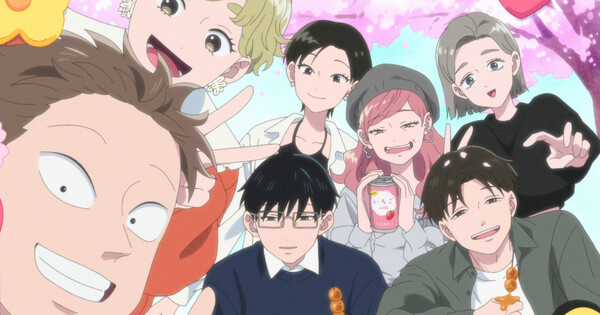

© Kocha Agasawa/SHUEISHA, You and I Are Polar Opposites Committee
Last week’s episode was so definitive of a conclusion that I frankly couldn’t begin to imagine what we could possibly get out of an extra one beyond a typical epilogue to see all these characters as adults. The answer was a bit unexpected. Most of this finale ends up going backwards in time, as it jumps back to the very beginning of Tani and Miyu’s relationship to show it from Tani’s point of view. It’s not exactly the most dramatic way to close out this show, but since this has never been all that dramatic of a series to begin with, I can’t say it doesn’t fit.
Delving into the past, we see that prior to meeting Miyu, Tani was a person who had a hard time understanding others or taking interest in them. Being someone who also has these same struggles, I could really sympathize with how easy it is for others to mistake it for total indifference. All that makes him understandably perplexed when Miyu keeps talking to him, and in hindsight it’s pretty funny to see that Miyu’s first attempts to approach him were entirely casual. As it turns out, she only started talking to him to put down any misgivings she thought he was having about her friends for constantly dragging him into their conversations. It wasn’t until Miyu started getting frustrated with how seemingly unresponsive he was that it turned into a crush, and seeing that shift play out in real time is pretty cute. It was also just as cute to see that while Tani didn’t realize right away he was falling for Miyu, talking to her started adding a bit more color to his life. Tani only ever realized he liked her during Miyu’s attempt to walk home with him all the way back in episode one, which made Miyu’s poor attempt to deny her crush in front of her friends even more awkward. While Tani was almost willing to let go of his crush out of fear he put Miyu in a bad spot, it was sweet to see that even by that point, he’d already fallen for her hard enough that he couldn’t let go of all the time they’d spent together. Of course, we know that worked out. Since we’ve already seen the confession scene from Tani’s perspective before, I appreciate the show avoiding showing that a second time.
Instead, we see all of Tani and Miyu’s happy memories as a couple, and some of those happy memories include the future, so the show ends up circling back around to a standard epilogue after all. Nothing in that epilogue is too surprising, but given my worries that some part of it might imply that Taira and Azuma’s relationship never changed, I am at least relieved that we got a scene of them enjoying a night ride together (I’ll just take that as a sign they started dating in college and leave it at that). As far as an actual ending goes, what we got last week was more of a proper climax, but this was a nice little bonus, and either way, I’m glad it went out on a high note. You and I Are Polar Opposites was a cozy little ride from beginning to end, and considering I sometimes struggle to stay invested in lower-stakes rom-coms, it says a lot that I had a good time the whole way through. It goes to show that an aggressive amount of charm is sometimes all an anime rom-com needs to hit, and when it comes to raw charm, there are few as good as this one.
Rating:
You and I Are Polar Opposites Season 2 is currently streaming on
Crunchyroll.
The views and opinions expressed in this article are solely those of the author(s) and do not necessarily represent the views of Anime News Network, its employees, owners, or sponsors.
>
Hello, and welcome once more to the latest edition of the column! Due to having to submit the last issue for publication a bit earlier than usual, I wasn’t able to incorporate much news from the 2026 Tokyo Game Show. And amidst a crunch period related to the release of Fire Emblem: Fortune’s Weave, I didn’t get the chance to watch the announcements as they happened. Jean-Karlo ran down some of the more notable announcements on the console and PC front, and while I spent some time combing through the latest, TGS was surprisingly light on big mobile news, at least of the kind that gets space right here on:

Astrae Oratio and Fareidolia Strut at TGS
While big on-stream announcements were a little bit scarce at TGS 2026 (beyond some interesting-but-not-showstopping new titles like Sanrio Kawaii Me Live! and Fragaria Memories), the show floor offered playable demos of two games on many anime otakus’ hype list: NC and Dynamis One’s Astrae Oratio and Nexon‘s Fareidolia, both due out in the near future on mobile and PC. These two titles are notable because they both have deep roots growing out of Blue Archive, Nexon‘s bishoujo gacha game, and one of the biggest things in the subculture scene this side of Kantai Collection.
Astrae Oratio is the game that’s farther along, having entered a short closed beta test period just last week and with its release window seemingly set for sometime this year (or early next). Publisher NC has fully kicked off the game’s promotional cycle, too, releasing new trailers and previews for both the Japanese and Global/English editions and aiming for a simultaneous worldwide launch. Prior to all this new info coming out, Astrae Oratio was notable mainly for its origins. As mentioned back in May when NC unveiled its official title (and discarded the Project AT codename), Astrae Oratio is developed by Dynamis One, a studio founded by developers who once held key positions on Blue Archive‘s development team at Nexon, including Blue Archive‘s former director, lead scenario writer, art director, and other notable creatives.
Unfortunately, the circumstances of the staffers’ departures, and of its initially announced debut game, Project KV (which was cancelled barely a week after it was announced after igniting a public furor over its similarities to Blue Archive), proved controversial enough that South Korean authorities got involved, with studio leadership currently under investigation over accusations that they unlawfully poached development materials related to an unreleased Nexon project called MX Blade. While there’ve been no publicly announced results from that investigation so far, much of the curiosity surrounding Astrae Oratio and NC’s backing of Dynamis One stemmed from that bit of scandal.
Now, though, the game can at least be seen on something approaching its own merits, and I must say that it makes quite the first impression. Though I didn’t get into the closed beta test, footage that’s emerged from it has revealed a game that seems to have a firm handle on the intriguing sensibilities and cutesy foundations that helped propel Blue Archive to its lead player in the “subculture game” (read: games designed to bait anime nerds and similar otaku) space. In fact, it wouldn’t be reductive to describe Astrae Oratio as “Blue Archive, but about witches instead of vaguely angelic students.” The game trades in the ultramodern urban aesthetics of Kivotos for a more specific place and time: Tokyo, in the early years of Japan’s Heisei era, which started in 1989. For Astrae Oratio‘s “Reisei era,” That means boxy cars, blocky electronics, CRT monitors and TVs, headphones with fuzzy foam earpads, constant shots of Tokyo Tower, and an art style that blends flashy, contemporary anime visual sensibilities with callbacks to the popular character design tropes millennials grew up with. The early-game tutorial characters even have a main menu theme that sounds a heck of a lot like the opening to Cardcaptor Sakura.
In terms of gameplay, Astrae Oratio seems to pull a fair bit from how Honkai: Star Rail does battles, but mixing in character-switching elements from fighting games and other real-time combat systems. Players need to attack an enemy while anticipating and countering their moves on a timeline, with what look like timing-based dodge and parry mechanics to spice things up. I’ve quite enjoyed Blue Archive, but acknowledge that the game feels a bit like it’s in something of a slump, trying to recapture some of the momentum it lost in earlier years and hold onto the goodwill Nexon jettisoned when recent changes to the gacha mechanics angered Japanese fans (and Global fans, by extension).
But if Astrae Oratio seems about ready to exit the gate with all cylinders pumping, seemingly targeted to dethrone its predecessor-turned-rival, Nexon‘s Fareidolia looks like the type of game to try to make space beside Blue Archive rather than take its seat. That makes sense, since it’s coming from the same part of Nexon: internal Studio Io Division. Not too much is known right now about how Fareidolia will turn out, but it’s definitely not a mere Blue Archive spinoff. In fact, judging by Ken’s account of the playable demo at TGS, it’s as different from Blue Archive as Arknights Endfield is from Arknights.
The demo at TGS was pretty much restricted to Fareidolia‘s combat, and where Blue Archive is an isometric auto-battler, with little hands-on control beyond deciding when and where to place a character’s skills, Fareidolia is a hybrid turn-based tactical game reminiscent of something like Sega‘s Valkyria Chronicles. Units move freely in a battle space, and positioning plays a key role in making sure a character’s skills have optimum effect.
The demo didn’t have much to indicate what Fareidolia will be like outside of combat, but early reporting and teasers suggest that the game’s got life sim elements to focus on alongside the combat. Just a handful of playable characters have been revealed so far, and all cohabitate with the player at Twilight Hall, a dorm of sorts that serves as a living space where the player bonds with their squaddies as they solve problems around a mystical world called Anima City, one that blends in Showa-era visual elements, like retro-looking tech and architecture enmeshed with more modern conveniences like smartphones and vending machines.
While most bishoujo gacha games in this vein tend to limit interactions to scripted animations or side stories, reports from Japanese news sites say that Fareidolia‘s daily life segments also feature an option for voice recognition, allowing players to address characters by name and call out to them while they lounge around onscreen. They’ll also be able to select dialog choices in conversations by reading them aloud. If it works (and hopefully isn’t being used to spy on you), it could be a fun immersion-boosting feature. Despite my own dedication to staying muted in as many calls as I can stand, I’ve always had a soft spot for voice-control games, ever since gimmicky titles like Lifeline and Tom Clancy’s Endwar let you talk to computers and control a game while doing so.
Right now, Fareidolia‘s looking more like a work in progress than a game that’s close to any real release window, but if nothing else, it does at least seem to promise a potentially unique experience for fans looking for more than “Blue Archive 2.”
Maiden’s Corner Mini-Edition: Love and Deepspace Promotes Literal Toxicity
One way to keep your game at the top of mind is with attention-grabbing promotions, and that’s an assignment that Love and Deepspace‘s social media team seems to understand well. It’s well understood that LADS rides high on spicy, sexy teaser clips, but it also makes headlines when the team in charge of the game’s Twitter account implies that what’s on offer is too hot for public consumption, as it did with summertime promos from earlier this year, opting to use saucy stick figures instead of footage from the game.
All that said, the latest promo might have backfired a little. On September 29th, the official Love and Deepspace Twitter account launched a web-based “Drink Event,” asking players to suggest ingredients to add to a handful of “Shimmering Blend” mocktails to share with their love interests.
Shake, swirl… and take a sip! One taste of this Special Blend🍸️ and you won’t forget it.
Exotic Fruits picked together are blended into a taste of happiness.
A little of this, a little of that, and one last must-have ingredient…?
🍸️What secret ingredient would you add to this Special Blend made just for him?
🎁Feel free to post with the hashtag #SleeplessBanquet or share in the comments. You can share text, screenshots, or photos!
We will randomly select 5 Hunters to receive a redeem code for [Diamond*100, Stamina*100, and Gold*10,000]!
———
🪐Official Discord: https://t.co/hKmnBAbbgu
🪐Download and Log in Now: https://t.co/bNEP8yM6bZ
#LoveandDeepspace #ANightThatNeverEnds— Love and Deepspace (@Love_Deepspace) September 29, 2026
The mocktails themselves were little more than cutesy juice mixes to serve as cover for a light raffle entry contest, but the promo quickly attracted attention outside the LADS-player sphere for suggesting garnishes of Datura and Fire Lily for two of the drinks. Though garnishes aren’t generally meant to be eaten, Datura and Fire Lily are, in real life, quite toxic plants, and shouldn’t be put anywhere near a person’s digestive system. The post was hit with a warning via Twitter‘s user notes feature, and the account also issued a “Safety Notice” via quote, advising players not to attempt to recreate or consume the drink recipes in reality.
While the kefuffle was ultimately rather harmless, it’s a bit of a shame that the drink recipes themselves are entirely fictional. I still remember the early 2020s, when official brand accounts helped spark a surge of interest in game- and anime-themed cooking pushed by recreating popular fictional food items for home-bound fans to try, like LeBlanc Curry from Persona 5 or Sekiro‘s Ohagi rice balls.
Heaven Burns Red Summons the Phantom Thieves to the Global Edition on October 8th
It took a little while, but the global edition of Wright Flyer Studio and Key‘s Heaven Burns Red finally has a date for the localized edition of its Persona 5 Royal crossover. Operation Takanawa Mementos ~Wake Your Heart~ will launch on October 8, 2026, just a few months after it launched in Japan. The global edition of Heaven Burns Red operates on an accelerated schedule to help it catch up after spending years without a global launch. Players will be able to roll on the gacha for Queen (Makoto Niijima) and Violet (Kasumi Yoshizawa), and participation will grant players a copy of Morgana.
I highly recommend folks give Heaven Burns Red a bit of a try, even if it’s a lot of visual novel to read through. Of the many VN-adjacent gacha games out there, I consider HBR among the best in the scene for character writing, and it benefits from being the baby of Key luminary Jun Maeda. The game’s main story is also on the road to ending for good, at least in Japan, so there’s no danger that you’ll be getting an incomplete experience.
Chaos Zero Nightmare To Tease its 1st Anniversary in October 10 Showcase
Publisher Smilegate is gearing up to celebrate the first anniversary of Chaos Zero Nightmare, its gacha deckbuilder. More details will be released in a showcase broadcast set for October 10th, but the teaser trailer promises a round of spooky stories and something that might strike fear into the hearts of CZN players: a sinisterly smiling Renoa.
As passe as primarily 2D gacha RPGs seem to be these days, I’ve always somewhat preferred that style in my mobile games over the slick full-3D presentation of the market leaders. And when a game is in 3D, the more its style seems to emulate 2D, the more I’m drawn to it (Astrae Oratio is a strong example, to borrow an upcoming title). Though I never really got into Chaos Zero Nightmare, I quite liked the unusual choice of angles used for its battle sequences. It’s just a bit disappointing it didn’t hold to its initial horror and occult-themed roots as strongly as it could’ve, though if nothing else, the spooky story-themed Nightmare Carnival Event might bring some of that vibe back.
Punishing Gray Raven Launches Date A Live V Crossover, with Kurumi Tokisaki Joining
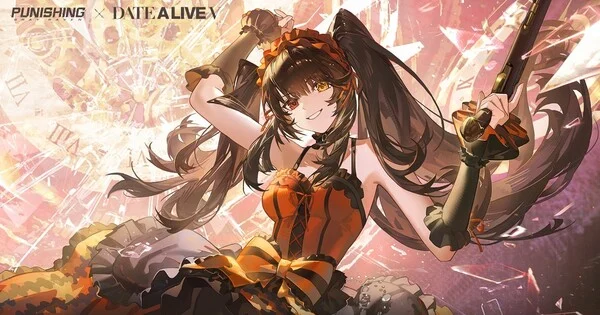
Though Kuro Games is better known these days as the Wuthering Waves developer, Punishing Gray Raven remains a vital, if lower-key feather in the studio’s cap. And if one’s a WuWa main, a glance at PGR does show where the larger title’s appetite for crossovers came from. The latest PGR event, which launched on September 29th, hooks players up with Kurumi Tokisaki, the fan-favorite time-manipulating heroine of Date A Live V.
As in other Date A Live media, Kurumi shows off her signature move, Zafkiel, to teleport around the battlefield and shoot the heck out of her opponents with antique flintlock firearms. Despite not making a huge impression when it was new to the seasonal anime churn, I’ve always found Date A Live to be a series with surprising endurance, coming back again and again despite years of separation between some of the seasons. And whenever the series makes news again (such as the recent announcement of Date A Live F Last Date), Kurumi-lovers are quick to proclaim (or re-proclaim) their love for the heterochromatic yandere.
Mobile MonHun Returns on October 29th with Monster Hunter Outlanders
Long before phones could conceivably play “real” games, Monster Hunter was for many the epitome of modern online “mobile” gaming. It’s hard to understate how influential the ability to play Monster Hunter on PSP with friends was for a huge chunk of the gaming audience (particularly in Japan, where the phenomenon sparked an entire game industry movement searching for hunter-likes built around local wireless multiplayer).
Now CAPCOM and Timi Studio (of Honor of Kings fame) are looking to make a Monster Hunter for the modern mobile age with Monster Hunter Outlanders. Rather than the augmented reality joint Monster Hunter Now, Outlanders bills itself as a real, “proper” Monster Hunter game centered around combat with massive beasts and mastering a variety of wild weapons.
The wrinkle here is that, like many a free-to-play mobile game, this one’s supported by the gacha. In addition to your standard customizable player character, you’ll be able to roll the banner for other adventurers with their own identities, looks, and playstyles. You can set these gacha-recruited characters as party members in an approximation of the classic co-op party or control them directly by putting them in the lead. It remains to be seen whether that style of monetization (and the design-warping pressures it can put on any game) can really translate “classic” Monster Hunter gameplay to the modern mobile environment, but we won’t have long to find out if that’s the case.
Hatsune Miku: Colorful Stage! Set to End its Main Story by 2029
I guess we can file this one under “Wait, it had a story?”
I am of course joking, but to someone who hasn’t played the game or paid it much attention since it launched in 2020, Hatsune Miku: Colorful Stage! (also known as Project SEKAI: Colorful Stage) was nothing more than a mobile, free-to-play Vocaloid-themed rhythm game in the vein of the Project DIVA titles. Such games (and Vocaloids in general) aren’t known for character-driven narrative appeal. Nevertheless, Colorful Stage! now has an ending window for its main story, according to an announcement by producer/director Yūichirō Kondō. Japanese players can expect each group’s core storyline to end by the beginning of 2028, with global players seeing the same by 2029.
One must wonder, given the usual expectation that free-to-play and live service games are meant to go on for as long as they make money, what prompted the announcement. According to Kondo, this ending was always the plan, but, not unlike the Heaven Burns Red story news, the conclusion of the main story doesn’t mean the game is shutting down. Side stories and epilogues will still be added to the game over time, alongside the usual slew of new songs and cosmetics.
For what it’s worth, I think announcing endings like this is a smart move. With the gacha and live service markets cooling off, even in hotspots like Japan and China, more developers and publishers are recognizing that these games, even the best of them, can’t grow eternally, and are developing games with an eventual ending in mind. Having that plan in place from the start helps avoid the dissatisfaction of seeing a beloved game unceremoniously put down, and also potentially gives games a second chance in the future when they pull a Final Fantasy Resonance and get rebooted or rereleased as premium offline titles later on.
Let’s close out this edition with a few news tidbits:
- Restaurant management sim One Piece: Grand Gourmet has a full release date now, and will launch on October 23rd. Rather than the traditionally fighting-focused One Piece game entries, Grand Gourmet‘s a cutesy pixel art character-fest putting players in charge of making their restaurant, Baratie Number Two, the best dang eatery on the Grand Line and beyond.
- Looking for a bit of classic gameplay without having to install an emulator? Konami‘s got you covered, as a mobile port of the original Castlevania is available for free on Android and iOS, in celebration of the series’ 40th anniversary. Console and PC players can also look forward to an entirely new game, Castlevania: Belmont’s Curse.
- Elementa Games’ open-world detective adventure Silver Palace has opened signups for a third round of closed beta testing, with a recruitment survey form open until October 10th. The test date has yet to be announced, but participants in the 2nd round of testing will be grandfathered into this one. This will also be the first testing round for players on Android and iOS (the previous two were PC-only). This test also includes cross-save functionality, allowing players who do get in to play across both mobile and PC, if they wish.
- Developer Sloclap has announced a mobile port of Sifu, its martial arts-themed single-player action game, where getting killed lets you come back, wiser and a bit older. The game is out on PC and consoles, but will hit iOS and Android on October 12th. It’ll be a premium release, costing about $8 USD on the North American stores.
- Truckful, a neat-looking, physics-enabled truck delivery game, will hit on October 9th and challenge players to make deliveries over treacherous terrain and past mysterious threats in a rickety truck that they outfit for the occasion. The game’s a multiplatform release, but notably won’t be hitting iOS at the time of its launch. Instead, it’s a PC and Android exclusive for the time being.
And that’s it from me for now. Despite the prevailing narrative is one of seemingly everybody scrambling to get out of Grand Theft Auto‘s way, it’s looking like a pretty crowded few months for games, particularly if you keep mobile releases in mind. Keep yourselves safe, and I’ll see you next time.
>
Seahawks escape Chargers with sloppy win, vow to be better with 49ers showdown looming

Skydance: Mark Thompson Stays Atop CNN, Bari Weiss at CBS News
Rams' wild comeback against Eagles offers a blueprint for fulfilling their potential
-

 movies5 months ago
Search For Canadian TV Actor Stewart McLean Now Homicide Investigation
-

 Fashion9 years ago
These ’90s fashion trends are making a comeback in 2017
-
Fashion9 years ago
According to Dior Couture, this taboo fashion accessory is back
-
Fashion9 years ago
Model Jocelyn Chew’s Instagram is the best vacation you’ve ever had
-
Fashion9 years ago
Emily Ratajkowski channels back-to-school style
-
Fashion9 years ago
9 Celebrities who have spoken out about being photoshopped
-

 Anime4 months ago
Rurouni Kenshin: Hokkaido Arc Manga Takes 1-Issue Break – News
-

 Anime3 months ago
HIDIVE to Stream English Dubs for The World Is Dancing, The Forsaken Saintess and Her Foodie Roadtrip in Another World, The Dangers in My Heart: The Movie Anime – News