
Tech
Scammers are abusing an internal Microsoft account to send spam links


For months, scammers have been taking advantage of a loophole that allows them to send spammy emails from an internal Microsoft email address typically used for sending legitimate account alerts.
It’s not clear how the scammers are abusing the system, but they have been able to set up new Microsoft accounts as if they are new customers, and use that access to send out emails purportedly from the tech giant itself, potentially tricking people into thinking that these emails may be genuine.
Microsoft doesn’t yet appear to have gotten a handle on the issue.
Last week, I received several, similarly structured emails containing subject lines and web links to scammy sites from Microsoft across different email accounts. These crudely made emails were sent from msonlineservicesteam@microsoftonline.com, an email account that Microsoft uses to send important notifications to users, such as two-factor authentication codes and other critical alerts about their online account.
Some of these emails’ subject lines resembled official emails that would alert users to fraudulent transactions, while other emails claimed to have a private messaging waiting for the recipient at a web address mentioned in the email body.

In a social post on Tuesday, anti-spam non-profit, The Spamhaus Project, said it had also seen Microsoft’s account notification email address being abused to send spam, and that the activity dated back “several months.”
“Automated notification systems should not allow this level of customization,” wrote Spamhaus. The non-profit added that it has notified Microsoft of the issue.
When contacted by TechCrunch earlier this week, a Microsoft spokesperson acknowledged our inquiry, but has not yet commented or said if the company has stopped the abuse of its account notification email.
This is the latest in a rash of incidents in which hackers or scammers have abused company systems to trick unsuspecting customers in recent months. Earlier this year, hackers broke into a platform used by fintech firm Betterment to send out fraudulent notifications that purported to triple the value of any crypto users send in — a widely known scam used to steal people’s cryptocurrency.
Back in 2023, hackers similarly abused access to an email account run by Namecheap to send out phishing emails aimed at stealing people’s credentials.
Other users commenting on social media say that other companies’ email addresses are also being used to send out spam, suggesting the issue is not limited to Microsoft.
When you purchase through links in our articles, we may earn a small commission. This doesn’t affect our editorial independence.
>

Mecka AI, a startup that collects and analyzes human motion data to train humanoid robots and other kinds of robots, announced it has raised a $60 million Series B round led by Sequoia, with participation from Nvidia, Microsoft’s venture fund M12, and others. TechCrunch had previously reported that the startup was nearing a new funding round at a $500 million valuation.
Founded in 2024, the startup intends to do for robotics what Scale AI, Mercor, Surge, and other data-labeling companies have done for LLMs. Those companies supply the human-generated data these systems learn from. Mecka pays people to record themselves doing everyday tasks, like making coffee or fixing cars, while wearing body sensors and using smartphones.
Other startups that collect real-world data for robot training include XDOF, which was in talks to raise a Series B round at a $1.2 billion valuation according to TechCrunch’s previous reporting. Human-data platforms that began with LLMs are also expanding into robotics, such as Scale AI and Micro1.
>
Endeavor Catalyst has closed its fifth fund with $320 million in capital commitments, bringing the firm’s total assets under management to more than $850 million. The raise is good news for founders outside the Bay Area who risk getting overlooked as more funds focus squarely on AI companies in Silicon Valley.
Catalyst is the venture arm of Endeavor, a New York-based global nonprofit that has spent 30 years supporting founders outside major tech hubs. (It calls all those other places “elsewhere” throughout its marketing materials.)
The fund is run by managing partner Allen Taylor, a 20-year veteran of the organization, and managing director Jackie Carmel, who joined Endeavor 12 years ago, along with a 16-person team. The official general partner, though, is Endeavor itself. What that means, says Linda Rottenberg, who co-founded Endeavor and helped start Endeavor Catalyst in 2012, is that “half of the fund’s profits go back to Endeavor, so every investment helps the next generation of founders who are building elsewhere.”
The bar for those founders is pretty high. A person first has to get into Endeavor’s network, where he or she can access Endeavor’s mentoring and extensive network, and that’s hard. Last year, the group says it screened more than 10,000 candidates and picked 88. The network now has more than 3,100 entrepreneurs in over 50 countries.
When one of those founders’ companies raises at least $5 million in a round led by another institutional investor, Catalyst can join in on the same terms as that lead. The team tells TechCrunch that checks usually run $1 million to $3 million but can’t exceed 10% of the round.
Over the next few years, they plan to make 40 to 50 investments annually, investing in up to 150 companies altogether with this new fund, they say.
Taylor wouldn’t share numbers on cash-on-cash returns tied to its earlier funds, but he did point to some impressive-sounding numbers. Across all five funds, he says, Endeavor Catalyst has backed 437 companies in 44 markets. Eighty-three of those startups are currently valued at $1 billion or more, he says, and the unit has seen 39 exits and 11 IPOs.
Some of the venture arm’s most valuable holdings right now include four-year-old ElevenLabs, the maker of AI voice tools that was recently valued at $22 billion in a secondary sale (it was founded in Poland originally), and Bending Spoons, the 13-year-old Italy-based conglomerate that went public in July and which currently boasts a $26 billion market cap.
Other holdings include New York-based Reflection AI (founded by two former Google DeepMind researchers — one of whom was born in Greece) that is now valued at $25 billion; Checkout.com, whose founder is Swiss and that was valued last year at $12 billion; the African payments infrastructure company Flutterwave, valued this summer at $3.2 billion; and Replit, co-founded by Amjad Masad, who is Palestinian-Jordanian. Replit snagged a $9 billion valuation earlier this year.
Endeavor, the nonprofit, has especially well-connected people associated with it, including board members Reid Hoffman; Nick Beim, a career VC who has spent the last 25 years at Matrix Partners, then Venrock; and Edgar Bronfman Jr., the former head of Warner Music and Seagram, who chairs Endeavor Global’s board.
Greek Prime Minister Kyriakos Mitsotakis is a longtime friend of Endeavor, too, including appearing routinely at Endeavor events. (Late last month in San Francisco, I sat down with him during a rare visit to the Bay Area meet with tech founders and Greek expatriates.)
Altogether, Endeavor Catalyst’s newest fund includes 400 limited partners, including Hoffman, famed hedge manager Bill Ackman, and the Dutch investment group Prosus. According to Taylor, roughly 30% of those backers are Endeavor founders themselves, including founders of Nubank, Revolut and Checkout.com.
While so much attention is paid to what’s happening in San Francisco and its immediate environs right now, the bets of Endeavor Catalyst suggest what other investors may be missing, and Endeavor, with local teams and mentors in dozens of countries, seems particularly well positioned to see it.
Indeed, about 90% of the venture arm’s investments are outside the U.S., it says. Europe is its fastest-growing region, with 12 new investments in the first half of 2026 compared with 14 in all of last year, though Latin America is still the largest.
Repeat founders are also becoming a bigger part of the mix. Taylor tells TechCrunch that roughly 14% of Endeavor Catalyst’s fourth fund went to second companies started by Endeavor founders at the seed or Series A stage. With this new fund, the team expects that number will reach 20%
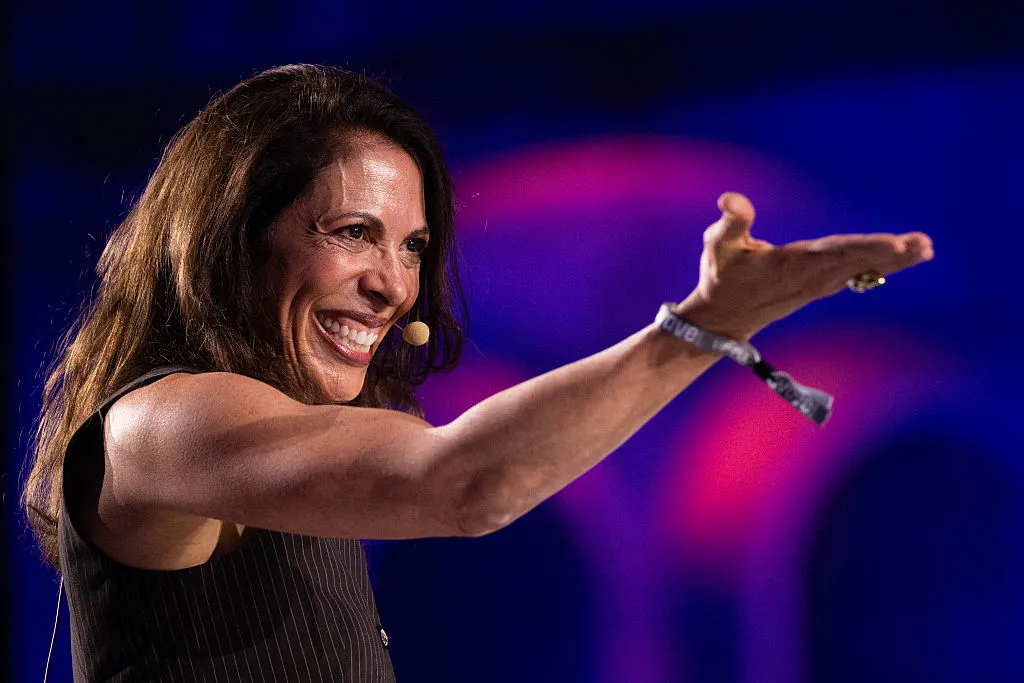
Pictured above: Endeavor co-founder Linda Rottenberg on stage in Turin, Italy, earlier this month.
When you purchase through links in our articles, we may earn a small commission. This doesn’t affect our editorial independence.
>
Google Docs can now edit Markdown files natively, narrowing the gap with Obsidian for teams that write, review, and collaborate on .md files.
The post Google Docs Can Now Edit Markdown Natively — Can It Replace Obsidian? appeared first on TechRepublic.
>
Breanna Stewart unhappy with officiating after Game 2 OT loss: 'It's pretty frustrating'
What can Tottenham fans learn from Roberto De Zerbi's slow start at Brighton?
Barcelona have their most exciting team in years. But you need to know about seny and rauxa
-

 movies5 months ago
Search For Canadian TV Actor Stewart McLean Now Homicide Investigation
-

 Fashion9 years ago
These ’90s fashion trends are making a comeback in 2017
-
Fashion9 years ago
According to Dior Couture, this taboo fashion accessory is back
-
Fashion9 years ago
Model Jocelyn Chew’s Instagram is the best vacation you’ve ever had
-
Fashion9 years ago
Emily Ratajkowski channels back-to-school style
-
Fashion9 years ago
9 Celebrities who have spoken out about being photoshopped
-

 Anime4 months ago
Rurouni Kenshin: Hokkaido Arc Manga Takes 1-Issue Break – News
-

 Anime3 months ago
HIDIVE to Stream English Dubs for The World Is Dancing, The Forsaken Saintess and Her Foodie Roadtrip in Another World, The Dangers in My Heart: The Movie Anime – News