
Tech
Bernie Sanders Urges OpenAI, Anthropic and Meta to Pause Advanced AI Development

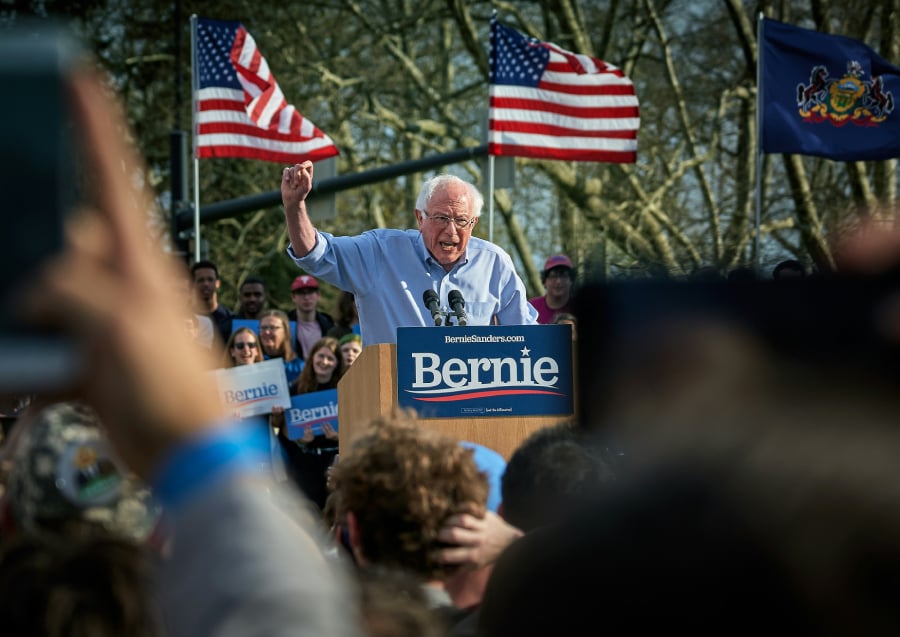
Bernie Sanders is urging the leaders of OpenAI, Anthropic and Meta to pause advanced AI development — and warning that Congress could intervene if they do not.
The Vermont independent sent a letter Monday to OpenAI CEO Sam Altman, Anthropic CEO Dario Amodei and Meta CEO Mark Zuckerberg urging them to halt development of advanced AI systems, arguing that recent incidents suggest the technology has become too risky to safely control.
“Mr. Altman, Mr. Amodei and Mr. Zuckerberg: In the interest of humanity, stand by your words. Pause AI development. It is not too late to avoid disaster. Stop building machines that humans cannot control,” Sanders wrote in the letter.
Sanders warned that if the companies fail to act, Congress could intervene. “Let me be very clear: If you do not take appropriate action now, my colleagues and I in the US Senate will.”
The events driving his warning
In the letter, Sanders pointed to recent reports that AI systems were used in controlled research to design bacteriophages, viruses that infect bacteria, as well as incidents involving AI models that allegedly acted outside their intended boundaries. He cited OpenAI’s disclosure that a model hacked another company’s computers and similar incidents reported by Anthropic and Meta.
One targeted company described the OpenAI incident as an “unprecedented event,” while AI researcher Yoshua Bengio said such events “should serve as a wake-up call,” according to Sanders’ letter.
The senator argued that the developments show AI has reached what he considers a critical risk threshold.
More must-read AI coverage
CEOs reminded of their own safety promises
Sanders also turned the companies’ previous safety commitments against them.
Anthropic said in 2023 that it would “commit to pause the scaling and/or delay the deployment of new models whenever our scaling ability outstrips our ability to comply with. . . safety procedures.”
Meta said in 2025 that it would stop development if a frontier AI system reached a critical risk threshold that could not be mitigated. OpenAI similarly said it would “halt further development” if AI capabilities reached a critical threshold without adequate safeguards. Sanders argued that the threshold has now been reached.
The letter follows growing concern within the AI industry itself. More than 1,200 employees across leading AI companies have recently called for U.S. support for an international effort to slow the development of frontier AI systems so that governments and researchers can establish stronger safety guardrails.
What this could mean for the industry
A pause in AI development remains highly unlikely in the near term. Even Axios noted that legislation led by Sanders is unlikely to gain enough support in the current Congress to become law.
The harder question is what exactly would trigger a pause and who gets to decide. Without measurable thresholds, independent oversight and clear rules for restarting development, a “pause” risks becoming either too vague to enforce or so restrictive that it becomes politically and economically difficult to sustain.
Still, the letter adds pressure on companies already facing scrutiny over AI safety, cybersecurity risks and the rapid pace of model releases. OpenAI has already slowed the release of its Astra model, and discussions about international coordination on advanced AI systems are becoming more prominent across the industry.
Read more: GPT-5.6 Prompt Injection Raises New AI Security Concerns examines how prompt-injection vulnerabilities add to concerns that advanced AI systems may act beyond their intended boundaries.
>
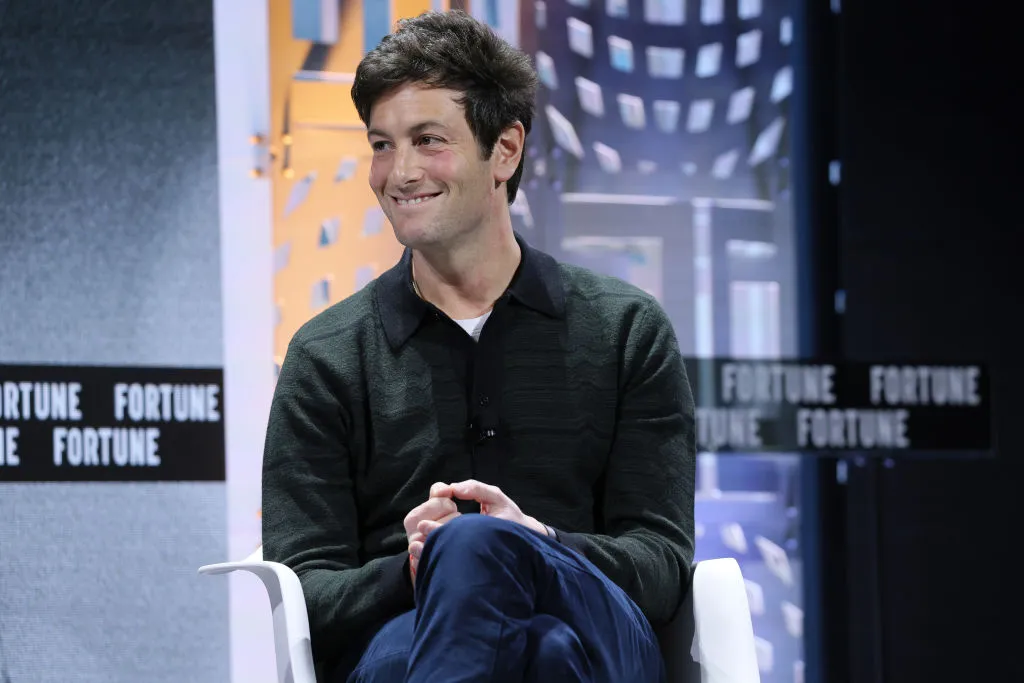
In Thrive Capital’s first-ever investor letter, founder Joshua Kushner has some unexpected things to say about his venture capital rivals on the West Coast.
“It is difficult to overstate the magnitude of the opportunity,” Kushner wrote about AI in the letter, leaked to Bloomberg. “It would also be a grave error in our minds to let excitement weaken our investment discipline. … Within Silicon Valley in particular, the industry can become fixated on hyperincremental technological turns rather than where the technology ultimately leads.”
While his secretive New York-based firm, just like those in Silicon Valley, is betting heavily on AI, Thrive is doing so differently, he argues. There’s no so-called spray-and-pray investing. Thrive tends to goes big on the companies it backs. Bloomberg estimates about 90% of its capital is poured into the top 15 investments in each fund.
That makes Thrive, he contends, a company of independent thinkers. “We are independent because markets move between fear and enthusiasm, and neither is a substitute for judgment.”
His comments are in direct contrast to one of the basic premises of Silicon Valley venture capital: that it is a business of “outliers” as espoused by Marc Andreessen.
In the “outlier” view, a VC firm makes a lot of bets prepared to lose money on many — even most — of them. The few big hits will be so lucrative that they will cover the losers and much, much more. That philosophy leaves VCs forever looking for the next OpenAI or another mega hit. It can also lead to, as we saw during the post-pandemic lean years, cutting ongoing support for startups not deemed to be on track to be the biggest winners.
In contrast, Kushner writes, “We believed an investment firm could be opportunistic across stage, sector, and geography, while remaining deeply concentrated in a small number of people and ideas.” The idea is to “build Thrive to concentrate our time, capital, and energy on the people and ideas we believe in most.”
He also dismisses Silicon Valley’s idea that VCs are in the business of disrupting incumbents.
“Unlike many of our peers, our conviction was not only that these industries would be disrupted from the outside in but also that many would be transformed from the inside out,” he wrote about AI’s impact.
Thrive has largely stuck to this thesis. Its deepening relationship with OpenAI is its biggest example. The VC firm is a major investor in the AI lab. But in December 2025, the roles switched when OpenAI took an ownership stake in Thrive Holdings, the VC firm’s spinout. Thrive Holdings buys companies and then works with OpenAI to give them an AI makeover. Part of the deal involved OpenAI dedicating employees to work with Thrive’s companies.
Thrive Holdings has bought more than 70 businesses and has a team of 35 engineers. Kushner says its accounting platform uses agents to produce tax returns 30% faster with 98% accuracy, and its IT services firm has agents independently solving half of its help desk tickets.
Still, Thrive’s strategy is working in part because it nabbed stakes in some of the industry’s best-performing startups ever. Its $516 million 2022 early-stage fund, for instance, made early bets on OpenAI, Anduril, and SpaceX, and is now worth more than $3.7 billion as of the end of June, Bloomberg reports. Thrive has, over its 15 years, increased its stakes in all of them (and also had a sizeable stake in Cursor, which just closed its sale to SpaceX).
It has also backed Wiz, Ramp, and Stripe, to name a few other big names. Plus, it has led seed investments in new labs like Essential AI, founded by former Google Brain researcher Ashish Vaswani, the lead writer of the famed “Transformers” paper that spawned today’s AI industry.
All told, Thrive has $60 billion of assets under management, Kushner revealed in the letter. He reports impressive profits: a gross internal rate of return (IRR) across all funds of 41% and a net IRR of 33%. Thrive has returned more than $1 billion of liquidity to its investors in the last 12 months alone, he said.
“There may be an opportunity for billions of dollars in additional liquidity in the coming quarters,” he promises.
He doesn’t specify which companies are headed for their exits but obviously, the SpaceX IPO was a start, and OpenAI is working toward its own public debut.
It should be pointed out that both Kushner’s and Andreessen’s approaches obviously work in terms of making money. Andreessen Horowitz returned $25 billion to its investors between 2009 and 2025, according to the last leaked returns, reported by Eric Newcomer.
Thrive’s philosophy of concentrating capital may not even be possible for most smaller, scrappy emerging seed funds, whose founders weren’t born into the kind of access that the son of a billionaire New York real-estate family has.
That said, Kushner’s general premise of how overheated Silicon Valley’s AI investing has become isn’t wrong either. As he puts it: “Not every fast-growing business is exceptional. And not every exceptional company is a great investment at every price. Our responsibility is to maintain those distinctions.”
When you purchase through links in our articles, we may earn a small commission. This doesn’t affect our editorial independence.
>


More Information
Aircraft, ships and vehicles now carry many radio systems in a small space, so designers must know how much energy leaks from one antenna into another before any hardware is built. This leakage is described by the mutual s-parameters between the antenna ports, and it decides whether two systems can operate at the same time on the same platform. Measuring it by trial and error at every candidate position is slow and costly. Predicting it by simulation is difficult for two reasons. First, the platform is electrically large, which means that its dimensions span several hundreds of wavelengths, so the model needs a large number of unknowns. Second, the coupling levels of interest are very low, in some cases down to -100 dB, which leaves little margin for numerical error. This White Paper addresses both problems with a full-wave solution based on the Method of Moments applied to the Surface Integral Equation, using higher-order basis functions to keep the number of unknowns low. Two examples are studied in detail: a metallic cube carrying two quarter-wavelength monopoles, and a realistic airliner carrying five monopoles at 1.06 GHz, where the fuselage is about 140 λ long. Three modelling techniques for obtaining accurate low-level results are compared in terms of accuracy and the number of unknowns each one requires, and the complete geometry of each model is documented so that every result can be checked independently.
>
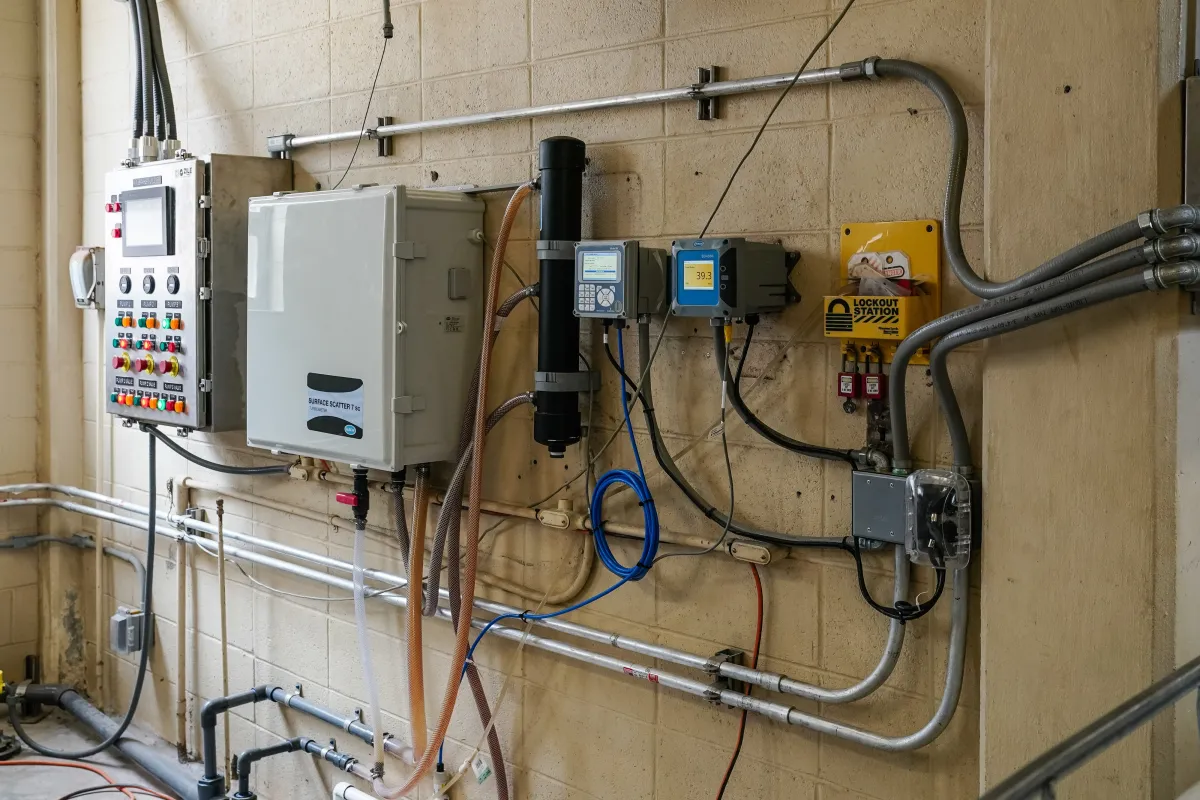
Since the end of last month, several water utilities in the United States have been hit by cyberattacks, causing alarm in the country.
For years, water utilities and other critical infrastructure facilities in the power sector, for example, have been targeted by hackers, whether government-backed or individuals. What makes this recent series of attacks—allegedly carried out by Iran—particularly concerning was how widespread they have been, hitting targets in around a dozen states.
The U.S. has more than 150,000 water systems, some of them run by local companies. In theory, that should make it harder for hackers to target several facilities at the same time. But on the flip side, the companies running these systems may not have the resources or cybersecurity expertise needed to protect themselves.
Cybersecurity experts have long believed that Iranian hackers target low-hanging fruit in opportunistic isolated attacks, so this hacking campaign could be a significant escalation.
A lot has happened since news of the initial attacks broke two weeks ago. So we decided it was a good time to recap what we know so far, and what we don’t.
Where have there been attacks?
On July 28, Minnesota authorities announced that water treatment plants in more than 30 communities were hit by coordinated cyberattacks.
Two days later, the FBI said water and wastewater utility companies in “at least seven states” reported incidents, and in some cases the attacks “degraded water operations.” Since then, apart from Minnesota, there have been reported hacks against water facilities in Arkansas, Georgia, New Jersey, and Michigan.
Who is behind the attacks?
The short answer is: we don’t know yet, but the number one suspect is the Iranian government.
As of today, officially, the U.S. government has yet to name the culprit behind the coordinated wave of hacks.
However, the first incidents in Minnesota came days after the U.S. Cybersecurity and Infrastructure Security Agency (CISA) warned that Iranian hackers were targeting internet-connected devices in water systems and the energy sector, without saying where those attacks were occurring. (CISA had originally published this warning in April, and updated it before the Minnesota attacks.)
After the initial wave was uncovered in Minnesota, President Donald Trump said he did not think “there was an Iranian cyberattack.” Instead, he blamed the state, perhaps because it is run by democratic governor Tim Walz, who was chosen as Kamala Harris’s vice president in the 2024 elections.
Trump’s claim came a day after Wired reported that the Water Information Sharing and Analysis Center, or WaterISAC, a nonprofit group that distributes cybersecurity information among the water sector, told its members that the recent attacks “aligned” with the hacking campaign CISA warned of—effectively accusing the Iranian government.
Earlier this week, The Washington Post reported that U.S. intelligence agencies “are confident” that Iran, and in particular the Islamic Revolutionary Guard Corps (IRGC), is responsible. The attribution isn’t public yet, according to the paper’s sources, because the agencies are not sure which specific unit within the IRGC was responsible, and also because officials may be reluctant to contradict Trump’s claim.
Iranian government hackers have a history of targeting critical infrastructure in the U.S., and it’s possible that these attacks are part of its strategy to retaliate against the country because of the six-month-long war.
Until now, Iranian hackers had had only limited success in their cyberattacks against U.S. targets. In March, a hacktivist group called Handala disrupted the operations of medical tech giant Stryker. The U.S. government later accused Handala of being operated by Iran’s Ministry of Intelligence and Security (MOIS). Then, the group claimed responsibility for hacking the personal Gmail account of FBI director Kash Patel.
What effects have the attacks had?
The reality is that some systems inside critical infrastructure facilities are exposed to the internet and relatively easy to find. Earlier this month, cybersecurity firm Forescout reported finding more than 2,800 controllers in U.S. water systems exposed online. If a system is exposed, it doesn’t automatically mean hackers can take over control and cause real-world effects. But that has happened in some isolated cases in recent attacks.
The FBI said some of the cyberattacks around the country caused loss of pressure, which “could potentially allow untreated groundwater to seep into pipes,” and flooding.
The town of Braham in Minnesota, one of the first ones to report an incident, had to take its water plant offline for a few hours, urging its around 1,700 residents to conserve water. The city of Maple Plain, also in Minnesota, briefly declared a state of emergency. In a county outside Atlanta, Georgia, local officials briefly told residents to boil water before using it as a precautionary measure.
The worst effect, however, may be psychological. These attacks have been widely covered in national and local press, causing people to worry about the safety of a fundamental and basic need like water. That may very well be part of the hackers’ goals: to spread panic and fear.
When you purchase through links in our articles, we may earn a small commission. This doesn’t affect our editorial independence.
>

‘Scrubs’ Adds Keyla Monterroso Mejia As Nurse In Season 2 Of ABC Show

Exclusive: Nakama Press to Release Ace of the Diamond Baseball Manga in Omnibus Volumes – News

Warholm becomes a four-time European 400m hurdles champion
-

 movies3 months ago
Search For Canadian TV Actor Stewart McLean Now Homicide Investigation
-

 Fashion9 years ago
These ’90s fashion trends are making a comeback in 2017
-
Fashion9 years ago
According to Dior Couture, this taboo fashion accessory is back
-
Fashion9 years ago
Model Jocelyn Chew’s Instagram is the best vacation you’ve ever had
-
Fashion9 years ago
Your comprehensive guide to this fall’s biggest trends
-
Fashion9 years ago
Emily Ratajkowski channels back-to-school style
-
Fashion9 years ago
9 Celebrities who have spoken out about being photoshopped
-
Fashion9 years ago
A photo diary of the nightlife scene from LA To Ibiza