
Tech
OpenAI Computer History: What ChatGPT Records on Your Mac

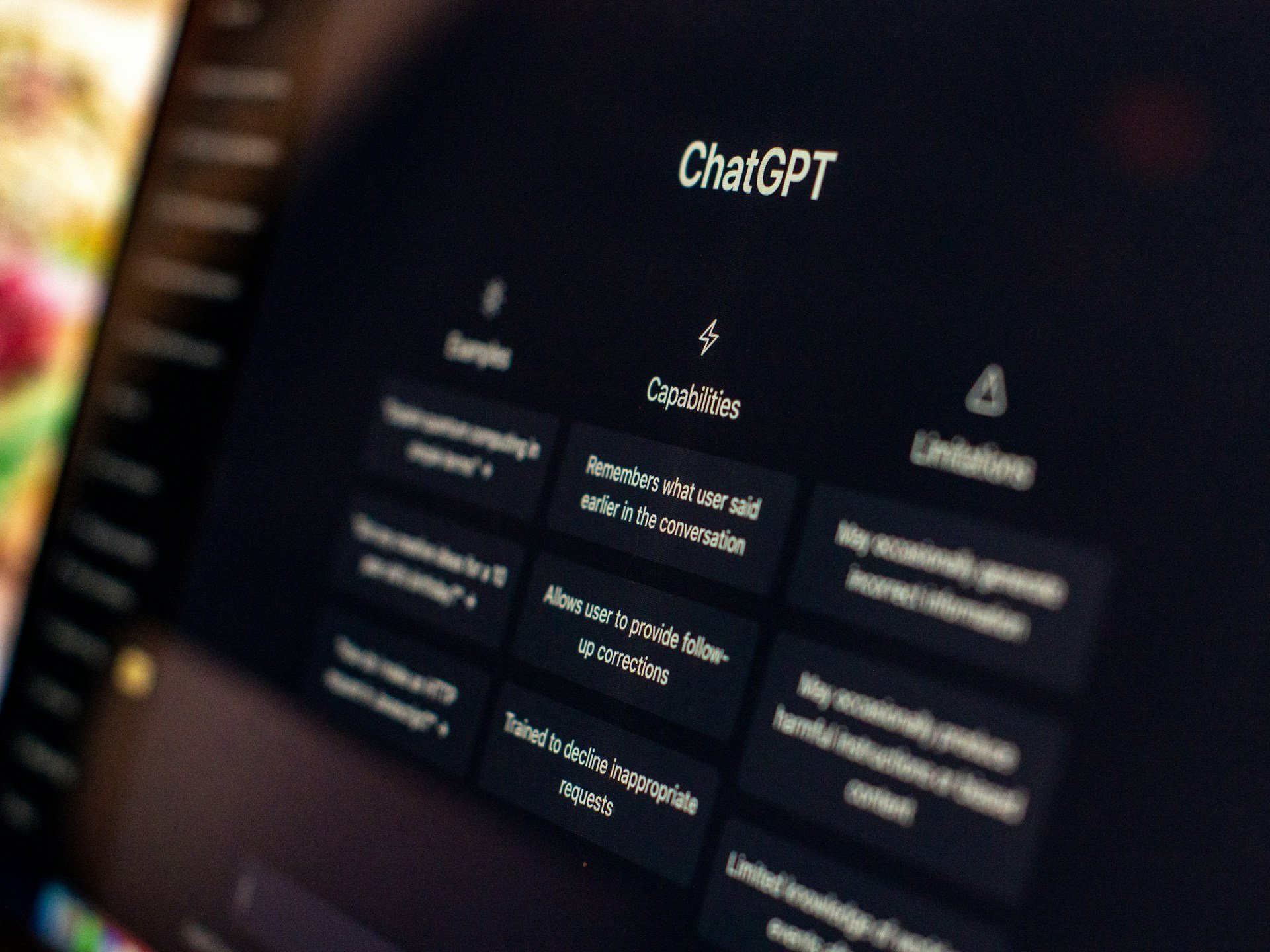
OpenAI has rolled out Computer History, a new opt-in feature for the ChatGPT desktop app on macOS that records activity across permitted apps and websites, turning it into a searchable timeline and local memories for ChatGPT and Codex. The feature requires ChatGPT Memories to be enabled.
Users can ask questions such as what they were working on before a break, where they last saw a document or what they accomplished during the day. ChatGPT can use the activity timeline to identify the relevant file, conversation or website and then access that source directly.
OpenAI says Computer History replaces its earlier Chronicle research preview, but the two work differently. Chronicle relied on screenshots, while the new system records interaction events such as clicks, typing, keyboard shortcuts and app switching through macOS accessibility features.
“Computer History doesn’t rely on screen or audio capture. Instead, it captures interaction events like clicking, typing, app switches, and more, so it can capture memories faster and more efficiently,” OpenAI’s Dominik Kundel said in an announcement video.
From memory to automation
The more interesting part of Computer History may be what happens after ChatGPT learns a user’s routine. When the system spots a repeated workflow, it can suggest turning it into a skill or automation. Users can then ask Codex to build a reusable workflow based on the recorded activity.
That pushes ChatGPT beyond simply remembering previous work. It gives the system a way to learn how a person performs tasks and potentially reproduce those steps later. For businesses, that could make repetitive processes easier to automate, extending ChatGPT’s growing role across connected office apps, files and websites. For individual users, it could reduce the friction of returning to unfinished work or finding something they vaguely remember seeing.
The privacy trade-off
OpenAI has built several controls around the feature. Users choose which apps and websites contribute, can pause collection from the macOS menu bar and can delete individual entries or larger periods of history. Private-mode browsing is excluded automatically.
The company also says Computer History does not capture screenshots, screen recordings, microphone input or system audio. Temporary event files remain on the Mac for up to 48 hours before deletion after processing, while generated memory files remain locally until the user removes them.
But the local storage comes with an important caveat: OpenAI says the memory files are plain-text and are not encrypted by Computer History. Other programs running under the same macOS user account may potentially access them. OpenAI also warns that the feature increases the risk of prompt injection because malicious instructions on websites or inside applications could enter the context available to ChatGPT or Codex.
A new bet on personal AI
Computer History signals a broader shift in how OpenAI sees AI assistants. Instead of waiting for users to explain what they need, ChatGPT can build context from the work already happening around it.
That could make AI agents considerably more useful, but it also raises the cost of a mistake. The more an assistant knows about someone’s daily workflow, the more valuable its memory becomes, and the more carefully that memory needs to be protected.
For users, the practical choice is therefore less about whether Computer History is useful and more about where its usefulness outweighs the privacy and security trade-offs. OpenAI has made the feature optional and controllable, but its own warnings suggest that selective use may be wiser than simply switching it on everywhere.
The feature is available to ChatGPT Pro, Business and Enterprise users, although Business and Enterprise administrators must first grant access before employees can enable it. It is off by default and currently unavailable in the European Economic Area, Switzerland and the United Kingdom.
Read more: Computer History’s prompt-injection warning reflects a broader agent-security problem, as OpenAI’s GPT-5.6 tests found higher attack success rates when malicious instructions came through tools and external content.
>

For as long as anyone can remember, Github has been the de facto code host preferred by a majority of developers. However, in recent times, the platform has struggled with widely reported outages and performance degradation and, as it drops the ball, Cursor is waiting to pick it up.
The AI startup, which is now officially a part of SpaceXAI, launched Origin this week — a new code hosting platform designed to do all of the things that developers typically use Github for: collaboratively work on codebases, browse and edit them, handle pull-requests (edits made by others asking to be added to the main codebase) and store them in repositories.
This seems like a natural next step for Cursor, whose primary focus up until this point has been selling automated web development services through its AI Code Editor. Cursor has also said that “agent native” features will soon be available for Origin, although hasn’t shared many details yet. The company also says it is building a wider “app ecosystem” to support broader coding efforts within Origin.
Interestingly enough, using Origin doesn’t require a user to stop using Github. Indeed, Origin is designed to allow developers to work alongside Github and pass code back and forth between the two in an interoperable manner.
“Your GitHub repos can sit alongside the ones Cursor hosts,” Cursor says in its blog. “Connect GitHub to Cursor, pick your org, and you’ll see the repos you can sync. Select one and Cursor pulls it in.”
The launch of Origin coincides with ongoing frustration over a perceived dip in Github’s services. Indeed, on the same day that Cursor launched its new platform, Github suffered a quite lengthy worldwide outage. For over six hours, the site’s functions were reportedly degraded, with a nearly 20 percent error rate worldwide.
This isn’t the first time in recent times when this has happened either. Earlier this year, after a rash of outages, Github announced new actions to sate unhappy coders as its availability problems seemed to escalate. More broadly, the platform has suffered 257 outages over the past year, a recent analysis by LeadDev states. Such persistent issues have led to “a visible exodus of high-profile users” writes LeadDev’s reporter Charles Humble.
Still, if Cursor wants to compete with Github, it will have its work cut out for it. According to Github’s own metrics, some 180 million developers use its platform as of last October. The platform, which was founded in 2007 and was acquired by Microsoft in 2012, continues to be the largest source code hosts in the world.
When you purchase through links in our articles, we may earn a small commission. This doesn’t affect our editorial independence.
>

The Justice Department has launched a probe into Andreessen Horowitz regarding the firm’s partners serving on the boards of competing companies, Bloomberg reported.
The nearly year-long investigation focuses specifically on the firm’s board seats at Databricks, which is valued at $190 billion, and Fivetran, which combined with dbt Labs in June. The firm’s co-founder, Ben Horowitz, serves on the board of Databricks, while partner Martin Casado serves on the board of Fivetran.
Several VCs told TechCrunch they were surprised by news of the probe. Databricks and Fivetran are competitors now, but the two companies weren’t rivals when a16z invested in the startups, according to another Databricks investor who spoke on condition of anonymity. Databricks is largely known for its cloud storage products but, with its Lakeflow product, has expanded into AI data pipelines and application connectors. That’s Fivetran’s main business.
Given that Andreessen Horowitz has backed hundreds of companies, it’s almost inevitable that some startups will pivot or expand into the same markets, becoming competitors.
While backing direct rivals has become more acceptable recently, as evidenced by the many VCs that funded both Anthropic and OpenAI, holding a board seat on competing startups creates a far greater conflict of interest. Directors are generally privy to much more sensitive strategic information than non-board investors ever see.
Such conflicts can be resolved by having a partner step down from one of the boards. However, because Databricks and Fivetran have different individuals from the same VC firm on their boards, a16z can institute a so-called Chinese wall between Horowitz and Casado, which would prevent the two partners from sharing confidential information about the two companies with each other, one investor said.
The investigation invokes Section 8 of the Clayton Act, a 112-year-old law stating that an individual or entity is barred from serving on the boards of competing companies. Since regulators have rarely targeted venture capital with this rule, the industry is watching the DOJ’s probe closely. If a16z is forced to surrender a seat, founders may place less value on board commitments from top-tier VCs, given that those investors might be forced to step down if a portfolio overlap creates a future conflict.
a16z did not immediately respond to our request for comment, nor did it respond to Bloomberg. Databricks and DOJ declined comment.
When you purchase through links in our articles, we may earn a small commission. This doesn’t affect our editorial independence.
>

TikTok is developing a feature that would allow users to send each other money via direct messages, according to a new report from Bloomberg. If rolled out, the feature would use the social media service’s TikTok Pay offering, which is already available in Southeast Asia for TikTok Shop purchases.
References to the potential feature were found in code hidden within the current version of TikTok’s U.S. iPhone app, according to the report. The code indicates that recipients would be able to “tap to accept” payments, while senders could include messages with their payments, similar to Venmo.
TikTok told Bloomberg that the feature is not being tested, which suggests that it’s in early development. Given that the feature is still under development, it’s unknown when or if TikTok plans to widely release peer-to-peer payments.
TikTok did not immediately respond to TechCrunch’s request for comment.
It’s worth noting that this isn’t the first time TikTok has tried to push further into financial services. Reuters reported earlier this year that TikTok had applied to Brazil’s central bank for approval to operate as a financial technology company offering lending and payment services.
Although TikTok is widely described as a social media giant, it has gradually expanded beyond that category thanks to additions such as robust search, TikTok Shop, a local discovery map, games, hotel bookings, and more. By introducing peer-to-peer payments, TikTok would be competing with services like Venmo and Zelle.
TikTok isn’t the only social network pushing into financial services, as X, formerly known as Twitter, recently launched X Money to allow users to send each other money.
>

Rider dies after Manx Grand Prix qualifying crash

How to watch Mariners vs. Brewers: TV channel and streaming options for August 18

Cursor capitalizes on Github frustration, launches rival hosting platform
-

 movies3 months ago
Search For Canadian TV Actor Stewart McLean Now Homicide Investigation
-

 Fashion9 years ago
These ’90s fashion trends are making a comeback in 2017
-
Fashion9 years ago
According to Dior Couture, this taboo fashion accessory is back
-
Fashion9 years ago
Model Jocelyn Chew’s Instagram is the best vacation you’ve ever had
-
Fashion9 years ago
Emily Ratajkowski channels back-to-school style
-
Fashion9 years ago
9 Celebrities who have spoken out about being photoshopped
-
Fashion9 years ago
Your comprehensive guide to this fall’s biggest trends
-
Fashion9 years ago
A photo diary of the nightlife scene from LA To Ibiza