
Sports
Richard Masters on… Chelsea payments, FIFA’s fiasco and the arrival of Jeff Bezos

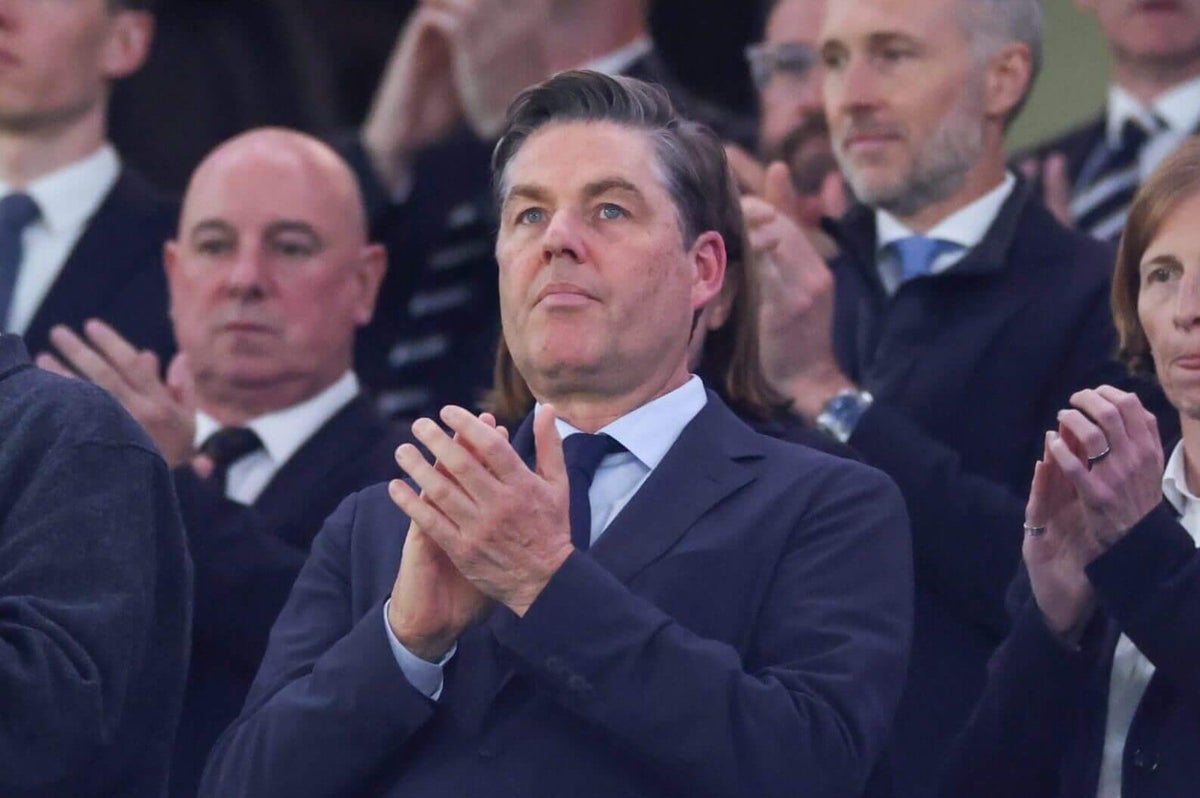
“There’s a lot of new about it,” is Premier League chief executive Richard Masters’ sales pitch for the new season, which starts on Friday evening when Arsenal, the newish champions, host Coventry City, the newish competitors.
With Pep Guardiola on sabbatical again, Manchester City are one of nine teams under new management. Mohamed Salah, one of the league’s icons, has moved to Turkey, but Premier League sides have already spent more than £2billion ($2.7bn) on new talent, with more sure to come.
Aston Villa and Crystal Palace enter the season as champions of European competitions, Palace for the very first time, Villa for the first time in a long time, while Bournemouth can look forward to their first set of European club fixtures.
This will also be the first season played under a fully operational Independent Football Regulator, which partly explains why the league’s 20 clubs will also be following new financial rules and we may even get a new financial settlement between the Premier League and the English Football League.
New, new, new… that was certainly the word of the day when Masters hosted a scribble of football writers at the Premier League’s London HQ this week to answer as many questions as we could squeeze into half an hour of his busy schedule. And as he seemed not to completely hate the experience, we managed to get seven minutes of added time.
Given the fact that opportunities to get the boss of the world’s most popular domestic football competition on the record for this long do not happen very often, we thought we would share pretty much all of it with you, bar a few snips here and there for readability and to avoid repetition.
The forever war: Manchester City v Premier League
However, we are going to start with some very obvious repetition, as Masters has given a version of this answer every year for what seems like most of my adult life.
When asked, without any hope of receiving a fresh response, if there will ever be an outcome to the Premier League’s case against Manchester City, the small matter of those 100-plus charges for a decade of alleged cheating, Masters said: “Yes, there will be an outcome, but I literally can’t say anything about it.
“There’s only one available outcome, which is to allow the process to reach its natural conclusion. I can’t talk about the substance of the case. I can’t talk about the timing of the case. I’ve always been very clear about that. I accept it’s taken longer than anyone expected and obviously people are eager to know what the outcome is, but the process is the process.”
For those of you still counting. It is now eight years since German outlet Der Spiegel published the hacked emails at the centre of the controversy, six years since Manchester City overturned its two-year ban from European competition at the Court of Arbitration for Sport, three and a half years since the Premier League charged the club and two years since an independent panel started a 12-week hearing to assess those charges.

(Michael Regan/Getty Images)
Has something gone wrong? Does this delay suggest something needs to change?
“No,” he said. “We’ve always said the commission needs the time and space to do their work.
“It’s the league’s job, providing the evidence is there, to put serious allegations in front of an independent commission to let it establish the truth. That process shouldn’t be qualified by the amount of time it takes.”
But the commission has been mulling it over since December 2024?
“I just have to accept the fact that people are frustrated and want to know (the result),” he said. “The process is independent. It will take as long as it takes.”
And those frustrated people include the other clubs in the league?
“I talk to clubs all the time and it’s not top of the list,” he said. “There are lots of other things to talk about.”
Chelsea’s hidden payments
We can imagine, we all nodded, like how they feel about the £10million fine and suspended transfer ban the league gave to Chelsea earlier this year after they admitted making £47million worth of off-the-books payments to agents and third parties between 2011 and 2018?
For some added context, those payments helped Chelsea recruit the likes of Samuel Eto’o, Eden Hazard and David Luiz. Players you would think provide a team with a sporting advantage.
The Premier League, however, like UEFA before and the Football Association after, was in a difficult spot, as it had to balance the undoubted seriousness of the offences — and their impact — against the equally undisputed fact that these organisations only knew about the offences because Chelsea’s new owners discovered them during the due diligence they did when they bought the club from Roman Abramovich in 2022 and promptly fessed up.
“In the end, a sanction agreement was reached and it was the largest fine in Premier League history by quite some distance, and it was also the only sporting sanction, albeit a suspended one, that’s been given outside the PSR cases,” said Masters, when asked a question that suggested the sanction was a tad too generous.
The mention of PSR was a reference, of course, to the points deductions Everton, Leicester City and Nottingham Forest have been hit with for breaching the league’s old financial rules, the prof and sustainability regulations.
“(The Chelsea) sanction had to go to an independent commission and part of their job is to opine on whether the sanction is unduly lenient,” Masters added. “They did not in this case.”

(Steve Bardens/Getty Images)
Other people’s problems, the best kind
Having spent at least until the first hydration break of our allotted time with him on parochial matters, we started to branch out into more global issues.
As you may have gathered, there was a football tournament in North America this summer. Lots of people really liked most of it, but there were a few issues that caused a bit of a flap there and elsewhere.
What impact will all of that have on the Premier League?
“I’m a big fan of the World Cup,” said Masters.
“It’s a great recruiting sergeant for bringing new people into the game. Normally, everyone gets a little lift post a World Cup or Euros, as there are just more people interested in the game or who want to follow players they’ve met along the way.”
Indeed, we nodded, but what about those less savoury moments? The rows about certain teams being favoured by the referees, inconsistencies with new pieces of technology or, dare we say, the world’s most powerful politician calling a football official to have a star player’s ban suspended?
“I do scroll through social media every now and then, (and) I bump into some of the stuff that people are saying out there,” he said.
“But I believe that when our fans turn up — we’re 99 per cent sold out — and they look at what’s on the pitch, it’s everything it should be. Everyone is trying their best. The referees are trying their best. There’s lots of controversy but it is what it says it is.”
Speaking of football officials and lots of controversy, we were all eager to hear his take on the recent travails of FIFA boss Gianni Infantino. A touch of schadenfreude, perhaps?

Gianni Infantino has had a testing few weeks (Carl Recine/Getty Images)
“I don’t think the (short-lived FIFA Forward Enterprise) concept is the only thing that has contributed to the split in the confederations,” he observed sagely.
“It’s an accumulation of things over a period of time — the expansionism, the taking football in a particular direction — that has led to this situation where we have a split FIFA.”
To be fair to Masters, he has been talking about FIFA’s arrogance and overreach for some time.
“This proves what we’ve been talking about for five years: the calendar, competitions, decisions that impact on domestic football competitions,” he continued.
“The Premier League has been the same size since 1994. It begins in August and ends in May. All the new football is either at regional or global level, and the amount of football that players play now… we’re at saturation point.
“Leagues don’t have a meaningful seat at the table at all. We’re not consulted on the big decisions. We think that’s wholly wrong and that’s why we’ve regrettably had to put in a complaint at the European Commission. We’ve all seen what’s happened over the summer, but it feels like more of the same.”
That complaint was lodged in October 2024 by European Leagues, the umbrella group that represents the interests of Europe’s leading domestic leagues, and FIFPro, the global players’ union. They want the Brussels-based body to investigate FIFA for potential breaches of European Union competition law, namely the abuse of a dominant market position.
Surely this summer’s FIFA drama is all the grounds the commission needs to open an investigation?
“The European Commission moves at its own pace,” said Masters, pumping the brakes.
“The European Leagues team is in pretty regular dialogue with the people there and at some point a decision will be made. We’re not going to put pressure on that process today.”
And while we wait for that, whither FIFA?
“What needs to happen is for another candidate to emerge with a new, different offer that can unify the confederations,” said Masters.
“Part of that offer should be to look at governance reform. That’s not to say it should be Europe dictating that reform — that’s not what this should be about. But, given what’s happened, it would be right to look at those governance structures and the role of the president.”
New money, great returns
While we were on the subject of FIFA, one of our number asked if any exciting, new private-equity fund had ever offered him a large cheque for a small slice of the league’s future revenues.
“We’ve never had those discussions with anybody,” he said firmly.
Really?
“Perhaps we don’t give out the right signals,” he said. “Even during Covid, when people had big problems in front of them, we didn’t go near a solution like that. The Premier League model works very well. We have a very strong media rights business, we’re number one in that market, and there’s no need for us to access that sector.”
That does not mean the league is against any of its clubs bringing in new investment, though. On the contrary. Asked how he feels about the prospect of Amazon founder Jeff Bezos being involved with Liverpool, Masters said: “That is proof positive that people still look at the Premier League and think it’s a strong investment.
“It’s also a testament to the job (current owner Fenway Sports Group) has done. Think about the club they bought all those years ago, the position it was in then and the position it’s in now, the progress they’ve made and all the trophies they’ve won.”

Jeff Bezos is part of a consortium that has bought 38 per cent of Liverpool for $2.7bn (Michael M. Santiago/Getty Images)
Quantity, not quality?
And Masters is right — nobody could accuse Premier League clubs, of all sizes, of not investing in new talent. No other league gets close to the Premier League’s net spend these days.
But that does not mean all the best players in the world play in the Premier League. Far from it. In fact, some might say almost none of the world’s best players play in the Premier League. Is that true? If so, is it a concern?
“I don’t think the Premier League has ever been led by stars — it’s the whole league offer, the competition,” said Masters.
“If this season has a title race, a race for European spots, a relegation battle and another few surprises along the way, that’s its inherent beauty. You never quite know what you’re going to get.
“It’s different in other leagues where they only have a couple of teams who can potentially win it, and they have star-studded line-ups. Of course, you’d like as many big names as you possibly can, but the Premier League has just under 50 per cent of the world’s top 100 players, so there is no shortage of quality within the league. And while we have a few big names leaving the stage, new stars will emerge.”
Fair points, all of them, but another of the Premier League’s great strengths was that it might not have been home to all of the world’s best players, but it was where the planet’s top coaches wanted to be. Is that still the case?
“I think you’ve got to give (the new managers) a chance,” he said.
“There are nine new managers and to get into a Premier League technical area you’ve got to be at the top of your profession. It’s a chance for the Premier League to look slightly different this season. One era finishes, another one starts.”
New deal or no deal
The English Football League will be hoping that sense of renewal applies to the topic of how English football shares its wealth. After all, the Premier League used to be known as Division One until the country’s biggest clubs realised that pay-TV channels were going to revolutionise sport and it would be nice if they got to keep more of that money for themselves.
Fair enough, you might think. That’s capitalism. All fine until you remember the Premier League remained connected to the rest of the game, with three teams coming up from the EFL each season and three teams going the other way.
Those broadcast billions do not belong solely to whichever 20 teams are in the top division in any given season. The Premier League has become a global sensation because it sits atop the world’s deepest and most vibrant professional football pyramid. That pyramid deserves a fair share of the credit and annual revenues.
So, how are talks going on between the Premier League and EFL to replace a financial distribution model that has been in place since 2019 and nobody thinks is fit for purpose anymore?
“Two weeks ago, our clubs unanimously approved a new proposal,” said Masters, encouragingly.
“It includes all the financial elements you’d expect: an increase in solidarity funding, a phased reduction in parachute payment and a whole bunch of other things.
“But we’ve agreed not to talk about it in public while we’re still negotiating how to make a deal work.”
Oh. And he meant it.
When asked if he was confident a deal can be done without needing the IFR’s involvement, he added: “We’re very much in favour of an industry-led solution and not having to use what could be a very damaging backstop process to find a resolution.
“I’m very optimistic. We think the proposal is fair to both sides.”
Any other business?
By this point, we had entered added time and we could hear the whistles from the league’s media team at the back of the room. It was time to fire random questions at him, speed-dating style.
When are we going to scrap the domestic TV blackout on Saturday afternoons?
“It’s not just our decision,” he sidestepped. “It’s us, the EFL and FA, and we’re all backing it for the next three seasons. In about 12 to 18 months, we’ll think about whether we’ll continue that. It’s an all-football decision and it’s quite a big one. But it’s a decision for the future.”
The Premier League keeps taking teams to North America for summer friendlies. Have you given up on China?
“No, we’re looking at it for next summer,” he said. “Our Asian fans are very important to us. We may end up there next summer.”
Like Manchester City, Liverpool, Chelsea and the rest, the United Kingdom has a new gaffer in the dugout. What do you make of him?
“I haven’t spoken to (British Prime Minister and huge Everton fan Andy Burnham) since he’s taken over — he’s obviously a very busy man,” said Masters. “But we know he’s a big football fan, and he’s going to talk about football.
“But the Premier League is politically neutral; we have to get on with all governments and we think we can help. We will produce £33billion (in gross value added) over the next three years, with billions going to the exchequer. We support 110,000 jobs, all over the country, and we’re a fantastic global export, rooted in our communities.
“There’s so much good work that can be done with the whole of English football. We’re talking to the government about how we can help young people, how we can help with regional regeneration. We can be a real asset.”
And how about you, Richard? You have run the Premier League for seven years (which makes Burnham his sixth counterpart in No 10) — are you getting sick of our questions yet?
“It’s eight, actually. I include the interim year (in 2018),” he said, with a smile.
“No, I really enjoy it. It’s a privilege and opportunity to be involved in this incredible league.”
A positive note on which to finish and a good starting point for the new campaign. Good luck, everyone.
>
Sports
New Zealand Football CEO hopes ‘others will feel brave enough’ to go public on Infantino’s position
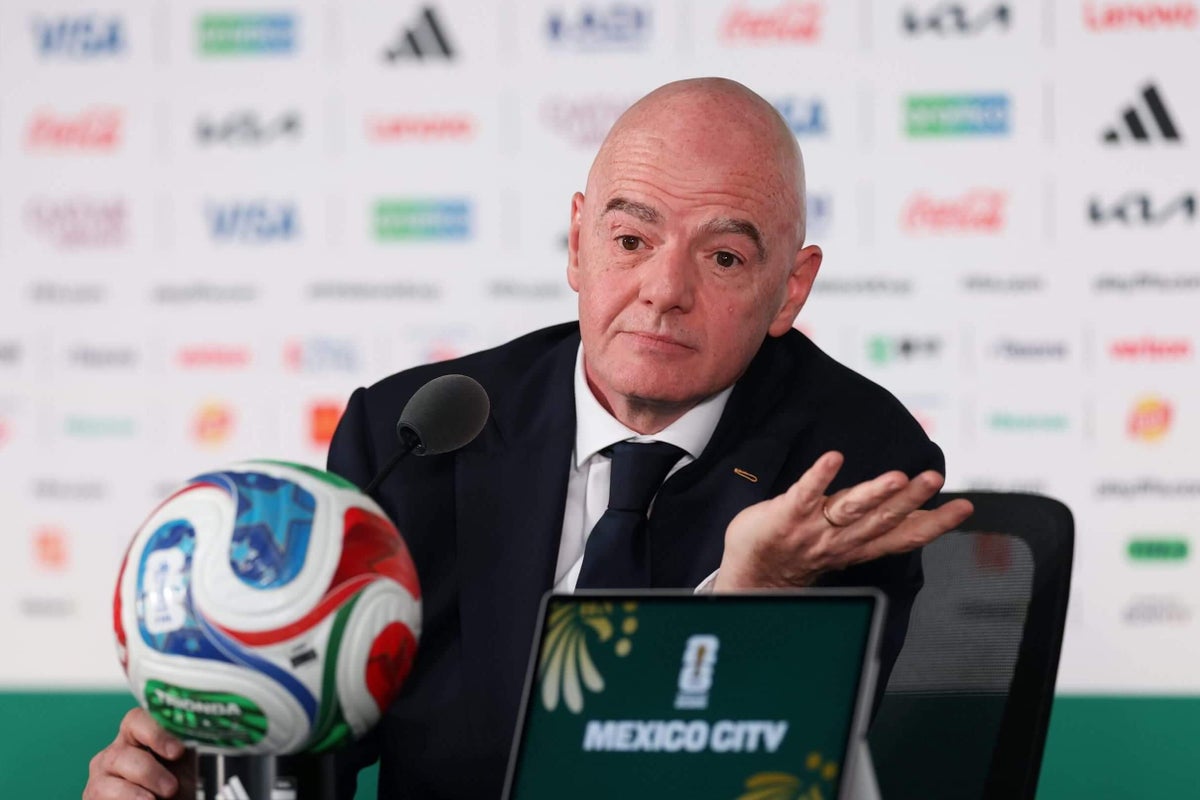
“I feel like there are a lot of people who are hedging their bets, sitting on a fence or waiting to see the way this falls,” says Andrew Pragnell, the chief executive of New Zealand Football (NZF).
Global football stands divided after the collapse of FIFA president Gianni Infantino’s proposal to sell a stake in FIFA’s commercial and event operations to private investors including Thrive Eternal, headed up by Joshua Kushner, the brother of President Donald Trump’s son-in-law Jared.
For Infantino’s long-standing critics in the sport, it proved a bridge too far and efforts are underway to force him out of office. The leadership of UEFA, the European confederation, Concacaf, the confederation of North, Central America and the Caribbean, and the Asian confederations last week joined together to release an open letter, in which they said trust had been broken in FIFA’s leadership “through deception.” A previous statement from Concacaf called for a “comprehensive reckoning with this presidency”, while UEFA stated it had “lost confidence” in Infantino.
Early next year, FIFA will hold its presidential election and, so far, Infantino is the sole candidate. FIFA operates a one-member-one-vote system, meaning that each of its 211 member associations have equal voting rights. For now, it remains unclear how Infantino would fare should a rival contender emerge, or whether he can be compelled to resign. He appears to maintain support from South America and Africa, while Oceania has not moved against him collectively, with the confederation praising the “progress” made under Infantino.
Yet Oceania’s most successful football nation, New Zealand, last week announced it had withdrawn its support for Infantino’s candidature, following several European countries including England, Wales, Scotland, Serbia, Finland and Croatia in doing so.
New Zealand Football’s statement on the 2027 FIFA Presidential candidacy. pic.twitter.com/VjVVAZ0YVo
— New Zealand Football 🇳🇿 (@NZ_Football) August 14, 2026
As executives around the world jockey for position, most have reserved their comments for press releases. New Zealand’s Pragnell, therefore, stands out as a football executive prepared to talk at length and in detail on the matter.
“A really important part of leadership in football is being transparent and open to the general public about the decisions you take,” he told The Athletic in a telephone interview. “This issue around the FIFA Forward Enterprise (FFE) scheme has generated global concern. There needs to be more leadership speaking about it and speaking publicly about their views.”
FIFA’s lack of consultation with member federations was such that Pragnell found out about the proposal when he woke up in New Zealand to “text messages from media.” Infantino’s plans blindsided the FIFA Council. FIFA’s chief operating officer Kevin Lamour spoke out, eventually costing him his job, and described it as “one man’s” proposal. Soon after, a media release came from FIFA unveiling the plan, but only after it had been leaked to The Times and The Financial Times.
Over 24 hours later, the federations received a deck written up by J.P. Morgan, the bank which had worked with Infantino and Kushner on the secret plan, setting out the bare bones of the proposal. Yet Pragnell was among many executives around the world wondering why FIFA, an organisation which earned over $15 billion in the cycle including the 2026 men’s World Cup in North America, required external investment from private equity. He also wondered whether an enterprise value of just over $20 billion for FIFA’s commercial and events propositions may be an undervaluation.
“There were so many concerning angles,” Pragnell says. “The question was why. Why private equity? Why now? How was the valuation worked up? Why Thrive Eternal? It wasn’t clear what problem private equity was trying to fix. FIFA sits on healthy reserves, we’ve just been celebrating the incredible commercial returns of this World Cup. What did a future forecast look like for the valuation? Is this actually a fire sale?”
He continues: “It’d be fascinating to jump into the J.P. Morgan evaluation and understand how the value was determined. Not knowing the methodology, that’s potentially incredibly cheap. What are those assets worth potentially in 2034? Those are things the members needed to know.”
Infantino hoped that the 211 members would be tempted by proposed payments of $40million each over the next four years. Yet it rebounded amid suggestions — denied by FIFA — that he may have been in line for a lucrative commissioner-style role at the spin-off enterprise.

(Gabriel Aponte/Getty Images)
Pragnell says: “The concept of putting money downstream, to go into football development, is a good one. That is if there are sufficient checks and balances on how money is managed. But it should not necessarily be through private equity. That’s a debate the game should be having. That’s why we have, in my mind, the FIFA Bureau, the FIFA Council and the FIFA Congress, to discuss these things.”
Instead, the initiative was cooked up without consultation. Many member federations were opposed, but to some, it was the moment that encapsulated a pattern of leadership by Infantino, where outcomes are decided by an increasingly concentrated power base with a highly elastic interpretation of FIFA’s statutes.
Over the past year alone, Infantino single-handedly decided Trump should receive a FIFA Peace Prize, while the game’s integrity was called into question after Trump revealed he called Infantino to challenge a red card received by U.S. forward Folarin Balogun during the World Cup. A disciplinary committee, which FIFA says is independent, decided unusually to suspend Balogun’s one-game ban in the middle of the tournament.
Pragnell, it should be said, has not been a long-time public critic of Infantino. When I last interviewed him at FIFA Congress in Paraguay in May 2025, he praised Infantino’s desire to grow the game globally and redistribute wealth to developing football nations.
“The commercial growth has been incredible,” Pragnell says now. “Some of the FIFA staff that I’ve met over the years are some of the best qualified young professionals taken from around the world. That’s a particular group I’m feeling for right now, as the organisation is taking a battering. That being said, from an organisational perspective, ultimately, the FFE scheme is what drove New Zealand Football to take the view that we couldn’t support his candidature for 2027.
“I will also make some personal observations. There’s some growing disquiet around the world around how World Cups are awarded.”

Pragnell, right, at an event in 2024 with New Zealand’s general manager of high performance Keir Hansen (Hagen Hopkins/Getty Images)
Infantino has still never taken questions on the process that led the 2034 World Cup into Saudi Arabian hands. Due to FIFA’s confederation rotation principle, two tournaments must pass before a confederation can host another World Cup. In 2030, the tournament will be shared across three continents (Africa, Europe and South America) and six countries (Morocco, Spain, Portugal, Uruguay, Argentina and Paraguay). This made the 2034 tournament essentially a fait accompli for Saudi Arabia, which belongs to the Asian confederation. The rotation principle means New Zealand could theoretically be contenders to host the 2038 men’s edition, as only Oceania and Concacaf would be in play for the tournament. Many suspect Infantino favours a return to North America.
“Is it going to be competitive or is it going to be managed in the background?” he asks. “And you know what? If the Congress agree that we should prioritise harmony over (bidding battles), then perhaps that’s OK, but let’s at least have that discussion on how it should be approached.”
Pragnell continues: “The things that have been happening are driving discontent amongst leagues, clubs, players and fans. If the powers-that-be, those of us who have some of the checks and balances, don’t take note of those and don’t speak out on them, then ultimately people will lose confidence in the global game. From an organisational perspective, absolutely the enterprise scheme went too far. But it presented the evidence or talked to fears that people have; that power is too concentrated, which is exactly what the 2016 FIFA reforms were designed to avoid.”
Pragnell also concedes that, following the World Cup, some associations and some fans are now questioning the independence of FIFA’s disciplinary committee. “Obviously all members have to have full confidence in the independence (of that committee). For the game, for fans, the idea or concept that perhaps there could have been interference is grossly concerning if this impacts the on-field performance. So, while I’m not making any allegations in relation to that, obviously it casts a shadow and certainly the public confidence has been shaken.”
As for what happens next, New Zealand want a full independent review into the FIFA Forward Enterprise scheme. FIFA has suggested it will make its own review and report to the FIFA Council, but Pragnell says the terms of reference must be agreed by all six confederations and focus on how and why the plan was developed and who was involved at every stage.
“We need a qualified global institution with investigative background and strong commercial knowledge to do this type of work. It must be a party that’s contracted and can be relied on, but the scope needs to be overseen by the parties who’ve lost the trust.”
Behind the scenes, are disgruntled federations now working together and reaching out to possible allies? “We’ve got relationships with many football associations around the world,” Pragnell says. “We’re in touch with a wide range, including some in the northern hemisphere. We’re not deeply kind of enshrined in a mass of ‘What’s next?’, there is a lot of water going to the bridge. I don’t think this is done.”
Within Oceania, there is no bloc unanimity, with nations deciding they will respect one another’s independence.
“I’m really interested for when the FIFA Council will next meet and the position their members will take,” Pragnell says. “I’m hoping that for the sake of fans, clubs, leagues and anyone involved in the delivery of the game that people are clear on their position. The biggest concern is the idea that people might be too scared to take a position because of some kind of retribution or something that might happen to them — we just cannot have that. We can never have that in football. There shouldn’t be (fear) and there can’t be, and ultimately if there was, there would need to be further outcry.
“People need to step forward. We took the position as a values-based decision, that’s what we stood for, we thought the public should know what we stand for. We hope that, by taking that stance, others will feel brave enough to come forward and state their position as well.”
>
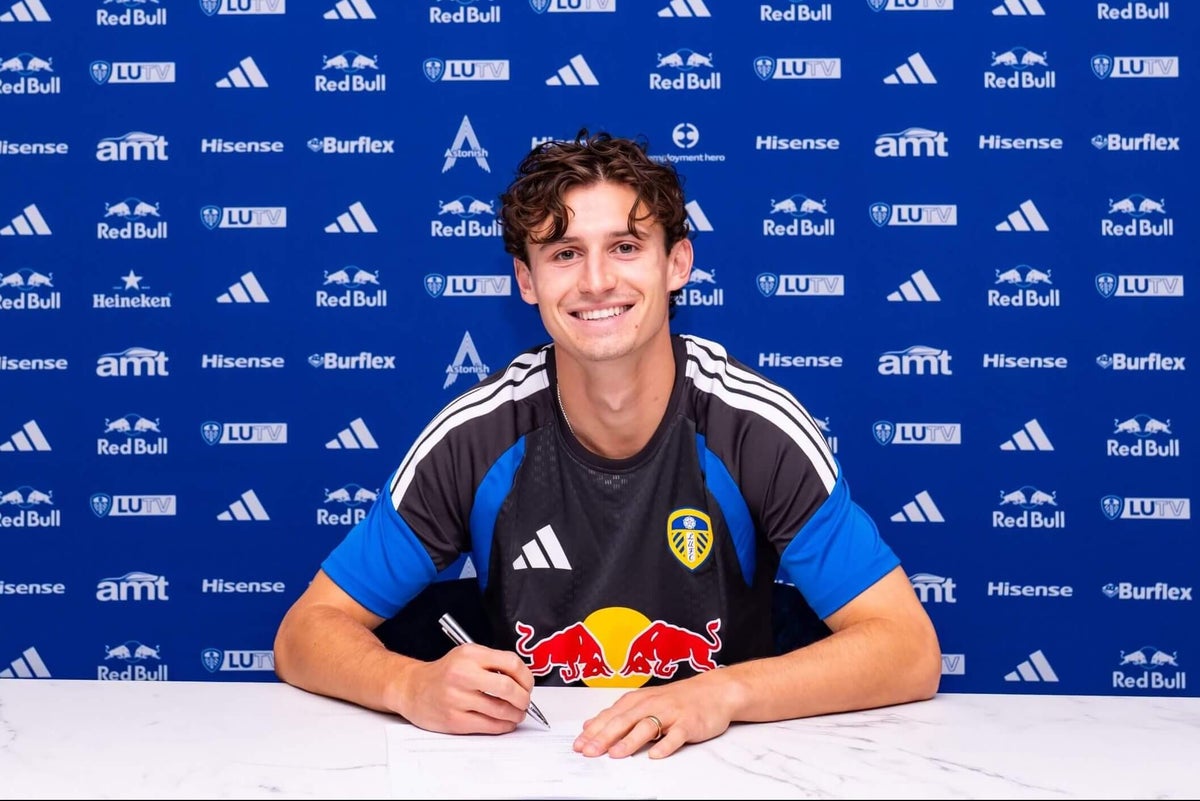
Leeds United have announced that midfielder Brenden Aaronson has signed a new three-year deal with the club.
The 25-year-old has signed new terms until 2029, which underline his rising status at Elland Road under Daniel Farke.
Aaronson signed a five-year contract when he first arrived from Red Bull Salzburg in 2022. However, when he struggled in a Leeds team which was relegated in 2023 and then jumped ship to Union Berlin on loan, few supporters would have expected to see him sign another deal in West Yorkshire.
As it is, the USMNT player has continued to surpass expectations since returning from that loan. He was booed by sections of the Leeds fanbase in the summer of 2024, but proved to be one of Farke’s most-used players en route to a 100-point title in the Championship.
Then again, after promotion, he continued to be a key player for Farke at a higher level, featuring in 37 (starting 30) of their 38 Premier League matches. After a summer of reinforcement, including the arrival of Harry Wilson, Aaronson has been given another vote of confidence with this contract.
Aaronson’s new deal follows similar announcements for team-mates Ethan Ampadu, Joe Rodon and Jayden Bogle this summer.
Analysis
Aaronson’s new contract is a lesson in persistence and hard work. When he left the club in 2023 after relegation, escaping for Berlin and the Bundesliga while everyone in Leeds faced the Championship, you would have been forgiven for writing the American off.
He had been poor in that first year in England, and it added insult to injury when he ran away from the outcome. However, unlike many of those who left on loan, he did come back, and he did face the music.
Aaronson did not cower from interviews, answering tough questions about his mentality and loyalty to Leeds. He also took his medicine when, in the opening weeks of his 2024 return, he was booed by sections of his own fanbase.

Aaronson has successfully worked his way back into Leeds’ fans good books. (Shaun Brooks – CameraSport via Getty Images)
Slowly, but surely, he did turn the tide, however. At an admittedly lower level, he did prove effective for Leeds in the second tier. Farke waxed lyrical about his work rate and keenness to learn and improve.
Even in the Premier League, after promotion, Farke’s consistent selection of Aaronson through October and November defined the acrimony which began to grow on the terraces as results nosedived. The attacker was eventually taken out of the firing line, but returned to the team and memorably scored an exceptional brace at Newcastle United in January.
His form did ultimately tail off again and left Leeds with a decision to make this summer. With his prior deal expiring in June 2027, they had to sell or renew this summer. They have chosen the latter, and they clearly see further potential in the 25-year-old.
>
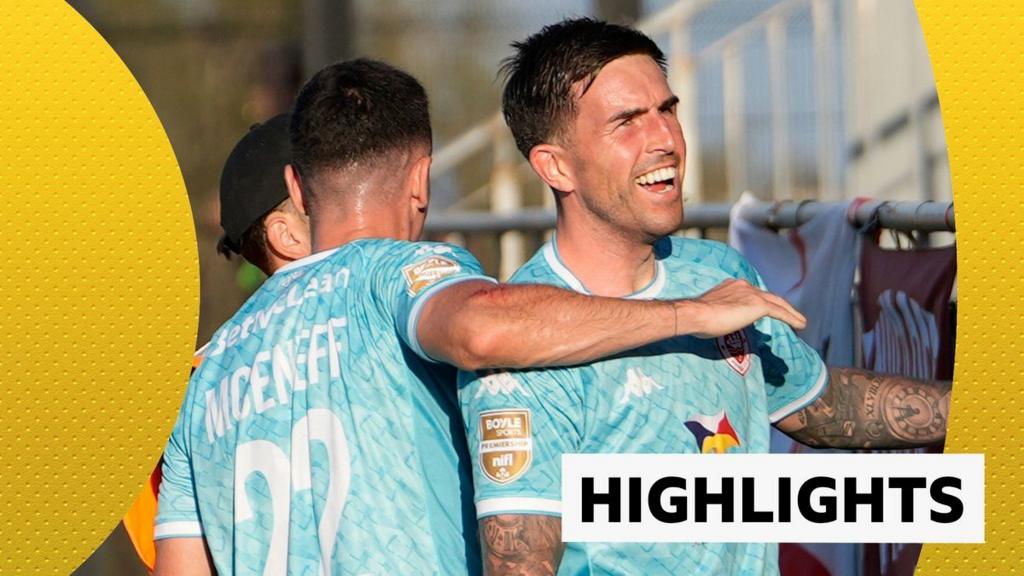
Watch highlights as Irish Premiership champions Larne defeat 10-man Lincoln Red Imps 2-0 in the first leg of their Uefa Conference League play-off.
>

Yahya Abdul-Mateen II Says “Optics Are Obvious” Of ‘Wonder Man’ Cancellation & ‘Blade’ Reboot Delays: “It Should Be A Priority To Change That Narrative”

New Zealand Football CEO hopes ‘others will feel brave enough’ to go public on Infantino’s position

USMNT midfielder Brenden Aaronson signs new three-year deal with Leeds United
-

 movies3 months ago
Search For Canadian TV Actor Stewart McLean Now Homicide Investigation
-

 Fashion9 years ago
These ’90s fashion trends are making a comeback in 2017
-
Fashion9 years ago
According to Dior Couture, this taboo fashion accessory is back
-
Fashion9 years ago
Model Jocelyn Chew’s Instagram is the best vacation you’ve ever had
-
Fashion9 years ago
Emily Ratajkowski channels back-to-school style
-
Fashion9 years ago
9 Celebrities who have spoken out about being photoshopped
-
Fashion9 years ago
Your comprehensive guide to this fall’s biggest trends
-
Fashion9 years ago
A photo diary of the nightlife scene from LA To Ibiza