
Entertainment
AMC Endorsed the Paramount-WB Merger, But Indies Still Need Convincing


In 2019 after Disney closed its acquisition of 20th Century Fox, independent movie theater owners found themselves caught off guard when classic movies they had been accustomed to playing were suddenly unavailable to them. Titles like “Home Alone,” “Alien,” “Fight Club,” and more Fox films became locked in the fabled “Disney Vault,” only licensed to dedicated repertory cinemas, and sometimes not even to them. These movies that filled in the gaps among first-run new releases and provided indie exhibitors with small, but needed revenue had dried up.
The fear among smaller theater owners now is that history will repeat itself.
America’s three largest theater chains, AMC, Regal, and Cinemark, have all come out in strong support of the merger between Paramount and Warner Bros. Discovery. They want to see a steady stream of movies available to them, they want a guarantee those movies will play exclusively in theaters for at least 45 days, and Paramount CEO David Ellison has been willing to put his promises to them in writing. And they also don’t want to see a prolonged legal battle interrupting any of the gains the box office has made.


Their collective endorsement put Cinema United, the exhibitor trade group that represents the big guys and the little guys, in a tough spot. In a letter from Aug. 18, Cinema United called on Ellison and California Attorney General Rob Bonta to reach a settlement, with some important caveats to a deal. The group wants to ensure that the promised 30 theatrical releases a year are marketed properly and promoted in theaters of all sizes, it wants guarantees that rental terms aren’t increased for smaller theaters who won’t have the negotiating power to push back on a merged company, that safeguards are in place for small theaters that want to make choices best for their theaters, and that the libraries of both companies are still accessible.
“There are differences between big circuits to the smallest, and we’re all providing the same product for our guests, but how we get from here to there, it’s different for the independents. We have more challenges financially than the big guys. We have to be a little sharper in how we operate,” one independent theater owner who was a signatory to the Cinema United letter told IndieWire. “Commitment to the 30 films is certainly a starting point, but there’s a lot of questions that need to be worked out. How widely will they be released, how will they be marketed, and will independent theaters have reasonable access to these films?”
For the smallest of theaters, even ones with just a single screen, exhibitors can be stuck in a position where they need to hold a movie for multiple weeks, generally with “clean screens” that only show that one film across all the showtimes. If it’s “The Odyssey,” the theater might do great Weekend 1, less well in Weekend 2, and even lose money in Weekend 3 because they’re generally only seeing their most loyal customers once in that span. If a movie flops, it can really hurt an indie theater’s bottom line, more so than a national circuit that can spread risk across hundreds of venues, and terms are often set uniformly for massive multiplexes down to single-screen venues.
Holds on films is a problem not exclusive to a Paramount-WB merger, but it’s still a concern that indies have when considering potential market control if one major provider could be going away.
“[We’re] not looking for special treatment but fair terms and enough flexibility to operate in their theaters and communities,” the theater owner added. “They need the ability to evaluate and license films based on their market, their screen count, and their audience, which an indie owner knows intensely.”
The theater owner worried this merger would be a repeat of Disney-Fox when it came to the particular issue of repertory titles. Such movies fill the gaps in release calendars and create differentiated programming that can help an indie exhibitor better connect with their community. Disney had and still has a unique licensing policy, withholding older titles that it believes could compete with its new ones, a policy Paramount historically hasn’t necessarily shared.
But if that were to change, such as if Paramount decided it wanted to use the Warner Bros. library to better support its streaming brands at the expense of putting those movies into theaters, that could pose challenges with yet another studio’s library locked away from theaters. An exhibition expert said that such views on library titles tend to be “short-sighted,” and for many theaters, repertory releases are great resources because the “small guys can’t always get the movies they want.” The expert added that he wasn’t surprised the major chains endorsed a settlement, but even for them, “the devil is in the details.”
Documentary filmmakers in a recent IndieWire piece raised a similar concern over Paramount presumably taking over CNN. Would a new CNN under Ellison and Bari Weiss be less willing to license archival footage to documentary filmmakers? Would HBO Documentaries be less willing to take on such films?
Paramount did not respond to a request for comment on this piece.

Cory Jacobson, the owner of the mid-range chain Phoenix Theaters with 10 locations across multiple states, still has his concerns, but he in a recent guest post for THR recently came out in support of the merger and is more concerned about the aftermath of a lengthy legal battle or even no merger. As a primarily first-run chain, he told IndieWire the repertory titles are a fairly minor part of his business, and he’s focused on having a steady stream of new movies and seeing a long-term commitment to theatrical.
One area in which Jacobson would like to see change is for Paramount’s 30-film/45-day window commitment to grow from three years to five. Some movies can’t even be developed in a three-year span. Meanwhile, he has leases on buildings that last as long as 25 years. A more stable commitment to a business plan for at a minimum five years would put him at ease.
He’d also like to see added tiers for different movies based on their performance, all as a means of giving indie theaters a little more flexibility. That’s another popular talking point among many exhibitors that has little to do with the specifics of the Paramount-WBD merger, but it’s part of the conversation that can happen now.
“If the studio releases a picture and it underperforms, do we really begrudge anybody for wanting to move up the release date on streaming? Probably not nearly as much. But on the backside, all these middle-sized films, maybe sometimes things need a little time to just sit in the theater and build an audience,” Jacobson said. “I think that discussion has started. I think it still needs some improvement on the part of Paramount and Skydance to say, ‘Here’s a better plan.’ And if there are things that you’re already going to do because they’re in your financial interests as a studio already, then why not just ensconce those things that you’re already knowing you’re going to do in a definitive plan that everyone can live with?”
Truth be told though, not all theater owners are even at Phoenix Theaters’ level or in a position to make any requests.
“Unfortunately we don’t drive the bus,” one West Coast-based mid-size theater owner said. “I think there’s always going to be a challenge for people that have less than more for people to negotiate their position … that’s just the way the free economy works.”
He shares the majors’ concerns that a lengthy legal battle could create a supply chain issue with movies being delayed while at the same time wondering if Ellison is the person to deliver on the 30-movies promise. He argues that theater owners are consistently making a lot of investment in their own theaters to help the studios make more money, and what a settlement would ensure is that same commitment coming from Paramount.
“This is an opportunity so we don’t have to take them at their word,” the theater owner said.
>
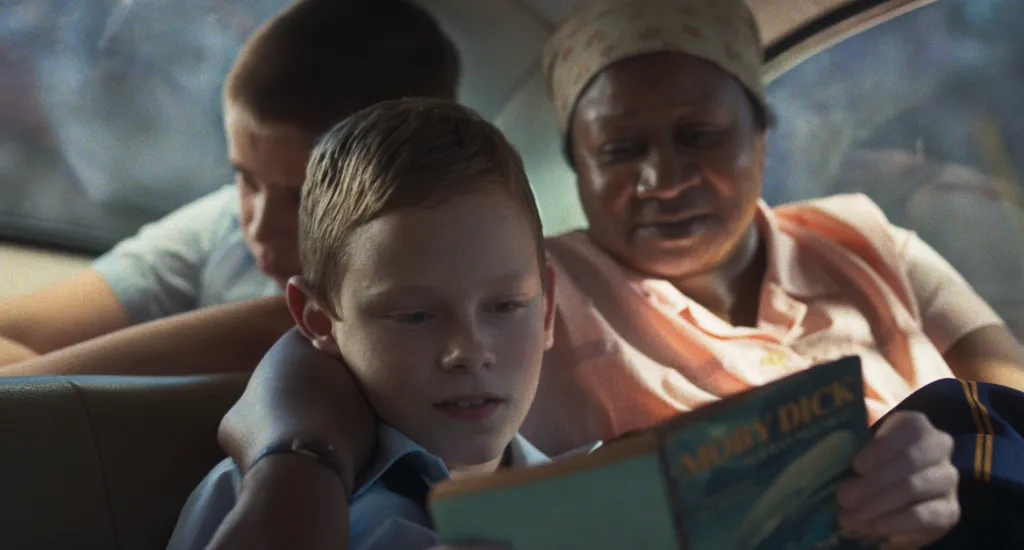
EXCLUSIVE: Cercamon has acquired international sales rights to South African director and writer John Trengove’s Apartheid era drama The Smell of Apples and released a first trailer ahead of its world premiere in Toronto.
Based on Mark Behr’s eponymous 1993 Booker Prize-nominated novel, the film follows a young boy growing up in a white utopia in Cape Town in the 1970s at the height of the racial segregation imposed by the Apartheid system.
On the surface his family leads a charmed life, but the complex family drama will expose the brutality beneath the idyllic façade.
“John Trengove has made a film of remarkable precision and emotional force,” said Sébastien Chesneau, Founder and CEO of sales company Cercamon.
“Through the intimate story of one family, The Smell of Apples exposes how violence and ideology take hold behind the façade of an idyllic world. It is bold, unsettling and deeply human cinema, and we are proud to bring it to international audiences as it begins its journey in Toronto.”
Trengove previously made waves with The Wound, which debuted at Sundance in 2017 before making it onto the nomination longlist for the Academy Award for the then Best Foreign Language Film category in 2018.
In between times, Trengove has also directed Berlinale-selected toxic masculinity drama Manodrome, starring Jesse Eisenberg and Adrien Brody, as well as episodes of Cape Town-set crime show White Lies.
New film The Smell of Apples is produced by Eric Abraham and Jack Sidey at Portobello Productions), Cait Pansegrouw at Cadence) and Frank Hoeve at BALDR Films.
It is the second South African film produced by Abraham and Sidey at London-based Portobello Productions, whose credits include the Academy Award-winning films Kolya and Ida.
“Cercamon are the perfect fit for The Smell of Apples,” said Sidey. “They grasped the film’s nuance and emotional impact from the very first conversation, and we’re confident their expertise and formidable reputation will carry the film to a global audience.”
The Afrikaans and English-language film will premiere in TIFF’s Platform section, giving it a potential pathway to the Best International Feature Film race at the 99th Academy Awards. Under new Academy Awards rules, a non-English-language winner of the main TIFF Platform award will be eligible for consideration in the category.
>
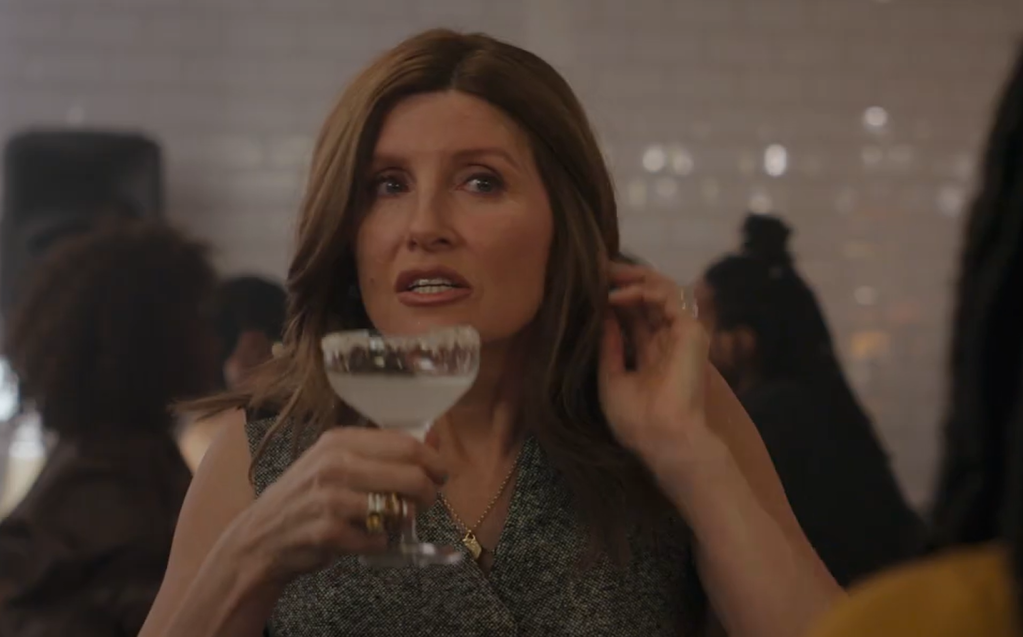
Sharon Horgan‘s Alex is struggling with getting older as she searches for sex and love in HBO comedy Youth.
“It looks like it’s arthritis in your lower jaw,” Harriet Walter’s character tells Alex at the beginning of the trailer. “So what next,” asks Alex. “Or is this just the start of a general decline?”
“It’s just an age thing,” replies Walter. “You have a decreased range of opening. So, no more blow jobs for you.” A clearly disappointed Alex replies, “No more for me?”
Written, executive produced and starring Horgan, Youth follows a 50-year-old divorcee’s search for sex and love whilst juggling caring for her ailing parents and parenting her should-be grown up son.
Rupert Friend also stars as Patrick, Sharlene Whyte as Sam, Aran Murphy as Ruari and Robbie Gee as Frank.
Youth will premiere with the first two epsiodes on Sunday, September 20 at 10 p.m. on HBO and stream on HBO Max.
Youth is produced by Merman (Amandaland, Bad Sisters, Vladimir). In addition to Horgan, executive producers are Faye Dorn for Merman, Jim Kleverweis, and Dawn Shadforth, who also directs.
Check out the trailer above.
>

The Block the Merger Coalition has launched a new petition urging the 12 state attorneys general to reject “empty concessions” from Paramount and “hold strong” in their legal fight against its $110 billion merger with Warner Bros. Discovery.
“Financial analysts are now predicting that this deal cannot survive the wait of the trial and that Paramount must settle or risk losing Warner Bros,” the petition states. “We have them on the ropes, but Larry Ellison has proven time and again that he will use his vast wealth and influence to buy allies and control the public discourse. The Ellisons are paying for a powerful campaign to pressure the AGs to sell out our people by organizing a host of often financially conflicted executives and policymakers across the political spectrum.”
The coalition argues that merger concessions “don’t work,” noting that they’re “unenforceable, frequently abandoned and often attempt to pit impacted parties against one another,” citing research from the Writers Guild of America and the American Economic Liberties Project. They further warned that accepting unenforceable conditions from the Ellisons in a backroom rather than fighting in the courtroom is a “losing proposition.”
“Even in the best case scenario, concessions do not protect all workers and consumers. We believe that to make sure no one is left behind, we must #BlockTheMerger. That’s why we’re calling on state AGs to take their case to trial,” the petition continues. “Let’s show them that the power of many is greater than the power of their money. Billionaires have hoarded outsize wealth, but that doesn’t give them the right to control our lives, our media, and break the law. This deal will destroy competition and diversity in the creative sector. The antitrust lawsuit is strong. Let’s have our day in court and let the Judge decide.”

The lawsuit between the dozen state AGs and Paramount is headed to trial in March 2027. Paramount has agreed to delay the closing of the merger until five days after the outcome of the trial, or June 1, 2027, whichever comes earliest.
Starting Oct. 1, Ellison is on the hook to pay WBD shareholders a 25 cent per share ticking fee, which translates to a payout of $650 million per quarter or $7 million per day until the deal is closed. If the deal does not close at all due to regulatory matters, he must also pay WBD a $7 billion break-up fee.
The contractual expiration date on the merger is June 4, 2027.

The latest move by the Block the Merger coalition comes as Iowa Attorney General Brenna Bird and Montana Attorney General Austin Knudsen filed a motion with the Supreme Court urging them to block the “politicized” antitrust lawsuit by California’s Rob Bonta and 11 other states.
The pair allege that the litigation is depriving their states’ economies of the deal’s benefits and and harming “tens of thousands of employees of Paramount and Warner Bros., as well as hundreds of millions who watch their movies, shows, and news through a variety of sources” in the process.
Iowa and Montana also requested that the Supreme Court set a deadline of Sept. 15 for Bonta and the other state AGs to respond and an Oct. 9 conference hearing. A spokesperson for Bonta’s office previously told TheWrap it is reviewing the filing from Bird and Knudsen and that it will “respond as appropriate.”
Meanwhile, a number of parties have called for a settlement between the states and Paramount, including California Gov. Gavin Newsom, Los Angeles Mayor Karen Bass, the Democratic nominee in California’s gubernatorial race Xavier Becerra, the Directors’ Guild of America and IATSE.

In an interview with TheWrap on Monday, Bonta reiterated that the state AGs are “not interested” in behavioral remedies being offered by Paramount, such as Ellison’s pledge for 30 theatrical film releases a year.
In terms of specific examples of what a structural remedy could look like, Bonta said that someone else would have to own a “significant” portion of the 50 basic cable channels that would be included under the combined company, though he stopped short of saying CNN would be one of them.
“We have some thoughts on [specific channels]. I’m not going to share those with you. If we do end up ever having productive settlement negotiations, that is something to be discussed,” he added. “But the idea of what it means to have a structural remedy, for example, in the basic cable channel licensing market means separate ownership of a significant number of those channels.”
The Wall Street Journal has also reported that Bonta is interested in keeping the operation of the two companies’ studios separate. Bonta’s comments came after he canceled a mediation session with Paramount that was scheduled for Monday following the WSJ’s report.
Though Bonta said he remains open to “good faith” discussions to settle the lawsuit as early as this week, he emphasized that the states will only return to the negotiating table if Paramount Skydance agrees to “stop leaking and stop misrepresenting through their leaks” to the press.”
“It’s up to them,” he added. “They’ve got to figure out where the leaks are and shut them down. And once they figure that out, we’ll be happy to talk with them. I don’t know how long it’ll take them to figure it out and to fix it, but when they do, we’re ready.”

TheWrap exclusively reported a Los Angeles County study which found that the merger could result in nearly 4,500 film and TV jobs lost over the next three years when the two companies combine. It could also put over 5,800 indirect or induced jobs from related small businesses at risk, per the study.
Overall, the economic impact of losing these jobs would be $1.26 billion in wages, $2.78 billion in economic value, $4.06 billion in total business output and $547 million in tax revenue, including $78.6 million in local taxes — most of which (63%) comes from property taxes.
However, Ellison has threatened to move Paramount’s operations out of the Golden State if a settlement can’t be reached, a move experts warn could also be “devastating” for the local economy.
The Block the Merger coalition slammed Ellison’s threat, arguing that it proves his “disregard for industry workers” and that “only desperate people make threats like that.” Bonta, who has called the threat “blackmail,” emphasized in his interview with TheWrap that no matter where they decide to go, the lawsuit will continue.
“They can’t escape accountability. There’s no reason, based on our lawsuit, for them to go anywhere else unless it was their plan all along before this lawsuit to always go to another state,” Bonta said. “Maybe they think it’s clever, maybe they think it’s helpful to be engaged in the court of public opinion. But as I’ve said time and time again, and I’ll say it now, this is a very straightforward, black and white, bread and butter, meat and potatoes antitrust case about three markets.”
“If there ever is a decision to leave California, that is completely David Ellison’s decision,” he added. “He owns it. It is laid at his feet. He’ll have to explain the 180-degree turnaround from ‘I’m committed to the future of Hollywood’ to ‘now I’m leaving.’”

>

Reiss Nelson becomes free agent after agreeing with Arsenal to mutually terminate contract

Cercamon Boards John Trengove’s Toronto-Bound ‘The Smell Of Apples’

Seahawks’ DT Leonard Williams to sign 3-year extension: Source
-

 movies3 months ago
Search For Canadian TV Actor Stewart McLean Now Homicide Investigation
-

 Fashion9 years ago
These ’90s fashion trends are making a comeback in 2017
-
Fashion9 years ago
According to Dior Couture, this taboo fashion accessory is back
-
Fashion9 years ago
Model Jocelyn Chew’s Instagram is the best vacation you’ve ever had
-
Fashion9 years ago
Emily Ratajkowski channels back-to-school style
-
Fashion9 years ago
9 Celebrities who have spoken out about being photoshopped
-
Fashion9 years ago
Your comprehensive guide to this fall’s biggest trends
-

 Anime3 months ago
Rurouni Kenshin: Hokkaido Arc Manga Takes 1-Issue Break – News