
Anime
Amata Games Unveils Phoenix Wright: Ace Attorney – Dual Destinies VR Game for 2027 – News

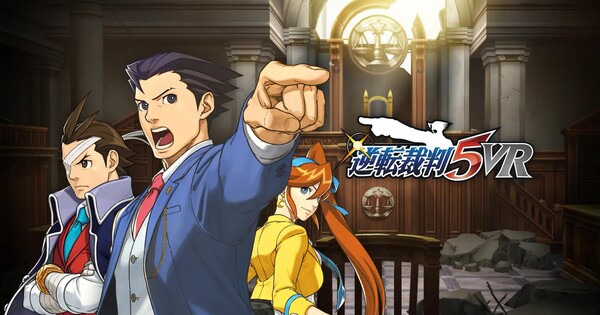
VR version of 5th Ace Attorney game offered with support for English, other languages
Amata Games announced on Thursday that it is developing an officially licensed version of CAPCOM‘s Phoenix Wright: Ace Attorney – Dual Destinies game for the Meta Quest virtual realty (VR) headsets and newly announced Meta VR Glasses headwear. The game, titled Phoenix Wright: Ace Attorney – Dual Destinies VR, will debut next year with English, French, German, Japanese, Korean, Traditional Chinese, and Simplified Chinese language support.

©CAPCOM Licensed to and published by AMATA K.K.
Amata Games describes the game:
The hit Ace Attorney series finally comes to the immersive world of VR! Take on the roles of Phoenix Wright, Apollo Justice, and Athena Cykes—and prove your clients innocent of all charges!
After 8 long years, Phoenix Wright makes his return as a lawyer in this 5th mainline game. The story starts with a bang in the middle of a badly-damaged courtroom. Along with Apollo Justice and Athena Cykes, Phoenix works to bring an end to the current “Dark Age of the Law”, where the pursuit of victory trumps the pursuit of the truth.
Phoenix Wright: Ace Attorney – Dual Destinies shipped in Japan on the Nintendo 3DS in July 2013, and debuted in the West in October 2013. CAPCOM released the game on iOS in August 2014, and on Android in May 2017.
Apollo Justice: Ace Attorney Trilogy — a collection containing the Apollo Justice: Ace Attorney, Phoenix Wright: Ace Attorney – Dual Destinies, and Phoenix Wright: Ace Attorney – Spirit of Justice games — launched for PlayStation 4, Xbox One, Nintendo Switch, and PC via Steam and Microsoft Store in January 2024.
Sources: Phoenix Wright: Ace Attorney – Dual Destinies VR game’s website, PR Times via Gematsu
>


©Bandai Namco Entertainment Inc.
Ace Combat 8: Wings of Theve is one of the best games that I’ve played in 2026. It’s a thrilling, arcadey fighting flight sim whose design team seems to have had a ton of fun playing with their game’s form. Its level design, barring one inordinately frustrating late-game chokepoint, interlinks a rewarding level of challenge with creative mission parameters. Its aesthetics are impeccable, from its loving recreations of real life fighter jets to its sweeping, gorgeous top-of-the-year score. Its story is solid on a macro-level and excellent on a micro-level, particularly when it comes to its antagonists. It’s a blast—and between the joys of its gameplay and the care with which its makers tell their story, it’s one with plenty of replayability in single-player. While I was unable to participate in Wings of Theve‘s multiplayer test for timing reasons, playing its campaign to completion has made me excited to give multiplayer a spin when the game launches.
Gameplay-wise, Wings of Theve‘s campaign gives players a set of tools, teaches them how to use them (along with the context in which they will be using them), and then delights in throwing curveball after curveball. Missions can begin with one type of challenge (say, attacking a fortified position, or protecting a vulnerable target), only for things to go sideways (unexpected enemies arrive, or the wheels come off a carefully laid plan, for instance). Wings of Theve‘s missions demand the player juggle multiple key elements; the amount of armaments they have left, the time left on the mission clock, the role they’re having the rest of Joker flight play. The mid-mission twists in turn demand that the player be flexible and able to adapt on the fly.

©Bandai Namco Entertainment Inc.
It’s intense and exciting, but, provided the player flies with care, never merciless. On “Pilot” difficulty, Wings of Theve‘s normal difficulty, the game is challenging but fair. If you fail a mission, you will know how and why you failed, and what you need to do to succeed. Wings of Theve‘s levels are, with one exception, rewarding to complete. There is one in particular about two-thirds of the way through that was so satisfying it made me stand up and cheer. As for the exception, while it is a mercifully brief moment late in the game, it offers so little margin for error that it is possible to fail repeatedly in rapid succession. Overcoming it is not so much satisfying as it is a relief to be done with. It’s a rare sour note in an otherwise marvellously crafted game—but it is so out of step with Wings of Theve‘s otherwise skilful balance that it stands out.
Wings of Theve‘s gameplay partners well with its narrative. Structurally, the game keeps the majority of its story personal, focusing on Joker Flight’s travails. The flight is a well-realized crew, both as a group and as individuals. Ellington “Professor” Baxter, Rex’s wingman, is a college-level teacher turned fighter pilot. He’s content with himself, but worries for Joker Flight’s younger pilots. The music-loving William “Noise” Coster tries to be professional and reliable, but he struggles with taking on too much responsibility. The energetic Tasha Severskaya is Joker Flight’s best technical pilot by a mile, and she’s a civilian flyer who doesn’t want to take a life if she can help it. While Rex is primarily a cipher for players to project themselves onto, he does get to affect Wings of Theve‘s story via player choice and certain yes/no questions.
As individuals, the members of Joker Flight are working their way through fighting a massive, horrible war. It’s a stressful, soul-grinding experience at the best of times. Surviving, not only in body but in spirit, will take care. Wings of Theve‘s creative team runs with this, giving each pilot space to struggle and to triumph. This in turns gives the voice cast space to do good work. I played Wings of Theve in English, and was consistently impressed with William C. Stephens‘ Baxter, Emi Lo‘s Tasha, and Ray Chase‘s Noise. They play off each other well, and their chemistry sells the flight’s bond. Joker Flight’s development across the game is rewarding. They are, you might say, a winning hand.

©Bandai Namco Entertainment Inc.
Where Wings of Theve‘s writing excels, though, is with its antagonists. Mission-specific foes get just enough space to make themselves memorable. Their superiors, Wings of Theve‘s primary antagonists, are particularly compelling. Shadow 22, the greatest ace of the Shadows and Rex’s chief rival, is a skilled commander. His pilots revere him, and his direct superior respects his abilities. Shadow 22 lives for a good fight and he is more than willing to be ruthless in pursuit of one. His valor and viciousness are inextricably wrapped together.
Shadow 22’s superior officer, meanwhile, is a wonderfully thorny character. To speak personally, her arc is the single most compelling one in the game. Wings of Theve‘s creative team uses their lead villain sparingly. The game’s core focus is on Joker Flight. The audience learns about their foes when our heroes do. Quite a bit about them goes unexplored. When Shadow 22 and his commander do take center stage, they command both Joker Flight and the players’ attention. It’s effective character work, and it uses the confines of Wings of Theve‘s narrative well.

©Bandai Namco Entertainment Inc.
“It uses its shape well” is a good sentence-long review of Ace Combat 8: Wings of Theve. It gives its players their tools and carefully teaches them how and when to use them. It then bends those circumstances in a host of ways to create consistently exciting (minus that one frustrating one), challenging levels. It keeps its narrative focus tight, which lets its leads blossom and play off of each other, and gives its antagonists space to shine when they cut in. It’s a blast, one I count myself fortunate to have played.
>
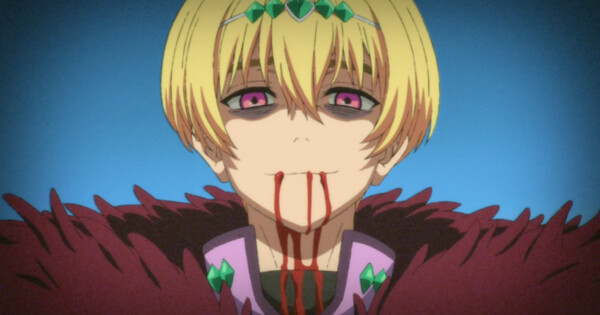

© Yuji Iwahara/LDF/CLEVATESSⅡ Project” Production Committee.
It’s one of the oldest questions asked by hundreds of anime over the decades: “Is there any better time for an extremely lengthy lore-dump flashback than right in the middle of a climactic battle?” The obvious answer is, “Yes, obviously, let’s not interrupt the thrilling action sequence if we can help it,” but this is a truth that has eluded so many shows. While I would have preferred more than a measly few uninterrupted minutes of Clevatess and Vorden duking it out, I cannot deny that the dark history of Toah is a welcome revelation. At long last, the story of the “True Hero” of legend has been told, and it’s a doozy of a tale, indeed.
As any of us could have predicted, Vorden’s motivations stem from his desire to bring back the most formidable and satisfying rival he ever encountered. It’s a pretty classic case of an Anime Dude desperately craving the blood-soaked attention and intimacy that can only be satisfied by the heated rivalry he shares with another Anime Dude, complete with aggressive homoerotic subtext. What is surprising about Write, the Strongest Hero, is how his role in the twisted history of Clevatess‘ fractured fantasy world is more complicated than merely being the doomed protagonist of a forgotten chapter in the war against the Dark Beast Lords. For one,seeing Vorden be so down bad for Write gives me hope that Clevatess will one day understand what an Ultra-Rare-Tier pull he landed with Alicia.
More important to our story, though, is how the ancient kingdom of Toah turns out to have been a deeply cruel and apathetic kingdom that was all too happy to throw its legions of heroes into an endless cycle of brutal violence and reincarnation. What’s more, I’m pretty sure that the Heroes were all victims of Ye Olde Isekai Routine, which means the bastards of Toah absolutely deserved the massacre that was coming for them. The Books of Toah and the Heroic Legend were all Write’s ploys to bore holes into the foundations of Toah’s rotting empire and set the stage for his apocalyptic reckoning. The apocalypse of Toah was not the doing of any Dark Beast, but a nerdy little writer with a talent for playing the long-con. That, my friends, is damned fine world-building. It’s a shame that the production values of this episode were a little too rough to fully sell this cool and entertaining twist, but the overall impact is still felt. No wonder our big bad wants his rival back. Vorden spent a year frolicking with the most heinous Supervillain Isekai Boyfriend that his universe has ever known. Even after a millennium, who else could possibly compare?
Not Clevatess, that is for sure. To be honest, I absolutely love how badly our evil little pupper got his ass handed to him this week. He’s spent the entire season acting like the unkillable King Shit of Demon Doggy Mountain, so it’s been humbling to see Vorden clean Clevvie’s clock while also pointing out the malaise of existential boredom that has been holding him back for so centuries. Also, don’t think I didn’t notice the moment where Vorden punches Clevatess so hard that the entire medium shifts to live action with a cut to a rotoscoped miniature explosion ripped straight out of an Ultraman joint. That single edit alone is enough for me to bump the score of this entire episode back up to four stars. Long live tokusatsu, baby.
Episode Rating:
Clevatess Season 2 is currently streaming on
Crunchyroll.
James is a writer with many thoughts and feelings about anime and other pop-culture, which can also be found on BlueSky, his blog, and his podcast.
Disclosure: Kadokawa World Entertainment (KWE), a wholly owned subsidiary of Kadokawa Corporation, is the majority owner of Anime News Network, LLC. One or more of the companies mentioned in this article are part of the Kadokawa Group of Companies.
The views and opinions expressed in this article are solely those of the author(s) and do not necessarily represent the views of Anime News Network, its employees, owners, or sponsors.
>
Anime
WIT Studio’s George Wada on Attack on Titan, Trust, and Taking on The One Piece – All the News and Reviews from Anime Expo 2026
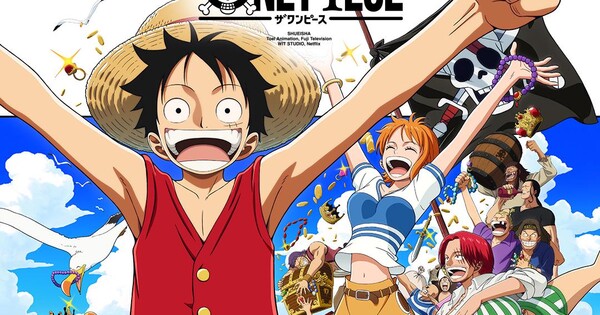

As the current president of Wit Studio and Production I.G, George Wada has played an instrumental role in helping to bring to life some of anime fandom’s most cherished properties. Serving as an animation producer on the first three seasons of Attack on Titan, Wada has since led Wit Studio as it worked on projects including The Ancient Magus’ Bride, Vinland Saga season 1, Ranking of Kings, and SPY x FAMILY. Wit Studio is currently working on The One Piece, a new adaptation of Eiichiro Oda‘s famed manga. Wada sat down with us last month at Anime Expo to talk about the past, present, and future of Wit Studio.
Before we talk about the future, I’d like to talk a little about the past. Looking back almost fourteen years later, did you or anyone else at Wit Studio imagine that Attack on Titan would become such a global phenomenon?
Wada:
Not at all. Before the very first promotional video was released to the public, Tetsuya Nakatake showed it to me. Attack on Titan was the first project for our newly established studio, and Nakatake said to me, “Isn’t this incredible? We should be proud that we’re able to make something like this.”
For a new studio, Attack on Titan seems like an incredibly ambitious project to take on as your first production. What made you think it was the right project for Wit Studio?
Wada:
I chose it because I thought the original manga was a perfect fit for Director Tetsuro Araki. Our studio had just been established, and we were about to go out into the world and face many challenges. I felt that the story of our new animation studio and the story of Attack on Titan were somehow in sync with each other. We made it with the feeling that we were going to face those challenges head-on.
Was Attack on Titan the first project you considered for the studio, or were there other possibilities as well?
Wada:
It was the only one.
Beyond the animation itself, Attack on Titan also has such a strong emotional core. What was it about the story that made you think it was right for your studio?
Wada:
I thought the story of having to go outside, because otherwise you can’t gain anything, was something that could reach people around the world. This was before the world had become as connected as it is now. I think it was truly significant as a story about people all over the world overcoming different kinds of walls.

© Hajime Isayama, Kodansha/“ATTACK ON TITAN” Production Committee. All Rights Reserved.
In the entertainment industry, success is often measured by things like financial performance. But there’s another kind of success when something becomes a global cultural phenomenon. Was there a particular point when you realized that Attack on Titan and Wit Studio‘s work had become something much bigger than simply a commercially successful anime?
Wada:
Attack on Titan was very significant in the sense that it helped Japanese anime spread around the world and helped people around the world understand how incredible Japanese animation can be.
Since Attack on Titan, Wit Studio has gone on to produce and co-produce many beloved series, including SPY x FAMILY and Ranking of Kings. After all this time, what continues to influence the projects you choose?
Wada:
One thing that has remained consistent from Attack on Titan all the way through The One Piece is that we want to pursue forms of expression that can only be achieved through animation. That hasn’t changed. I think the stories that our co-founders Tetsuya Nakatake and Kyoji Asano envision, where the protagonist confronts some kind of difficulty, represent the kinds of works Wit Studio chooses.
With everything the studio has accomplished, how do you continue to challenge yourselves and improve? Once you’ve achieved that level of success, I imagine it must be difficult to keep going and create something even better.
Wada:
I think the essence of entertainment is to keep adding something new.
There is so much entertainment in the world now, so if we want to surprise audiences and make them happy, we have to create something truly incredible. As creators, all we can do is keep adding to what we’ve done so that we don’t disappoint the audience. Once people forget about the things we create, that’s when it’s time for us to leave. I heard that from Masahiko Minami at BONES.
As studio president, so much of your job relies on trust. You have to trust the people you work with and trust your team. After almost fifteen years, do you think you’ve changed in the way you approach that?
Wada:
Over the past ten or fifteen years, I think I’ve gotten better at trusting people.
To trust someone means entrusting something to them. And entrusting something to them means respecting the way that person thinks. There isn’t anyone who can do exactly what I do, and there isn’t anyone who can think exactly the way I do. I think the reason our team has become stronger is that we’ve all gotten better at trusting one another. We started as a studio of six people, and now we’ve grown to more than 300. I’m very happy that the number of people I can trust has grown. More than anything, we want to make a lot of animation.
I think fans will be very excited to hear that you plan to make a lot more anime. Is there a particular upcoming project you’re especially excited for audiences to see?
Wada:
I’m really looking forward to seeing how The One Piece, which will be released in February 2027, reaches audiences today. There is already the existing One Piece anime, and there’s also the live-action version. With our new version of One Piece, I hope we can introduce the work to even more people. I consider One Piece one of Japan’s most precious manga, so I’m really looking forward to bringing it to the world.

© 尾田栄一郎/集英社・「THE ONE PIECE」製作委員会
Taking on such a beloved property as One Piece, would you say it’s scary, exciting, or a little bit of both?
Wada:
We’re really excited. In Japanese, we’d say “waku waku.” As you said, there is some fear and anxiety about heading somewhere we haven’t been before. But the excitement is even greater than that. That’s also what the story of One Piece is about.

© 尾田栄一郎/集英社・「THE ONE PIECE」製作委員会
At your panel, you mentioned Tokyo Anime Next, an international animation event taking place in Ikebukuro later this year? (Tokyo Anime Next will take place in Ikebukuro from October 30 to November 2, 2026, as a launch event for a new annual international animation festival planned for 2027. Organized by the Association of Japanese Animations (AJA) in collaboration with the Tokyo Metropolitan Government, the initiative was announced by Wada during the Production I.G x Wit Studio panel at Anime Expo.)
Wada:
Yes. One reason we decided to do this is that I felt Japan didn’t really have a large, well-established awards event for animation. After discussing it with colleagues at other anime studios, we decided to hold an event like this. A lot of studios will be participating, which means many creators will be gathering there. We’ll also be sharing a variety of information. If you want to learn about Japanese animation, get the latest news, and find out what’s happening in the industry right now, I think this will be a very good event to follow. There will be creators there in person as well, so I hope people from around the world will come to Japan to experience the event.
>

9 to 5 Starring Dolly Parton, Lily Tomlin & Jane Fonda Returns For Parton Charity

Game Review: Ace Combat 8: Wings of Theve – Game Review
Brendan Shanahan recommends new exec role to oversee Ontario junior hockey after lengthy review
-

 movies4 months ago
Search For Canadian TV Actor Stewart McLean Now Homicide Investigation
-

 Fashion9 years ago
These ’90s fashion trends are making a comeback in 2017
-
Fashion9 years ago
According to Dior Couture, this taboo fashion accessory is back
-
Fashion9 years ago
Model Jocelyn Chew’s Instagram is the best vacation you’ve ever had
-
Fashion9 years ago
Emily Ratajkowski channels back-to-school style
-
Fashion9 years ago
9 Celebrities who have spoken out about being photoshopped
-

 Anime4 months ago
Rurouni Kenshin: Hokkaido Arc Manga Takes 1-Issue Break – News
-

 Anime3 months ago
HIDIVE to Stream English Dubs for The World Is Dancing, The Forsaken Saintess and Her Foodie Roadtrip in Another World, The Dangers in My Heart: The Movie Anime – News