
Entertainment
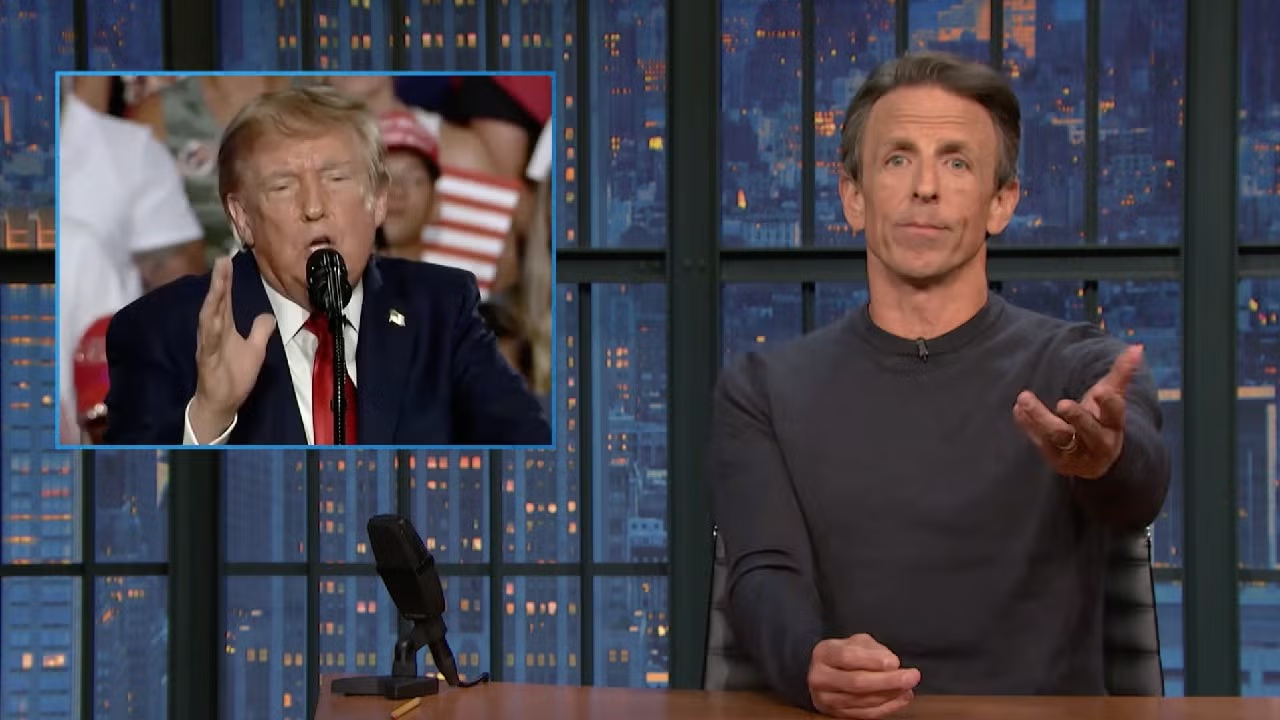
Seth Meyers Thinks Trump Is ‘Secretly Thrilled’ by Judge Overturning Press Ban

>
>

This year’s iHeartMedia Jingle Ball tour will feature performances from Olivia Rodrigo, Hilary Duff, Jonas Brothers, Sombr, and more as the show moves through Dallas, Los Angeles, New York City, Boston, Detroit, Washington, D.C., and for the first time, Nashville.
The Jingle Ball tour will culminate in late December with a network holiday special exclusively on ABC and, the next day, on Hulu, D+ and VOD.
Others artists participating in the tour, which kicks off December 1 in Dallas, are Raye, Alex Warren, Charlie Puth, Teddy Swims, Jason Derulo, Ludacris, OneRepublic, Katseye, Nickelback, Sienna Spiro and Tomorrow X Together and more.
The schedule and tour dates of the annual holiday concert tradition are:
Dallas/Fort Worth, Texas, Dickies Arena – Tuesday, December 1, at 7:30 p.m. CST
Lineup: Katseye, Raye, Ludacris, Myles Smith, Tove Lo, Kylie Cantrall, The Beaches and JYT.
Los Angeles, Intuit Dome – Friday, December 4, at 7:30 p.m. PST
Lineup: Olivia Rodrigo, Hilary Duff, Raye, OneRepublic, Sienna Spiro, Freya Skye, Bella Kay, Stella Lefty and The Beaches.
Chicago, Allstate Arena – Monday, December 7, at 7:00 p.m. CST
Lineup: Raye, OneRepublic, Ludacris, Dominic Fike, Tove Lo, Freya Skye, The Beaches and JYT.
Detroit, Little Caesars Arena – Tuesday, December 8, at 7:30 p.m. EST
Lineup: Alex Warren, OneRepublic, Ludacris, Tove Lo, Jason Derulo, Bella Kay, Freya Skye, The Beaches and JYT.
New York, Madison Square Garden – Friday, December 11, at 7:00 p.m. EST
Lineup: Hilary Duff, Sombr, Alex Warren, Charlie Puth, Teddy Swims, Sienna Spiro, Tomorrow X Together & Yeonjun, Stella Lefty and Freya Skye with special guest performances from Bella Kay and The Beaches.
Boston, TD Garden – Sunday, December 13, at 6:00 p.m. EST
Lineup: Hilary Duff, Sombr, Nickelback, Tomorrow X Together & Yeonjun, Freya Skye, Stella Lefty, Adela, The Beaches and JYT.
Washington, D.C., Capital One Arena
Lineup: Jonas Brothers, Sombr, OneRepublic, Ludacris, Nickelback, Tomorrow X Together & Yeonjun, Kylie Cantrall, The Beaches and JYT.
Philadelphia, Xfinity Mobile Arena – Tuesday, December 15, at 7:30 p.m. EST
Lineup: Charlie Puth, Sombr, OneRepublic, Ludacris, Adela, Jason Derulo, Kylie Cantrall, The Beaches and JYT.
Nashville, Bridgestone Arena – Thursday, December 17, at 7:30 p.m. CST
Lineup: Hilary Duff, OneRepublic, Alex Warren, Teddy Swims, Nickelback, Stella Lefty, The Beaches and JYT.
The cities on the tour will partner with the Ryan Seacrest Foundation, a non-profit organization dedicated to “bringing interactive media studios into pediatric hospitals to help patients find joy during treatment.” Each event will allocate a portion of ticket sales to benefiting organizations as well as offer exclusive packages through online auctions leading up to the events.
The iHeartRadio Jingle Ball special on ABC is produced by iHeartMedia as well as OBB Studios.
>
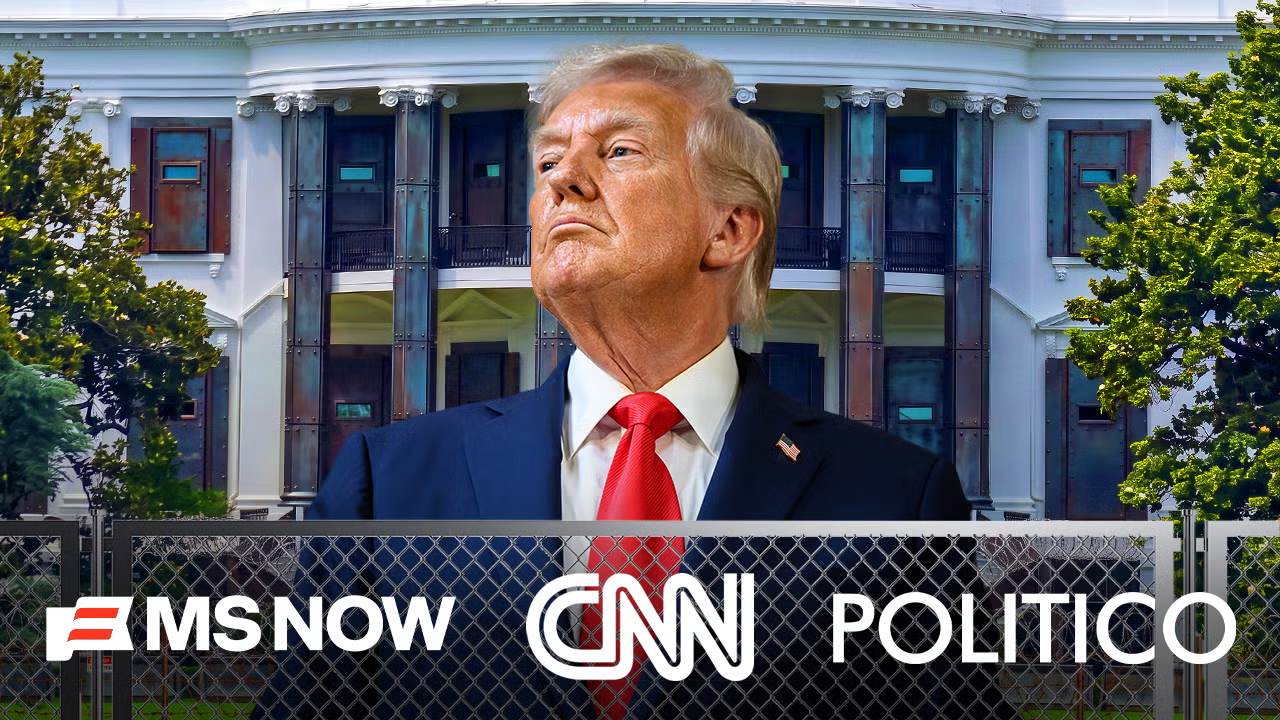
The Trump administration’s latest confrontation with the press ended, for now, with the institutional guardrails holding. But not for lack of the president trying to barrel his way through them.
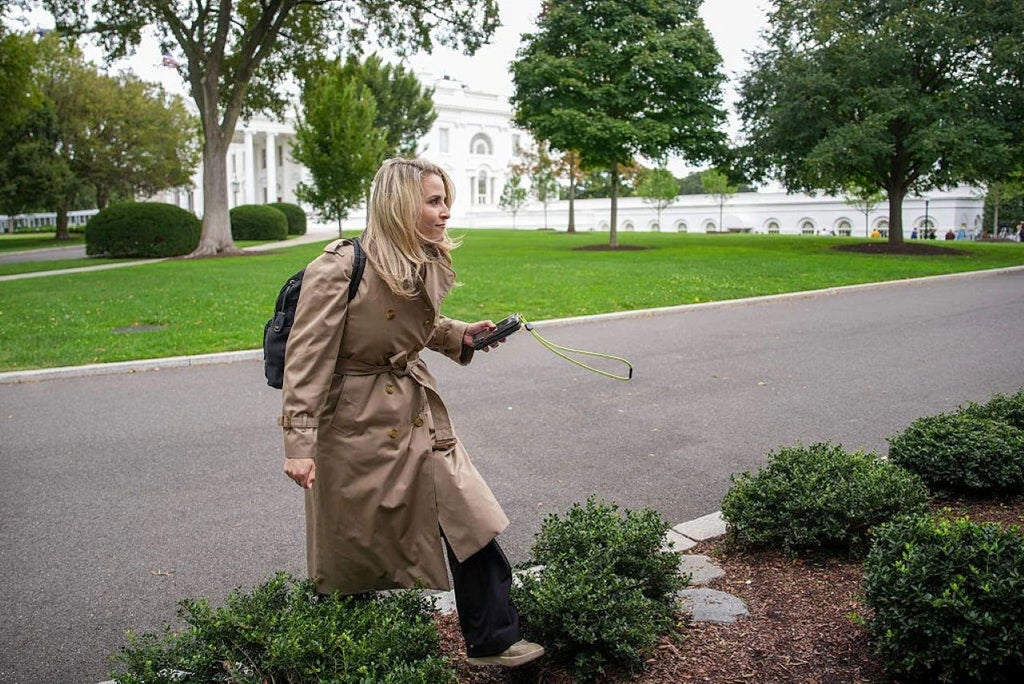
A federal judge on Thursday ordered the White House to restore access to CNN, MS NOW and Politico. The major television networks stood together rather than replace CNN in the White House TV pool. And reporters from the three barred outlets were eventually allowed back onto the grounds Thursday after initially being turned away despite the court’s order.
But the episode marked the latest escalation in President Donald Trump’s confrontation with the media and raised a more fundamental question about what happens when the White House keeps pushing against both institutional norms and constitutional limits. As the administration keeps escalating its confrontations with the press — including denying CNN and MS NOW reporters access to cover the arrival of Chinese President Xi Jinping for a state dinner even after the ruling — what happens when those protections are tested again?
The administration has been remarkably consistent in its clashes with the media. Trump has regularly sued or threatened to sue news organizations. The White House restricted the Associated Press’ access in February 2025 after it declined to adopt Trump’s preferred “Gulf of America” terminology, then took control of selecting which news organizations participate in the presidential press pool, a role previously handled by the White House Correspondents’ Association. The administration later imposed new restrictions on journalists at the Pentagon, and in January, federal agents searched the home of a Washington Post reporter as part of a national security leak investigation.
In the latest escalation, Trump went further, barring three major national news organizations from the White House after attacking their coverage, once again raising the question of how much discretion the White House has when deciding who gets to cover it.
Jonathan Peters, a University of Georgia professor and the Carter Chair for Excellence in Journalism, said the key distinction is between a president criticizing coverage and the government using its control over access to reward or punish editorial decisions.
“Once access becomes contingent on editorial compliance, the dispute stops being merely another political fight between a president and the press and begins to raise serious First Amendment concerns,” Peters told TheWrap.
The first guardrail was the judiciary
U.S. District Judge Timothy Kelly ordered the administration early Thursday to restore the outlets’ access for 14 days. His ruling granting temporary relief rested on due process — whether the government followed the required procedure before taking away access — while leaving the broader First Amendment fight for another day.

Amy Kristin Sanders, the John and Ann Curley Chair in First Amendment Studies at Penn State University, said that distinction could prove important as the case proceeds.
“We certainly got a sense that Judge Kelly thinks the news organizations’ Fifth Amendment argument is strong, but he kept his cards close to his chest with regard to their First Amendment claims,” Sanders told TheWrap.
That leaves the larger constitutional question unresolved. The White House has substantial authority to manage press access for legitimate reasons including security, space and logistics, Peters said, but that discretion is not unlimited.
“Once the government establishes a system for granting press access, constitutional protections constrain the government’s ability to exclude particular journalists or organizations for impermissible reasons,” Peters said.
Kelly did not settle that issue Thursday. But the confrontation quickly presented another test when questions emerged about whether the White House would comply with his order.
“His willingness to move quickly when it seemed the White House was not going to respect his order was essential,” Sanders said, adding that the administration “seems keen to push the constitutional envelope.”

Hours after Kelly ordered their access restored, reporters from CNN, MS NOW and Politico were still turned away from the White House. The organizations went back to court, and Kelly ordered the administration to explain its compliance. The reporters were eventually allowed back around noon.
Timothy Zick, chancellor professor and John Marshall Professor of government and citizenship at William & Mary Law School, said the delay raised a separate issue.
“It was a temporary violation of a judicial order, which raises serious questions of its own,” Zick told TheWrap. “Had access not been restored, contempt proceedings might have been the next step.”
The second guardrail came from the press itself
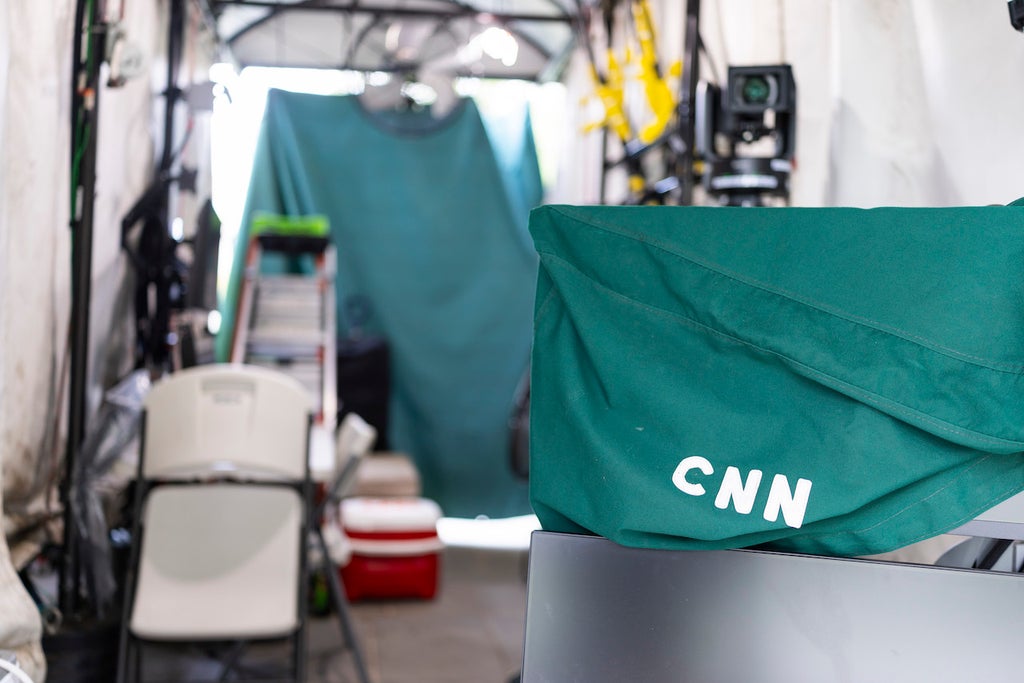
After CNN was prevented from handling its scheduled television pool duties in the immediate wake of the ban, the other major networks declined to take its place. Still photographers also withheld their participation.
The pool allows a small group of journalists to cover events where there is not enough room for the entire press corps and share their reporting with other news organizations. The networks’ decision meant the White House could not simply remove CNN and rely on another major network to step into its pool slot.
“By declining to take CNN’s place, the other networks effectively treated this as a question about the independence of the press corps rather than CNN’s individual interests,” Peters said.
But the standoff also exposed a weakness: CNN, MS NOW and Politico have the resources to fight the federal government in court. Not every journalist or news organization does.

MS NOW senior legal reporter Lisa Rubin warned Thursday that repeated confrontations could discourage journalists even if the government ultimately loses.
“The process for him is the punishment,” Rubin said on “Morning Joe.” “What concerns me is people who are outside of the mainstream media, who want to do reporting without fear or favor, who are going to be deterred by this kind of behavior from the president.”
The government does not have to prevail in every legal fight for restrictions to have an effect. The expense and disruption of challenging them can fall especially hard on smaller outlets and independent journalists.
Will these guardrails keep holding?
The episode underscored both the strength and the limits of those protections. A federal judge intervened, competing networks refused to benefit from CNN’s exclusion and the three outlets regained their access.
But those protections are being tested in increasingly consequential ways. Each confrontation has pushed against a different boundary — from editorial language and control of the press pool to journalists’ physical access and, now, the outright exclusion of major news organizations.
Now the courts may be asked to decide not only what process the government must follow, but where its constitutional authority over press access ends.
Kelly’s order lasts only 14 days, and the larger First Amendment claims remain unresolved.
And the dispute over access continued Thursday night. CNN and MS NOW said the White House denied their journalists access to cover the arrival of Chinese President Xi Jinping for a state dinner, just hours after reporters from the outlets regained access to the White House grounds.
The networks standing together this time does not guarantee the same response in another dispute. And not every outlet could mount an immediate legal challenge.
Trump has also shown himself willing to continue legal fights even after setbacks in court. To that end, this order may prove more of a speed bump than a wall.
This week showed that the guardrails can still hold. The courts intervened, the networks stood together and the barred reporters got back inside.
What it did not establish is where the breaking point of those protections lies.
As the administration continues pushing the boundaries of its authority over the press, that is the question the next escalation may test.

>

Game Review: Ace Combat 8: Wings of Theve – Game Review
Brendan Shanahan recommends new exec role to oversee Ontario junior hockey after lengthy review

Last 24 hours to save up to $200 on Disrupt 2026
-

 movies4 months ago
Search For Canadian TV Actor Stewart McLean Now Homicide Investigation
-

 Fashion9 years ago
These ’90s fashion trends are making a comeback in 2017
-
Fashion9 years ago
According to Dior Couture, this taboo fashion accessory is back
-
Fashion9 years ago
Model Jocelyn Chew’s Instagram is the best vacation you’ve ever had
-
Fashion9 years ago
Emily Ratajkowski channels back-to-school style
-
Fashion9 years ago
9 Celebrities who have spoken out about being photoshopped
-

 Anime4 months ago
Rurouni Kenshin: Hokkaido Arc Manga Takes 1-Issue Break – News
-

 Anime3 months ago
HIDIVE to Stream English Dubs for The World Is Dancing, The Forsaken Saintess and Her Foodie Roadtrip in Another World, The Dangers in My Heart: The Movie Anime – News