
Politics
Politics Home | Trade Unions Call On Burnham To End “Military Collaboration” With Saudi Arabia

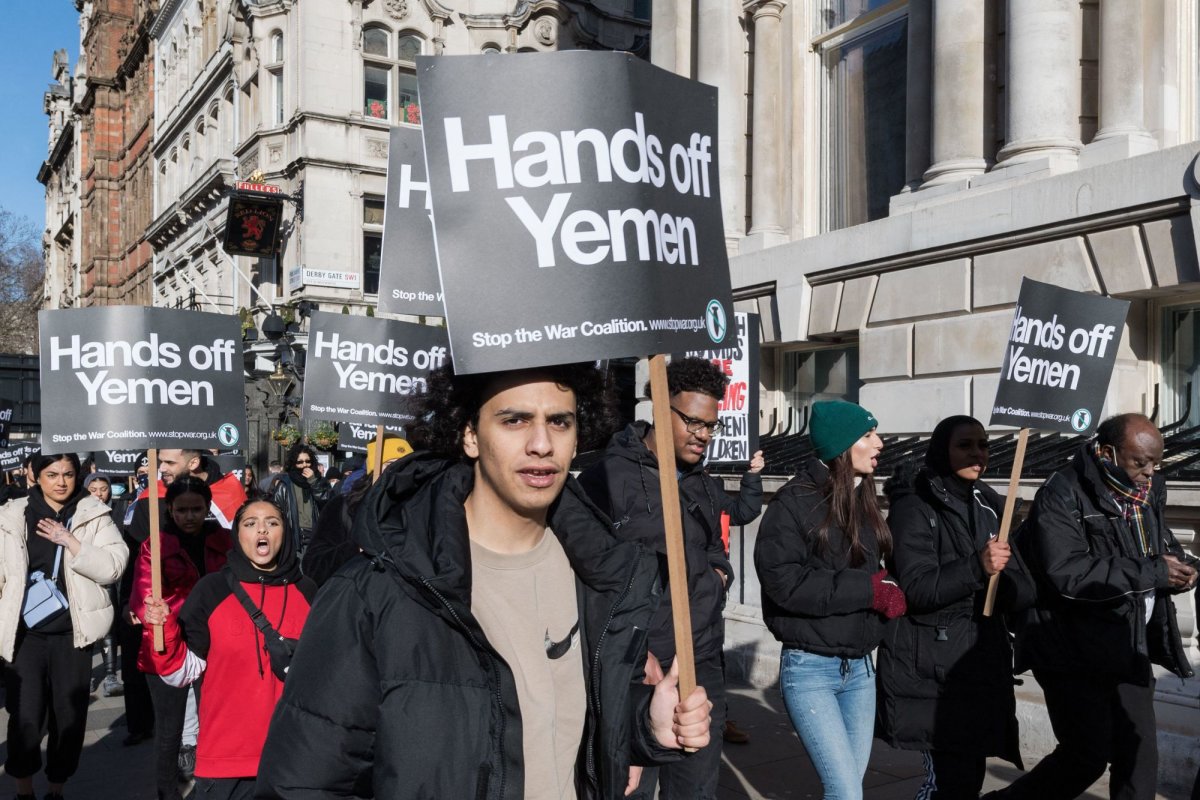

Anti-war demonstrators march against the ongoing war and humanitarian crisis in Yemen, February 2022, London (WIktor Szymanowicz/NurPhoto / Alamy)
5 min read
Exclusive: Ten trade unions have signed an open letter to Andy Burnham calling on his government to end its “military collaboration” with Saudi Arabia amid concerns over the humanitarian crisis in Yemen.
The letter, shared exclusively with PoliticsHome, criticises the UK government’s decision to provide military support to the Saudi-led coalition, which it accuses of targeting civilians and breaking international law in Yemen.
Conflict in the region has escalated in recent weeks, with Saudi Arabia claiming on Friday that it had intercepted six ballistic missiles fired by the Iran-backed Houthis.
Earlier this week, the UK government announced that it would provide additional defensive military support to Saudi Arabia, claiming “escalating tensions in the Gulf can have a serious impact at home in the UK”.
Ongoing disruptions to the Strait of Hormuz, a vital trade route, mean any attacks affect Saudi Arabia’s ability to export oil through the Red Sea, hitting prices across the globe.
Ahead of Labour Party conference this weekend, the general secretaries of 10 unions – including four Labour-affiliated unions – said they were “shocked” by the decision to increase military support, and criticised the government’s reasoning.
“Contrary to the government’s statements, the more this war expands, the more expensive our bills will get. The only way out is a diplomatic settlement to the regional war,” the letter reads.
Affiliates Unison, Britain’s largest trade union, the Communication Workers Union (CWU), Transport Salaried Staffs’ Association (TSSA) and the Fire Brigades Union (FBU), among other unions, argued that Britain “should not collaborate with a military that has repeatedly violated international law and has been central to creating one of the world’s worst humanitarian crises in Yemen”.
The letter calls for Burnham to urgently end both Britain’s military support for Saudi Arabia and the UK’s wider involvement in the Iran war “by revoking support for US air strikes launched from RAF bases”.
Burnham has argued that he agreed to help refuel Saudi jets to defend key energy infrastructure against the Houthis in a bid to keep oil flowing from the Gulf and ease economic pressures that will affect the UK.
The union signatories to the letter do not accept this justification, however.
“As the war expands, our members are paying the price. Inflation rose again in August, driven by petrol prices,” the unions said.
“Escalating this war will make our bills more expensive. If the government is serious about tackling the cost of living crisis, it must get serious about diplomacy.”
The Times reported on Thursday that ministers are drawing up plans to help poorer households with energy bills in next month’s Budget.
Khem Rogaly, co-director of Transition Security Project, the militarism-focused research centre that organised the letter, said: “Collaborating in Saudi military operations in Yemen is reckless, inflaming the regional war that started with the massive US-Israeli attack on Iran earlier this year.
“Britain should have no part in the US-led war against Iran or Saudi-led interventions in Yemen. Saudi interventions in Yemen have relied on British military support for more than a decade, leaving a legacy of war crimes and humanitarian crisis that has killed hundreds of thousands of people.”
The letter is one of the biggest organised since Burnham entered No 10 and the unions led by the signatories collectively represent more than 2.3 million workers.
The full text of the letter is below.
Dear Prime Minister,
As trade union leaders we are shocked by the government’s decision to provide yet more military support to Saudi Arabia. Britain should not collaborate with a military that has repeatedly violated international law and has been central to creating one of the world’s worst humanitarian crises in Yemen.
Providing military support to Saudi Arabia inflames the war started by the US and Israel against Iran in February, which has expanded across the region. Contrary to the government’s statements, the more this war expands, the more expensive our bills will get. The only way out is a diplomatic settlement to the regional war.
Saudi Arabia has intervened in Yemen for 11 years, with devastating results. Throughout this war, the Saudi-led coalition has repeatedly targeted civilians, breaking international law, while its air and sea blockade helped cause a humanitarian crisis that left 377,000 people dead by 2021.[i] Britain has supported this war throughout — supplying Saudi Arabia with aircraft, missiles and on-the-ground maintenance to keep its fighter jets in the sky. Earlier this year, the government approved a £468 million weapons sale to Saudi Arabia, mostly composed of missiles.[ii] These actions have fuelled a brutal war that has left Yemen in ruins. Providing military support to Saudi Arabia as the US-Iran war extends to Yemen only exacerbates regional conflict and takes us further from the diplomatic settlement that the world urgently needs.
As the war expands, our members are paying the price. Inflation rose again in August, driven by petrol prices. Energy bills will rise again in October, perhaps exceeding £2100 for the average household from January.[iii] Escalating this war will make our bills more expensive. If the government is serious about tackling the cost of living crisis, it must get serious about diplomacy.
First, we ask you to urgently end Britain’s military support for Saudi Arabia. Second, we ask you to end the UK’s wider involvement in the Iran war, by revoking support for US air strikes launched from RAF bases. These are essential steps for a cost-of-living government to take.
Yours sincerely,
Andrea Egan, General Secretary, UNISON
Daniel Kebede, General Secretary, National Education Union
Dave Ward, General Secretary, Communication Workers Union
Eddie Dempsey, General Secretary, National Union of Rail, Maritime and Transport Workers
Fran Heathcote, General Secretary, Public and Commercial Services Union
Jo Grady, General Secretary, University and College Union
Paul W. Fleming, General Secretary, Equity
Maryam Eslamdoust, General Secretary, Transport Salaried Staffs’ Association
Sarah Woolley, General Secretary, Bakers, Food and Allied Workers’ Union
Steve Wright, General Secretary, Fire Brigades Union
>
Politics
The House | Hazards Ahead: How Labour Unity Under Andy Burnham May Be Tested In The Months Ahead
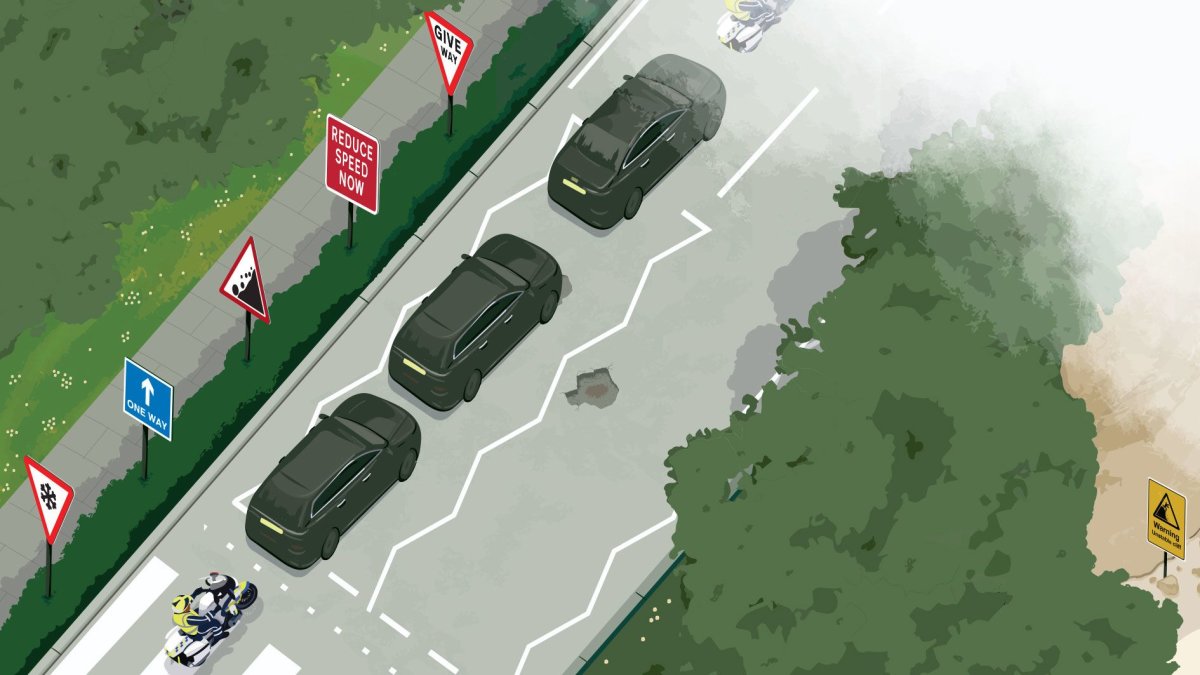
Illustration by Tracy Worrall

12 min read
The first few months of Andy Burnham’s premiership have passed in relative calm but the Labour Party’s newfound unity is about to be tested. Harriet Symonds reads the warnings on the road ahead.
Things, as they might say, can only get worse. Labour gathers in Liverpool with tails up, ahead in the polls having overtaken Reform UK. But it is in the nature of bounces that what goes up must come down, and Andy Burnham well knows that the momentum will fade.
Despite repeated public denials he is planning an early election, the Prime Minister is understood to have discussed the option with James Purnell, his chief of staff. No firm conclusion was reached, say sources.
On one level, that is unsurprising – indeed it would be odd if he hadn’t at least reviewed the possibility with his closest political aide – but it adds to the sense there is an ongoing calculation.
Although the decision will be Burnham’s alone, Labour MPs will do much to condition his thinking in the months ahead.
If he believes he can carry the party through difficult decisions – on welfare and immigration in particular – he may be more likely to wait until he can more confidently campaign on Labour’s record in government. On the other hand, if it appears he has become their captive, he may be more inclined to seek a mandate of his own.
Watching on are the dispossessed and disgruntled, ejected from government for their loyalty to Sir Keir Starmer. The revelation by Louise Haigh that Burnham’s return to Westminster had been in the works for a year has only deepened their resentment.
At the centre of this emerging group is Darren Jones, the former chief secretary to the prime minister, whose exclusion from Burnham’s Cabinet has angered MPs in the group who saw it as a serious miscalculation.
“Even now, they still don’t realise how much power Darren wields in the PLP,” warns an MP in the group. “When the wheels start falling off, they might need him.”
Jones showed his teeth when he challenged No10 claims about how much would be saved through shelving the digital ID scheme, for which he’d had ministerial responsibilities.
At the moment Jones sees himself as something of a Jeremy Hunt-like figure in the Labour Party, who can make significant interventions without undermining the government.
But he is not the only former minister to know where the bodies are buried. Some, like Olivia Bailey and Catherine Atkinson, have been elected to chair select committees which will look at policy areas they tackled in government.
MPs on ‘rebel watch’ insist they want Burnham’s government to succeed, but they have no problem being “critical friends” when it comes to some of the difficult choices ahead, especially those affecting the economy.
“The group has so much institutional knowledge of government – they have a lot to offer,” says an MP organising for the group.
They have begun meeting regularly, including for drinks at the Clarence pub on Whitehall.
Those involved describe it primarily as a support network for MPs adjusting to life outside government, but it has also become a place to connect with donors and develop longer-term policy ideas aimed at securing a second Labour term.
Burnham’s first real tests will come not in Liverpool but in the months ahead, when he will have to make tough decisions that will upset different wings of his party.
MPs are eagerly awaiting the government’s 10-Year Plan in November to provide more clues about the government’s direction of travel.
Welfare, defence, the Troubles Bill, oil and gas and plans for devolution are all issues on which the new government could face opposition from its own benches.
The economy
Burnham inherited an economy with little room for manoeuvre and will deliver his first Budget on 28 October against a backdrop of rising inflation, high borrowing costs and sharply reduced fiscal headroom. The government is facing pressure to fund defence, ease the cost of living and maintain its fiscal rules at the same time.
The government wants the Budget to be as quiet as possible. The Spending Review next year is likely to be the more significant test, particularly on welfare and defence.
Attacks on Rachel Reeves have not gone unnoticed by Labour MPs, with some saying it is “totally unfair” and warning it “will not wash”.
The group of disgruntled Labour MPs is watching closely to see whether Chancellor John Healey sticks to the fiscal rules and how he balances competing demands from defence, welfare and public services.
In a sign that the government is taking the group seriously, The House understands that Healey has asked to speak to Jones ahead of the Budget.
Meanwhile, talk of an early election is rife among Labour MPs, with some reporting contact from regional organisers that they believe could be preparation for a snap poll.
Welfare
Addressing Britain’s £333bn ballooning welfare bill will be one of Burnham’s most politically dangerous tasks. He has said he wants to reduce spending but has yet to set out in any detail how he intends to do it.
Two reports will soon land on his desk: one by former minister Alan Milburn examining youth unemployment and another by Stephen Timms on disability benefits. Milburn has already argued that the welfare system is trapping young people in unemployment and called for a tougher “working state”.
The PLP is divided over how far Burnham should go. Starmer’s attempt to cut £5bn from welfare spend last year ended in a revolt that exposed the depth of opposition on the Labour benches and started the downfall of his premiership.
Burnham faces the same fundamental dilemma: how to reduce the bill without provoking another rebellion from the left.
Some MPs want to see a credible plan to get welfare spending down, while MPs on the Labour left, including Kim Johnson, Rachael Maskell and John McDonnell, will not tolerate what they regard as “punitive” cuts.
Many of those who were involved in last year’s welfare rebellion are now in government, including the new Chief Whip Anneliese Midgley, creating the prospect of a fight within the government itself if Burnham struggles to win support.
“It will be the moderates that will end up saving Burnham when a vote comes to cut welfare,” predicts an MP on the party’s right flank.

Defence
Defence spending could provide Burnham with an equally awkward coalition of rebels. The Prime Minister has committed to spending 3.5 per cent of GDP on defence by 2035 but has so far refused to set out a timetable for reaching three per cent.
With little spare cash, reaching three per cent by 2030 would require difficult decisions elsewhere. The government has indicated that the route to the 3.5 per cent target will be set out at next year’s Spending Review.
The decision to appoint former defence secretary John Healey as Chancellor is a sign of the importance Burnham attaches to the issue.
MPs on Labour’s right want to see the government make defence a priority, particularly after Burnham declared that national security “cannot come at the expense of social security”.
The line was pre-prepared, The House understands, and while the sentiment spoke to some Labour backbenchers, others were less impressed.
“He was dreadful today. Everything I feared,” one Labour MP said following that PMQs performance on 9 September.
Healey’s decision to resign from Starmer’s government over defence spending has also given him little room for manoeuvre. Many MPs will expect him to demonstrate that his new role as Chancellor has not diluted his commitment to increasing military spending.
Tan Dhesi, chair of the Defence Select Committee, has already warned the Prime Minister that “vibes alone just isn’t going to be enough”.
Troubles Bill
New Northern Ireland Secretary Chris Bryant faces the difficult task of passing the Northern Ireland Troubles Bill, intended to replace contentious elements of the Legacy Act.
The legislation is contentious as it could expose former British military personnel who served in the Troubles to continuous unfair legal action. The government has been attempting to address those concerns while also preserving routes to justice for victims and their families.
The bill has become deeply controversial in the veteran community. Since his appointment,
Bryant has been on a charm offensive to convince Labour MPs with military backgrounds to give their support to the bill, some of whom could present powerful opposition if the government gets this wrong.
Several MPs invited for talks say the government is moving in the right direction, but key MPs remain uncertain about whether they can support the bill until they see the final amendments.
Former armed forces minister Al Carns cited the legislation as one of the reasons for his resignation in June, saying it risked failing the veterans it was intended to protect.
Immigration
Home Secretary Shabana Mahmood is facing a growing rebellion from Labour MPs on the soft left over plans to retrospectively extend the qualifying time for Indefinite Leave to Remain (ILR) from five to 10 years or more.
The size of the growing rebellion from within the PLP means Mahmood will likely end up watering down her proposals. Some MPs are calling for skilled worker visa holders to be exempt from extended settlement, allowing them to qualify in five years instead of 10.
Darren Jones sees himself as something of a Jeremy Hunt-like figure in the Labour Party
A motion calling for this move tabled by Neil Duncan-Jordan, the left-wing Labour MP for Poole, has attracted 81 signatures so far, including 42 other Labour MPs.
Duncan-Jordan argues that the proposals could make it harder to recruit workers into sectors such as social care, where there are already around 110,000 vacancies.
“The Prime Minister’s plan to reset the social care system has no chance of succeeding if we keep on with the current plans of ILR. We already have 110,000 vacancies in the sector and the threat of making people wait another five or 10 years until they reach settled status is simply unfair,” he says.
“You can’t reset social care without the workforce and to change the rules for those who are already here is cruel. The Prime Minister needs to rethink or he could be facing his first rebellion.”
Justice
The Courts Bill will be another test of Burnham’s ability to absorb pressure from his own benches.
Under proposals from the Starmer government, jury trials in England and Wales were set to be scrapped and replaced with a single judge for crimes carrying a likely sentence of up to three years. The move was justified as a bid to tackle the courts backlog, which has reached a record level of 80,000 cases.
The plans were originally put forward by former justice secretary David Lammy but faced a significant backlash from Labour MPs. Karl Turner, the MP for Hull East, was at the forefront of efforts to defeat the proposals, calling them “undemocratic” as well as ineffective in reducing the backlog.
Andy Burnham has since described jury trials as a “linchpin of a fair society”, signalling he will scrap the reform – the rest of the Courts Bill, however, is expected to remain very similar, which could be a source of frustration for some.
The extent to which Burnham reverses the Lammy-era proposals will be made clear when the bill returns on 13 October.

Devolution
English devolution is central to Burnham’s premiership. The PM has pledged to take power out of Westminster and give it to communities across England, promising “good growth in every postcode”.
There is broad support for moving power out of Whitehall. The problem for Burnham is that a growing number of Labour MPs fear their constituencies, particularly in London and the South, are being asked to surrender power and money to regional mayors.
Labour MPs representing constituencies in the South have told The House that Burnham’s ‘Manchesterism’ agenda risks being seen as overlooking other parts of the country also facing serious economic and social challenges.
London Labour MPs in particular are worried that deprived parts of the capital will be ignored. In his first intervention since leaving government, former housing secretary Steve Reed publicly warned Burnham that he “can’t make the rest of the country richer by making London poorer”.
There has also been backlash from MPs in regions that do not have elected mayors and those in rural constituencies who fear they will be overlooked.
Perran Moon, Labour MP for Camborne and Redruth, tells The House: “There’s a misunderstanding about Cornwall. We will never join a combined mayoral authority because of our national minority status. So we are at risk of being excluded from the powers and funding we need to unleash Cornwall’s economic potential.”
Burnham has attempted to head off that criticism, promising to work with Cornwall council and its six MPs on a devolution deal “with or without an elected mayor” and extending the offer to areas across England without devolved power.
The government’s decision to row back on local government reorganisation has been welcomed by many MPs who criticised the one-size-fits-all approach. But it now leaves unanswered questions over who gets power, who loses it, who gets the money and who is accountable.
Oil and gas
There is growing pressure on Burnham to approve North Sea oil and gas projects, notably Rosebank and Jackdaw. He has previously said he is “open-minded” about North Sea drilling and recognises the need to balance energy security, jobs and the transition to net-zero.
It is widely expected that Burnham will green-light Jackdaw, but the announcement has been delayed. It is thought that a decision will now only come after the Holborn and St Pancras by-election next month, amid fears it could lose votes to the Greens.
The issue has split Labour. Labour MP Henry Tufnell broke ranks back in March to publicly call for North Sea drilling, arguing it would boost economic growth, create jobs and prevent further deindustrialisation. Unions are also watching the decision closely, with Unite and the GMB in favour of drilling.
But some on the soft left of the party, many of whom are now in government, remain hostile to new oil and gas licences. Foreign Secretary Ed Miliband clashed with the Treasury over the decision when he was energy secretary.
In August, Labour MP Clive Lewis wrote a letter to the new Energy Secretary, Miatta Fahnbulleh, urging against new oil and gas licenses. He wrote on X: “Framing this as a choice between protecting the climate and protecting jobs is misleading. The real risk lies in clinging to volatile fossil fuels, which leave us vulnerable to energy price shocks.”
This new government will not be able to satisfy every wing of the party. For a Prime Minister who has promised to end the factionalism of the Starmer years, Burnham’s first real test may be learning to accept he can’t please everyone.
>
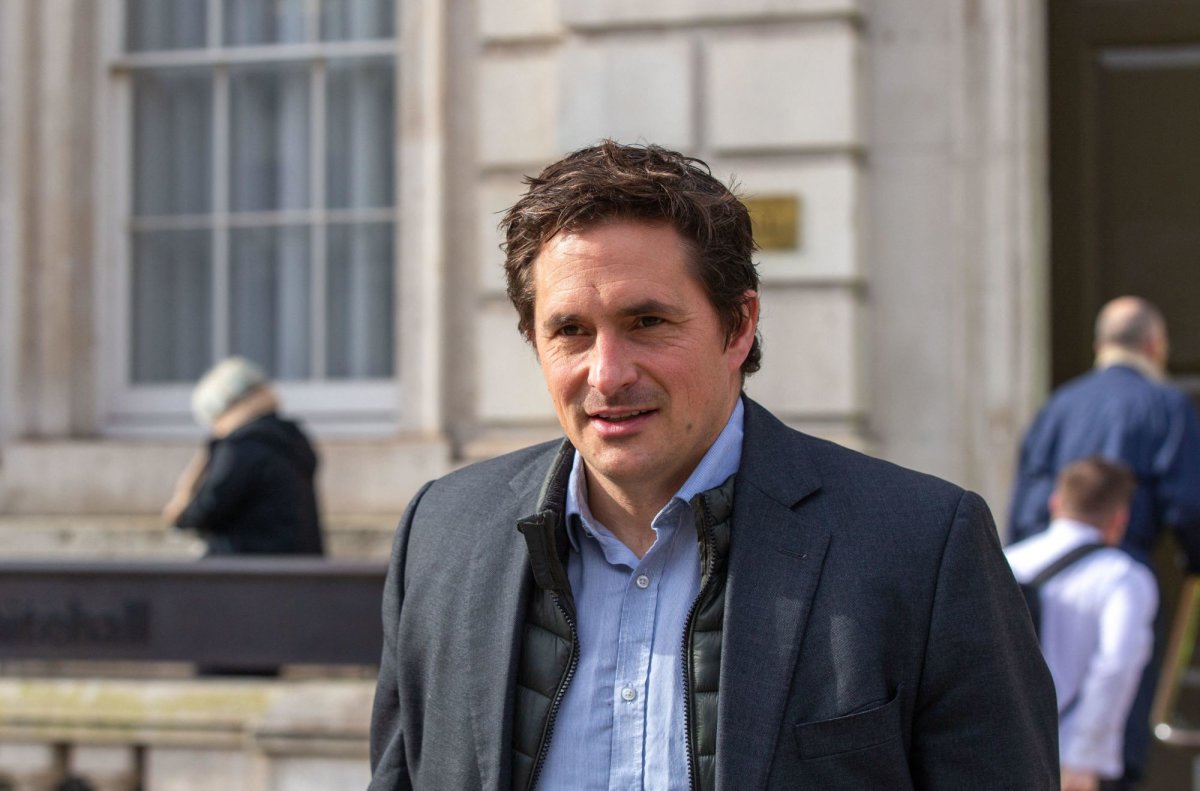

Johnny Mercer has unloaded on his former colleagues in a scathing book about his time in politics (Alamy)

3 min read
Johnny Mercer is scathing about virtually everyone he worked with during his nine years as an MP. In his new book charting his time in Parliament, he’s also critical of his own abilities as a politician.
The former Tory veterans minister spoke to this week’s episode of The Rundown about what he describes as the broken Westminster system, being lied to by successive prime ministers, and how he eventually helped create the Office for Veterans Affairs, the mission he had set for himself after leaving the armed forces and entering the House of Commons in 2015.
Mercer, who lost his Plymouth seat to Labour in 2024, said he wrote No Way to Run a Country because he wants “better” people to pursue careers in British politics, saying he wished such a book existed when he first stood for election over a decade ago.
“I want them to know what it’s like and learn from my mistakes, of which there were plenty”, Mercer told the podcast.
Asked if he felt he had been a bad politician, he replied: “Terrible. I was terrible. I didn’t spend any time on relationships, and I wish I had because you get more done, and there’s some good people in there.
“I was pretty straight all the time, and I don’t think that’s always helpful, and I didn’t enjoy it. So no, I don’t think I was a very good politician. But ultimately, I changed the country.”
After serving, and then resigning, from Boris Johnson’s Conservative government, he was the first person to serve as veterans minister at cabinet level in the summer of 2022, a position he then held for two years under Rishi Sunak.
Referring to himself as just “a very ordinary bloke”, he spoke with pride about creating a new department which spends millions of pounds a year on the UK’s veterans community, and having “changed the law in this country on more than one occasion to better look after veterans”.
“If I can do that, imagine what someone who’s actually vaguely good at this stuff could actually do,” he said.
The former Conservative MP admitted he “torched relationships and friendships” during his time in Parliament, but said he found being a “pain in the arse” to be the most effective way of getting things done in Westminster.
“I’ll always think, could I have got more done in a more collegiate way, but I did try that, and I tried that a lot, and the truth is I got a lot more done when I made myself a pain in the arse.
“Because if you work collegiately, and then people turn around and do the opposite thing that they’ve said they were going to do, what are you supposed to do?
“So no, I tried both, and one was far more successful than the other.”
The Rundown is presented by Alain Tolhurst, and is produced and edited by Lulu Goad and Ewan Cameron for Podot
- Click here to listen to the full conversation with Johnny Mercer on the latest episode of The Rundown, or search for ‘PoliticsHome’ wherever you get your podcasts.
>
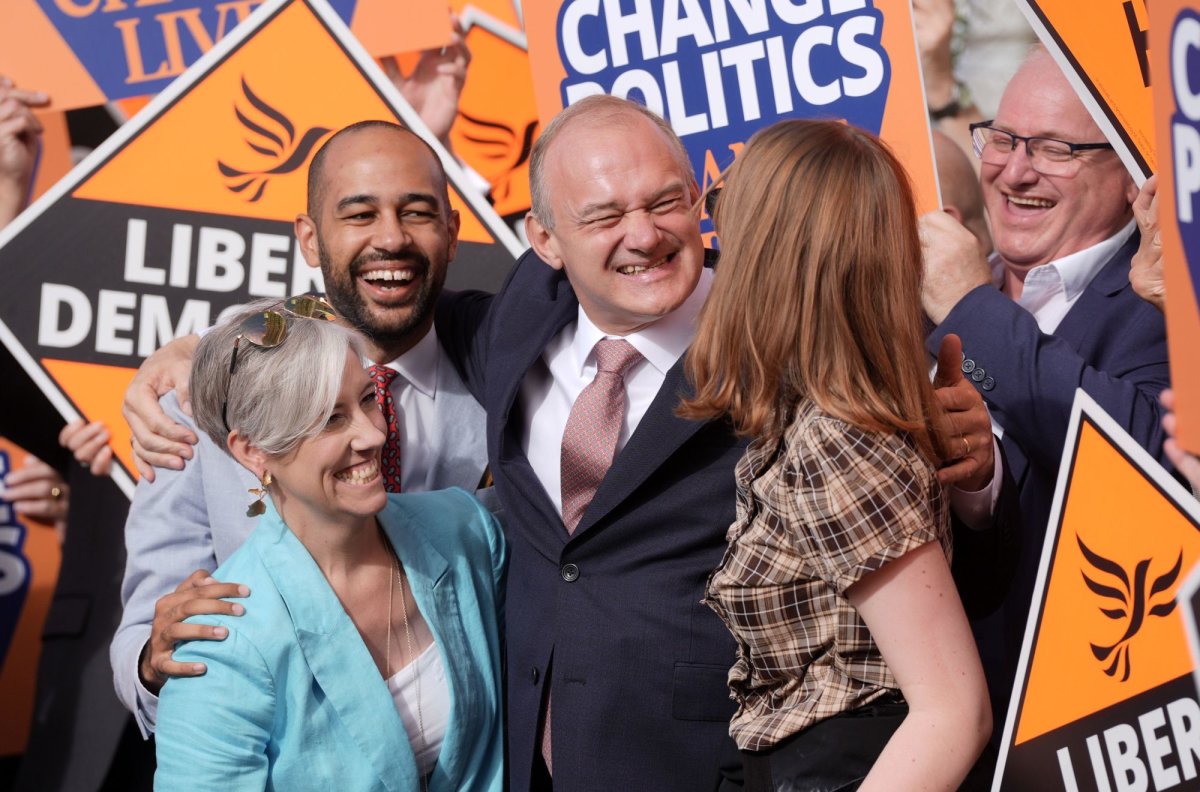
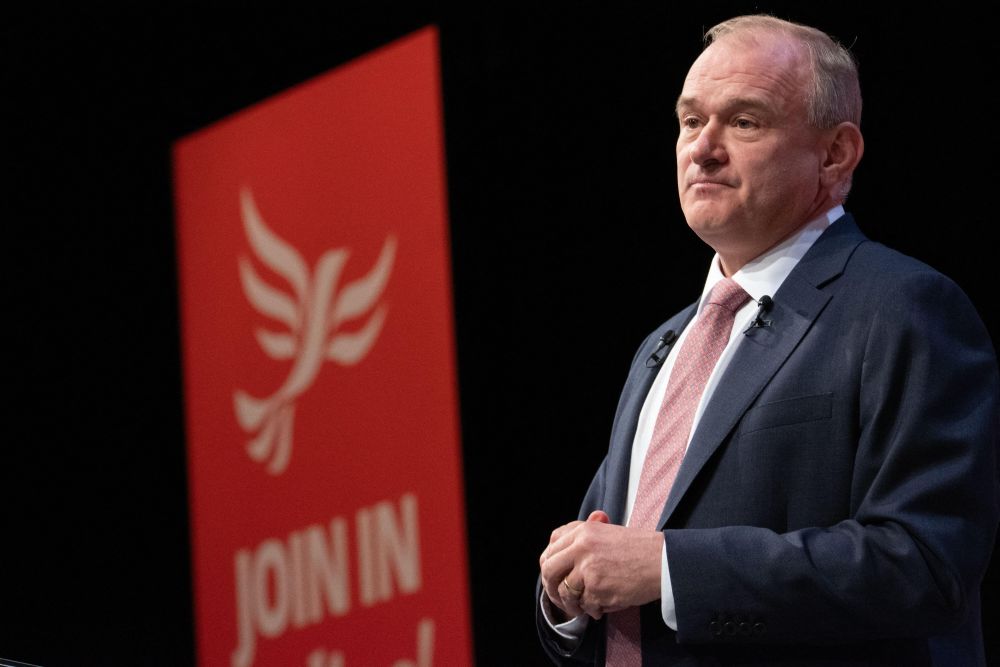
Lib Dem leader Ed Davey with party president Josh Babarinde and deputy leader Daisy Cooper at the party conference in Brighton (Alamy)
11 min read
Questions about the Liberal Democrats’ strategy, message and identity dominated the party’s conference in Brighton.
As Lib Dem parliamentarians and activists arrived on the south coast at the weekend, they were encouraged to write on a board why they support the party.
“I want to live in a country where every voice and every vote matters.” “Fairness and equality of opportunity.” “I didn’t want to stand by and see our country overtaken by malign actors.” “Honesty, decency, integrity and progressivism.” “Because it doesn’t need to be this shit.”
The range of answers reflected a growing debate within the Lib Dems that was the biggest talking point in Brighton: what, and who, are they for?
The question was putting pressure on leader Ed Davey in the weeks, even months, leading up to the weekend.
On the eve of conference, South Cotswolds MP Roz Savage said publicly what many Lib Dems had been complaining about in private: that their party is “struggling for relevance”. In an essay shared exclusively with PoliticsHome, Savage argued that liberals must “rediscover” their “insurgent spirit”, rather than being “the polite custodians of a system that leaves people feeling powerless”.
Indeed, as Lib Dem direction comes under growing scrutiny, senior party figures told PoliticsHome they had noticed more media attention than they would normally expect at this stage of a Parliament.
Davey has made no secret of his desire to see the Liberal Democrats enter government after the next general election, telling The House in a recent interview that he would be “the most experienced leader” in the event of a hung parliament.
Faced with criticism, he has pointed to the party’s electoral gains at local level as evidence of success. “We’re winning where it matters: at the ballot box,” he declared in Brighton.
Having won a record 72 MPs in the 2024 general election, the Lib Dems transformed their presence in Westminster. However, in recent months, multiple party figures have expressed frustration with what they describe as failure to capitalise on this success and stagnant polling, and fear that the Lib Dems are failing to cut through in a fragmented political climate.
Speaking to PoliticsHome at conference, one MP blamed “growing pains”: a Lib Dem central operation that had taken time to catch up with the size of the parliamentary party.
Another MP described this year’s conference as “edgier” than previous years, adding that restlessness with Davey’s leadership was leading to conversations about possible successors: “This one feels edgier about the leadership… The three who would go for it are Lisa Smart, Daisy Cooper and Max Wilkinson. Whether they’d do any better, I don’t know.”
Cooper, the party’s deputy leader, is generally seen as the most obvious potential successor to Davey. She was once widely seen as the natural heir, although that assumption has faded somewhat over the past two years as 2024-intake MPs like Wilkinson, Calum Miller and Josh Babarinde have risen through the ranks.
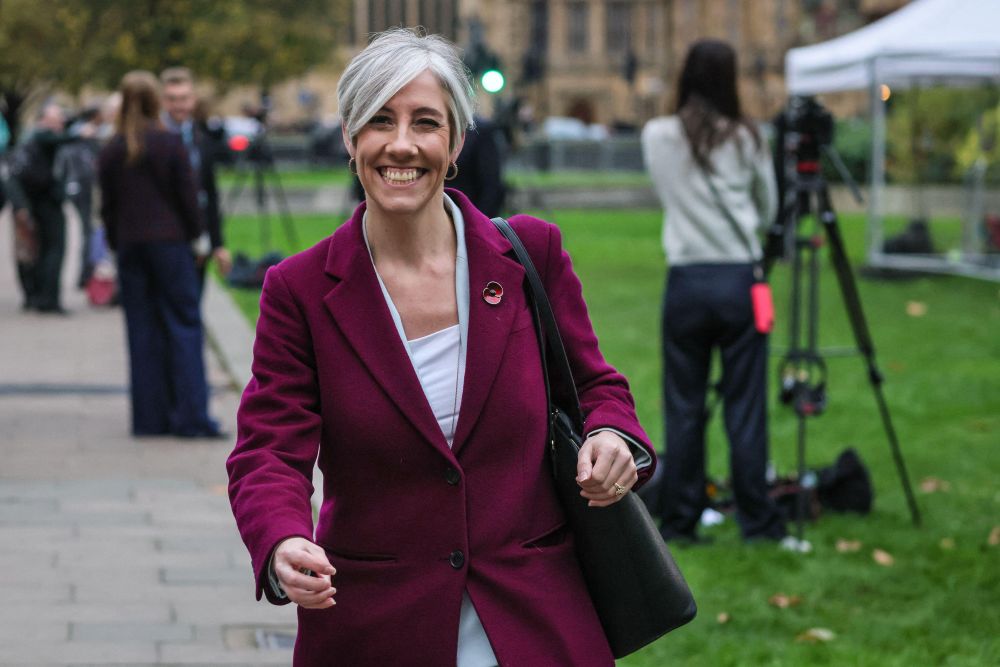
Babarinde has recently taken on the presidency of the Liberal Democrats for a three-year term, and the expectation among colleagues is that he will see that role through before considering a leadership bid – following a path similar to that taken by former leader Tim Farron.
Smart, who is a close ally of Davey, is seen as a potential continuity candidate, while Miller and Wilkinson are widely viewed as highly competent spokespeople for the party. However, MPs worry that if a leadership change were to happen now, any potential successor would struggle to achieve the same name recognition with the public that Davey has earned through years of campaigning and media stunts.
Furthermore, while there was chat about Davey’s successor in Brighton, few party figures believe a change in leadership anytime soon is a serious possibility.
While some Lib Dem MPs privately acknowledge frustrations with the party’s progress since the election, many remain relatively comfortable when looking at polling in their own constituencies, which are largely based in former-Conservative voting parts of southern England. An MRP poll carried out by Electoral Calculus in June this year shows the Lib Dems holding steady with 72 seats.
“It’s just not that deep,” one Lib Dem MP joked, arguing that some of the Lib Dem MPs most critical of Davey also “do not have an alternative” to offer.
there is an absence of underlying understanding publicly as to what the party’s purpose is
For now, the party is attempting to project unity and purpose rather than succession politics. Victoria Collins, the MP for Harrow West, described the mood of conference as one of preparation for government.
“The general tone is that we are ambitious, we are going for government, whatever that looks like, and we’re preparing for it,” she said.
That said, while Davey’s position is still regarded as secure, he is undoubtedly under pressure to clarify the party’s message beyond the so-called “blue wall” seats won at the last election.
In his conference speech on Tuesday, he made a moral case for the Lib Dems, telling the party that it is in a fight for the country’s future against the modern-day far right.
At a panel organised by the Social Liberal Forum (SLF), the SLF chair John Shreeve argued that the Liberal Democrats had become effective campaigners in areas where they already possessed capacity, but struggled to expand that model elsewhere.
“The conclusion that we reach is that there is an absence of underlying understanding publicly as to what the party’s purpose is,” he said.
“So, are we the best administrators? Well, that’s not going to exactly put us in power. It’s the scale of our delivery which is inadequate. We’re very good at delivering where we have the capacity to do so, but we are very poor at being able to stimulate and lead and inspire.”
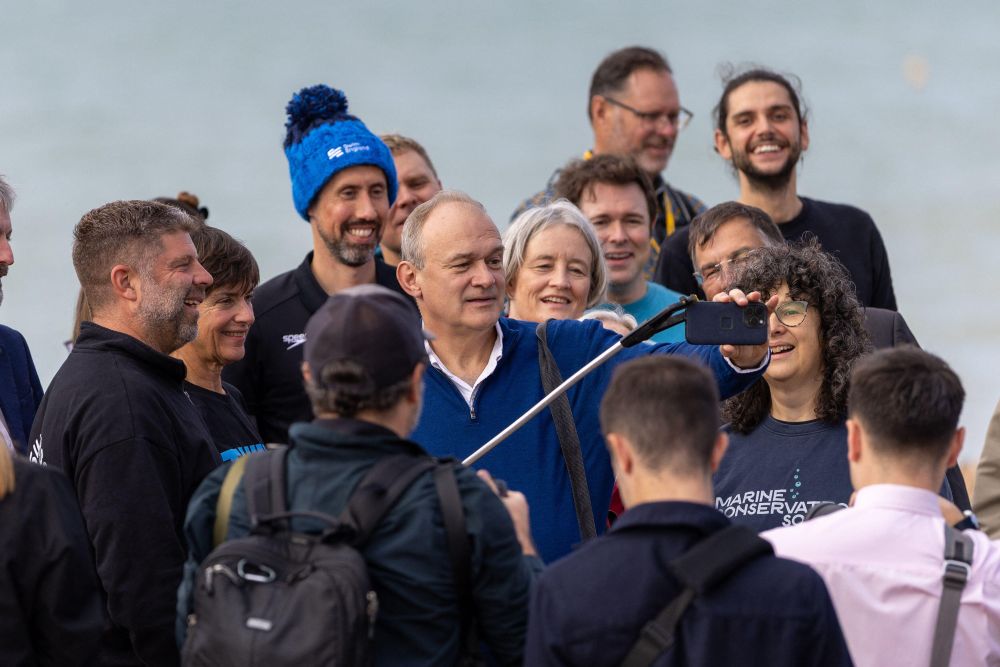
Graham Neale, chair of the Green Liberals, agreed.
“We end up, unfortunately, being sort of just populist bureaucrats,” he said at the panel event.
“‘We can get more for your council tax than this group can, or we would spend it better than that group can…’ We just end up competing to see who can be the best bureaucrats. We’ve really got a series of disconnected ideas here.”
He accused the party of being “timid” on environmental policy, taxation, and its international stance, especially around Gaza.
“We didn’t reap any benefit from our international stance in the way that the Green Party did in Southwark and other places in London.”
Other urban Lib Dems continue to feel that the party remains disproportionately focused on former Conservative territory rather than trying to make progress in some of England’s biggest cities.
Northern Lib Dems in particular are dissatisfied that the party has not done enough to address what they see as a north-south imbalance. One Manchester councillor told PoliticsHome that they had recently invited Davey to an event in the city, but that the leader declined to attend: “He doesn’t care about Manchester.”
The acknowledgement that the lack of cut-through was an issue was probably the most significant first step
Other groups have gripes with the party’s approach. Young Liberals chair Will Tennison argued that the party’s focus on the European Union was misplaced when it comes to winning over younger voters.
“They’re bored of it,” he said. “It went on too long. We’re ready to move on… The job market almost always comes out on top.”
Tennison, who sits on the party’s federal board, said the party is “aware that the messaging is not up to scratch”.
“I don’t think they’ve come up with a solution to how to fix it, but I do think it’s really good that we’ve seen an increase in the number of people at HQ that are working in the digital space. So we’ve got more social media admins, we’ve got more people doing influencer stuff. Politics isn’t won on the BBC News anymore, and in the not too distant future, it might very well be won on TikTok.”
One MP said that the party’s problem lies less in the core policies themselves – fixing the social care system, repairing the UK’s relationship with Europe and electoral reform – but more in the communication of how they would actually directly improve people’s lives.
Earlier this year, PoliticsHome reported on a “strategy rethink” inside the party, amid frustration from some MPs about the lack of progress since the general election in breaking into new ground.
The party has responded to criticisms by overhauling its communications operation, including the appointment of James Holt as political director. Holt previously served as the Liberal Democrats’ director of communications more than 10 years ago, and has returned to the UK in the last few months after working for Prince Harry and Meghan in the US.
“The acknowledgement that the lack of cut-through was an issue was probably the most significant first step,” one MP said.
“Now we’ve got people in place who should be able to help communicate and structure our vision. They won’t be able to do it overnight, but a year ago, there wasn’t even anyone working on it.”
The party has also hired content creators, reflecting a recognition that political communication is increasingly taking place away from traditional media.
There is also a new effort to develop the intellectual infrastructure behind the party.
The Britain Project, a new think tank aiming to “convene and catalyse liberal thinking”, was launched at the conference. Davey welcomed its arrival, arguing that liberalism had lacked a dedicated Westminster think tank for too long.
“There’s been a gap in the market. There hasn’t been a liberal think tank for a long time,” he said.
“You look around Westminster and Whitehall, and there are lots of think tanks there that are supplying ideas for Labour, ideas for the Conservatives, ideas that they try to promote so that they can get policies for government. The fact that we haven’t had a think tank focused on liberalism, sharing our values, has been a real gap.”
But Davey also insisted that the organisation should not simply become a policy arm of the party.
“While we share those values, we need you to come up with ideas that I occasionally disagree with, because we need you to challenge not just me, but challenge the whole party.
“When you do come up with ideas – whether we agree with them or not – the fact that we can add them to our debate, that they can challenge us, challenge the party, is a really good thing, because that challenge, as we know, as liberals, makes those ideas better.”
If you are as close to power as we may be, you need to be serious about it
The think tank’s policy director, Lib Dem peer Lord Leunig, went further, saying his ambition was to become unpopular within his own party if that was what was required to improve its policymaking.
“My ambition is to be the least popular person in our party,” he said.
“But to be a good minister you actually have to have policies that work, and I can tell you that our party, just like all other parties… can be guilty of ‘convenientism’ – believing that what can be convenient is true – and I tell you that is not always the case.”
He later added: “We are not soft people. This is serious stuff. Because you know what? If you are as close to power as we may be, you need to be serious about it.”
Davey has hinted at a willingness to work with Labour. He has refused to completely rule out a coalition with the Conservatives, but suggested that a coalition with the Tory party in its current form under the leadership of Kemi Badenoch would be highly unlikely. One senior Lib Dem told PoliticsHome the party would never consider joining a government that wanted to leave the European Convention on Human Rights.
The MP suggested that, if coalition negotiations did eventually arise, the party should publicly identify three issues on which it would refuse to compromise: energy policy, Europe and electoral reform.
The Lib Dems feel confident that they will be a significant player come the next general election – whether it happens at the expected time or if Burnham calls an election early.
However, their own activists and MPs are still embroiled in debates about what the party’s broader purpose should be, who it should speak to, and how it can translate a collection of familiar liberal causes into a proposition that voters across the country can understand.
The SLF panellists were asked to sum up what the Lib Dems were for in just a few words. Chris Bowers, coordinator of the Yorkists group, was the only panellist to offer an answer, which placed the Lib Dems in contrast with the other political parties on the ballot box.
“We’re better than this.”
>

Tesla finally moves to electrify trucking after a decade of work and delays

Robert Pattinson’s ‘Primetime’ Earns $2.7 Million in Previews for A24

Ed Sheeran Controversial Gillette Stadium Concerts Canceled For Nor’easter
-

 movies4 months ago
Search For Canadian TV Actor Stewart McLean Now Homicide Investigation
-

 Fashion9 years ago
These ’90s fashion trends are making a comeback in 2017
-
Fashion9 years ago
According to Dior Couture, this taboo fashion accessory is back
-
Fashion9 years ago
Model Jocelyn Chew’s Instagram is the best vacation you’ve ever had
-
Fashion9 years ago
Emily Ratajkowski channels back-to-school style
-
Fashion9 years ago
9 Celebrities who have spoken out about being photoshopped
-

 Anime4 months ago
Rurouni Kenshin: Hokkaido Arc Manga Takes 1-Issue Break – News
-

 Anime3 months ago
HIDIVE to Stream English Dubs for The World Is Dancing, The Forsaken Saintess and Her Foodie Roadtrip in Another World, The Dangers in My Heart: The Movie Anime – News