
movies
NYFF 2026 Fires Up With ‘Artificial’, ‘You Can See Everything’, ‘NAZA’

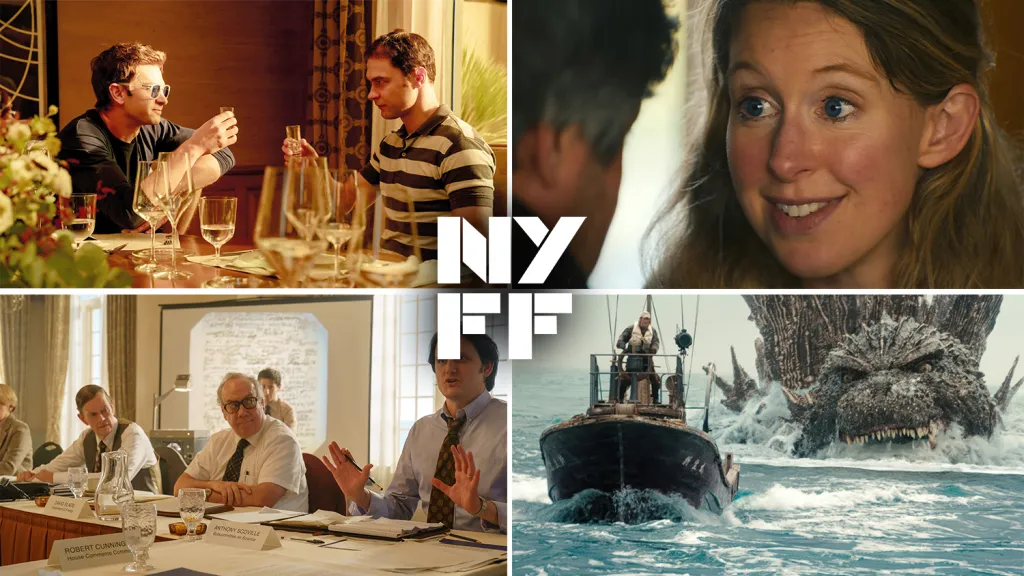
The New York Film Festival opens Friday night with a lineup featuring great films of 2026 along with heavy-hitting world premieres. Artistic director Dennis Lim insists the global bows are not “the be all, end all,” but if they come he credits the vibrant Big Apple audience.
“The New York audience engages with a film in a way that is meaningful to filmmakers and that creates a memorable launch for a film, so I would credit our audience for that,” Lim tells Deadline of this year’s slate, which includes Nathan Fielder and Lance Oppenheim’s Elizabeth Holmes doc You Can See Everything, NAZA by Yuval Abraham and Rachel Szor, and world premieres from Luca Guadagnino’s Sam Altman biopic Artificial to Tony Gilroy’s Behemoth!, Tom McCarthy’s The Statement and the sequel Godzilla Minus Zero by Takashi Yamazaki.
Jonathan Glazer, Paul Thomas Anderson and Ava DuVernay will also world premiere new documentaries at this year’s NYFF, which runs through October 12.
“These films came to us and decided to premiere with us with for different reasons. It just so happens we have a certain number of them this year, which shows that we have proven in the last few years that we can be a pretty good place to launch a film,” Lim says.
NYFF’s 64th edition opens tonight at Lincoln Center’s Alice Tully Hall with James Gray’s Paper Tiger. DuVernay’s 14th, a direct follow-up to her acclaimed 2016 documentary 13th (which opened NYFF that year), is the closing-night selection.
Asked to tick down the lineup, Lim says Artificial “was in flux for a while with the change in ownership. When the film was at Amazon we did have conversations about it. It was not going to be a 2026 film. That changed when it landed at Neon” to join the indie distributor’s awards slate. Amazon dropped the nearly finished $50 million film after making a massive investment in Altman’s OpenAI, noting the project would be better served elsewhere. Neon acquired global rights in June.
Godzilla, conversely, “came pretty early, long before it was finished. There’s a tremendous amount of intricate effects work on the film. We started the conversation early in the spring. They did not do festivals with the previous film, which was a huge success for Gkids and Toho, and they were interested in doing something different with this one. We saw an unfinished version in the summer and though it would be really fun,” Lim tells Deadline.
“The Elizabeth Holmes documentary, obviously, had been in the works for a while. I knew of the existence of the film but was sworn to secrecy when they wanted to have maximum impact in Telluride. It was always understood that it would be a surprise there, and we would announce thereafter.”
You Can See Everything from A24 world premiered as a secret screening at Telluride, gobsmacking the audience. The Theranos founder allowed the filmmakers into her San Diego home with unfettered access in 2023 during the days before she reported to prison after being found guilty of defrauding investors.
Wrote Deadline’s Pete Hammond in his review: “Nothing seems to be off limits as they agree to be miced-up for at least 12 hours a day, wide-angle cameras in place to get all movements, with other cameras getting closeups. Fielder immerses himself in this weird world as someone she comes to trust, much to his astonishment, becoming so close she asks him along on that last drive to prison.”
The doc is Fielder’s feature film directorial debut. His 2023 Showtime comedy The Curse was the first and one of the few television series to world premiere in the NYFF’s main lineup, Lim recalls.
NAZA, which world premiered in Venice, was a late addition. The investigation into Israel’s mass killing of civilians in Gaza was shot at night on rooftops in Tel Aviv where the filmmakers interviewed Israeli military intelligence officers and soldiers about destruction and loss of life.
“Films are not made in vacuum, they are made by people. There has not been another year where I felt the films to be so directly in conversation with the real world, really are tackling contemporary reality head on,” Lim says. “I think whether they are documentaries or fiction, all films emerge from this world that we all live in together, the reality that we share, and they will engage with real world institutions.”
This year’s festival has set 119 films — 75 features and 44 shorts – across its Main Slate, Spotlight, Currents and Revivals sections along with a series of talks complementing the lineup.
>

After sharing her story in her 2024 memoir Be Ready When The Luck Happens, Ina Garten is reluctant to trust a filmmaker with the adaptation.
The Barefoot Contessa celebrity chef recently explained why she’s “never been willing” to make a biopic about her life, despite being “approached” to adapt Be Ready for the big screen.
“It’s funny, I don’t make long-term plans. I do what I do as well as I can, and things come along, and I say no to most of them,” she told People.

Garten added, “I’ve been approached to do a movie of my memoir, but I know that when a producer or director gets ahold of a story, they want to make it work on film and they’re going to change it. So I’ve never been willing to do that. It’s my story. I get to keep it. And I don’t want people making up things just for dramatic effect. And so I’ve always said no.”
The 2024 memoir came after Garten ended the nearly 20-year run of her Food Network cooking show Barefoot Contessa, which ran from 2002 to 2021.
Since 2022, Garten has hosted her followup Food Network show Be My Guest, inviting friends to her dinner table in her East Hampton, New York home.
>
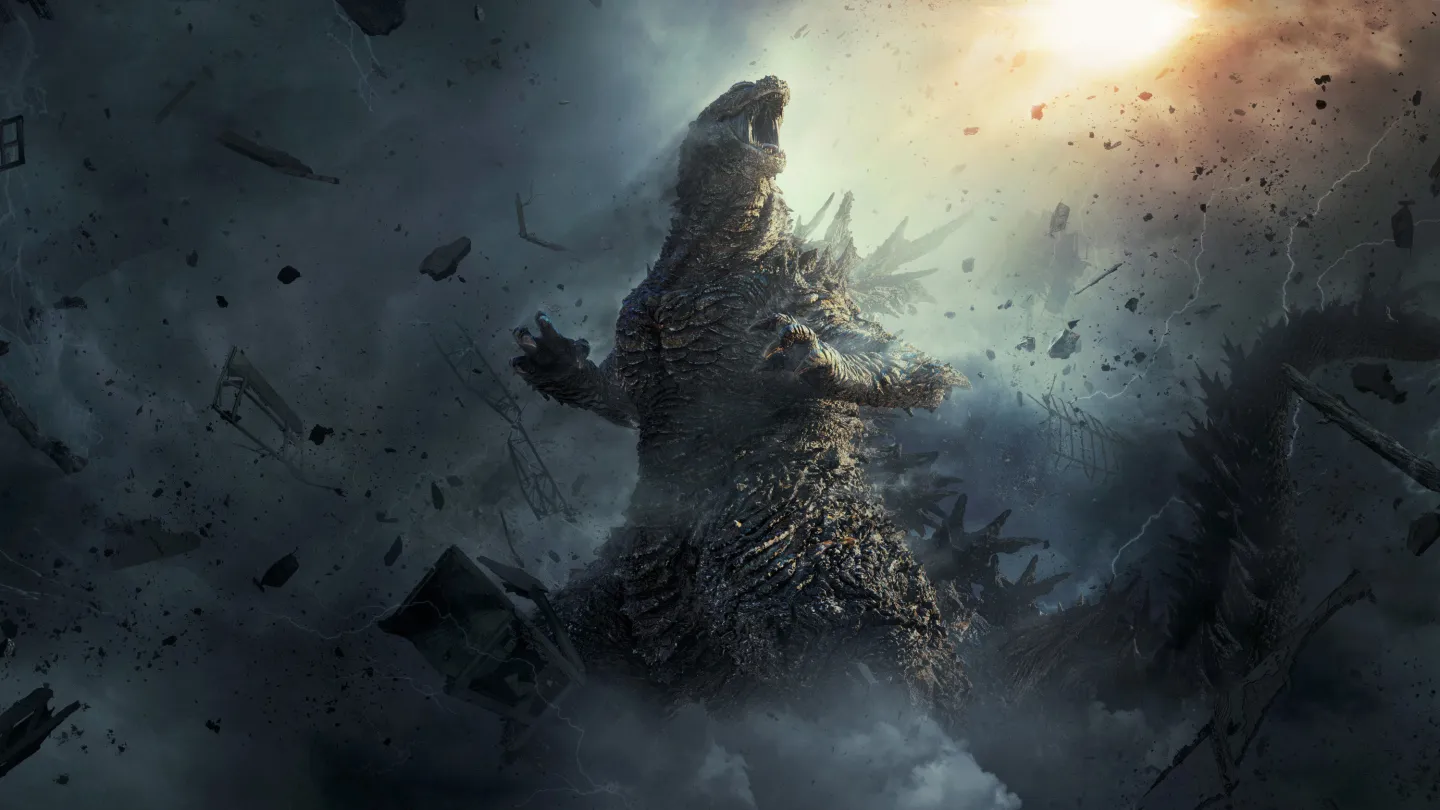
Writer, director and VFX wizard Takashi Yamazaki three years ago reinvigorated Japanese production titan Toho’s seven-decade kaiju franchise with Godzilla Minus One, which delivered amply on monster mayhem with sophisticated (and Oscar-winning) effects, but perhaps more importantly, grounded the creature feature in affecting humanistic drama. By dividing the film’s attention between mass destruction and the raw pain of post-WWII trauma, reconstruction and societal reintegration — not to mention the atomic allegory — Yamazaki boldly reimagined the property while honoring the roots of the series’ 1954 original.
That same meticulously balanced duality is evident in the director’s approach to the scaled-up sequel, Godzilla Minus Zero, an equally thrilling jolt of marauding monster action anchored by tender themes of family, friendship, camaraderie and personal courage. These are characters about whom we come to care deeply, and Yamazaki trusts his audience to know the value of time spent observing human relationships, ennobling the horror with tangible emotional stakes. Following its world premiere at the New York Film Festival, GKIDS will release the film in the U.S. Nov. 6.
Godzilla Minus Zero
The Bottom Line
A radioactive blast.
Venue: New York Film Festival (Spotlight Gala)
Release date: Friday, Nov. 6
Cast: Ryunosuke Kamiki, Minami Hamabe, Yuki Yamada, Kuranosuke Saski, Jun Kunimura, Mio Tanaka, Sakura Ando, Masami Nagasawa, Min Tanaka, Hidetaka Yoshioka
Director-screenwriter: Takashi Yamazaki
Rated R,
2 hours 15 minutes
While the 1949 setting might be expected to make the aftermath of war recede into the past, it’s no less acutely felt here, with resonant moments touching on the complicated perceptions of the Japanese people toward America and the outsize impact on the rest of the world of its military industrial complex. World War II may be over, but its vicious cycle of loss, destruction and power-flexing continues.
At the risk of angering the spoiler police — a cue to stop reading now if you’d rather go in blind — the new film ushers in another legendary kaiju first seen in 1964. Promotional materials for the most part refer evasively to “a new threat,” but fan anticipation and advance media have pretty much let the badass three-headed dragon out of the bag.
Just as Japanese life appears to be returning to some kind of peacetime normalcy, with Godzilla exiled to the ocean depths and believed to have been killed in the previous movie, King Ghidorah comes swooping in with massive wings generating hurricane-force winds, ripping apart an entire town in the opening action.
There’s a ton of sci-fi mythology in the Godzilla series concerning the origins of Ghidorah the Explorer, a creature at various times under the control of alien invaders and time-traveling human terrorists, which supposedly arrived on Earth inside a meteorite intent on detroying the planet, much as it had destroyed Venus thousands of years earlier. Yamazaki wisely ignores all that geek lore, instead treating the dragon as simply another killer Monsterverse freak with regenerative powers, inevitably destined to fight a death match with Godzilla for alpha status.
Just as Godzilla can charge up his radioactive dorsal plates and shoot nuclear-level heat rays at his targets, Ghidorah has his own neat trick and three gaping fanged mouths with which to deploy it. The creature design is magnificent, with the huge wingspan and writhing tangle of elongated necks and tails cranking up the menace, while the ferociousness of the monster’s faces is enhanced to great effect by growling and roaring that can sound almost like an evil cackle.
The mega-dragon spews out electromagnetic energy in the form of gravity beams; some of the most outstanding sequences involve those lightning-like bolts wrapping antigravitational forcefields around buildings, trains and anything else in Ghidorah’s path, sucked up into the air and then smashed to the ground for maximum wreckage.
The heart of the previous film was former WWII kamikaze pilot Koichi Shikishima (Ryunosuke Kamiki) — stunned by the loss of his parents and crushed by guilt over his conduct in the dying days of the war — daring to dream of a life of domestic contentment only to see that dream repeatedly put in jeopardy.
More or less given no choice, Koichi welcomed a young woman, Noriko (Minami Hamabe), into his home in the rubble of Tokyo, along with Akiko (adorable Sae Nagatani), the orphaned child she had found alone and terrified. Two years on, this found family are inextricably bound together, with flinty neighbor Sumiko (Sakura Ando, so memorable in Hirokazu Koreeda’s transcendent Shoplifters), who also lost her family during the war, serving as “Auntie,” to lend a hand with Akiko.
Once Ghidorah’s rampage spreads fresh terror, Noda (Hidetaka Yoshioka), the former naval weapons engineer now heading up the government’s Disaster Countermeasures Bureau, begins working on defense plans. He signs up his old comrades from the previous film along with a couple of new ones, meteorological forecaster Aoyama (Masami Nagasawa) and Professor Murakami (Min Tanaka), who lost his family in Hiroshima and may have a hidden agenda.
Veteran Jun Kunimura (much better served here than in the Takashi Miike dud Bad Lieutenant: Tokyo) also turns up as a doctor studying the effects of exposure to Godzilla’s cellular tissue on people involved in the attacks of Minus One. This phenomenon impacts Noriko, who miraculously survived the devastating Ginza attack last time around and has shown remarkable resilience, with her wounds healing at an uncanny rate.
Yamazaki infuses tenderness into not just the core family but also the extended group, bound by profound fondness as much as by horrific shared experience. With Ghidorah dictating that the fight will now be airborne, Koichi is eager to get back in the pilot’s seat, compelled by a sense of duty to his country but also by lingering survivor’s guilt.
Nodo wrestles with his own guilt over the countless deaths caused during the war by weapons he designed; he will not hear of Koichi putting his life at risk again and possibly robbing Akiko of a father. Nodo agrees only to bring the pilot on as an advisor, but Koichi is not easily deterred. The same goes for Noriko, whose medical condition may have the potential to be weaponized.
Nodo and his crew set up a command center in Matsumoto City, where Aoyama determines that they can track Ghidorah as the creature responds to the electromagnetic force of a fast-moving storm system.
Around this point Godzilla — fully regenerated and pissed as hell — resurfaces offshore. Given that heavy artillery and bombs have failed to slow down Ghidorah for long, Murakami calls Godzilla’s reappearance “divine providence,” insisting that setting the two monsters against each other is their only hope. Via some ingenious plotting, that entails a plan to lure the beasts into proximity, using a system tested by the professor in a cheeky homage to Hitchcock’s The Birds.
The resulting clash of the legendary kaiju is a rip-roaring smackdown in a movie that keeps awing the audience with exhilarating action and then continually one-upping itself in the dustups that follow. I’m fairly sure I stopped breathing during a tense scene in which Godzilla bears down on a seaplane attempting a hurried liftoff.
While Spider-Man: Brand New Day generated plenty of sparks and Dune 3 and Avengers: Doomsday are still to come, it’s interesting that some of the most pulse-pounding, intense and inventive action sequences on screens this year have been in two East Asian films — Godzilla Minus Zero and Hope. Stand down, Hollywood.
As he demonstrated in Minus One, Yamazaki’s command of big-ass destruction spectacle is breathtaking, this time overseeing a significantly larger VFX team that makes the monsters not only mighty physical presences but also part of an immersive environment in which we experience the full force of their earth-shaking power. This is some of the most impressively seamless integration of major-scale CGI in recent memory.
But the masterstroke of Yamazaki’s direction is the skill with which he ensures that the human drama remains no less compelling than the monster faceoffs. The film also benefits from initially making Godzilla the underdog in the fight, bringing back the creature’s representation in Japanese culture of nuclear trauma, natural disasters and the pervasively heavy anxiety that gripped the nation in the postwar years. Watching the Minus movies, you realize how much the lack of that cultural specificity limits the American Godzilla entries and how much these latest two Japanese films serve as a reclamation.
While the action in those U.S. productions, notably Godzilla vs. Kong, can pack a visceral charge, the human element generally is forgettable and the mythology sketchy. But the characters here are richly developed, especially Koichi and Noriko, played with a mix of determination and vulnerability by Kamiki and Hamabe that fosters genuine emotional investment in them as both individuals and as a makeshift family; and the wonderful Yoshiyoka’s avuncular Noda, who has some of the film’s most affecting moments.
As she was in the previous film, Ando’s hard-edged but soft-hearted Sumiko is a droll scene-stealer, and Nagasawa’s Aoyama is a terrific addition — it’s great to see a woman with authority and sharp intuition on the science team, even if she’s not immune to self-doubt.
The first Japanese feature shot in IMAX, the movie looks stunning, with so much detail and nimble movement packed into returning DP Kozo Shibasaki’s frames. Period production design by Anri Jojo and Wataru Hirai is understated but evocative. And the score by another repeat collaborator, Naoki Sato, is a marvel, ranging from brooding apprehension, with solemn choral elements, to thunderous symphonic bursts for the big clashes. With the plot door open to another sequel, here’s hoping Yamazaki will keep on making new entries in this hugely entertaining series. And while we’re raiding the Toho kaiju vaults, bring back Mothra!
>
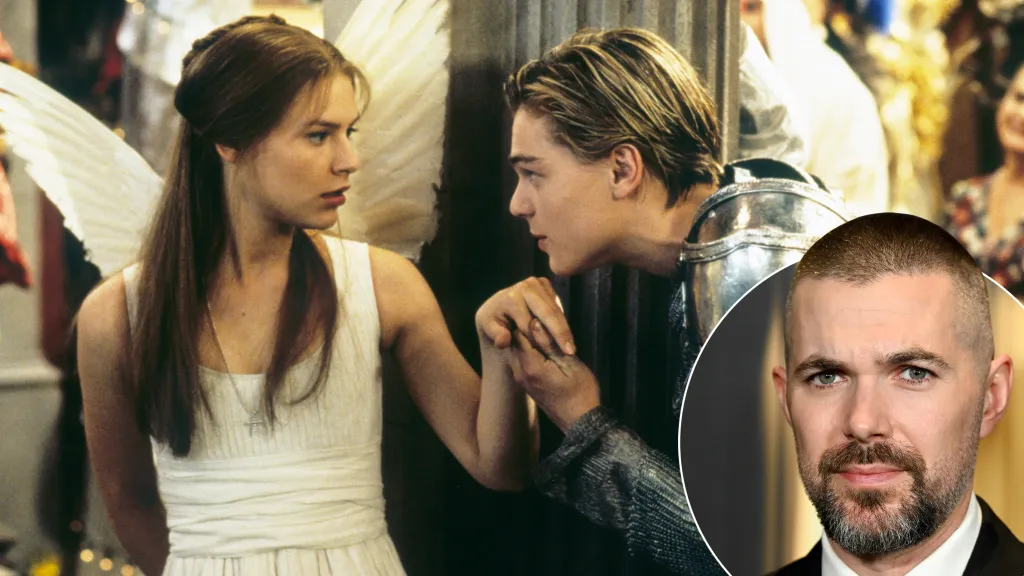
SPOILER ALERT for anyone who skipped freshman English! Robert Eggers is teasing his take on William Shakespeare’s Romeo & Juliet.
During a post-screening Q&A for his latest macabre title Werwulf, premiering Christmas Day, the auteur joked that the famously tragic conclusion of Shakespeare’s 16th century romance would be a welcome “break” from his usual horror work.
“I was doing something else,” noted Eggers of plans for his next project in a video from the event. “But what happened was, after Werwulf, I was writing another horror movie, and it got so dark again, and I was like, ‘I need a break. So, I’ll do something about two teenagers killing themselves.’”
Earlier this week, Deadline reported that Eggers was eyeing a return to Focus Features for his take on Romeo & Juliet, which has sparked some studio competition.
Details of Eggers’ adaptation are under wraps. His deal is not yet finalized, but we understand he’ll direct and produce this version of the classic play. The deal would reunite him with a studio with whom he’s worked across much of his body of work, including horror titles The Lighthouse (2019), Nosferatu (2024) and Werwulf.
In Werwulf, a man (Aaron Taylor-Johnson) in 14th century England finds him and his family threatened by a ravenous beast haunting the town. The film also stars Lily-Rose Depp, Willem Dafoe, Ralph Ineson and more.
>
President Donald Trump to attend Presidents Cup day after Texas-Tennessee football game
Cleveland Guardians clinch third consecutive AL Central title
How to watch the women's Singapore Open: Streaming options for the Final
-

 movies4 months ago
Search For Canadian TV Actor Stewart McLean Now Homicide Investigation
-

 Fashion9 years ago
These ’90s fashion trends are making a comeback in 2017
-
Fashion9 years ago
According to Dior Couture, this taboo fashion accessory is back
-
Fashion9 years ago
Model Jocelyn Chew’s Instagram is the best vacation you’ve ever had
-
Fashion9 years ago
Emily Ratajkowski channels back-to-school style
-
Fashion9 years ago
9 Celebrities who have spoken out about being photoshopped
-

 Anime4 months ago
Rurouni Kenshin: Hokkaido Arc Manga Takes 1-Issue Break – News
-

 Anime3 months ago
HIDIVE to Stream English Dubs for The World Is Dancing, The Forsaken Saintess and Her Foodie Roadtrip in Another World, The Dangers in My Heart: The Movie Anime – News