
Entertainment
Michael Jackson’s Nephew Calls Out ‘Clickbait Articles’ About His Family


Taj Jackson, the nephew of Michael Jackson, called on fans to “stop trusting the tabloids” after a report suggested the late King of Pop’s family was looking to “cash in” amid the “Michael” movie’s success.
Taj, an original member of the group 3T, took to X on Friday evening and called out the New York Post, claiming a recent article was nothing more than “clickbait.”
“Do I have to drag you again, @nypost? Leave my family alone with your lies and clickbait articles,” Taj wrote on his social media account. “You and your fake sources. A ‘family source’ … blah blah blah.”
He added: “Stop trusting the tabloids.”

The article in-question made claims about a possible Jackson family tour following the biopic’s success, with La Toya Jackson, Rebbie Jackson, Jermaine Jackson, Jackie Jackson and Marlon Jackson all reportedly committed to the new venture. The outlet stated there were efforts to get Janet Jackson involved, as well.
A representative for the New York Post did not immediately respond to TheWrap’s request for comment.
Nonetheless, the “Thriller” singer’s nephew has been quite vocal on social media amid the release of “Michael,” repeatedly hitting back at critics over the panned reaction to the blockbuster.
Last week, Taj posted on X that the media didn’t “get to control the narrative anymore of who Michael Jackson truly was,” adding, “The public gets to watch this movie…they will decide for themselves. And you can’t handle that.”
He followed this post up with a celebratory one, as the “Michael” movie received an A- on CinemaScore and 94% Audience Score on Rotten Tomatoes in the first few days of the film’s release.
“The Michael movie is clearly bringing people together and leaving them feeling joy and happiness,” he added online. “That sounds exactly like my uncle Michael… Michael Jackson never gave the world what it thinks it wants, he gave the world what it truly needs.”
Still, the movie has faced its fair share of criticism as well, with James Safechuck, one of the two subjects who alleged Michael Jackson sexually abused them as children in HBO’s 2019 documentary “Leaving Neverland,” calling the film’s release “triggering.”
The singer faced 10 charges in 2005 tied to the alleged sexual abuse of a 13-year-old. After denying all of the allegations against him and participating in a 14-week trial, Jackson was acquitted on all counts. However, the controversy resurfaced in 2019 when the aforementioned documentary brought about new allegations from two of Jackson’s alleged victims.

>

Robert Pattinson has been a star since he first locked eyes on Kristen Stewart in 2008’s “Twilight.” As Edward Cullen, a vampire blessed with brooding, Byronic good looks, Pattinson captivated audiences, becoming a heartthrob for a rising generation of moviegoers.
But you sensed that he wasn’t entirely comfortable with being a pin-up, and Pattinson used his newfound bankability to build a resume filled with oddball roles for edgy auteurs like David Cronenberg (“Cosmopolis”), Claire Denis (“High Life”), and Robert Eggers (“The Lighthouse”). Critics praised the work, but only the most ardent Pattinson heads turned out and most of the films were more admired than seen.


That started to change when Pattinson re-embraced mainstream cinema; first with 2020’s “Tenet” and then with 2022’s “The Batman,” in which he played Bruce Wayne as a billionaire in desperate need of counseling. And Pattinson’s star has risen to a whole new level this year, with “The Drama,” “The Odyssey,” and now “Primetime.”
“Primetime,” produced for just $15 million and starring Pattinson as a creepy “To Catch a Predator” host Chris Hansen, opened to an impressive $19.2 million. The journalism drama was able to outperform expectation because Gen Z, which has become the most reliable moviegoing force, turned up in droves to watch a movie about a TV show that was popular when they were kids. In fact, 69% of the opening weekend crowd was under the age of 30 and you get a sense that they have come of age with Pattinson. First getting introduced to him as “Twilight’s” swooning bloodsucker and keeping tabs on him over the years as they came of age as film lovers.
It’s Pattinson’s second big hit of the year for A24. In the spring, he and Zendaya drove the dark relationship comedy “The Drama” to an impressive $134.9 million globally. It cost a mere $28 million to produce, so will be highly profitable for the indie studio. There’s just something about Pattinson’s intensity and willingness to subvert his movie star image that seems to be perfectly aligned with A24’s hip and transgressive brand.
And while Pattinson doesn’t get credit for the box office performance of “The Odyssey” (that belongs to Christopher Nolan), its success only burnishes his movie star image. It will get another gloss when “Dune: Part Three” opens in December and when “The Batman: Part II” rolls into theaters in 2028.
For more than a decade, agents and analysts have decried the death of the movie star. They’ve noted that no one has come on the scene to replace aging icons like Leonardo DiCaprio, Tom Cruise, and Brad Pitt. That may be changing. Like his “Dune” co-star, Timothée Chalamet, Pattinson, has finally figured out a way to make challenging, provocative work that general audiences will embrace, as well as cinephiles.
>
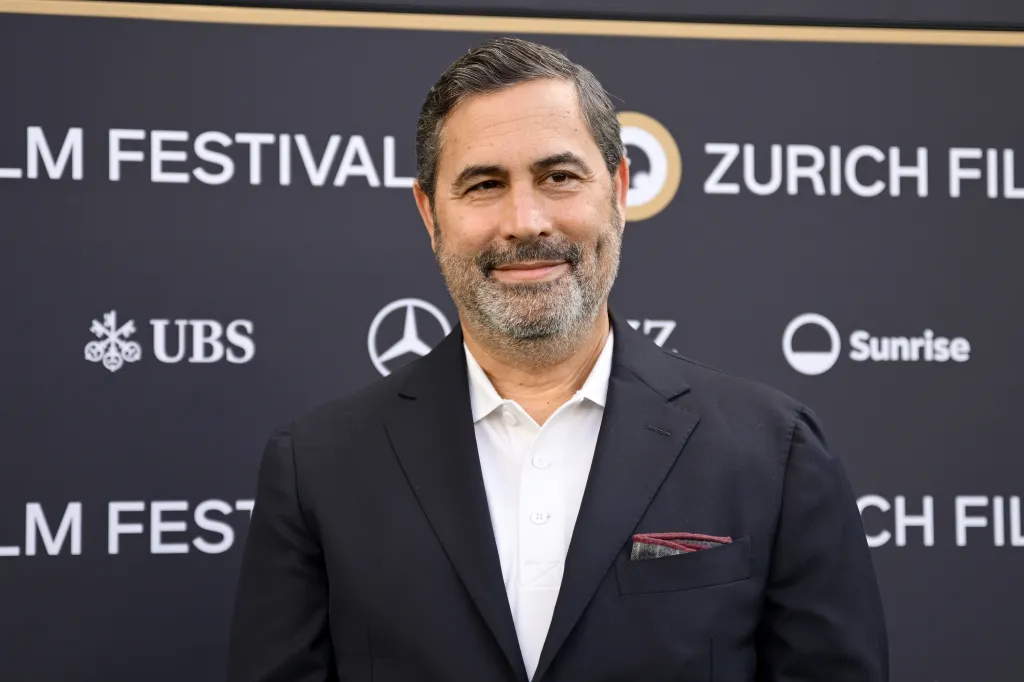
FilmNation Entertainment Founder and CEO Glen Basner will receive the Game Changer Award this evening at the Zurich Summit, the annual industry event aimed at fostering transatlantic connections taking place within the Zurich Film Festival.
As part of the honor, Basner participated in an onstage conversation on Saturday moderated by German Oscar-winning director Edward Berger.
Over the course of an hour, the pair dug into Basner’s trajectory from sales rep at his father’s garment business, to heading up one of the world’s top international indie sales, financing and production companies.
Basner and Berger go back a long way, having first met at the beginning of their film careers in the early 1990s at famed New York production company Good Machine.
Basner arrived there from a five-year stint selling ladies knitted sweaters. He had been bitten by the movie bug while helping childhood friend Edward Burns in his spare time on his first film The Brothers McMullen. Burns then invited Basner onto his second feature She’s The One, which was produced by Good Machine. The rest is history.
Berger spent a year and a half at the company from 1994, where his paths crossed with Basner. They have stayed connected ever since, with the pair joining forces professionally again on Berger’s 2024 $100M global box office and streaming hit Conclave.
“32 years later, it’s such a full circle moment,” said Berger as they kicked off the conversation.
Looking back at his time working with Ted Hope, James Schamus and David Linde at Good Machine, Basner said the lessons he learned there had carried him through his career.
“I was taught that you could sell movies around the world and not lie to people… that you can value and appreciate the relationships that you develop around the world and treat people not just as if you’re selling them a product, but that you are really delivering them a work of art, and that you’re there to help support them as they go and release the films country by country.”
Berger suggested working there had also taught them reliance, recalling how just prior to their arrival, the company had nearly gone bankrupt after it wrapped Ang Lee’s romantic comedy The Wedding Banquet.
“It taught us to go through hard times and get stronger… around the time of The Wedding Banquet, the company was basically bankrupt… they decided let’s cancel the photocopier and scrape every last bit together and go to Berlin,” said the director.
The film went on to win the Berlinale’s Golden Bear and then took off at the box office to gross some $23M, against the $1M budget, making it the most profitable U.S. film of 1993.
After subsequent stints heading up sales at Focus and then The Weinstein Company, Basner created FilmNation in 2008, initially uniquely as a sales company.
He said creating his own company had been a natural move for him given his family background.
“My father had his own business, and I wanted to be like my father, so I always had this entrepreneurial bug that I wanted to go out and sort of really test my mettle by being on my own and developing something and seeing if it could succeed,” he said. “So that was something I thought about since the first day that I started working in film.”
Eighteen years later, the company has expanded organically into finance, production and TV, with bases in New York and L.A., and string of award-winning features in its filmography including The Big Sick, Promising Young Woman, Anora, Conclave, Maria and upcoming pictures Bunker, Talent for Murder and I Play Rocky to name but a few.
“The opportunity was clear in 2008. In those days, there were only two strong and dominant, excellent American international sales companies that were unaffiliated with U.S. distribution,” said Basner.
“Pretty much at the same time, they both became U.S. distributors. Summit, which was run by Patrick Wachberger, became a U.S. distributor, and Mandate, Joe Drake’s company, was bought by Lionsgate… so there was this big hole for an American, unaffiliated-with-distribution sales company.”
Sales craft
Talking about FilmNation’s recent slate, Basner said he had wooed Florian Zeller ahead of getting involved in Bunker.
“I told him to his face he was my filmmaker crush of the moment,” he joked.
“You said that to me too,” replied Berger in mock disbelief.
“I know. It was a different moment,” fired back Basner jovially.
He recalled how Zeller had been on the cusp of approaching Javier Bardem and Penelope Cruz as FilmNation quietly putting out international sales feelers.
“He had said, ‘If they say yes, we’ll move forward. If they don’t do the movie, I don’t think I’m going to do the movie.’ Fortunately, they said yes, and then we just really started the work,” said Basner.
The film took a traditional pre-sales route thanks to Zeller’s track-record with Oscar-winner The Father, followed by The Son, it’s A-list cast and a “exquisite” script, with the bulk of the international sales tied up at Cannes in 2025. The U.S. deal to Sony Pictures Classics was sealed in collaboration with CAA Media Finance later on, on the basis of the completed film.
“There were distributors that were willing to take the risk. It’s not the easiest thing to say: ‘Here’s the script, here’s the director, here are the actors, and here’s your price’. They don’t really get to sit and have hour-long conversations with the filmmaker to fully understand the movie,” said Basner .
“They have to trust us to be able to articulate exactly what the movie is and what the intention is of that filmmaker, so that they can then decide to take the significant risk on a movie like this of pre-buying the film.”
Talking about their collaboration on Vatican-set thriller Conclave, revolving around the secretive Vatican process of electing a new Pope, Basner said part of the challenge had been conveying Berger’s vision for the film to buyers.
He suggested that on the basis of the screenplay alone – it felt like a story about “a bunch of old men talking in rooms” with a potential $12M to $15M price tag.
“But that really wasn’t the movie that you were looking to make… You talked about The Parallax View being a point of reference for you,” said Basner, referring to Alan J. Pakula’s 1974 political thriller.
“You talked not just about the architecture of the locations, but the architecture of how you wanted the camera to move and the film to feel… all of a sudden this became a political thriller,” continued Basner.
The sales veteran said estimating a value of a film, country by country, came down to a mixture of experience and expertise.
“You’re responsible to hit these estimates. And human nature takes over, and sometimes you can get a little bit conservative to make sure that you deliver,’ he said.
“What we’ve learned over the years is to trust the business acumen and the marketplace experience that we have, and not be too conservative, but actually just deliver the valuation that we think, and be prepared to stand by it in a real way because it’s our money that we’re investing.”
“Part of that is, instead of talking all the time about what the market says and what the market will bear, it’s really about just sitting and listening to the filmmaking team so that you really understand, not what I, Glen Basner, thinks the movie is going to be or should be, but the movie that the filmmaker wants to make.”
Basner revealed he was wary of going down the packaging route of attaching known talent when helping get big projects of the ground, suggesting attempts to mitigate risks on films, whether via the cast or other factors, can sometimes lead to less exciting films.
“Sometimes we have to take more risk on an unknown actor because they are the best person for that role to make the best version of the movie, and we have to trust that filmmaker to deliver on that, not in a naive way, in a thoughtful way, but really trust that that’s really what’s going to drive the value for that movie,” said Basner.
“I really am encouraging everybody to look around, look at what’s working in the marketplace. There are a lot of films that, on paper, did not make sense. The history of our company is predominantly on films that did not make sense to the marketplace at the beginning.”
Conclave clash
Berger revealed they had not always seen eye-to-eye in the final stages of bringing Conclave to fruition.
“After quite a long edit… I was basically done with the film. I’d run out of ideas… I really wanted to go to Venice or at least show them the movie and see if they’d show it,” recalled Berger.
“This was in in May. Glenn got on the phone and made me furious. I hated him. He just kind of said, ‘I’m not sure the movie’s ready, don’t rush it…Venice is going to be expensive, and we don’t have American distribution in place’,” he recalled.
Lead producer Tessa Ross also felt the movie was “missing something” and after test screenings with friends and family sparked an “ok” response, Berger went back to the edit suite and even reshot one or two scenes.
Berger credited Berger and Ross for pushing the extra mile on the film, while his energy levels were low after an arduous months-long edit process.
“We just edited and edited and edited and made the music again and revised it, and finally something cracked… little things, just shifted and gave us the confidence that the movie was ready. But it was really half a year later.”
It was another full circle moment for Berger
“This is going back to Good Machine, and what I took from Good Machine… which was you can always do better… whether its budget, contract or the cut of the movie.”
Organic expansion
Taking stock of FilmNation’s trajectory since 2008, Basner said the expansion into production and TV had been organic.
“We never really anticipated becoming the company that we have over time, but things changed. One, as we continued to do our jobs and have success, we gained confidence through experience, and we were ready to do things like fund our own films,” he said.
A second development was the convergence of film and TV and other entertainment formats, which has seen the company also embrace TV, podcasts and theater, while retaining its original mission of being a place that enables filmmakers to not just make their film, but to make the very best iteration of their film.
“When we’re at our best, that’s exactly what we’re doing. It’s no more complicated than that. And when we are doing it, nothing feels more rewarding than doing that job well,” he said.
Looking to near-term goals, Basner said the company was ramping up its productions in the arrival of former 20th Century Fox, DreamWorks and Universal Pictures exec Stacey Snider in the new role of Chief Creative Officer in January.
“We are being more ambitious by investing more and making more films. This year we will make four films and a television series, and next year we already have four films in pre-production and hope to make another three,” said Basner.
“The arrival of Snider as the Chief Creative Officer was an articulation of our desire to take more risk and to be more productive,” he continued.
“Working with her these last nine months, you see this incredible creative talent, you see a skill set and a maturity that we don’t have ourselves, or that I don’t have myself, and it is definitely building confidence to invest further. But it’s really also, as she would say, it’s about making it better. The conversation that you had before: let’s take another look at this. Let’s do it a little bit better. That’s something she reminds me pretty much every day.”
>
At this weekend’s Zurich Summit a group of film financiers were asked by Deadline for their thoughts on the prospects of a U.S. federal film incentive.
Last week, a bipartisan group of lawmakers unveiled the bill for a 20% incentive, which with bonuses could bring the total rebate to 30%. The move has long been called-for by the U.S. industry concerned by the exodus of production overseas.
Alex Walton, former Co-Lead & Partner at WME Independent, told the Summit the move was “hugely positive”: “It’s wild to think there hasn’t been an efficient tax credit in America. It has helped many other countries. Spain is booming because of it now; and all over Europe. It’s going to take some time to be realized and for financial institutions to be able to cash flow it. But you’ve got to believe it will happen within the next three-four years, and then that will see all the foreign tax credits compete harder to maintain their positions.”
A start date is not yet set. The proposed text from last week stated that the credit would apply to qualifying film and TV productions beginning in taxable years after December 31, 2026 (effectively targeting projects starting in 2027). But bills can take years to pass.
Andrea Scarso, Managing Partner at prolific financier IPR.VC, whose credits include Marty Supreme and Materialists, agreed that a U.S. incentive would be “positive” but also cautioned against rising production costs: “It remains to be seen whether the prices and budgets are also going up by the same amount, which is something that happens in some foreign territories when they increase the amount of tax credit or soft money. It’s always a balance. But overall, I think it’s good news.”
Sarah Schweitzman, Co-Head CAA Media Finance, noted: “What’s important is that when you look at some of the international markets, you realize that we’re making movies there because of a tax incentive situation and I think if we’re able to federalize a tax incentive program in the U.S. it’s going to create many more jobs and invigorate crews, which is something we absolutely need in the U.S.”
A recent Motion Picture Association study claimed that a federal film tax credit could increase U.S. production spending by $125BN and add more than 143,000 jobs by 2035.
You can read more about the bill here.
>
MLB playoff bracket scenarios live updates: Phillies, D'backs, Rangers and Astros fight for spots

With ‘Primetime,’ Robert Pattinson is 2026’s Biggest Box Office Star
AP Top 25 predictions: Who will rise, fall and enter the new college football rankings?
-

 movies4 months ago
Search For Canadian TV Actor Stewart McLean Now Homicide Investigation
-

 Fashion9 years ago
These ’90s fashion trends are making a comeback in 2017
-
Fashion9 years ago
According to Dior Couture, this taboo fashion accessory is back
-
Fashion9 years ago
Model Jocelyn Chew’s Instagram is the best vacation you’ve ever had
-
Fashion9 years ago
Emily Ratajkowski channels back-to-school style
-
Fashion9 years ago
9 Celebrities who have spoken out about being photoshopped
-

 Anime4 months ago
Rurouni Kenshin: Hokkaido Arc Manga Takes 1-Issue Break – News
-

 Anime3 months ago
HIDIVE to Stream English Dubs for The World Is Dancing, The Forsaken Saintess and Her Foodie Roadtrip in Another World, The Dangers in My Heart: The Movie Anime – News