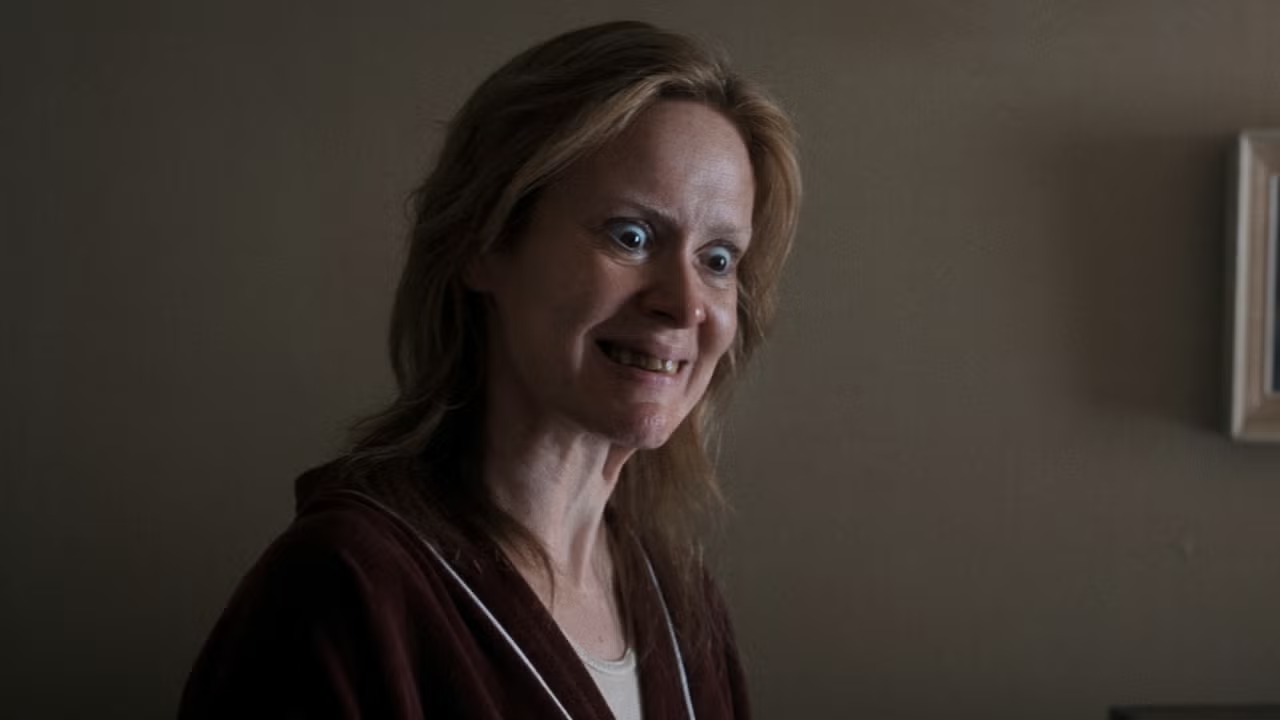
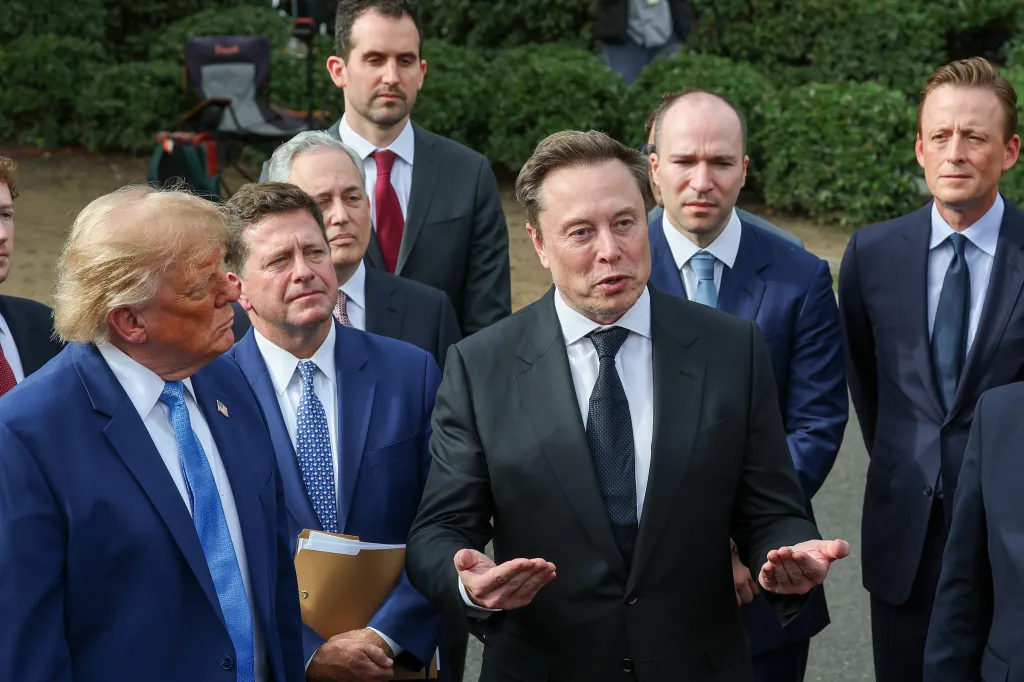
From left: Lars Von Trier, Catherine Deneuve, and Bjork at the ‘Dancer In The Dark’ premiere at the 53rd Cannes Film Festival in 2000.
FocKan/WireImage
Jon Stewart laid into the media coverage of the hantavirus outbreak, accusing reporters of “treating it like the O.J. [Simpson] chase.”
The comedian weighed in on the recent hantavirus outbreak on the cruise ship MV Hondius during Monday’s monologue for “The Daily Show,” where he emphasized that the illness was not set to start another global pandemic — despite certain sensationalized reports suggesting otherwise.
“I know we don’t have to be hysterical about it. It’s a choice. But you know what? It’s a relief. I’m glad we don’t have to be hysterical about it,” Stewart noted after playing the first initial reports about the hantavirus, explaining how the disease wasn’t like COVID-19. “COVID was a respiratory virus, passes easily, often when the person isn’t symptomatic. It was a brand new virus we had never seen before, and we weren’t allowed to know where it came from. I mean, we didn’t know. We were obviously allowed to know. We just didn’t know. Wink.”
He continued: “While the hantavirus is a known virus, it’s difficult to transmit. It’s mostly spread by rat infestation, which does raise the question. How did a cruise ship end up with hantavirus on it?”
After poking fun at the origins of the outbreak, which stemmed from a couple who went bird watching at a rat-infested landfill, Stewart declared: “The point is, some people may get pretty sick, but forget COVID. This ain’t no pandemic. Hell, this hantavirus ain’t even in monkeypox territory.”
Yet, Stewart bemoaned that “reality don’t sell papers,” noting that despite learning the truth on Tuesday, media coverage continued to sound the alarm over the illness.
“You gotta fight for your right to be nervous,” Stewart said. “Yes, we might have a right to be nervous, but I guess the question the news might want to ask is, do we have a reason? And your assignment, news, should you choose to accept it, is to help the public discern the difference. So may we hear from the experts again?”
He added: “Sunday we found out hantavirus had been on a cruise ship. Monday through Thursday, expert upon expert, scientist upon scientist, very transparently explained why this illness, while a serious illness, is a low-level public health threat. Their words went a long way to easing the concerns of a curious public. And Lord knows the news can’t let that happen.”
At this point, Stewart played footage from “Nightline,” which presented the hantavirus outbreak as “a floating nightmare” and posed the question: “Could this become the next pandemic?”
“The question of whether it was going to be the next pandemic had been asked and answered for three days,” Stewart noted. “But apparently, that was before the authorities decided not to fire a torpedo and sink the cruise ship, burying its diseased passengers and cruise entertainers in a watery grave befitting their disease. That’s right, folks. These people from this ship were going to be allowed to disembark.”
The late night host then ripped into the play-by-play coverage that followed the disembarkment, noting, “They were treating it like the O.J. chase … That’s the logistics of how you get from a boat to the f–king shore.”
“Drone video?! Spectacular! Such good use of drones,” he went on. “Ukraine uses theirs to defeat Russia, but good on you. I still have not learned enough. I mean, I know they’ve gone from a boat to a smaller boat to a tent to a bus, but at this point, I’ve somewhat lost the trail. Where will it end?”
Stewart then roasted a NewsNation reporter for asking the same question over and over again regarding the Hantavirus, despite getting the same answer every time.
“No matter how many times the question can be asked and answered, it doesn’t f–king matter for some people. And sometimes, it’s the same person,” he said. “Jesus, lady. How badly do you just want to work from home? Just work from home. We’re not all going to die. That’s a good thing.”
Watch the full monologue above.
“The Daily Show” airs weeknights at 11 p.m. ET on Comedy Central.
>
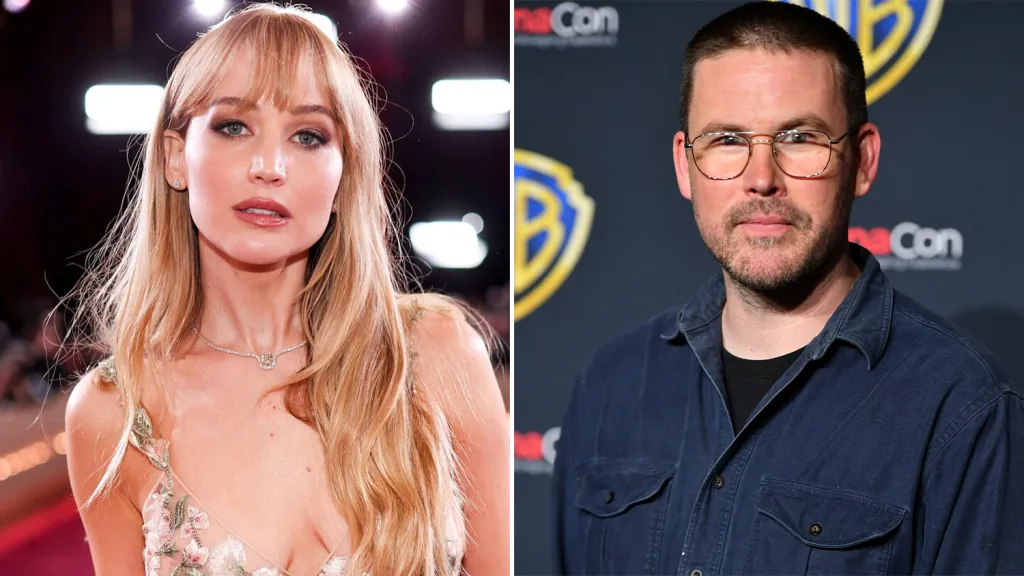
Cannes Film Festival Director Thierry Frémaux took to the stage on Monday for his traditional meeting with the press on the eve of the opening ceremony.
In a sign of the complexity of the times, he was grilled on everything from AI to new Oscar submission rules; selfies; the festival’s gender parity record; steps taken to Berlinale backlash, the Hollywood studios and Fast and Furious.
On whether the festival had taken steps to prepare its jury and the film teams on how to deal with thorny political questions in the light of the Berlinale’s rocky ride, Frémaux did not give a direct answer.
“The question raised in Berlin is one that regularly comes up at the festival, which for a long time was considered as a very political festival. Is it more or less than before? We’re living in different times, it’s hard to make a comparison,” he said.
Frémaux waded in to defend Wenders who found himself at the heart of the Berlinale backlash after he declared at the opening jury conference that filmmakers should “stay out of politics”.
“I would like to pay tribute to Wim Wenders because I think he was subjected to criticisms that weren’t really justified. I understood what he wanted to say, but I think people didn’t want to understand what he was saying,” he said.
“He wanted to say that the politics should be on the screen. That’s what we say at Cannes… the festival considers that political questions are primarily those of the artists’ voices and the voices of the artists whose work is being shown.”
He said that while filmmakers in Official Selection were free to express or not express their political views if questioned, it was not his job or that of the jury or management to wade in on politics.
“We’re in a world partly at war, a world in a fragile state in terms of dialogue between nations. We don’t want to add to the confusion with our analysis of what’s going on… I often say, and I deeply believe this, that art, and cinema in particular, are instruments of peace, even when they are calling for rebellion and freedom.”
Gender Parity
Frémaux came with notes for a question on the festival’s track-record over gender parity, which he said he had been expecting.
The fact that only five of the 22 films in the running for the Palme d’Or this year are directed by women, against seven in 2025, has sparked criticism from French gender-parity group Le Collectif 50/50 in the lead-up to the festival.
The group, which was created in the wake of the MeToo movement, has accused the festival of “feminism washing” in relation to its official poster featuring Geena Davis and Susan Sarandon in 1991 road movie Thelma & Louise.
A journalist from the AFP asked why in Cannes only 23% of the main prize contenders were women, while the Berlinale managed to approach parity this year, with nine of the 22 Golden Bear contenders by women.
Suggesting her question had been prompted by the Le Collectif 50/50 poster comments, Frémaux responded: “At no moment would we have chosen an image of Geena Davis or Susan Sarandon or Ridley Scott’s film for the poster to make ourselves look feminist.”
He acknowledged that in the past the festival’s track record had been questionable, evoking the selection in 2012 when not a single female director made it into the main competition, but said it had striven in recent years to play its part in rectifying the situation.
He said that Cannes had been one of the first festival to sign up for Le Collectif 50/50’s equality charter in 2018 and had acted on its stipulation that juries and its government body achieve gender parity, but noted that there is no clause in the charter demanding parity in the Official Selection.
Studying his notes, Frémaux said that 28% of the films submitted this year had been by women, while female-directed films accounted for 34% of the across the entire selection and 38% in the short film competition.
“Today we’re seeing more and more women directors coming into cinema, so they’re gradually making their way into the competition,” said. “The figures show its moving forward, but also that it’s slow, that it’s not enough.”
Frémaux said the entire cinema industry had to get behind a gender parity push, pointing to the challenges for female directors to make their second feature as well as the need for more cinema made from a female point of view.
“As in literature and in music, we need the world seen from a female perspective, a woman’s sensibility, to be more present in the world of film,” he said.
The festival director promised fresh dialogue with interested parties in future but said negative campaigns on social media were not the answer.
New Oscar rules
This year’s edition of Cannes comes just days after the Academy of Motion Picture Arts and Sciences (AMPAS) unveiled a game-changing shake-up of the eligibility rules for the non-English language Best International Feature Film category, which will lend even more weight to the Palme d’Or winner.
Under the new rules, as well as being submitted by a country or region via an Academy-approved selection committee, a non-English language film can also become eligible for consideration in the category by winning the top prize at qualifying festivals Berlin, Busan, Cannes, Sundance, Toronto or Venice.
Frémaux welcomed the changes, suggesting it was sign of the rise of international films in the overall Oscar race, citing 19 nominations in the run-up to the 98th Academy Awards for films which screened in Cannes last year.
“When people say that America is turning inward, it’s not true. In any case, Hollywood is opening up to the international scene, opening up to universality; that’s what Cannes is all about, it’s about universality,” he said.
He acknowledged that the new rules would avoid a situation such as that of the 2026-26 Oscar cycle in which Jafar Panahi’s It Was Just An Accident ran as France’s candidate rather than for Iran, where his anti-government stance means he is unlikely to ever be the country’s official candidate.
Frémaux added it would also open up the possibility of a country with a strong crop of films having more than one film in the running in the category, noting the strong showing for Japan and Spain in Official Selection, with three films each.
He downplayed a question on whether the rule change might influence the jury’s decision and sway them towards awarding the Palme d’Or to dissident filmmakers who would benefit from the award, such as Iranian director Asghar Farhadi and Russian director Andrey Zvyagintsev, who are in competition with Parallel Tales and Minotaur this year.
“The jury is nine people. There is not one political conscience, there are nine personal positions… It could be there that there is someone on the jury who is extremely politicised. Paul Laverty might be very political, he writes very political films but that perhaps he not like that as a spectator,” he said, referring to the UK writer and longtime Ken Loach collaborator who is in the jury this year.
“Cineastes very often like cinema that is different from their own, and not the same as their own… even last year, I won’t reveal the jury’s secret, I never felt that the favorable opinion that ultimately emerged in favor of Jafer Panahi had the slightest the political bias.”
AI
Frémaux was also asked his opinion on AI, and what implications of the technology for the filmmaking.
“Artificial intelligence is what the electric bicycle is to the bicycle. To ride an electric bicycle, you need to know how to ride a bike,” responded Frémaux. “It’s becoming a bigger subject in cinema. We have to be on our guard, but at the same time understand it a bit,” he said.
“The real question is what does it mean for our lives, our existence, our children,” he said. “What are the rules. The Oscars decided recently that an AI character cannot run for the best actor prize. That makes perfect sense.”
He likened the current debate around AI to that around the arrival of digital technology and special effects, and move away from celluloid and chemicals, evoking questions around whether films with digitally manipulated images are less authentic that those in the works of F. W. Murnau Murnau, Erich von Stroheim and the Lumière brothers.
Frémaux suggested that films made without AI or special effects were a bit like organic wine.
He suggested that the last “organic film” was Francis Ford Coppola’s Apocalypse Now, citing the Flight of the Valkyries helicopter attack scene which was shot live on 35mm.
“The number of helicopters that we see in the film is the number of helicopters that he had,” said Frémaux, suggesting contemporary directors can now create such scenes with special effects, adding helicopters at will.
He addressed rumors ahead of the festival that it had been mulling showing an AI film this year as untrue, saying no such film had ever been submitted for consideration.
“If it had been offered to us, we would have watched the film, and what would we have done?
Would it have been important for what it says about the history of cinema or the future of cinema?,” he said, adding that his mind was not made up on what would have been the correct course of action.
“What I can say with certainty in relation to artificial intelligence is that we are on the side of the artists, the screenwriters, actors and voice actors. We stand with everyone whose job could be negatively impacted by artificial intelligence. It requires legislation. We need to control this.”
>
Bong Joon Ho‘s much-anticipated animated feature Ally has lined up its voice cast, with Bradley Cooper, Ayo Edebiri, Dave Bautista, Finn Wolfhard, Rachel House and Werner Herzog joining the project, the Oscar-winning director’s producers announced Tuesday on day one of the Cannes Film Festival. Newcomer Alex Jayne Go led the casting announcement, suggesting she could be voicing the title role.
The reveal arrives alongside recent word that Neon has signed on to release the film in North American theaters in 2027 — marking the indie label’s reunion with Bong following its 2019 release of Parasite, which famously became the first non-English-language film to win the Oscar for best picture.
Ally is Bong’s first foray into 3D animated filmmaking, a passion project he has been developing since 2019. Set deep beneath the South Pacific, the family adventure follows a curious piglet squid — presumably voiced by Go — as she journeys from the ocean’s uncharted depths to its surface after a mysterious aircraft sinks into her habitat.
No word yet on the characters played by the various familiar Hollywood names revealed by the casting. For Cooper, a 12-time Oscar nominee, the project marks a return to animated voice work after his run as Rocket Raccoon in Marvel’s Guardians of the Galaxy franchise. The Bear breakout Edebiri will premiere the Arie and Chuko Esiri drama Clarissa — another Neon title — in the Directors’ Fortnight section at the Cannes Film Festival this week. Bautista (Dune), House (Moana) and Wolfhard (Stranger Things) bring some further franchise familiarity to the cast. The involvement of Herzog’s heavily accented Bavarian baritone is likely to delight international film buffs.
Outside North America, Pathé will distribute Ally in France, Benelux, Switzerland and West Africa, while CJ ENM and Penture Invest will handle South Korea, Vietnam, Turkey and Indonesia. Pathé is also overseeing international sales in Cannes this week (excluding Japan and China, which CJ and Penture are managing directly).
The 3D animation on Ally is being handled by VFX studio DNEG (Inception, Dune), with a creative team drawing from 12 countries that includes animation supervisor Jae Hyung Kim (Toy Story 4, Inside Out), Shrek franchise veteran David Lipman as supervising producer and Klaus production designer Marcin Jakubowski. Bong co-wrote the screenplay with Jason Yu, the South Korean filmmaker behind 2023 horror feature Sleep. Ally is produced by frequent Bong collaborator Seo Woo-sik, who also produced Mother (2009) and Okja (2017).
Korean industry chatter has suggested Ally‘s budget could reach $60 million, which would make it the most expensive feature ever produced in the country. The film is targeting completion in the first half of 2027 ahead of a global theatrical release later that year.
>
Catherine Deneuve, of course, brings her dog.
Jack — “not Jacques, Jack!” — a pointy-eared Shiba Inu, stands at attention throughout the interview, his eyes fixed on her like a discreet, furry security guard.
“I usually have him on set with me,” she says, patting his head. “He is always very good.”
We’re tucked into a cozy corner of a boutique Left Bank hotel. Deneuve’s tasteful Louis Vuitton handbag is tossed on the chaise lounge. As we chat, she punctuates her answers with the occasional puff from her vape — “I did quit smoking for a while, even did hypnosis, but I started again,” she says, waving the vape. “This, however, is not smoking. It’s nothing.”
It’s a classy, casual, almost domestic setting for what at times feels akin to a papal audience. This is Catherine Deneuve! Not just the face of French film but quite literally the face of France. In 1989, for the bicentennial of the French Revolution, Deneuve’s face was used as the image of Marianne, the French national emblem of liberty and reason. She is, de facto, an icon.
Deneuve’s onscreen persona is simultaneously that of sweet Geneviève, romantic idealism personified, in Jacques Demy’s magical 1964 musical The Umbrellas of Cherbourg; and Carole Ledoux, the Belgian girl in London whose sexual repression turns homicidal in Roman Polanski’s Repulsion (1965). She’s Séverine, haute-bourgeois housewife who moonlights as an S&M submissive in Luis Buñuel’s Belle de Jour (1967); and the camp star who sends up her own iconography in both Tony Scott’s lesbian vampire thriller The Hunger (1983) and François Ozon’s murder mystery musical 8 Women (2002).
At once liberated and conservative, radical and restrained (and, some would say, occasionally reactionary), Deneuve, more than any actress, more than any filmmaker, embodies French cinema in all its glorious, confounding contradiction. Deneuve is not just a legend of the Croisette. She’s the legend.
Deneuve returns to Cannes not as a retrospective figure but as a working actor. She has two films in official competition: Alongside Isabelle Huppert, Vincent Cassel and others in the ensemble drama Parallel Tales, from two-time Oscar winner Asghar Farhadi (A Separation, A Salesman); and as the mother of Léa Seydoux in Gentle Monster, from Austrian director Marie Kreutzer (Corsage). “Oh, they are very small roles,” she says modestly. “But even a small role must be necessary. When a role is small, I always ask myself: ‘If this character were removed from the script, would it matter?’ If not, then it isn’t very interesting. I’m also of course interested in the director, especially if they are young and the way they speak about the film has energy, something open and new. Then I want to be part of it.”
But Cannes is more than a current stop on the circuit for Deneuve — it is the throughline of her career, the stage on which her legend was first forged.
Deneuve’s Cannes story began with a coronation. The Umbrellas of Cherbourg, her first lead role, won the Palme d’Or and transformed the 20-year-old ingenue into an international star.
“We knew [the film] was special when were shooting it, the story was very different, and the film was entirely sung. Everything had to be recorded before shooting, so we had to learn the whole film in advance. It was a very special experience,” she recalls. “But it was the beginning of my career, and everything was new. Even winning [the Palme d’Or] felt unreal because I didn’t fully understand it yet. The moment I especially remember from Cannes is when [Lars von Trier’s] Dancer in the Dark won the Palme d’Or [in 2000]. That recognition, that stayed with me.”

From left: Lars Von Trier, Catherine Deneuve, and Bjork at the ‘Dancer In The Dark’ premiere at the 53rd Cannes Film Festival in 2000.
FocKan/WireImage
Between Umbrellas and Dancer — two musicals at opposite poles of the joy-to-anguish spectrum — Deneuve has been back to Cannes so many times, she can barely keep count. Her 1994 festival, where she served on the jury alongside Clint Eastwood, stands out. The jury’s Palme d’Or pick was Pulp Fiction. Deneuve handed the trophy to Quentin Tarantino, anointing a new generation of indie cinema — a choice that would prove as divisive as it was defining.
“Oh, the reaction in the theater! People were shouting, they were so angry. It was such a new kind of film that some didn’t understand it,” she remembers. “But inside the jury, there was not much conflict. Clint Eastwood, though, didn’t talk much. He knew what he decided, but he didn’t explain it much to the others.”
Scandal, for Deneuve, is nothing new. Over the course of six-plus decades onscreen playing serial killers, kinky housewives and lesbian vampires, she’s rarely seen a cinema piety she wouldn’t transgress. The fresh-faced Geneviève of Umbrellas would be shocked.
It was just a year after Umbrellas that Deneuve transformed for Polanski’s dark, violent and over-the-top Repulsion. Her performance shifted from romantic transparency, from the open joy of Geneviève, to Carole Ledoux’s unreadable froideur.
Repulsion and, more significantly, her performance two years later in Buñuel’s Belle de Jour, would cement Deneuve’s image as the “ice queen” of French cinema, as an indecipherable projection of male desire, poised between repression and release. For a modern audience, the premise of the film, and its depiction of female sexuality, seems almost inconceivable.
Deneuve admits some Belle de Jour scenes “were difficult. I wasn’t ready to do everything exactly as written,” she says. “And Luis Buñuel didn’t explain much to actors, so at the beginning, it was complicated. But the film went well, and after that we did another film together [Tristana], which was wonderful.”
Repulsion and Belle de Jour turned her into a bona fide sex symbol. (Her two Playboy pictorials, in 1963 and 1965, the latter shot by future husband David Bailey, also helped.) But such is the apparent contradiction that is Catherine Deneuve that the actress who helped define the language of sexual liberation rarely bared it all onscreen.

Catherine Deneuve at the Cannes Film Festival on May 10, 1983
Pool GARCIA/URLI/Gamma-Rapho via Getty Images
“I’m not a big fan of nudity in films,” she muses. “When you are naked, you are no longer quite a character — you are just a person, a body. It’s difficult to stay in the story of a character.”
There’s a similar tension in Deneuve’s public image and her cultural politics, which can appear, depending on where you’re standing, to be simultaneously progressive and reactionary.
Offscreen, Deneuve has been a mostly dependable progressive: a signatory of the 1971 “Manifesto of the 343” protesting France’s abortion laws; a petitioner against the death penalty; and, at Cannes last year, a voice condemning the killing of Palestinian photojournalist Fatima Hassouna. But the petition most people remember is her 2018 open letter in Le Monde, chastising #MeToo as a witch hunt. She later apologized to victims and distanced herself from those who had “found it strategic to support me.” For many, however, the letter — combined with her refusal to distance herself from Polanski and longtime friend Gérard Depardieu — convicted in 2025 of sexually assaulting two women on a film set — places her firmly in the reactionary camp.
Asked who was her best screen partner — from an incomparable list that includes Marcello Mastroianni, Jack Lemmon, Burt Reynolds, Daniel Auteuil and Michel Piccoli — she barely hesitates. “Gérard Depardieu. Because he is completely present. With some actors, you feel they are not fully listening. With him, everything is alive in the moment.”
On #MeToo’s lasting impact, she is circumspect. “It’s very complicated. Sometimes accusations come many years later, which raises questions. People must be very careful. It has made everyone more aware, more cautious. I’m very careful [what I say].”
But the queen of French cinema is not one for regrets. She would have liked to work with Alfred Hitchcock — “We had a project. It was a sort of spy movie. It was a fine script, so I met him, but then nothing happened” — and to have made a few more American movies. “I had a very good experience working with Jack Lemmon [on her first Hollywood movie, 1969’s The April Fools]. Then I did the film with Burt Reynolds [1975’s Hustle], which I liked very much. He was a wonderful actor and such a nice man.” And, as Deneuve put it in an earlier interview, “very funny … for an American.”
She does still long for celluloid and the era of screening the dailies. “I used to like watching dailies — discussing scenes afterward. You see some things that you wouldn’t notice when you are shooting,” she notes, wistfully. “[Now] directors watch monitors instead of being directly involved in the scene. That has disappeared. Everything is faster now, less collective.”
What hasn’t changed for the 82-year-old actress is the essential appeal of the work: “I still love going to the cinema — being in a theater with people, feeling that shared atmosphere. And I still love making films. I try to choose only what I truly want to do. It’s not just work — it’s something I love.”
Outside, Paris moves at its usual pace. Deneuve gathers her things. Jack rises with her, attentive as ever.
“It’s a great luck to have a life like this.”
This story appeared in the May 6 issue of The Hollywood Reporter magazine. Click here to subscribe.
>
These ’90s fashion trends are making a comeback in 2017
According to Dior Couture, this taboo fashion accessory is back
Your comprehensive guide to this fall’s biggest trends
Model Jocelyn Chew’s Instagram is the best vacation you’ve ever had
A photo diary of the nightlife scene from LA To Ibiza
Emily Ratajkowski channels back-to-school style
9 Celebrities who have spoken out about being photoshopped
The tremendous importance of owning a perfect piece of clothing