
Sports
Thunder sweep LeBron and the Lakers to return to Western Conference finals


The Oklahoma City Thunder ended the Los Angeles Lakers’ season — and possibly LeBron James’ career.
The top-seeded Thunder swept the No. 4 Lakers, earning a 115-110 win Monday night in Game 4 at Crypto.com Arena to advance to the Western Conference finals.
Shai Gilgeous-Alexander’s 35 points led the way for defending champion Thunder, who will play the winner of the semifinal series between the No. 2 San Antonio Spurs and No. 6 Minnesota Timberwolves. That series is tied 2-2 heading into Game 5 on Tuesday.
James, playing in his NBA-record 23rd season, was swept in the playoffs for only the fourth time but the second in four seasons. The 41-year-old finished with 24 points and 12 rebounds in Game 4, his 302nd career postseason game.
James hasn’t said whether he will retire or return next season. After eight seasons in Los Angeles, his contract has expired, making him an unrestricted free agent.
The Thunder had to rally in the fourth quarter after dominating the first three contests against the Luka Dončić-less Lakers, winning by an average of 19.6 points per game. Trailing by one with 40.9 seconds left in the game, a Chet Holmgren dunk with 32.8 seconds put the Thunder up for good.
Austin Reaves (27 points), Rui Hachimura (25 points) and Jaxson Hayes (18 points) ignited the Lakers, who went on a 7-0 run to take a 110-109 lead with 40.9 seconds left thanks to Marcus Smart’s 3-point play. But after Holmgren’s dunk, James missed a go-ahead basket, and Reaves missed a game-tying 3-pointer late.
Despite Jalen Williams (hamstring) missing six of the Thunder’s eight playoff games, Oklahoma City remains unbeaten this postseason. Ajay Mitchell had 28 points on 12-for-19 shooting, and Holmgren added 16 points and nine rebounds.
Here are our immediate takeaways from Los Angeles.
No more air left
When the Lakers led Houston 3-0 in the first round, Lakers coach JJ Redick was asked why it was so hard to close out a playoff series.
“Well, you have to kill them,” he said, sounding almost like Dexter Morgan. “It’s difficult to kill someone. Survival instinct says, ‘I want to stay alive.’ So you’ve got to be able to kill them.”
On the opposite end of a 3-0 deficit, the Lakers played like a team that wasn’t ready to close its eyes. They fought through turnover problems. They survived a scoring drought that stretched longer than six minutes. They took haymakers from Shai Gilgeous-Alexander and Ajay Mitchell. And they lived. And lived. And lived.
Austin Reaves. LeBron James. Marcus Smart. Jaxson Hayes and Rui Hachimura made plays. Again and again, the Lakers put themselves in position to survive. Until there was simply no more air left.
James missed a runner that would have given the Lakers the lead. Reaves missed a 3-pointer that would have tied the game. Two shots that didn’t fall in the final minutes were the difference between playoff life and playoff death. — Dan Woike, Lakers writer
An uncertain future
Marcus Smart’s final game of the season almost had a storybook finish. With 40.9 seconds left in regulation, Smart, who had been struggling all night, drove to the basket, got fouled and scored. Lakers fans erupted, and continued cheering after he hit a free throw to complete a 3-point play that gave his team a one-point lead. But the final act that Smart was looking for wasn’t meant to be: The Thunder, who had an answer at every turn throughout this series, scored the final six points of the game and finished off another sweep.
Smart, who finished just 2 for 8 from the field, missed a 3-pointer just before the buzzer to cap off a night he would like to forget. In 35 minutes, the veteran guard had five fouls, went 0 for 4 from beyond the arc and couldn’t provide the lift the Lakers needed to stave off elimination. Now he has to decide if he wants to pick up a player option worth over $5 million for next year — and the Lakers have to decide if they want to keep him even if he does. — Nick Friedell, NBA writer
Season over
The Los Angeles Lakers finally earned a clutch-time game against the Oklahoma City Thunder. They finally survived the third quarter. They finally led after the first quarter. They led entering the fourth. They led with under a minute remaining.
And they still lost, 115-110. Season over.
And sure, LeBron James missed the shot that Chet Holmgren made (well, dunked) in the closing moments. But while you can go through one play that was made or one play that was not made in a back and forth affair, the Lakers will regret a much longer stretch. For more than six minutes in the second quarter, the Lakers failed to score a single point. Not a mere field-goal drought. They did not score. At all. For more than six minutes!
The Lakers entered the second quarter with a five-point lead. By the 5:38 mark, the Thunder led by 12 after a 17-0 run. That’s when James finally stopped the bleeding with two free throws, sparking a Lakers response that saw them outscore Oklahoma City 19-11 over the rest of the half.
The Lakers even overcame the double-digit deficit created by that run. Utimately, that run proved decisive.
But little things add up. In this case, the big Thunder lockdown of the Lakers offense wrought with turnovers and bricks gave the Thunder just enough to survive a night in which the Lakers arguably outplayed them for much of the game. — Law Murray, NBA writer
>
Sports
NFL Week 4 fantasy football rankings, starts, projections: Braelon Allen, Darren Waller and more
Looking for start/sit help for your fantasy lineups? Jake Ciely has you covered with his always-updated player rankings for Week 4.
>
A quick quiz question – what do The Wizard of Oz, Super Mario Bros 2 and the ninth season of Dallas all have in common?
Feel free to grab yourself a hot drink and mull it over for a moment.
Now for the answer.
If you figured out that the plots of all three never really happened – because in their endings it was revealed that they existed only in the dreams of one of the lead characters – then very well done indeed.
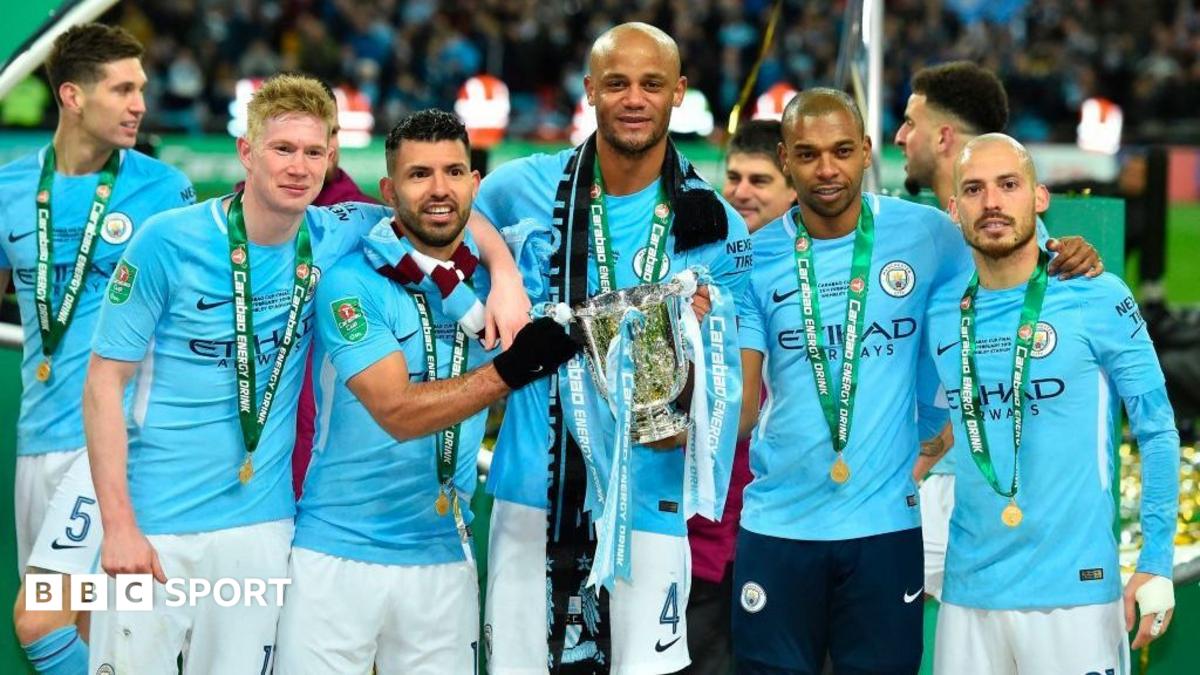
So do the guilty verdicts mean the Premier League seasons between 2009-10 and 2017-18 should now be considered a figment of our collective imaginations too?
City have until Friday to mount an appeal. If that appeal is unsuccessful, then, at some point, the club will be given some sort of punishment.
Whether sanctions will retcon the past in any way is unknown.
And about moving forwards? Right now football fans, both of City and other clubs across the country, do not know whether the football they are watching is ‘real’ or not.
Are City actually top of the league and in a title challenge, or will they be docked points later in the season?
If they are linked with another team’s star player, could that transfer happen or will they be unable to make deals at some point?
Will they be in the Premier League next season or will they be expelled and will there need to be a quite significant rejigging of the pyramid to accommodate them somewhere else?
And then there are questions about what comes later down the line.
Is anybody else breaking rules right now, which fans will only find out about in the future?
Does the potential for years of results to be retroactively kiboshed undermine the Premier League’s popularity with fans, players and sponsors?
And can the action fans are watching week in, week out ever fully be trusted again?
The answers to those questions will determine the future of the biggest league in the world’s most popular game.
>
The Real Madrid full-back assisted Anthony Gordon in his first start under Thomas Tuchel
>
NFL Week 4 fantasy football rankings, starts, projections: Braelon Allen, Darren Waller and more

Man City guilty charges: Which transfers did Premier League ‘sham’ help secure?
Alexander-Arnold delivers the kind of moment only he can. But will it be enough for Tuchel?
-

 movies4 months ago
Search For Canadian TV Actor Stewart McLean Now Homicide Investigation
-

 Fashion9 years ago
These ’90s fashion trends are making a comeback in 2017
-
Fashion9 years ago
According to Dior Couture, this taboo fashion accessory is back
-
Fashion9 years ago
Model Jocelyn Chew’s Instagram is the best vacation you’ve ever had
-
Fashion9 years ago
Emily Ratajkowski channels back-to-school style
-
Fashion9 years ago
9 Celebrities who have spoken out about being photoshopped
-

 Anime4 months ago
Rurouni Kenshin: Hokkaido Arc Manga Takes 1-Issue Break – News
-

 Anime3 months ago
HIDIVE to Stream English Dubs for The World Is Dancing, The Forsaken Saintess and Her Foodie Roadtrip in Another World, The Dangers in My Heart: The Movie Anime – News