
Kristy Matheson
BFI


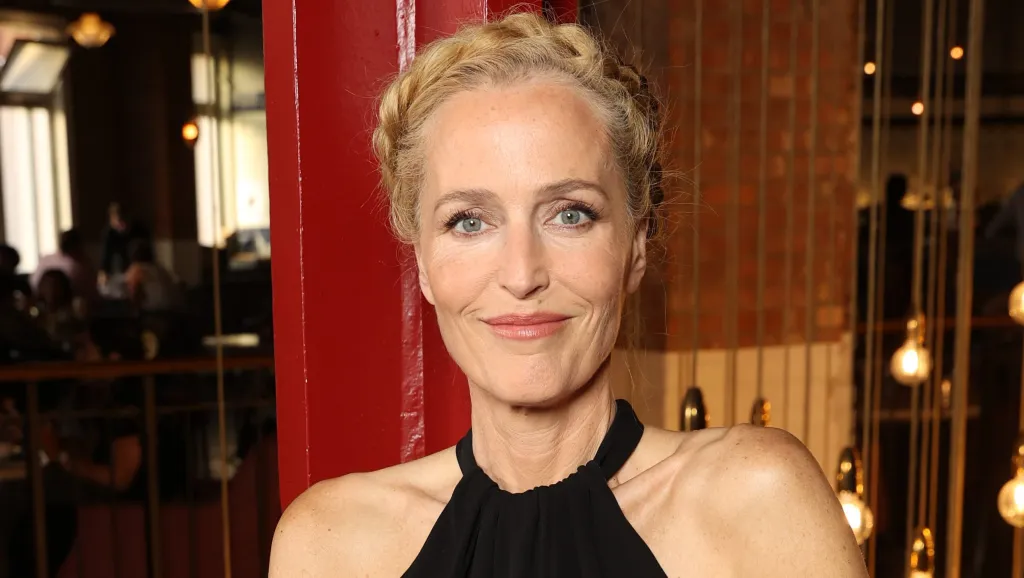
Gillian Anderson has explained why she asked a group of superfans not to sit in the front row of her West End stage show, Who’s Afraid of Virginia Woolf?.
Anderson is performing at Soho Place Theatre and was filmed confronting audience members following a performance. In the video, posted just after midnight on Sunday morning in the UK, Anderson tells fans: “You guys cannot sit in the front row.”
She continued: “I don’t care; you cannot sit in the front row. It’s so distracting.” The fans can be heard responding and apologizing. “You can’t come 20 times and sit in the front row, it’ll drive me mad,” Anderson adds, according to the video, originally posted on TikTok.
After the footage went viral (it has amassed more than 4 million views on TikTok alone), Anderson posted on X/Twitter, explaining the interaction she had following the show, which co-stars Billy Crudup.
“The video doing the rounds is me talking with women I go back over 20 years with – so please don’t say anything negative to or about them,” she said. “We’re thrilled to be doing this show but for people in the front row, please be aware that in such an intimate venue we can all see you and sometimes, it can be a tad distracting!”
The 58-year-old Sex Education star added: “That’s all. All good. On with the show and love to everyone and thank you to all of those coming.”
It’s unclear whether her fans will respect her request. The TikTok user who posted the video of Anderson suggested that the women had booked to attend eight performances.
Anderson’s confrontation is part of a growing trend of actors voicing their concerns to theatergoers. Last month, Cate Blanchett, from the London stage of National Theatre’s Lyttelton Theatre after the curtain call of Electra/Persona, asked fans to put away their cellphones.
Blanchett said: “There are few places on this planet where we can simply be together and be present. I understand you like filming the curtain call – and it is kind of flattering in a way – but for anyone who is filming the show, please don’t, because it spoils it for the next group of people who come in and are present with us. So thank you very much.”
In April, Wicked star Cynthia Erivo halted her performance of Dracula at the Noël Coward Theatre after spotting an audience member recording the show. A month later, Rosamund Pike was critical of an audience member for texting during her Inter Alia show at the National Theatre.
>

EXCLUSIVE: A trio of executives have launched an IP studio focused on sci-fi, fantasy and horror.
Antoine Disle, Orso Vesperini and Olivier Compere, who between them have made projects for Canal+, TF1 and Warner, are behind Forge Films Company, which has unveiled Viking mythlogy series Lost in Hel as first project from its slate.
Forge has brought in Head of Gaming & Interactive Experiences Léonidas Vesperini and former Lionsgate SVP Marc Lorber is advising the company, which launched over the summer.
Forge describes itself as a “next-generation genre studio and IP model,” which will focus on the sci-fi, fantasy and horror spaces and is keen on gaming. The exec team are based in the U.S., France and the UK, while individual projects like Lost in Hel will come out of the U.S.
Forge has just unveiled a Breathe in Hel proof-of-concept on YouTube for its Lost in Hel series. Set after a Viking clan is shipwrecked on an unmapped island, the Lost in Hel universe follows Jarl Alvar and a Christian queen forced into an alliance as they attempt to unite sworn enemies against an ancient force. Directed by Nik Kacevski (Mad Max: Fury Road), Lost in Hel stars Jessica Ferguson (Cobra City, Sun Sparta), Troy Honeysett (Class of ’07, The Combination: Redemption), Masa Yamaguchi (The Condemned, Wolverine) and newcomer Grace Durrant.
The co-founders said: “Forge is built to identify distinctive creative talent and original IP early, test their potential with audiences, and give the strongest worlds the opportunity to grow across film, television, gaming and immersive experiences. Our model brings together creative ambition, audience engagement and industry expertise within a commercially viable and sustainable framework.”
>
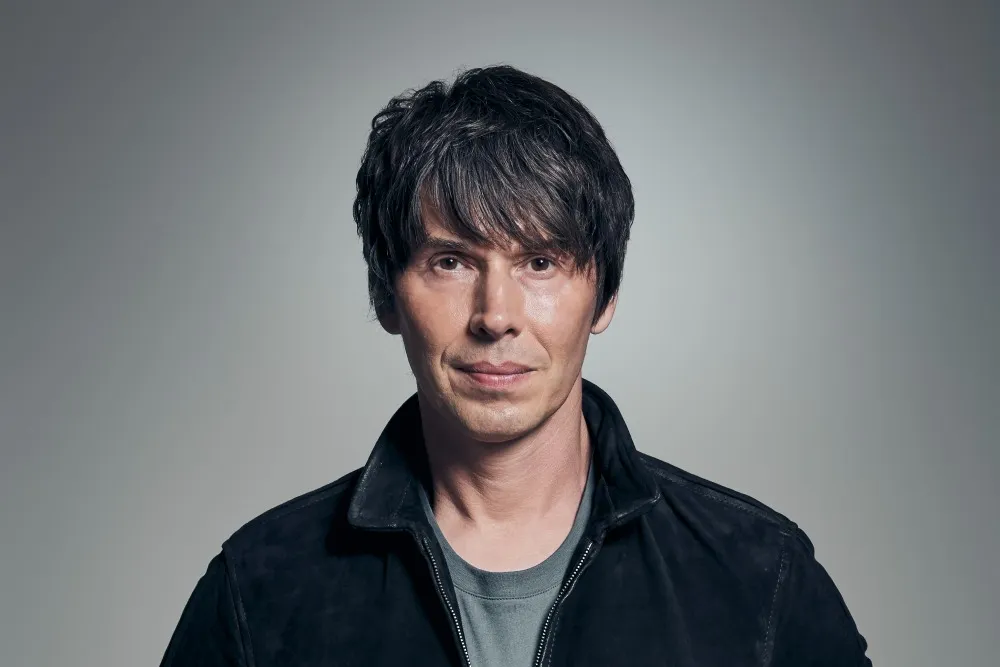
EXCLUSIVE: The first partnership for Sony Pictures Television’s (SPT) new digital studio was with Minecraft supremo Tom Simons AKA TommyInnit, but its second pact is in a different universe altogether.
Renowned British scientist and broadcaster Brian Cox has struck a deal with SPT International Production’s Digital Studio that will see the pair create his formats in the digital space for the first time.
Forged specifically for digital platforms, the content, which is part of a long-term partnership rather than specific series, will span science, astronomy and culture. “The collaboration aims to build a distinctive destination for science storytelling that combines world-class production values with the accessibility and immediacy of creator-led media,” SPT said.
Not to be confused with the Succession star, Cox, who already has a YouTube channel with more than 16,000 subscribers, is one of the UK’s best-known scientists. The particle physicist has presented reams of science shows, mostly for the BBC, including Stargazing Live, The Planets and Brian Cox’s Adventures in Space and Time.
Science has proved a hugely popular genre on YouTube and the BBC itself has been pushing further into the space. At the same time, traditional TV presenters like Holly Willoughby and Amol Rajan have started going direct to their audiences via YouTube.
Cox said: “It’s more important than ever to find new and engaging ways to deliver science and fact-based content to audiences, wherever they consume it. This collaboration with the Sony Pictures Television team is tremendously exciting for me, because we share a desire to make high quality, intellectually challenging, informative and entertaining content available to as many people as possible, across as many platforms as possible. We will have succeeded if our audience are entertained, challenged, terrified, excited and awestruck in equal measure by the dizzying picture of the universe painted by modern science.”
Sacha Khari and Matt Ford, the digital studio’s co-leads, said Cox is “better than anyone” at “taking the most complicated questions about existence and making them feel accessible and entertaining.” “On paper, Brian Cox and Tom Simons might look worlds apart, but there’s actually a lot in common. We work closely with distinctive talent, develop original ideas around them and grow audiences together to create scale and staying power,” they added.
Led by ex-BBC Studios and Channel 4 executives Ford and Khari, Sony’s digital studio launched last year to “engage with UK content creators, create digital originals and build creator partnerships.”
The TommyInnit deal, struck with the creator who runs the most popular Minecraft channel on Twitch, has seen him forge a 100 Questions YouTube series with guests including Cox and Stephen Fry.
>

More than 250 films from long-time festival favorites and new and emerging voices will screen at the 70th edition of the BFI London Film Festival (LFF), which kicks off on Wednesday. Among them are such high-profile world premieres of animated movies Ray Gunn by Brad Bird and Wildwood by Travis Knight.
Opening the 70th anniversary edition of the LFF on Oct. 7 is Elsinore, starring Andrew Scott and Olivia Colman, while Jesse Eisenberg’s The Debut will close the fest on Oct. 18.
Kristy Matheson, the Australian in charge of programming in her role as artistic director, BFI Festivals, put together the lineup for her fourth LFF together with a team, ensuring a selection of films from around the globe and in different genres and styles.
Matheson talked to THR about this edition’s selection, stars and possible surprises, and what not to miss this year.
With the 70th edition being a big, round number, did you and your team feel the need to do anything special for this year’s edition?
We had a lot of chats about what we were going to do to mark this occasion. And the more I thought about it, the more I really started to think about the genesis of the festival. It was really always set up to be a showcase, a best-of-the-festivals model. For 70 years, the festival has brought really the best of the year in cinema to audiences. And especially now, we also have a little bit of a preview into the next six months of cinema.
So, it’s really always been about bringing this incredible collection of films together for the people of London. Of course, now we also have our fantastic LLF on tour to bring audiences [outside of London] a really terrific [program].
The festival will feature two very high-profile world premieres of animated movies thanks to Ray Gunn and Wildwood, but there is also a range of other animated cinema in the lineup. How key is animation for LFF?
Back in 2024, we had a really great year for animation with so many incredible animated films. Last year, there weren’t as many, but for us, animation is such an inventive form. There are so many different types of stories that you can tell, and when you look at the depth of the stories being told, the innovation, the artistry and how these films are made, these are works that we’re always looking for. And I think often animation can be quite pigeonholed as being for kids.
As a team, we really do love animation, and audiences will be treated to such a tremendous depth of animated films this year. It was really thrilling when we knew there were these big animated films that would be ready for our festival season. But just with all the films in the program, we really try to approach them as their own unique proposition. We’re not starting the year and saying, “Oh, we want to engineer the program to be like this.” We really try to stay as open as we can. And we look at each work as its own unique work of art.
But over time, as the program is starting to take shape, themes do emerge and and patterns start to emerge, but we really try not to preempt what we want the festival to be. We really let that emerge for us as we’re viewing films.
The official competition program features 10 films, including from such international filmmakers as Hirokazu Kore-eda, Sergei Loznitsa, Lili Horvát and May el-Toukhy, as well as the world premiere of Carol Morley’s (Dreams of a Life) new feature. How did you pick these titles?
That’s the last piece of the program that we put together, and we purposely leave it right until the end. The aim there is this: People are not going to see all the films, but if you just watched the official competition, you would get a great snapshot of where cinema is in terms of themes, ideas, styles and forms. You’re going to get some very renowned directors who we’re very familiar with. And you’ll have some directors from whom you may have only seen one or two films to date.
Kristy Matheson
BFI
Is there any noticeable trend in terms of the tones that the films in the competition or beyond strike at LFF 2026?
There are some very funny films in competition – The Idiot(s) [by directors Malgorzata Szumowska and Michal Englert] being one of them. It’s a hilarious film, but it’s also really political. It’s skewering the idea of the male genius and looking at gender politics in such a delightfully clever and funny way.
It’s also very exciting to have a film like Act 3 [by Christine Molloy and Joe Lawlor] in the competition, which is a really inventive examination of a creative life but also looks at the politics of creating and the choices you make. We are really excited to have the Golden Lion winner, Woman Unknown [by May el-Toukhy], in the competition.
And to have a new film from Kore-eda [Look Back] in the competition is so thrilling. He’s a director who’s so beloved. We also have Glaxo from Benjamín Naishtat, who makes films that are so atmospheric – they are really cinema with a capital C. And of course, the great documentary and fiction filmmaker Sergei Loznitsa got Imperium, which is an epic film, both in its form, but also in what it’s talking about.
Also, [across the lineup], there are a lot of films that are dealing with the idea of community and what we are, who we are, and what we can be together rather than as individuals. That’s very much present in both our opening and closing night selections, but also across the whole program. It’s this idea of how can we possibly rethink ideas of community, ideas of compassion and care.
A film like All of a Sudden [by Ryusuke Hamaguchi] is a really great example of this, and it touches on themes around organizing. I Love Boosters by Boots Riley is such a wild and inventive ride. On the surface, it’s just a crazy, fun film, but it’s also a film about labor and about union organizing. It’s got these really radical politics nested into this wild fun.
This year, there have been a lot of films that are expertly navigating this. They have real political messages, but they’re not on the surface [and] are not dry, didactic films. That’s been really fun to see how artists are tackling this really cleverly and creatively.
You have all sorts of stars and directors speaking in the LFF Screen Talks program. I know you are excited for audiences to hear from all of them, but is there any big name who you are particularly happy about having discuss their latest film and their career this year?
We always think about the program and careers of people to see who makes sense for the Screen Talks. And yes, we have such an incredible lineup of people coming to speak to us. This is such a special thing for audiences.
It’s really hard [to pick one]. But I’m very, very excited about Sofia Coppola coming and speaking at the Royal Festival Hall. Her career is really interesting, and I think the film that she’s bringing to the festival this year, Making Marie Antoinette, which is a film made by her mother, is such an interesting examination of the creative process, but also talks about some of the challenges of being a female artist and navigating an industry and the legacy of a family. It just feels like the perfect film for her to come [to London with] and talk to us about her creative process and her career.
Have you noticed any countries or regions that have an unusually strong presence at LFF?
We have close to 90 different countries represented. We’re really pleased that we have some wonderful films from Southeast Asia, and in the last few years, we’ve had the opportunity to screen a few more films from this region, which is very distinctive. Probably the big country this year is Spain. It’s a really strong year for Spanish cinema.
And there’s a film from Nepal, Elephants in the Fog, which we saw in Cannes. We don’t see much from Nepal, and it’s a really beautiful film. So, that is a really rare treat to see on a big screen.
Is there anything else you’d like to highlight?
I would definitely highlight the U.K. films this year – from [Ashley Walters’ directorial debut] Animol, Lady, Our Share of Sand, and MASC. We also have Queer Edward II and Dependence, two terrific debuts. They represent the breadth of storytelling that’s being made here, and they are world-class films, so that is really exciting to see.
Also, it seems people are having a bit of a grumble about how it doesn’t seem like a big or a good year for cinema. Maybe I’m just watching different films, but I really didn’t feel at all that this was a weak year for cinema. It’s been so enriching and really creative. I’ve been very happy to be encountering all these films.
>


Search For Canadian TV Actor Stewart McLean Now Homicide Investigation


These ’90s fashion trends are making a comeback in 2017
According to Dior Couture, this taboo fashion accessory is back
Model Jocelyn Chew’s Instagram is the best vacation you’ve ever had
Emily Ratajkowski channels back-to-school style
9 Celebrities who have spoken out about being photoshopped


Rurouni Kenshin: Hokkaido Arc Manga Takes 1-Issue Break – News


HIDIVE to Stream English Dubs for The World Is Dancing, The Forsaken Saintess and Her Foodie Roadtrip in Another World, The Dangers in My Heart: The Movie Anime – News