
The Flight: Vahid Emami, husband of Sahand Sadeghi and father of Sophie Emami, both of whom died in the Flight PS752 crash.
National Film Board of Canada


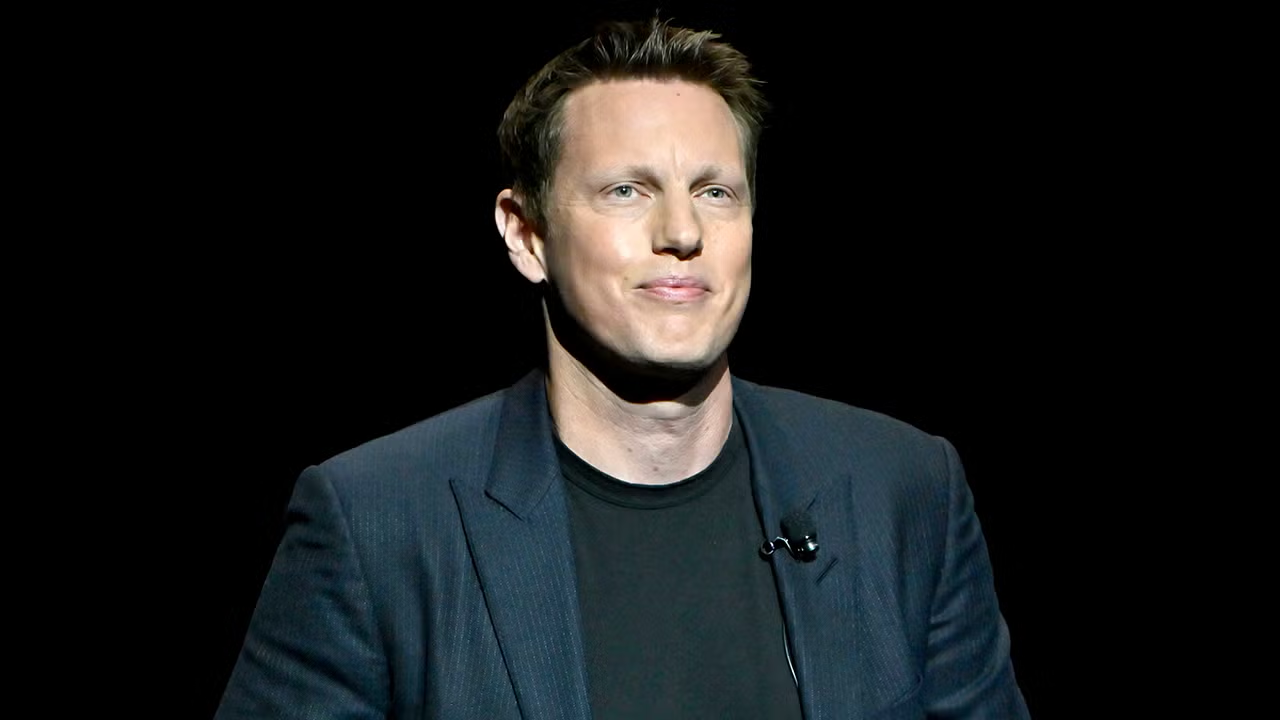
In this edition: The Skydance era; CNN’s leadership; Netflix’s sports play; Disney’s TV economics; Skydance’s integration test
Welcome back to “The Media Front.”
Paramount and Warner Bros. have spent more than a century building two of Hollywood’s most recognizable names. Starting Tuesday, the company that sits above them will carry a much younger one: Skydance.
David Ellison revealed Friday that the combined Paramount-Warner Bros. company will be called Skydance, choosing the name of the company he built to sit atop an empire that will include Paramount Pictures, Warner Bros., HBO, CBS, CNN, DC Studios, Nickelodeon, Paramount+ and HBO Max.
Ellison said the idea is to preserve the identities of Paramount and Warner Bros., not bury them beneath a new corporate brand. But the name still tells us something about the company he intends to build — and where the power now sits.
For much of Hollywood history, Paramount and Warner Bros. were the institutions other companies wanted to become part of. They survived ownership changes, technological upheavals and generations of executives because the brands themselves carried enormous cultural weight. Now both are becoming part of something named for Ellison’s much younger company.
That doesn’t mean audiences are suddenly going to the movies to see a Skydance release instead of a Warner Bros. or Paramount film. Ellison has explicitly said he wants those brands to remain in the spotlight, and preserving them makes obvious business sense.
But the new company isn’t Paramount Warner Bros. It isn’t Warner Paramount. And Ellison didn’t create some neutral corporate identity designed to split the difference between two century-old studios.
He chose Skydance.
The decision caps a week in which the shape of Ellison’s new company started coming into focus.

A federal judge approved Paramount’s settlement with 12 state attorneys general, clearing the way for the $110 billion Warner Bros. Discovery acquisition to close. Wall Street banks also completed a roughly $52 billion debt sale tied to the transaction. Mattel CEO Ynon Kreiz is joining Ellison as co-CEO, while HBO’s Casey Bloys is expected to oversee the combined streaming business.
Warner Bros. film chiefs Mike De Luca and Pam Abdy are expected to depart when the merger closes. The way their exits unfolded offered an early glimpse of how the transition is playing out. De Luca and Abdy learned from press reports Thursday night that they would not be joining the merged company before Ellison formally called each of them Friday morning, TheWrap’s Sharon Waxman reported. The conversations were tense, with Abdy telling Ellison: “Good luck to you. I left you 39 movies.”
Meanwhile, Ellison has asked CNN CEO Mark Thompson to stay and discussed a new contract with him.
Put it all together, and this looks less like Paramount adding Warner Bros. Discovery to the company that already exists than Ellison building something new on top of both. That’s where things get complicated.
Warner Bros. has its own way of making movies. HBO has spent decades protecting a specific identity around premium television. CNN has its own journalistic traditions and global infrastructure. CBS has its own history. Those differences are part of what made each of them distinctive in the first place.
Skydance now has to bring all of them together without flattening what made them valuable.
That may prove harder than picking a name.
Ellison has emphasized scale, technology and creative ambition as central to his vision. But the combined Skydance will also carry roughly $80 billion in debt and is targeting $6 billion in cost savings. Those goals aren’t necessarily incompatible with preserving the company’s individual brands, but they create an obvious tension.
Two major streaming services, two film studios, multiple television operations and two national news organizations give Skydance extraordinary reach. They also create duplication, competing priorities and a lot of expensive infrastructure. Some of that will almost certainly have to change.
There is precedent for old entertainment brands surviving comfortably beneath newer corporate identities. Most viewers don’t think much about which holding company ultimately owns the movie, television show or news program they’re watching. And Ellison may be right that a separate umbrella gives Paramount and Warner Bros. more room to remain themselves than combining their names ever could.
For generations, Paramount and Warner Bros. were among the names that defined Hollywood. Skydance was a company trying to establish itself within the industry they helped create. Now Skydance will be the name above both.
Whether Ellison can deliver the promised savings without weakening those assets — and preserve their individual cultures while imposing a new strategy from above — will take years to answer. But this week gave us the clearest indication yet of how he wants us to think about the company he’s building.
Paramount and Warner Bros. will remain.
The new empire belongs to Skydance.
A.J. Katz
Media Editor
Follow me on social!

David Ellison has asked Mark Thompson to remain CEO of CNN after Paramount completes its Warner Bros. Discovery acquisition, with the two discussing a new contract that would keep Thompson atop the network. CBS News Editor-in-Chief Bari Weiss is not expected to have editorial or operational oversight of CNN when the deal closes.
The development begins to answer one of the biggest questions surrounding CNN’s future under Paramount: who will run it. But it doesn’t resolve the larger question of how CNN and CBS News ultimately coexist under the same owner — particularly as the combined company looks for billions of dollars in merger savings.
For Thompson, the immediate question is how much authority he can secure. For Weiss, it is whether her mandate remains confined to CBS News. And for Ellison, keeping both leaders in place may give him something valuable as the integration begins: time to decide whether two very different news organizations ultimately remain separate.
My full piece: Mark Thompson’s CNN Talks Raise the Stakes for Bari Weiss | Analysis

Netflix spent years teaching viewers that television didn’t have to happen at a particular time. Its emerging sports strategy increasingly depends on giving them a reason to show up together anyway.
Chief Content Officer Bela Bajaria described the company’s approach at Puck and MoffettNathanson’s In the Arena conference this week as identifying sporting events that can become moments — from Christmas Day games to MLB and the FIFA Women’s World Cup — rather than simply recreating the full-season rights strategy of a traditional sports network. Netflix also announced that longtime NBC Sports host Rebecca Lowe will join its broadcast team for next summer’s Women’s World Cup.
That may explain what Netflix sees in sports. The company doesn’t need to rebuild the television schedule it helped dismantle. It can cherry-pick the events most capable of doing something streaming has historically struggled to reproduce: creating a large audience watching the same thing at the same time.
My full piece: Rebecca Lowe Joins Netflix’s Women’s World Cup Broadcast Team

Disney Entertainment Co-Chairman Dana Walden offered a revealing snapshot this week of the problem facing traditional television: A show can still matter culturally and attract millions of viewers without those audiences necessarily adding up to the business they once did.
Speaking about the future of “Jimmy Kimmel Live!,” Walden acknowledged that late night has become a challenging part of the television business as linear audiences shrink and more viewers consume clips and other programming on demand. Kimmel can reach millions of people across those platforms, but Walden said Disney is still trying to make sense of the economics of producing an expensive late-night show for an audience increasingly scattered across them.
It’s a problem that extends well beyond Kimmel. Television audiences haven’t disappeared so much as fragmented across linear, streaming and digital platforms, while the business models built to monetize them haven’t always kept pace. For Disney, the question isn’t simply whether viewers still want traditional television. It’s whether the economics can follow them wherever they’re watching.
Loree Seitz’s full piece: Disney President Dana Walden Talks Jimmy Kimmel’s Future on ABC: ‘We’re Trying to Make Sense of the Business’

David Ellison hasn’t officially taken control of Warner Bros. yet, but one of the first major personnel moves of the new Skydance era is already proving messy. Warner Bros. film chiefs Mike De Luca and Pam Abdy learned through press reports Thursday night that they would not be joining the combined company before Ellison called each of them Friday morning to confirm their exits, TheWrap’s Sharon Waxman reported.
The conversations were tense. Ellison told the executives that the combined company would carry significant debt and needed to restructure, according to Waxman. Both were angry over how their departures were handled, with Abdy telling Ellison: “Good luck to you. I left you 39 movies.”
It’s an early reminder that combining two Hollywood institutions will involve more than finding efficiencies on a spreadsheet. Skydance is targeting $6 billion in cost savings, which will inevitably mean difficult decisions about executives, operations and overlapping businesses. De Luca and Abdy may be among the highest-profile departures, but the way their exits unfolded shows how complicated imposing a new structure on Warner Bros. could become.
Waxman’s full piece: David Ellison Finally Calls Mike De Luca and Pam Abdy to Inform Them of Exit They Read About in the Press | Exclusive

What’s Next: This Week’s PRO — Fox News at 30
Fox News turns 30 Wednesday.
When Rupert Murdoch and Roger Ailes launched the network on Oct. 7, 1996, CNN had already spent 16 years defining cable news and few could have predicted that the newcomer would eventually become the dominant network in the category.
Three decades later, Fox enters its fourth decade from an unusual position: Its power within cable news remains formidable even as the cable bundle that helped build the business continues to shrink.
For TheWrap, I spoke with Fox News Media President and Executive Editor Jay Wallace, on-air talent and industry experts about how the network built that position, the ratings and revenue behind its dominance and what Fox’s next chapter looks like as the TV ecosystem around it changes.
Look for the full analysis this week on WrapPRO.

>
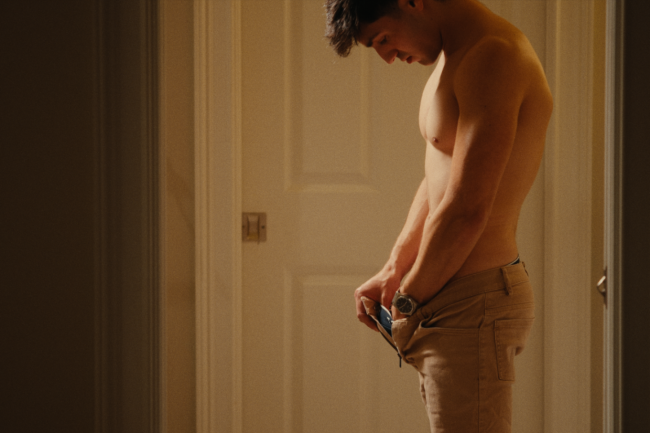
In the SXSW documentary “Manhood,” one man is trying to make penis enlargement procedures as easy and commonplace as a few spritzes of Botox. Dallas entrepreneur Bill Moore’s PhaloFILL procedure offers a solution to men’s worst insecurity. But it’s not without complications of its own, as the film shows an OnlyFans star and a father of five who put their bodies on the line — and face a complex emotional aftermath. IndieWire shares the exclusive trailer for the film, directed by “White Noise” filmmaker Daniel Lombroso. Executive producers include Penny Lane, Sheila Nevins, and Fenton Bailey and Randy Barbato for World of Wonder.


“The manosphere and its brand of toxic masculinity is taking over America, from social media to the White House,” said director Daniel Lombroso, who spent two years in male enhancement clinics to make the film, in a statement. “I wanted to explore the tremendous well of male shame and insecurity it all comes from.”
“Masculinity, and what makes a man, is a headline topic these days,” said executive producers Fenton Bailey and Randy Barbato of World of Wonder. “Size matters, but as Daniel so powerfully demonstrates, it’s the dimensions of the story that count. ‘Manhood’ is a story full of heart, humor, and humanity.”
More from IndieWire’s SXSW review: “‘I can fill your penis with filler, but I cannot fill the hole in your heart,’ Moore tells his patient/lover David. The patient-doctor relationship here is certainly ethically questionable, but at what point are ethics just sort of tossed out the window when we’re talking dicks? Still, Lombroso takes his subject and his subjects seriously, and treats them with respect. David, marveling near-tears at the results of his reconstructive surgery, makes for a moving moment — who knew a documentary about penile enhancement could touch a nerve and the heart, too?”
“Manhood” will open at the Laemmle NoHo in Los Angeles on October 28 and the Village East by Angelika in New York on October 30, with a week-long engagement at each, followed by a nationwide theatrical release. The film will be available on digital platforms November 17, with more details to be announced at a later date.

>
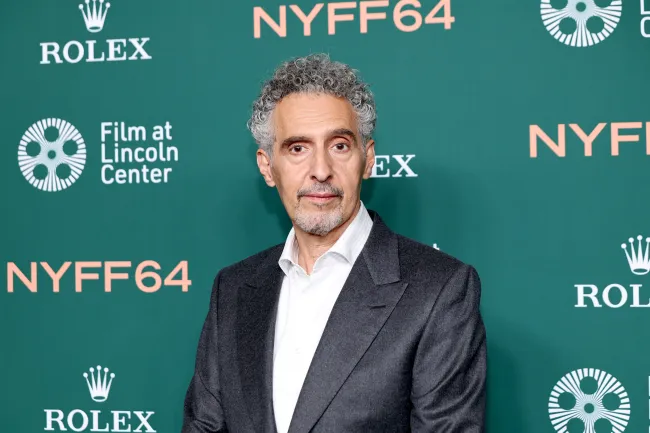
We all know our favorite John Turturro roles. Maybe it’s the Cannes actor-prize-winning purist screenwriter in “Barton Fink,” one of several memorable Coen brothers characters. (Turturro’s crossing his fingers they are getting back together, as we all are.) Maybe it’s purple-jumpsuited Jesus Quintana in “The Big Lebowski,” whose motto is “Nobody fucks with the Jesus.” Or pizza worker Pino in Spike Lee’s “Do the Right Thing,” another frequent collaborator. He’s also directed a number of delicious indies, from Cannes Camera d’Or winner “Mac” to “Illuminata” and “Romance & Cigarettes.”
This year Turturro scored raves in a leading role in “The Only Living Pickpocket in New York” (Sony Pictures Classics, October 23) which broke out at Sundance and is playing the fall festival circuit from Telluride to New York. That’s because SPC believes they have a shot at landing Turturro a Best Actor Oscar nomination. He’s long overdue. Shockingly, he’s never been nominated. But this 69-year-old Italian American New York theater, film, and television actor has built affection and respect from his peers.


You felt the Turturro love at the October 3 press screening of Tom McCarthy’s “A Statement” (Sony Pictures Classics, Spring 2027) at the New York Film Festival. (The press conference is here.) Turturro proved the MVP among the sprawling ensemble of 24 actors, nabbing the most applause. During filming, they sat across from each other at a square table, having memorized their dialogue, a transcription of the actual conference of climate change experts in 1980. The back and forth is fascinating and disturbing, as you can see exactly why the world could never come together to address this existential crisis.
Turturro’s MIT nuclear expert projects a series of charts that show how rising temperatures from CO2 in the atmosphere will explode if fossil fuels aren’t cut back dramatically. And later on, he crashes a wedding and hits the dance floor, dancing with the sexy stenographer (Nina Arianda). The movie is challenging but fun.
We sat down at the Telluride Film Festival over Labor Day Weekend.

Anne Thompson: Your new movie “A Statement” is playing the New York Film Festival but won’t come out until next spring.
John Turturro: This was the week before Reagan became president. So the words are the words of the real people. 75 percent of the movie is a transcript edited down, so we were all in a room most of the time. 24 actors, Amy Ryan, Nina Arianda. It’s really about democracy: How can people come to some kind of consensus, if not unanimity, and how difficult it is. And it’s funny. My character is an MIT nuclear engineer and anthropologist. I had to do a deep dive into scientific research about why people do or don’t solve large sociotechnological problems. [Tom McCarthy] made it entertaining. It creeps up on you.
I’m an old New Yorker, so I got a big kick out of “The Only Living Pickpocket in New York,” which I saw at Sundance. What did you think of writer-director Noah Segan’s screenplay?
It was a beautiful script about aging, the analog world, how everything is changing. I thought, “Let me read this again. Is this as good as I think it is?” It had a delicacy to it, and I also liked the time frame because it was Aristotelian, it wasn’t 24 hours but it’s 36 hours: “Well that makes it a pressure cooker and it’s still delicate.” I met Noah and he said, “I wrote it with you in mind.” And I said, “Let’s start talking about it.”
So you dove into the world of pickpockets?
He gave me all these books. “Whiz Mob” was by an anthropologist. He interviewed pickpockets in the 30s, 40s, 50s, men and women, sometimes teams, and it was interesting where they came from. And then I read about the history of pickpockets: they were everywhere, and a lot of them were abandoned orphans. It was the idea of not doing heavy crime and you take the money, but you could throw away the wallet or put it in the mailbox or whatever. And then I worked with this guy Apollo Robbins. He’s a magician pickpocket, and he was helpful too.
You had to practice?
Yeah, but his hands are like a concert pianist’s. He can take your watch off. You don’t feel it. It’s got to be with one hand, and you can’t just let it flop, and you can’t press. So you have to let it go, or you put your finger in someone’s pocket, and you don’t take it, just hold it. And they worked in teams. Sometimes the woman would be the setup. Sometimes it was two women.
Your pickpocket is taking care of his incapacitated wife. I found that moving.
This guy never has taken care of anyone. Maybe he blew all his money on good clothes or gambling, and now he’s actually taking care of someone. We talked a lot about the previous relationship, and as you get older, you do take care of people, and I’ve been an official guardian and an unofficial guardian, so I understand that’s an unsung, isolating position to be in, but it means something to someone who’s led not an admirable life.
And his daughter [Tatiana Maslany] is letting him know that. She’s not going to let him off the hook when she confronts him.

That’s right. Tatiana brought it. People want forgiveness, they want something, and she doesn’t. And I thought, “well, then you have to find someone else to be generous to.” And that was a tricky scene, but it could be a good one. We were nervous about rehearsing, and we blocked it, and we shot it. Tatiana, who I’m working with now, again, we’re doing “Rhinoceros” the play [in Cambridge] with Paul Giamatti. [It closed September 27.] It’s good to go back and do your humble rituals. [Both Maslany and Giamatti are also in “A Statement.”]
You shot all over the city.
We went to every borough. I grew up in Hollis, Queens, Rosedale, and I had relatives on the Lower East Side and in Brooklyn too. I’ve lived all over the city, with school upstate and New Haven [Yale Drama School]. During filming a lot of times I was in these new ethnic neighborhoods where I was in a hair salon, and that was my dressing room, or in a little store, or in someone’s apartment we rented. So it was that kind of movie. We had 26 days to shoot. It was one of those collaborative experiences. And so you want to give everything you have, and you want to take the elevator down to the subbasement if you can.
The prime prop in this movie is your big overcoat.
The coat. Well, that’s because I did a Zegna show. We were going to do a peacoat, and Noah fell in love with it, but the collar was too big. We talked to them, and they said, “Hey, we’ll make you a coat.” And they made me a coat. It reminds me of all these black and white movies, like “Out of the Past.” I’m a big Robert Mitchum fan.
It is a Robert Mitchum coat!
His shoulders are that big. But Robert Mitchum had this vulnerability, he had a lot of self-doubt in who he was. In a book about him, he turned down so many great parts because he thought, “I’m not good enough to do it.” Well, there’s a noirish aspect to this, without it being overt.
I agree. Your character is vulnerable and sad.
He’s at the point in his life where he’s at these crossroads, and how can he survive and take care of this person that he cares about? I felt there was a humanity to it. It’s a hard thing to do on film sometimes, because people aren’t that interested in it. Out of delicacy, there’s discovery. And you discover things about yourself too.
I left my house in L.A. as these bricklayers were working on our exterior wall. I thought of your movie “Mac,” a tribute to your dad.
Yeah, and to workers, builders, people who don’t destroy things. But it drives me crazy when I think how many movies have been made about the Titanic, and no movie was ever made about the Brooklyn Bridge, which stands and serves people every day. So, the working class is unexplored. There are certain professions in movies, and then there’s other things that just aren’t. People have seen “Mac,” but not a huge group. I think, “Okay, I made it, I did it, I did something.” And maybe if Bingham Ray’s October Films would have released it instead of Samuel Goldwyn— they wanted it. I got outvoted. That film was shown a lot on HBO for a while.
Where does that movie live now?

It lives somewhere. Sony owns it now. It was on Criterion for a while. They had a few of my films on Criterion; they lease them for a period of time. They had “Illuminata,” “Mac,” and “Romance & Cigarettes.” They disappear. You don’t know where. You used to go to the video store, and you could rent or buy a VHS.
Do you keep a DVD collection at home?
I still have DVDs. I even have some laser discs, but I don’t have a laser disc player.
I finally got rid of my VHS.
I tried to replace all of them with DVDs. Couldn’t do it. You can’t necessarily find everything, even old popular movies.

Anything coming up with you and Spike?
Well, there were talks. There were things that he wanted to do that he didn’t do, and I have something that I don’t know if he’ll want to executive produce or not. The things I’m interested in, I always think they’re entertaining, but they’re always a little bit off the beaten track. And so, people are gun shy for a lot of things. You write something about, class, race, sex? We see it every day. You know, why not? Why not explore it a little bit? I’m trying to do the things I really want to do now. I’ve always tried to do that as best I could. I still did some stupid movies. You know what I mean? Which people enjoy.
>
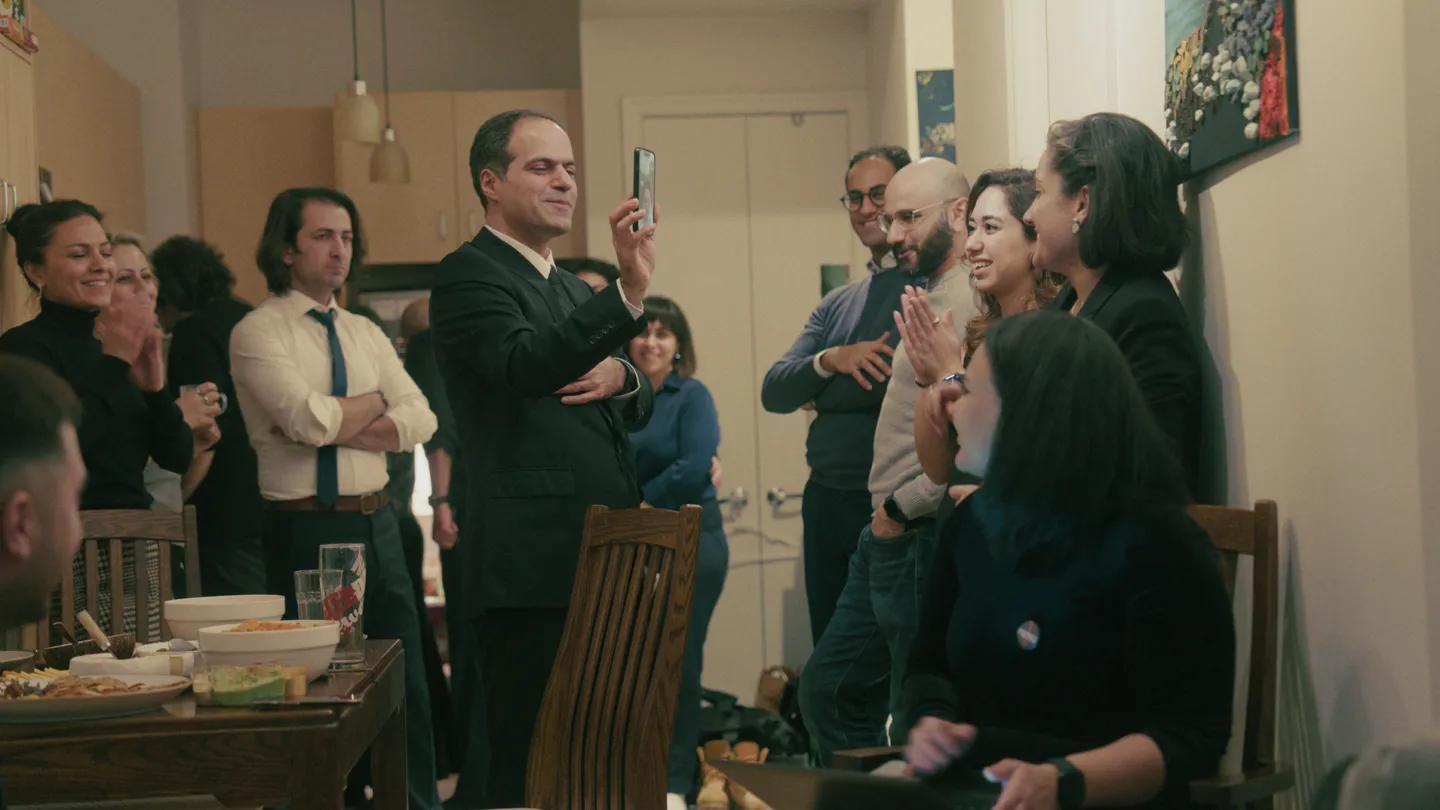
Kurdish-Canadian director Soran Mardookhi, with his latest documentary feature The Flight, recalls the doomed Ukraine Airlines Flight PS752 that in January 2020 crashed soon after taking off from an airport near Tehran.
All 176 passengers and crew members on board were killed by Iranian surface-to-air missiles that brought the Boeing 737 airliner down, with Iranian authorities at first covering up the tragedy.
But Mardookhi tells The Hollywood Reporter his feature documentary is not about the Middle East or politics.
“Once I start making the film, I kind of forget myself… I gave that space to the families who actually tell their own story,” Mardookhi says ahead of a world premiere for The Flight at the Vancouver Film Festival.
He doesn’t focus on the possible political and legal machinations that drove the Islamic Revolutionary Guard Corps to finally admit missiles were fired at the ill-fated Ukrainian aircraft. His National Film Board of Canada film goes beyond numbers to humanize the Iranian-Canadian victims of Flight PS752 who have long slipped from news headlines, even as their families continue an uphill battle to hold Iran accountable.
The result is a documentary that chronicles how an Iranian-Canadian community with lost family members — many of whom were university students, newlywed couples and young children — launch the Association of Families of Flight PS752 Victims as a force to be reckoned with in in asserting Iran violated international law and regime authorities should reveal what really motivated the missiles strike.
The Flight: Vahid Emami, husband of Sahand Sadeghi and father of Sophie Emami, both of whom died in the Flight PS752 crash.
National Film Board of Canada
“There’s individual families dealing with enormous personal loss, but they realized that together they could do things that would have been impossible on their own,” Mardookhi explains of their collective action. The campaigning families have never accepted the explanations around the tragedy from Iranian authorities.
And they have been put through the wringer by Iran, not being seen or heard by regime authorities in Iran, despite their pleas for justice and redress. “As victims of terrorism, they have no rights,” Mardookhi says of the families.
The Flight includes home videos of the families singing, dancing and laughing before losing their loved ones and launching their collective action. “We’re not talking about the lost people. We actually see them. We see part of their lives, sometimes very ordinary and sometimes best moments of their lives, like their wedding day,” Mardookhi explains.
The Flight also poignantly captures how the lost loved ones sought new lives in Canada tragically cut short when their plane was intentionally shot down. “They came to have a better life,” Mardookhi says of the 55 Canadian citizens and 30 permanent residents that were among the 176 people killed in the Flight PS752 tragedy.
The filmmaker, who is based in Vancouver, himself came to Canada in 2010 from Iranian Kurdistan after making films in Iran for around 10 years. That included his 2007 feature And Thus I Was Born produced underground to avoid entanglement with that country’s infamous censors.
And while he welcomes making movies in Canada free of overt censorship, Mardookhi says it took him many years to break free of the insidious and indirect ways Iranian authorities employ censorship to control filmmakers and silence dissidents. That realization came to him in 2014 on the Vancouver set of Turbulence, a feature drama about a father and his estranged daughter from Iraqi Kurdistan struggling to make Canada their new home.
“I was directing a scene and talking to the cast and, at that moment, I realized, oh my God, I’m censoring myself, even here. So I stopped and said, guys, I need just 10 minutes. And I went out and just thought, ‘what am I doing?’” Mardookhi recalled, as he questioned whether his self-censhorship aimed to help not angering regime leaders should he return to Iran to visit family.
The result, the director adds, is today he uses art in his films as a narrative tool, and not to get round strict censorship as Iranian filmmakers constantly face. The Flight gets its first look on Oct. 8 at the Vancouver Film Festival, which runs through to Oct. 11.
>


Search For Canadian TV Actor Stewart McLean Now Homicide Investigation


These ’90s fashion trends are making a comeback in 2017
According to Dior Couture, this taboo fashion accessory is back
Model Jocelyn Chew’s Instagram is the best vacation you’ve ever had
Emily Ratajkowski channels back-to-school style
9 Celebrities who have spoken out about being photoshopped


Rurouni Kenshin: Hokkaido Arc Manga Takes 1-Issue Break – News


HIDIVE to Stream English Dubs for The World Is Dancing, The Forsaken Saintess and Her Foodie Roadtrip in Another World, The Dangers in My Heart: The Movie Anime – News