
movies
James Corden & Ruth Jones’ Apple Show ‘The Choir’ Reveals Cast

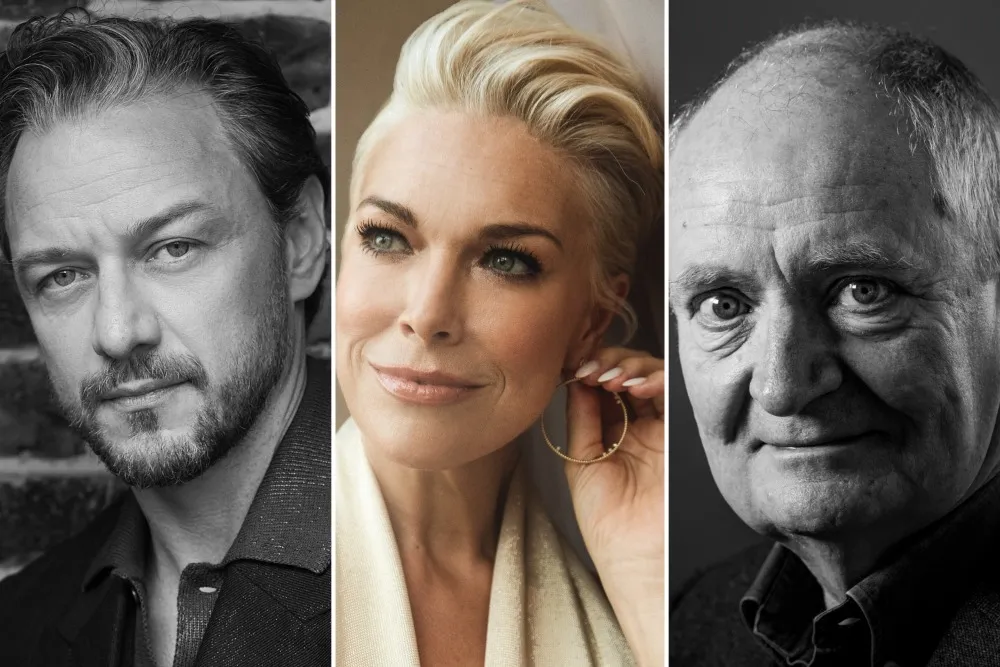
EXCLUSIVE: Hannah Waddingham, James McAvoy and Jim Broadbent will guest star in The Choir, the highly-anticipated Apple TV series from Gavin & Stacey creators James Corden and Ruth Jones.
The trio will be joined by an ensemble featuring Tom Davis, Rosie Sheehy, Susan Brown, Jason Watkins, David Harewood, Alexandria Riley, Sylvestra Le Touzel, Tom Edden, Gary Lamont, Emily Lloyd-Saini, Stephen Leask, Luiis Rouf, Jo Foster, Evie Jones and Farrah Abbassy.
We can also reveal that the show will be produced by I May Destroy You maker Various Artists Limited with Jones’ company TidyTwo. This is a departure from Gavin & Stacey, which was made by Steve Coogan’s Baby Cow and Corden’s Fulwell Entertainment, amongst others.
The Choir follows brother and sister, Ben (Corden) and Lisa (Jones), who haven’t seen each other for several years. Ben has been living abroad, while Lisa has carried on in their small English town where nothing ever happens. But when events take a sorry turn, Ben is forced to return to a life he never wanted, a town he never liked and a family from which he’s estranged.
The Choir, which has rolled cameras and will air next year, is the latest from the duo behind Gavin & Stacey, the iconic British sitcom which concluded two years ago as the UK’s most-watched show of 2024. The show has attracted a top caliber of guest star. Waddingham landed global recognition for her role in a different Apple TV series, Ted Lasso, which just launched Season 4. McAvoy is a BAFTA winner and Broadbent has an Oscar to his name.
The Choir is produced for Apple TV by Various Artists Limited and TidyTwo, with Phil Clarke, Jack Bayles, Jones and Corden serving as executive producers, and BAFTA Award nominees Jennifer Sheridan and Jim Archer set to direct.
>
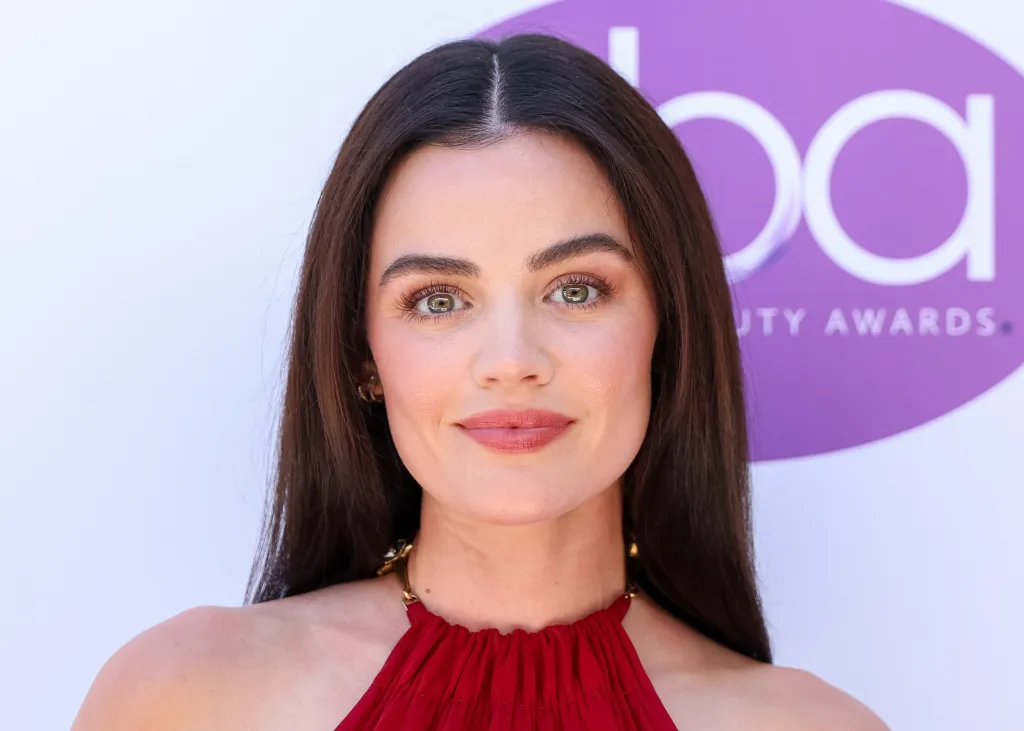
Roku has given a green light to Scarlett Holmes, a new Roku Original limited series, with Lucy Hale set to star and executive produce. Said to “put a fresh, romantic spin on the legendary world of Sherlock Holmes,” Scarlett Holmes, produced by Jaggi Entertainment, will debut exclusively on The Roku Channel in 2027.
Written by Paris Herbert-Taylor and Katie Wilbert, Scarlett Holmes revolves around the titular character played by Hale, a modern descendant of Sherlock Holmes who has inherited his legendary powers of observation, but instead of solving crimes, she takes on mysteries of love, dating, and relationships.
Each episode’s storyline draws inspiration from a beloved romantic comedy. Joining Scarlett in each episode is her trusty sidekick, “Jane Watson,” (casting TBA) as they help clients navigate mixed signals, secret crushes, romantic dilemmas, and everything in between. But while Scarlett may be an expert at solving everyone else’s romantic problems, her own love life proves far more difficult to decipher. When she falls for “Ollie Moriarity” (casting TBA) — a charming podcast producer secretly planning an exposé on her methods —she’s faced with the toughest case of all: her own.
“Lucy Hale has the wit, warmth and comedic instincts that make her the perfect creative partner to bring ‘Scarlett Holmes’ to life,” said Brian Tannenbaum, Head of Roku Originals. “This smart, sophisticated series celebrates two genres our streamers love—romance and mystery—through a fresh, playful take on one of the most recognizable legacies in storytelling.”
Scarlett Holmes is produced by Jaggi Entertainment with Sophie Tilson and Steve Jaggi serving as executive producers along with Hale. The series is overseen by Morgan Pichinson and Sabrina Lyall on behalf of Roku. Jaggi Entertainment handles international sales.
“I am a true diehard fan of romantic comedies, and Scarlett Holmes has that special something that made me fall in love with the genre in the first place,” said Hale. “And I love that it brings mystery into the rom-com world in a way that feels really fresh and fun. It’s charming, sexy, funny, and has a lot of heart. Scarlett is smart, curious, a little complicated, and like so many of us, looking for love. I feel completely thrilled to step into her shoes.”
Known for her work in Pretty Little Liars, Lionsgate’s F, Marry Kill, Hulu’s Which Brings Me To You and romantic comedy Puppy Love, Hale most recently wrapped production on thriller Legacy and romantic comedy Princess. She’s also executive producing the mystery drama Dead Letters, which is currently in development at Netflix, and will star in a dual role in the adaptation of the 2017 novel by Caite Dolan-Leach. She’s repped by CAA and Reel Talent Management.
“Scarlett Holmes is the kind of smart, feel-good storytelling audiences crave. Partnering with Roku on such a charming project has been an exciting journey, and we can’t wait for viewers to fall in love with Scarlett and her world,” said Steve Jaggi, CEO Jaggi Entertainment.
>
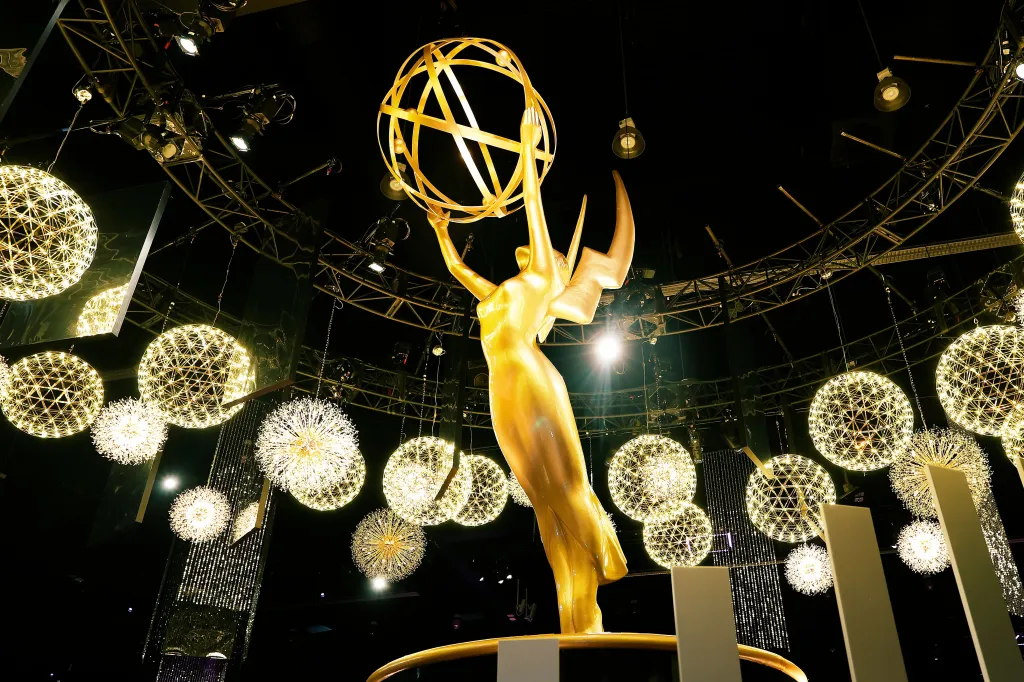
The Emmys officially have a new rights holder.
Amazon has closed its deal with the Television Academy, as previewed last month, and it’s a significant pact. The partnership gives Prime Video the right to stream the annual television ceremony for the next six years and is thought to be worth north of $120M in total.
The streamer has taken global rights to the event but will make it free to view on its Prime Video service each September.
Deadline understands that the deal is worth between $20M-$25M per year with one source pegging the value at $24M per year.
The deal succeeds the broadcast wheel, which has seen broadcast networks ABC, CBS, Fox and NBC rotate the rights each year. That system has been in place for over 30 years, since 1995.
Mike Hopkins, head of Prime Video and Amazon MGM Studios, told Deadline that it wanted to create a “global event” on Prime Video.
“We thought we could increase the viewership, bring in a younger audience, work with the Academy to put a lot more energy, and maybe look at the production itself to try to innovate. I feel that we can put the Emmys on a path to global growth and relevance that was probably harder to do when it was spinning from network to network and then distributed in various ways around the world,” he said.
The global nature of the deal is interesting, particularly given the fee increase the TV Academy has secured. The broadcast networks have paid between $8M-$10M per year to air in the U.S. but it’s not clear how much revenue the Academy makes from international broadcasters. The event has aired live in a number of international markets including on CTV in Canada, Showcase in Australia, Canal+ in France, TNT across Latin America and Sky Italia, but in many territories it is aired and streamed on smaller services and networks.
Abrego added that he didn’t want to just renew the wheel deal. “I felt strongly from the outset that this was an opportunity to rethink the model,” he said. “Starting every year with a new partner, trying to find a production partner, a brand partner, trying to bring even the simpleness of learnings from the past event into the next year didn’t matter because of the different institutions… that was very challenging. As television and the industry is evolving, the telecast and much like the Academy needed to evolve, and so having a singular home was my goal from the outset.”
Former Banijay Americas boss Abrego said that making the show free to view, and not behind a paywall, was a “non-negotiable” for the Academy.
“I give Mike credit. From our early conversations, he understood that. It’s not simply just about distributing an award show, they really understood what the Emmys mean to the television community and what we could build around that and we’re really excited about it,” he added.
Amazon has put other events in front of the paywall including a number of Amazon Fire concerts and its Black Friday NFL game. Hopkins pointed to the fact that the company has a “very large ad business”.
“We have we have a variety of other economic levers we can pull to make it make financial sense for us. We also have nearly all of the streaming services as part of Prime Video in our subscription business, and many of this year’s winners are available to our Prime Video customers via driving to HBO Max or Apple TV. We see it as something that sits as part of our entertainment system with customers where we can celebrate these awards and nominees throughout the year. We can be the home of many of the best shows on television today, not just those that we make ourselves, but our partners are the ones that are always every year going to get the lion’s share of awards,” he said.
Amazon itself hasn’t performed particularly well at the Emmys over the last few years; this year, largely thanks to Spider-Noir, which also aired on MGM+, it scored ten wins; last year, it won five awards at the Creative Arts Emmys and in 2024 it won four.
Hopkins said, “We stand up and clap at the Emmys when our partners win.” This is helped by the fact that Amazon would like to become a one-stop shop for streaming subscribers, as evidenced by recent bundles.
One of the things that both Amazon and the TV Academy stressed was the need to appeal to younger viewers.
“We’ve been talking a lot about it. It’s a little premature to get into specifics, but I think it is about the format. I think it’s about the celebration of certain stories and artists that might appeal to younger audiences. I also think it’s finding ways to promote to those audiences so they’re aware that it’s on,” added Hopkins. “Ultimately, we know that that younger audiences are more inclined to stream than watch broadcast television.”
Amazon does have one star that clearly appeals to younger audiences: MrBeast. Conan O’Brien joked at this year’s Oscars that he was going to be replaced by Jimmy Donaldson, the host of Amazon’s Beast Games, but maybe MrBeast would be a better choice to host the Emmys.
“We hadn’t thought about yet, but if you know him, please give him a call,” laughed Hopkins.
Abrego said that the Academy didn’t strike the deal to “just put on the exact same show”. “The amount of categories, the type of categories, the length of the show, the hope is that we have an awards show that’s as relevant and interesting and innovative as the shows that are winning the Emmys,” he said.
He wants to start having those conversations “in the next few days”. “We wouldn’t normally start having these conversations probably until May. We could start those conversations tomorrow, and start to really think about that. That’s what’s exciting,” he added.
>
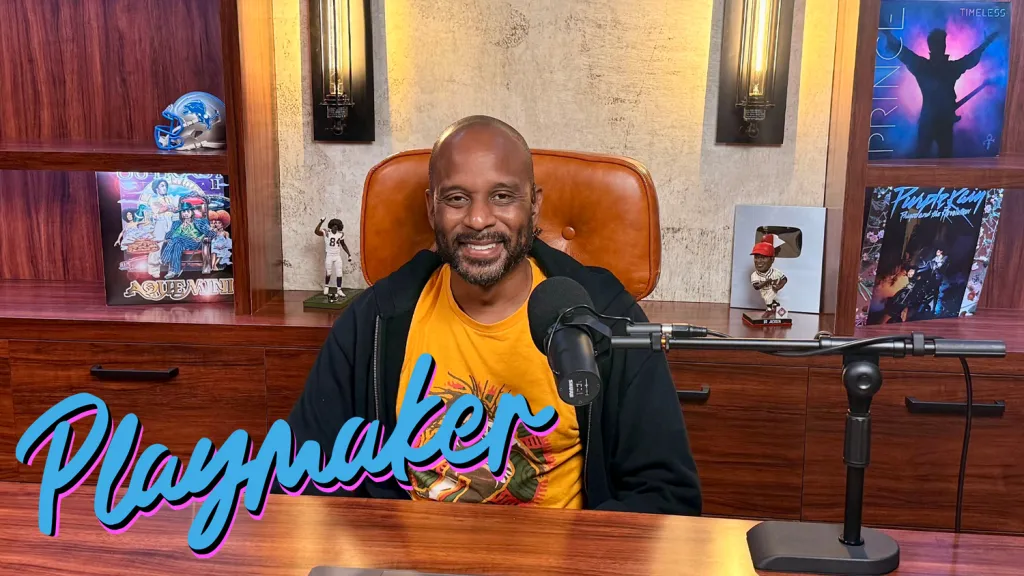
EXCLUSIVE: Bomani Jones, best known for his stints at ESPN and HBO, is teaming with podcast firm Playmaker for his long-running show The Right Time.
The New York-based Playmaker, which is owned by Danish digital sports media company Better Collective, has built an estimable roster of podcasts with a eye toward the increasing cross-over to video. The company’s roster includes The Roommates Show with New York Knicks teammates Jalen Brunson and Josh Hart, a bowling series hosted by L.A. Dodger Mookie Betts and various Shaquille O’Neal projects.
The Right Time launched in 2018 under ESPN’s auspices, and Jones acquired rights to it in 2021. He kept hosting it until leaving ESPN in 2023 and as he debuted as host of Game Theory, a late-night series that aired on HBO in 2022 and ’23.
In a conversation with Deadline, Jones talked about the new era for his podcast, which a few days ago started daily production at a new, purpose-built studio in Harlem, NY. He also weighed in on the fast-changing sports media ecosystem, the rise of athletes as media creators, and how his early experience doing radio prepared him for the podcast age.
The conversation has been condensed and edited for clarity and length.
DEADLINE: How is the show changing, if at all, with the move to Playmaker?
BOMANI JONES: At this point, the audience is much more invested in the product itself than where it comes from. Like when I when I left ESPN, I think that I could respond to people with a certain sort of resentment because to me at that point, I was only doing the podcast for them anymore. I wasn’t doing television. So it didn’t matter if it was ESPN or not. ESPN at that point was not really prepared or knew what to do really with the podcast they had in terms of monetization, terms of promotion, and all of those things. Now, coming here, I didn’t really want to talk as much about Playmaker until we were ready to do everything at one time. We’re going to move into a new studio. We’re going to change the imaging around the show. So I wanted it to be that when people looked up, one day it was going to be like, ‘Oh, wow, this is different. This has been improved. This has been elevated.’
DEADLINE: YouTube is constantly updating its product with new features and AI tools. Having worked a lot in traditional media, does the amount of technical resources available to creators ever amaze you?
JONES: One thing you see across industries in different ways that has really become more stark and more pronounced post-pandemic is how readily and largely cheaply people can produce high-quality video content. That becomes important for people like me who, throughout the years, have had the advantage of being promoted by a large platform. Creators are just people, right? Just guys, just women who are able to put together something that looks very similar to the thing that you are putting together. Um, and that is where YouTube, in a lot of ways – I’m reluctant to use the term has democratized things, because I think that kind of misses the point – but I do think that it has created a situation where the competition that you have when you’re putting together a show is so many more people. You can’t be somebody like me or with the background that I have and be arrogant about the fact that you have this background and somebody else does not. There are a lot of people I’ve never heard of who are out here putting up really, really big numbers, and I’m the guy that has to figure out how to learn from them as much as vice versa.
DEADLINE: There’s also this new lane for athletes. So many of them are now media figures and podcast host. Their experience lends an authenticity to what they do, but not all of them are exactly entertainers. What do you make of it?
JONES: It’s a very wide range with athletes because the difference between the athletes and most celebrity digital products versus everybody else is, they’re not getting those jobs because they’re good at it. That doesn’t mean that many of them are not good at it. That’s just not the reason that they’re necessarily getting that opportunity. The people in charge of these places figure, ‘Hey, man, if we get a big name, and depending on what their audience is and who surrounds them, then we can build a product that people will listen to and that people will click on. We can get enough people to set it up and put it up window dressing around them that will support them.’ They can get guests and guests show up immediately with a different level of comfort. So, yeah, it’s a very interesting game to me now watching what it means for an athlete to have a show because it could be so many different things. Playmaker has the Roommates show with Jalen Brunson and Josh Hart. I went to the block party that they had. They can get 10,000 people there, and they can get Mariska Hargitay as a guest. They had Fabolous and Jim Jones. And a big part of that is, if you’re a Knicks fan, you want to hear from your favorite players. I think there are different roles, and different shows can play, but the competition with athletes is not really like my team against their team, as much as it’s all of us against the fact that there are only 24 hours in a day.
DEADLINE: In terms of revenue, like, obviously you have advertising. What about subscriptions or other sources?
JONES: We are working on subscriptions. Some of that I still need to talk with Playmaker about. I am a bit of an artiste in the sense that what I really want to do is come out here and make stuff. Uh, you know, and then by large, you know, by and large, we go and we work the other things out. But I know one thing that we talked about initially and part of why I was open to coming back into a studio. Um, was that the studio itself will make it easier for them to sell in different ways. Like, I think a great example, if you look at [YouTube and ESPN host] Pat McAfee’s show, it is just littered with all kinds of knickknacks, and if you look close, it’s like, ‘Ooh, it says UberEats right there. Oh, you know, it says this in those different places.’ And so I, one of the draws for a play of Playmaker for me was there appeared to be a creativity on their end about sales.
DEADLINE: It seems like you have found a happy medium betwee big media institutions and do-it-yourself, do you feel that way?
JONES: Yes, but I’ll be honest with you. I have been doing this since I was 19 years old, so 26 years and change. My goal is I always have my own goals that I am trying to achieve while also being cognizant of the agreements that I’ve made with people. And so I have to fulfill the obligations that I have made to them. Yeah. So now, I have been doing this long enough now. that I exist as a brand myself. Not as big as ESPN, obviously. But I exist there and I’m all, as I’ve been before, it’s just more pronounced because of the way it goes. I am working to do best for myself, and I am always looking to have partners who see my interest and their interests as being complimentary. And I have been fortunate enough now again to find another company that sees it this way, and that’s always an exciting thing.
DEADLINE: Are you encouraged by the state of sports media? There are increasing signs of influence by leagues over what appears on ESPN or other places. But then again, there are a wide range of digital outlets out there. Is there a significant diversity of voices in your opinion?
JONES: My my only concern about the industry at this point, and it’s everywhere. This isn’t just in sports, is, like, if somebody knew was to come come into the game, I don’t know how to tell them to, like, what they need to do to get their voice to cut through. Yeah. Like, it’s it’s so much that’s going on. Like, it gets you into, like, the Neil Postman idea – and he was just talking about television – that as it becomes a bit unregulated in terms of who can be heard and who can put things out. It is winding up with so much noise all over the place that how do people decide what there is to listen to? How does anybody truly matter? Like, we don’t really make big music stars anymore. For example, because there’s just so much all over the place. How do you cut through to become big? That is one question I have now about the industry. I do think that there’s a certain measure of ideological capture, one could argue, but I think a lot of that has to do with the attitudes of whoever is running the given company right now. Like the attitudes of the people in charge of ESPN 10 years ago are not the same as the attitudes of the people now. So it’s going to kind of land different. It’s gonna kind of sound different.
>

Lucy Hale To Headline ‘Scarlett Holmes’ Limited Series At Roku

Short Net Anime Studio Plott to Start Producing Over-the-Air TV Anime – News
Luka Dončić returns to action for first time in six months as Lakers roll
-

 movies5 months ago
Search For Canadian TV Actor Stewart McLean Now Homicide Investigation
-

 Fashion9 years ago
These ’90s fashion trends are making a comeback in 2017
-
Fashion9 years ago
According to Dior Couture, this taboo fashion accessory is back
-
Fashion9 years ago
Model Jocelyn Chew’s Instagram is the best vacation you’ve ever had
-
Fashion9 years ago
Emily Ratajkowski channels back-to-school style
-
Fashion9 years ago
9 Celebrities who have spoken out about being photoshopped
-

 Anime4 months ago
Rurouni Kenshin: Hokkaido Arc Manga Takes 1-Issue Break – News
-

 Anime3 months ago
HIDIVE to Stream English Dubs for The World Is Dancing, The Forsaken Saintess and Her Foodie Roadtrip in Another World, The Dangers in My Heart: The Movie Anime – News