
Tech
Tesla wants to build a $10B solar factory in Texas

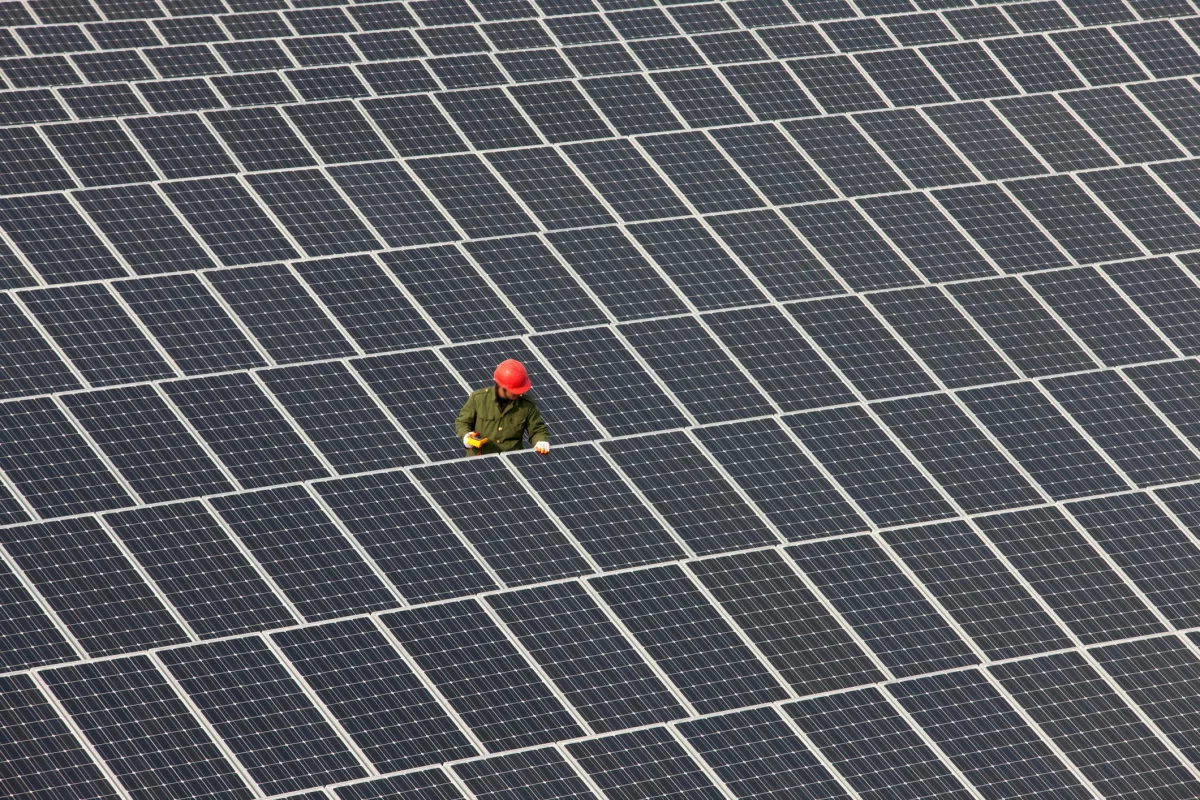
Tesla intends to build a massive solar panel factory 45 minutes southwest of Houston, according to documents filed with the state of Texas.
The new factory, called Project Crystal Sun, could cost as much as $10.1 billion. Tesla has applied for tax incentives to partially offset the cost, saying that it is exploring other sites “across multiple U.S. states.” The factory would create about 9,700 full-time jobs, Tesla said.
Without incentives, Tesla’s accountants estimated that the property tax liability for the project would be about $1.1 billion over 37 years.
The project aims to break ground this year and be completed by 2028, and Tesla said the first solar panels would roll off the line in 2029. The company hasn’t indicated whether the panels would be destined for terrestrial installations or satellites. However, Tesla CEO Elon Musk, who also runs SpaceX, is famously bullish on orbital data centers.
In the filings, Tesla did not publicly disclose the factory’s annual output, though it has said that it plans to build 100 gigawatts worth of manufacturing capacity in the U.S. by 2028.
>
Mesh, the relationship manager and personal CRM acquired by WordPress.com’s parent company, Automattic, last year, is now available to users on Android devices. The software allows users to privately visualize and keep track of the people in their personal and professional networks, add notes to people’s contact information, and be reminded when to reach out.
On Android, the company customized Mesh’s app to work with key platform features, like split-screen and pop-up views. This allows users to access Mesh while working in other apps, like messages or email. It also supports keyboard shortcuts for foldables and tablets, in-app search, home screen widgets (with Material You colors that match your Android’s wallpaper), and real-time sync across devices.

The company’s broader plans for Mesh could eventually see it tied more closely to Automattic’s all-in-one messaging app, Beeper, which offers a way to connect with people across platforms, including through WhatsApp, Instagram, Signal, Messenger, X, LinkedIn, Slack, Discord, Google Messages, and more.
Already, Mesh and Beeper interoperate to some extent, as Mesh users can draft a text to someone in Beeper or click deep links in the app to visit a Mesh user’s profile. In time, the company wants to add additional AI features that will make users of both products more productive in terms of managing their personal relationships.
“We’re thinking a lot about how can AI help you be a better friend and have better work and personal relationships?,” Mesh co-founder Zachary Hamed told TechCrunch in an interview earlier this spring. “We have users who have ten-, twenty-, or fifty-thousand connections across multiple social media apps, across their work products. It’s an impossible task to think and be conscientious with you, with each of those people, by yourself,” he noted.

Today, Mesh’s Nexus AI is in early access, offering a way to use AI to navigate your network. That means users can ask questions like who they know at a particular company or who lives in a certain city, or who has expertise in a particular topic. The company is also experimenting with using AI technology to provide a voice-based, hands-free experience and an improved business card scanning feature.
Importantly, personal information stored in Mesh isn’t shared or used for ad targeting, the company says, as the product is supported by subscriptions. (It’s free for up to 1,000 contacts, then has higher tiers for unlimited contacts and other features.)
In time, Mesh may consider a bundled subscription with Beeper or other Automattic products, but has nothing to announce on that front at this time.
Currently, the majority of Mesh’s customers, or around 70%, are using the app for some type of business purpose. Mesh co-founder Matthew Achariam says Mesh’s sweet spot is executives running bigger teams or those who have a tight network to stay in touch with. However, the company still thinks about the consumer use case, he notes.
“The beauty of [serving business users] is that the same things they’re using apply to every individual consumer. So every feature that we think about has to apply to both,” he says.
Mesh (formerly Clay) for Android will roll out to Google Play for phones, tablets, and foldables as a free download with in-app purchases.
When you purchase through links in our articles, we may earn a small commission. This doesn’t affect our editorial independence.
>
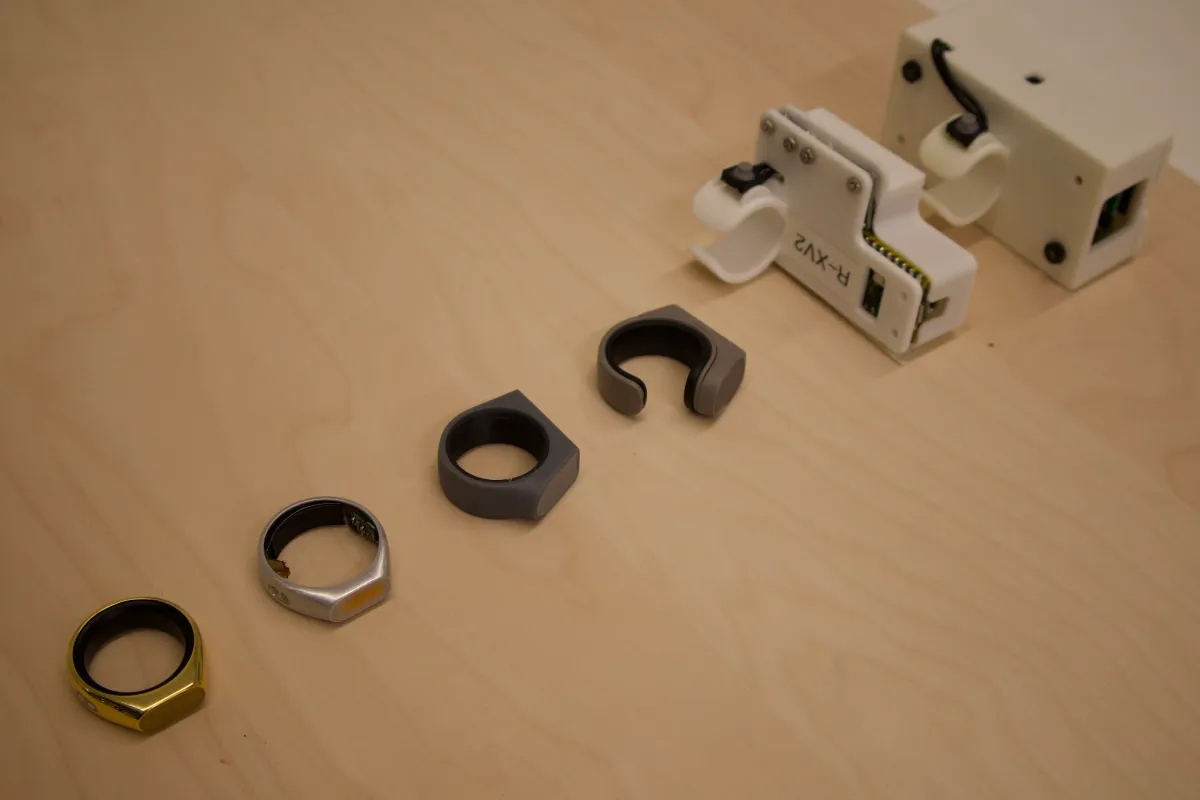
AI notetaking hardware has taken off over the past couple of years, with credit-card-sized devices, pendants, pins, and even transcribing earbuds all promising to capture your meetings and turn them into summaries and action items. Now, a whole wave of wearables — rings especially — are betting people want to capture stray thoughts and ideas the same way.
One of the companies chasing that bet is Sandbar, the startup behind the private voice ring Stream, which has raised $36 million to date, including a $23 million Series A led by Adjacent and Kindred Ventures.
On this episode of TechCrunch’s Equity podcast, Rebecca Bellan talks with Sandbar co-founder and CEO Mina Fahmi about why he thinks so many voice hardware devices before Stream struggled to break through, and why he’s betting that keeping the human firmly in control is what it’ll take to get wearable tech right.
Subscribe to Equity on YouTube, Apple Podcasts, Overcast, Spotify and all the casts. You also can follow Equity on X and Threads, at @EquityPod.
>

For years, Australians have been warned that artificial intelligence is coming for their jobs. So far, the economy-wide wave of AI-driven layoffs hasn’t arrived.
A new Australian government analysis found no evidence that AI has caused broad upheaval across the country’s labour market since ChatGPT arrived in late 2022. But beneath that reassuring headline is a more complicated signal: Australians working in occupations most exposed to AI are seeing slower employment growth.
For Australians entering the workforce, changing careers or wondering which skills will remain valuable, that distinction matters. AI may reshape work long before it produces mass unemployment.
Australia’s AI job apocalypse hasn’t arrived
The Department of Employment and Workplace Relations examined whether occupations more exposed to AI have performed differently since ChatGPT’s launch.
Employment in the occupations most exposed to AI grew 5.6% between November 2022 and February 2026, compared with 9.5% growth in the least-exposed occupations, according to the government’s AI and employment analysis.
The report’s modelling also suggested employment in relatively AI-exposed occupations was about 2% lower by February than it would have been under pre-ChatGPT trends. But there is an important catch: the department repeatedly cautioned that its findings are suggestive, not definitive, because weaker growth in some AI-exposed occupations predates ChatGPT.
In other words, Australia isn’t seeing evidence of mass AI-driven job destruction. But it isn’t seeing nothing, either.
Hiring may be where AI shows up first
Companies don’t necessarily have to fire thousands of people for AI to change the labour market.
Deloitte Access Economics has identified 82 “AI-disrupted” occupations where tasks are considered particularly susceptible to the technology. Employment in those occupations is still growing, but vacancies in some are already falling, suggesting the effects could be appearing in recruitment before redundancies.
Deloitte forecasts average annual employment growth across those occupations could slow to 0.5% over the next five years once the effects of AI are incorporated, compared with a forecast of 1.2% without those effects.
For Australian workers, that creates a much quieter version of AI disruption.
Instead of an employee receiving a pink slip because a chatbot took their job, a company might simply decide it needs fewer new employees as AI handles more of the workload.
That kind of change is harder to spot in unemployment statistics.
What about young Australians?
Entry-level workers have become a particular source of anxiety in the AI debate.
Junior employees often perform tasks such as preparing first drafts, conducting basic research, summarising information and processing routine data, precisely the kind of work generative AI can increasingly assist with.
Yet Australia’s early evidence doesn’t show young workers collapsing under the weight of AI. The government report found employment among people aged 20 to 24 has actually grown slightly faster than employment among workers aged 25 and older since ChatGPT’s release. Graduate outcomes have also remained resilient.
That doesn’t settle the question. The department’s study was designed to monitor current developments rather than forecast what AI will eventually do to employment, and it plans to continue tracking the labour market as adoption grows.
For younger Australians, the question may therefore be less about whether entry-level jobs disappear tomorrow and more about how those jobs evolve over the next several years.
AI could change Australian jobs more than It eliminates them
Deloitte’s research points to another side of the equation.
While dozens of occupations could experience disruption, other jobs may see stronger demand when AI complements distinctly human abilities such as judgment, creativity, and empathy.
That could make AI proficiency increasingly valuable in Australian workplaces without making humans obsolete.
An accountant using AI to process information faster still needs to determine whether the output makes sense. A manager can automate a first draft while remaining responsible for the decision behind it. Professionals may spend less time producing routine material and more time evaluating what machines produce.
How employers translate those efficiencies into staffing and productivity expectations remains uncertain. The government study did not examine changes to individual tasks, productivity, work intensity or firm-level AI adoption, meaning those effects shouldn’t yet be treated as established Australian labour-market trends.
Australians should watch hiring, not just layoffs
The absence of widespread AI-driven unemployment doesn’t mean Australians can stop worrying about the technology’s effect on work. It means they may need to watch different numbers.
Vacancies, graduate recruitment, employment growth in AI-exposed occupations and changing skill requirements could reveal the transformation before national unemployment figures do. Deloitte’s finding that vacancies are already falling in some AI-disrupted occupations makes hiring an especially important indicator.
Australia may therefore be offering an early glimpse of a less cinematic AI revolution.
The machines aren’t sweeping through Australian offices and emptying desks en masse. Instead, early evidence points toward something subtler: slower growth in some exposed occupations, weaker hiring signals and jobs that may increasingly be reorganised around what humans can do alongside AI.
For Australian workers, the biggest AI story may not be who loses their job… it may be which jobs companies decide they no longer need to create.
Also read: For a wider APAC perspective, see how AI hiring in India is surging even as broader IT recruitment declines.
>

‘Seinfeld’ Will Remain on Netflix and Paramount Channels

X-Men Reboot: Actors Campaign for Iconic Marvel Roles

Character Designer Takashi Okazaki Wins Emmy for Star Wars: Visions’ ‘The Duel: Payback’ Anime Short – News
-

 movies3 months ago
Search For Canadian TV Actor Stewart McLean Now Homicide Investigation
-

 Fashion9 years ago
These ’90s fashion trends are making a comeback in 2017
-
Fashion9 years ago
According to Dior Couture, this taboo fashion accessory is back
-
Fashion9 years ago
Model Jocelyn Chew’s Instagram is the best vacation you’ve ever had
-
Fashion9 years ago
Your comprehensive guide to this fall’s biggest trends
-
Fashion9 years ago
9 Celebrities who have spoken out about being photoshopped
-
Fashion9 years ago
Emily Ratajkowski channels back-to-school style
-
Fashion9 years ago
A photo diary of the nightlife scene from LA To Ibiza