
Tech
Sprains, pain, and whiplash: Waymo and Zoox test drivers are getting hurt as robotaxis scale

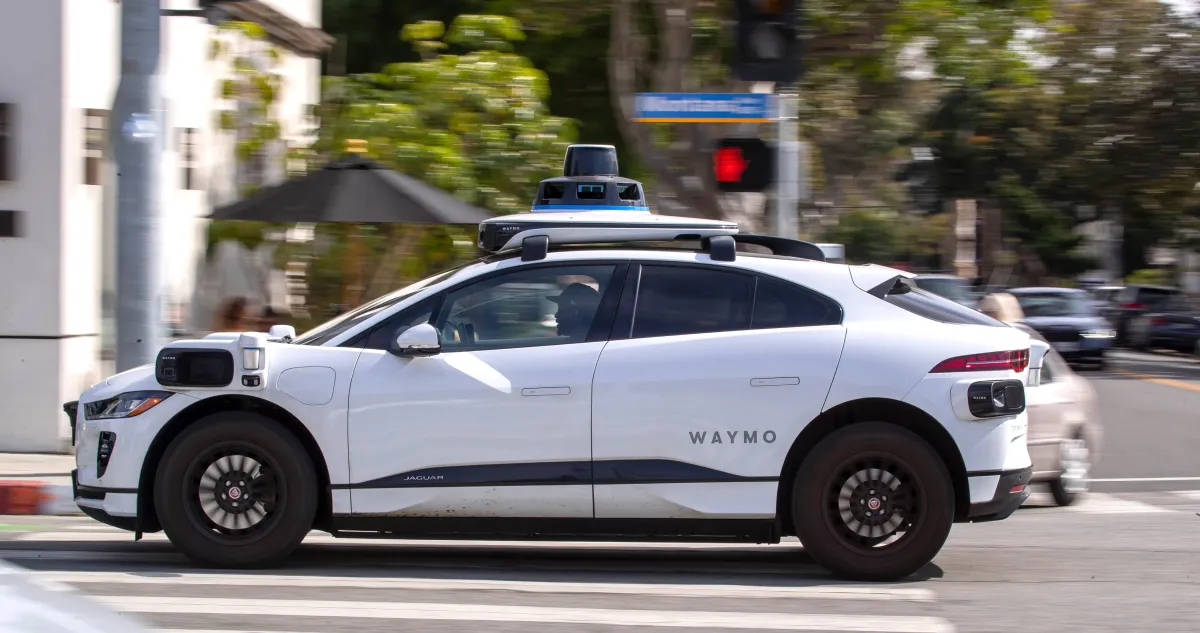
The rapid scaling of robotaxis over the last two years has come with a hidden human cost.
Test drivers for Waymo and Zoox sustained more than two dozen injuries in 2024 and 2025 from hard braking or other sudden movements made by the autonomous vehicles, according to a TechCrunch review of data submitted to the Occupational Safety and Health Administration.
These test drivers, who put autonomous vehicles through their paces on public roads, have suffered sprains, strains, whiplash, and more, according to OSHA data and interviews with former and current workers. Some have been sidelined for weeks or months.
Transdev, which employs and manages Waymo’s test drivers, reported 16 injuries tied to Waymo depot locations in three cities that were caused by the autonomous software braking hard or swerving suddenly. Zoox reported as many as eight worker injuries linked to hard braking.
Other autonomous vehicle companies do not appear in the dataset, though it’s possible they’re exempt. The Zoox and Waymo injuries appear because the companies classify themselves as taxi, limo, or transit services, which OSHA subjects to greater disclosure because they’re “higher-hazard” industries. OSHA also only requires establishments with 100 or more employees in these industries to make this information public, meaning test drivers in newer cities where operations haven’t scaled may have been injured on the job without appearing in this dataset.
TechCrunch was unable to learn whether Waymo or Transdev logged any new injuries in 2026. OSHA does not require companies to submit annual data until the following year as part of the agency’s Injury Tracking Application.
In Zoox’s case, injuries are still happening, according to sources who spoke to TechCrunch on condition of anonymity.
Two current and three former Zoox contractors told TechCrunch that the company’s test fleet vehicles — modified Toyota Highlander SUVs equipped with its self-driving system — were still braking hard and abruptly as recently as July. Three of those contractors said workers are still getting hurt. The workers were granted anonymity to discuss private operations.
Zoox declined to answer specific questions about the injuries it reported last year or the claims contractors made to TechCrunch about the continued hard-braking issues. The company said it follows necessary reporting requirements and takes injuries seriously.
Zoox also said hard-braking incidents are sometimes unavoidable and that the injuries reported last year represent a small percentage of the millions of miles its test fleet traveled.
Waymo also declined to answer questions about the injuries reported to OSHA.
“The safety of our riders, road users, and team is of paramount importance,” Waymo told TechCrunch. “As part of the process of responsibly deploying fully autonomous vehicles, we have driven tens of millions of miles with human operators behind the wheel. This is part of our ongoing validation process and learnings from these trips are integrated into the service.”
Transdev declined to comment.
More miles, more injuries

While Waymo has spent more than a decade developing its self-driving cars, it wasn’t until 2025 that it really started to scale. The company started offering rides in new cities and began mapping and testing in others, growing its commercial fleet to more than 1,500 vehicles by May 2025. Today, that fleet is more than 3,500 vehicles.
Waymo doesn’t break out how many vehicles it uses just for testing. But the amount of autonomous vehicle testing almost certainly increased as the company expanded its service areas and started to familiarize itself with entirely new locations.
Test driver injuries increased, too.
Transdev reported five Waymo test driver injuries in 2024 across San Francisco, Los Angeles, and Phoenix. One was related to hard braking, while the other four were related to erratic vehicle behavior.
In one case, a test driver reported that the car “suddenly backed up” while parking itself and “whipped the steering wheel,” catching his left hand and bending it “to the point he heard a crack in his wrist.” The employee spent more than two months away from work as a result.
The number of injuries jumped to 11 in those three markets in 2025, and hard braking was the cause of nearly all of them. Last September, a test driver in Phoenix wound up having to spend 157 days away from work after their vehicle “made an exaggerated breaking [sic] event without any obstruction.” At least two other injury reports specifically mention that the hard braking happened for no apparent reason.
The only injury report from 2025 that offers a reason for a hard-braking event involved an incident that happened in August in Los Angeles. The employee reported that “some kids were playing in the pathway.” The Waymo robotaxi stopped hard enough that the worker spent 175 days away from their job.
“Software braked harshly”

The Zoox contractors said hard braking — or “brake jabs,” as they are referred to internally — can happen multiple times on a single test drive, sometimes in the same location. They can happen at any speed, though higher-velocity braking incidents typically take a harsher toll on the body, the workers said.
The braking often happens when the autonomous driving system detects — or mistakenly detects — debris of some kind on the road, they said.
The scariest incidents, the contractors said, are when a test vehicle experiences a “nogo” — internal code for an entire system shutdown that often leads to a brake jab.
“You could be going 45 miles per hour and the car will enact a nogo, and suddenly you’re being whipped forward in the middle of the street, in traffic, and you need to be able to take over quickly,” one said.
This behavior shows up repeatedly in the injury reports Zoox submitted to OSHA.
On January 5, 2025, a Zoox test vehicle was driving autonomously in San Francisco when it abruptly slammed on the brakes. The “harsh” stop, as Zoox described it, injured the shoulder and upper arm of a contractor who was inside the SUV, leaving the worker on restricted duty for 16 days.
Later that month, another driver was hurt after a Zoox test vehicle made an “unexpected” stop, injuring their neck and leaving them with a swollen shoulder. It took the contractor eight days to return to work without restrictions.
Most of the Zoox-reported injuries appear to have happened to workers who sit in the driver’s seat of the SUVs. The company also reported an injury to an instructor who trains the test drivers. That injury took place on June 3 in San Francisco, when the test vehicle’s “software braked harshly,” causing the instructor in the back seat to report “sharp pain in lower right ribs and tightness in left shoulder upon returning to base.”
The injured instructor reported additional injuries to the spine and pelvis, though their work restrictions lasted only four days, according to the data.
Seven of the eight entries explicitly mention hard braking, nogos, or brake jabs. The eighth injury involved a worker who was sidelined for the longest amount of time — 46 days — and who reported “extreme back pain” after operating a test vehicle in Las Vegas in May 2025. Zoox wrote that the worker said they “were not sure if it was related to the behavior of the vehicle in autonomy or not but they said it hurts them to drive as well as take deep breaths,” and attributed the injury to a “vehicle maneuver.”
Zoox is dealing with these hard-braking issues as it finally begins offering a true commercial robotaxi service in a bid to compete with Waymo. The Amazon-owned company started charging for rides in its purpose-built robotaxi for the first time this month in Las Vegas. It offers free rides in San Francisco and is testing in Atlanta, Austin, Dallas, Los Angeles, Phoenix, Seattle, and Washington, D.C.
Four of the injuries Zoox reported in 2025 happened after the company issued a recall meant to resolve a year-long federal investigation into the tendency of its autonomous vehicles to brake unexpectedly. Zoox told TechCrunch the recall addressed an extremely narrow braking behavior and said the later incidents — and any resulting injuries — are unrelated to the software fix.
Two of the people who spoke to TechCrunch said that braking can be challenging even when manually driving the Zoox test cars because of the extra weight of the self-driving sensor suite. Test drivers are trained to brake with the extra weight, they said, though they added that minor injuries can be sustained even during that training process.
It’s hard to know if Zoox is experiencing hard-braking incidents with any regularity in its purpose-built vehicles, which do not have traditional controls such as a steering wheel or pedals. They either operate unoccupied or carry passengers who mostly aren’t employees – meaning any injuries wouldn’t be reported to OSHA.
Zoox has reported two robotaxi crashes to the National Highway Traffic Safety Administration in the last eight months in which hard braking for debris resulted in the purpose-built vehicles being rear-ended. The company’s descriptions of the crashes don’t specify what debris was spotted in either case.
When you purchase through links in our articles, we may earn a small commission. This doesn’t affect our editorial independence.
>
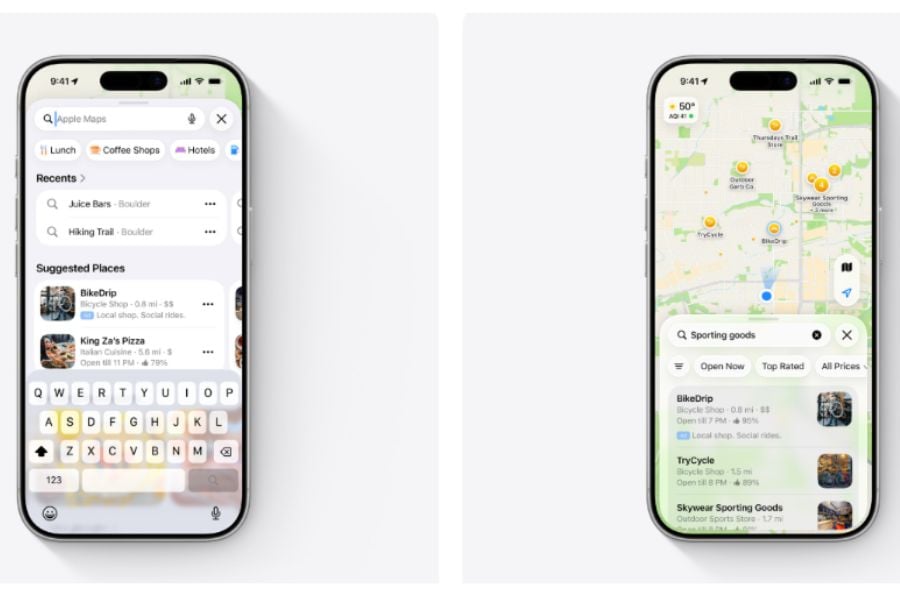
Well, the day many Apple users have dreaded has come. Apple Maps is no longer entirely ad-free.
Apple has begun rolling out sponsored business listings to Maps users in the U.S. and Canada, following plans announced earlier this year to expand its advertising business. Ads can appear before a search and at the top of relevant search results, with a broader rollout expected over the coming weeks.
For iPhone users, the biggest change is simple: sponsored listings are now part of the Maps experience, and there is currently no option to pay to remove them — even for iCloud+ or Apple One subscribers.
Where Apple Maps ads will appear
Fortunately, Apple isn’t flooding Maps with ads everywhere. Instead, the ads can appear in two places within the Maps app.
Before users search, an initial advertisement can appear in the “Suggested Places” section of the search screen. After a user enters a search, a second ad can also appear at the top of relevant search results.
Users will see at most one ad per location, according to 9to5mac. Paid listings are designed to look similar to other business results but carry a blue “Ad” label to distinguish them from organic listings. So while the ads may look similar to regular business listings, watchful users should be able to tell when a business has paid for placement.
Google Maps has offered promoted business listings for years. For Apple Maps users, however, the rollout removes one distinction between the two services: Apple Maps had previously offered an ad-free search experience.
Apple emphasizes privacy
This represents another step Apple is taking to expand advertising beyond traditional placements in services such as the App Store. The company has framed advertising as a business opportunity while attempting to differentiate its approach from competitors by emphasizing privacy.
Naturally, introducing advertising in a mapping app is going to raise some important privacy questions. After all, Maps has access to information about what users search for and where they are while using the app.
Fortunately, the company says Maps advertising will not associate a user’s location or the ads they see and interact with their Apple Account. Apple also says personal data stays on the user’s device and isn’t collected or stored by Apple or shared with third parties.
Users may still see ads based on their approximate location, current search terms, or the part of the map they’re viewing. But Apple says that this advertising information isn’t linked to users’ Apple Accounts.
Some Apple Maps users are unhappy
Of course, the ads have already attracted some criticism from Apple Maps users.
Initial reactions reported online have included complaints that advertising makes Maps less appealing and comparisons with Google Maps, particularly among users who previously preferred Apple Maps for its ad-free design.
Some responses have even included users saying they will switch to Google Maps, while others have questioned why they should continue using Apple Maps now that it has ads.
Another important thing: unlike some paid digital services, users cannot currently pay to remove the Maps advertisements. That means even users who pay for services such as iCloud+ or Apple One can’t remove the sponsored listings, either.
Now, does this really mean that Apple Maps is about to lose a huge number of users? Well, the impact on the app remains unclear. While some users might consider switching, ads alone are unlikely to determine everyone’s choice. Furthermore, Apple Maps is also deeply integrated into the iPhone and Apple’s broader ecosystem, which could make a wholesale switch less likely.
Still, the move for Apple is a risk. Ads might generate another stream of revenue for the company, but they also significantly change an experience that many users had come to expect.
What the ads mean for businesses
On the flip side, the rollout creates an immediate new advertising channel for businesses. For them, Maps ads could be a useful new way to reach potential customers.
A restaurant, retailer, or other local business can pay for a prominent position when people are looking for places to visit. Appearing near the top of a Maps search could allow advertisers to reach potential customers when they are actively looking for a particular type of business.
Apple has already opened Maps ad booking and is offering a promotional deal for businesses interested in trying the new placements, helping them compete for attention at the top of local search results.
Must-read Apple coverage
Apple’s growing advertising business
As the rollout continues, it points to Apple’s broader push to integrate advertising across its ecosystem. The company already sells ads across various parts of its business, including the App Store. Maps gives it another place to generate advertising revenue.
It will be interesting to see whether Maps advertising will remain relatively limited or eventually become a much larger part of the experience, and how this will impact customer response.
For now, the rollout remains relatively limited: sponsored listings are clearly labeled and appear only in specific parts of Maps. The bigger question is whether Apple keeps that footprint small as its advertising business expands — or whether ads gradually become a more visible part of using an iPhone.
Other News: Google has introduced pay-as-you-go pricing, spending caps, and savings plans for Gemini Enterprise to help businesses better control the unpredictable costs of AI agents.
>

Ring has a new answer to a difficult security-camera trade-off: keeping cloud-powered intelligence without retaining long-term access to the keys that unlock customers’ videos.
The Amazon-owned company announced TAKE, or Throw Away the Key Encryption, on Aug. 26. A phased rollout begins in September 2026, with Ring planning to make the system its default encryption worldwide while retaining cloud-dependent features such as intelligent alerts, video descriptions, and search. End-to-end encryption will remain optional.
How Ring TAKE limits access to video
Under Ring’s TAKE system, recordings use unique, rotating encryption keys. Ring temporarily holds a copy inside a secure cloud enclave so enabled services can process footage, then deletes that copy.
Ring already encrypts video in transit and at rest. Its privacy documentation says TAKE limits retention of video encryption keys to 24 hours. After deletion, the customer and authorized Shared Users retain the keys on enrolled devices.
Optional end-to-end encryption goes further by preventing Ring from accessing encrypted content. It also disables Shared User video access and numerous cloud-dependent features, including Video Search and Video Descriptions.
The tension between encryption and cloud processing extends beyond home cameras. Organizations face similar questions around encrypted cloud data and lawful access, while flaws in cloud-connected security cameras have highlighted the risks attached to remotely managed video.
TAKE also affects what Ring says it can provide to authorities. The company responds to legally valid government demands, including search warrants, subpoenas, and court orders. Ring’s privacy policy says that when TAKE or E2EE protects footage, the company can provide non-video information but not the protected recordings. Users can still choose to share footage themselves.
Ring Verify and Ring Pro add another layer
TAKE arrives as Ring expands the intelligence attached to its cameras. The company’s 2026 subscription changes renamed AI Pro as Ring Pro. Intelligent features include Video Descriptions, Familiar Faces, Unusual Event Alert, Active Warnings, Single Event Alert, and Video Search.
Availability varies by device, subscription, language, and location. Amazon said Aug. 26 that Video Descriptions expanded to more regions, while some intelligent features remain restricted in certain jurisdictions.
Ring Verify addresses the integrity of exported footage rather than who can decrypt it. Ring’s verification documentation says downloaded or shared cloud videos carry a digital security seal. A verified result means the file has not changed since download.
A failed check does not prove a clip is fake. Cropping, trimming, brightness changes, filters, or compression can break verification. Videos recorded with E2EE are also incompatible with Ring Verify and return “not verified.”
Organizations using Ring footage for investigations or evidence should account for both controls when setting encryption, export, and retention policies.
Read more: Ring’s evolving privacy posture also includes its decision to drop a planned Flock Safety integration after concerns over surveillance and access to camera footage.
>
Snapchat says it is suitable for teens as young as 13, but Pennsylvania now alleges the app’s content and design tell a very different story.
The state’s attorney general has sued the social media company, alleging Snapchat uses disappearing content, Snapstreaks, notifications, and other engagement features that encourage compulsive use among children. Pennsylvania says these mechanics can create a cycle in which young users return repeatedly because they fear missing content, losing a streak or falling behind socially.
The lawsuit also challenges Snapchat’s 13+ age rating, alleging that the company does not accurately reflect how often younger users encounter mature material.
Together, the claims put both sides of Snapchat’s teen experience under scrutiny.
Why Pennsylvania says Snapchat’s teen safeguards fall short
App store ratings and labels are intended to be a quick way potential app users, and in this case, parents, can check how suitable an app aligns with their needs and preferences. That means such labels should always be accurate.
However, the Pennsylvania judiciary has found that Snapchat’s age ratings and the app’s actual behavior are miles apart.
According to the court filing, an investigator working with the Pennsylvania attorney general’s office created a Snapchat account for a fictional 13-year-old and tested the content a minor could encounter on the platform. According to the complaint, the investigator encountered frequent and intense profanity, drug and alcohol references, sexual content and other mature material despite Snap maintaining a “T for Teen” rating in Google Play and Microsoft’s store and a 13+ rating in Apple’s App Store, The Next Web reports.
But Pennsylvania’s case does not stop at what Snapchat shows children. The case also aims to show how the platform keeps them coming back.
The complaint alleges that disappearing content, infinite scrolling, push notifications, autoplay, Snapstreaks and Snapscores create repeated-use loops that can encourage compulsive behavior among young users.
Snapchat has a defense; the courts have the decision
A Snapchat spokesperson told Fox Business in a statement that Snapchat was designed differently from the beginning, opening to a camera rather than a content feed and focusing on self-expression and connections between friends.
The statement also noted that Snap shares the attorney general’s goal of protecting young people online but is disappointed that Pennsylvania chose to pursue litigation rather than work with the company.
The dispute will now move forward in the Philadelphia Court of Common Pleas. Pennsylvania is asking the court to declare the alleged practices unlawful, impose temporary and permanent injunctions, and levy civil penalties for willful violations, along with legal costs and other relief.
The court will ultimately determine whether Snap’s practices violated that law and whether the state is entitled to the remedies it is seeking.
Earlier this month, a US appeals court allowed more than 3,000 lawsuits against Meta, Google, TikTok and Snap over alleged addictive platform design to proceed. Separately, a recent Meta settlement with dozens of states could force sweeping changes to how the company handles young users.
Australia has gone even further, imposing a ban that prevents children under 16 from holding accounts on social-media platforms.
The policy, which took effect in December 2025, has since helped trigger a wave of regulations and proposals aimed at limiting children’s access to social media across age groups. Governments are increasingly targeting features such as endless feeds, feedback systems and disappearing content that can encourage prolonged or repeated use.
What this means for Snapchat users and parents
For parents and younger Snapchat users, the Pennsylvania case is worth watching because its impact could extend beyond warning labels and app-store ratings. If the state succeeds, Snap could face pressure to change how it presents Snapchat to younger users, how it handles mature content, or how some of its most popular engagement features work for teen accounts.
That could put features such as Snapstreaks, disappearing content, autoplay, and frequent notifications under greater scrutiny. These are familiar parts of the social media experience, but regulators are increasingly questioning whether platforms should be allowed to use the same engagement mechanics for children as they do for adults.
The case could also contribute to a broader shift in how social-media companies verify ages and design accounts for younger users. Parents and teens may eventually encounter stronger age checks, expanded parental controls, different default settings, or restrictions on features intended to encourage repeated use.
For now, Snapchat’s existing features remain in place, and Pennsylvania’s allegations must still be tested in court. But the outcome could help determine how much responsibility social-media companies have for designing a fundamentally different experience when the person behind the screen is a child.
Also read: Meta was ordered to pay $567 million and overhaul teen protections as courts put more pressure on social media companies over how their platforms affect young users.
>

‘Adults’ Season 2 Review: Hulu Series Gets a Much-Needed Growth Spurt

‘Heat 2’ Movie Taps Odessa Young To Play Charlene

Tight end Jonnu Smith agrees to deal with Green Bay Packers: Source
-

 movies3 months ago
Search For Canadian TV Actor Stewart McLean Now Homicide Investigation
-

 Fashion9 years ago
These ’90s fashion trends are making a comeback in 2017
-
Fashion9 years ago
According to Dior Couture, this taboo fashion accessory is back
-
Fashion9 years ago
Model Jocelyn Chew’s Instagram is the best vacation you’ve ever had
-
Fashion9 years ago
Emily Ratajkowski channels back-to-school style
-
Fashion9 years ago
9 Celebrities who have spoken out about being photoshopped
-
Fashion9 years ago
Your comprehensive guide to this fall’s biggest trends
-

 Anime3 months ago
Rurouni Kenshin: Hokkaido Arc Manga Takes 1-Issue Break – News