
movies
2026 Sound & Screen Television Streaming Site Launches


Deadline on Monday launched the streaming site for Sound & Screen Television, its annual awards-season showcase of the best of TV music.
The event, which took place May 6 at UCLA’s Royce Hall, featured composers and songwriters from 11 buzzy shows discussing their craft and showing of their scores and songs with the help of a full orchestra in front of a crowd of industry voters.
This year’s edition welcomed composers Finneas O’Connell from Beef and Chris Bacon from Wednesday, both from Netflix; Christopher Lennertz and Matt Bowen from The Boys and Tyler Strickland from John Candy: I Like Me, both from Prime Video; Breton Vivian from Paramount+’s The Madison; Amanda Jones from Murderbot and Siddhartha Khosla from Imperfect Women, both from Apple TV; Jeff Beal from Peacock’s All Her Fault; and Jeff Russo from FX’s Alien: Earth.
Songwriters who joined in included co-writer David Archuleta, co-writer/singer Sophie Rose and co-writer/producer Michael Blum from Hulu’s Only Murders in the Building, and composer-songwriter Gavin Brivik and songwriter Andrew Bird performing the first original song from HBO Max’s Emmy-winning The Pitt.
Deadline’s latest awards-season installment follows last month’s live, 29-show strong Contenders Television, and before that Contenders Television: Documentary. Up next: Contenders Television: Documentary + Unscripted, a virtual presentation May 30.
>
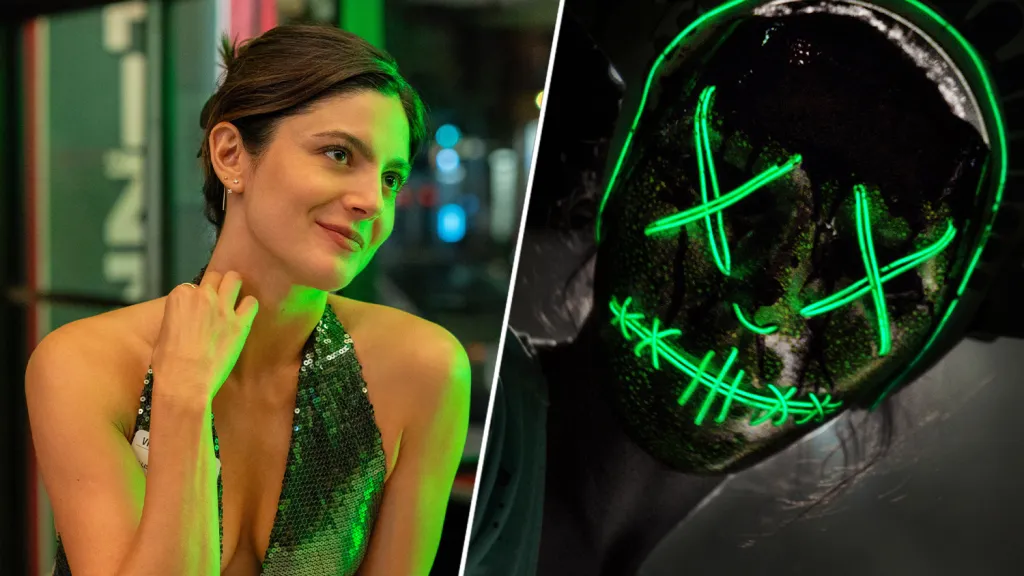
While One Night Only is intended as a romantic-comedy, there are some obvious dystopian undertones that audiences can’t ignore.
Director Will Gluck recently addressed online comparisons between the Purge franchise and his new Universal rom-com, which is now in theaters, about two New Yorkers (Monica Barbaro and Callum Turner) who meet on the one night a year premarital sex is legal.
“I am very aware of the online discourse about this world and this movie being the ‘sex Purge,’ and rightfully so,” he told SlashFilm. “But I don’t want this movie to be about that. And I know I get some blowback going, ‘How could you make a movie about this not being about that?’ Because I love exploring characters and situations.
Gluck added, “Whenever us humans get put in situations, no matter how or why the situation happens, we still have to be humans and get through the day. And that’s what interests me. So we didn’t want it to overwhelm. We wanted to explain it. We didn’t want to take a side. We wanted to show both sides, but we wanted it to be about these two people going through this crazy night.”
With five movies and a TV series expanding on the universe since The Purge premiered in 2013, the Blumhouse franchise is set in an alternate reality where all crime, including murder, is legal one night a year for 12 hours.

In a similarly dystopian fascist universe, albeit with a much lighter mood, One Night Only follows recently dumped pizzeria owner Owen (Turner) and singer Allie (Barbaro) meet on the one night of the year premarital sex is legal under the United States’ “chastity mandate.”
>

HBO’s new documentary series Monsters of God abounds with colorful creatures – and those are just the humans.
The five-parter from Tiger King co-director Eric Goode features reptile dealers with a fondness for creepy crawlies and a loose connection to ethical and legal mores. There’s Tom Crutchfield, who loves women with the ardor of Pepé Le Pew but spends most of his time not in pursuit of the ladies but of exotic snakes, lizards, alligators, turtles and whatnot. His arch rival: Hank Molt (aptly named, given that snakes molt), a man who pioneered the shady trade of importing rare and often endangered reptiles to the United States (HBO calls it a “billion-dollar criminal enterprise.”).

Another key Monsters of God character: Anson Wong, a Malaysian “exporter” (to use a polite term) perhaps as cold-blooded as the creatures he rounds up and dispatches around the world. His nickname – “the Pablo Escobar of reptiles.”
The template for the series is supplied by the 2008 book The Lizard King: The True Crimes and Passions of the World’s Greatest Reptile Smugglers, written by Bryan Christy. The author, who appears in the series and serves as a consulting producer, took part in a panel discussion of Monsters of God Thursday night after HBO screened episode 1 at Vidiots in Los Angeles. He praised Goode and fellow producers for wrangling the reptilian importers, typically a wary group.

“I know what it took to run these people down, to get people to say ‘yes’ to you coming in their place,” Christy told the moderator, the actor Jason Segel. “And with a camera. I just had a pencil… It’s amazing what they brought together. And they’re celebrating the animals in a way that I hope gets people to care more about this sort of maligned species.”
Goode needed no persuading about the beauty of animals like New Caledonian geckos, African bush vipers, Caribbean rock iguanas, and similar Cyclura. He’s been an avid collector since childhood.

“I have a confession to make,” he said at the Q&A, alluding to his collecting urge. “I’ve been an addict for over 50 years and now I’m still not sober, sorry to say.”
The challenge of convincing reptile dealers to appear on camera became evident during the panel discussion, which included Crutchfield and Mike Van Nostrand, both Florida men who have served time behind bars for their activities (in 2022, Van Nostrand was convicted in a scheme to smuggle “illegally-harvested Florida turtles out of the United States and into China, Japan, and other places,” per the Department of Justice).
“I didn’t like the Tiger King,” Van Nostrand stated flatly. “Eric was a little tricky one.”
For his part, Crutchfield called Tiger King “one of the weirdest movies I’ve ever seen.”

Along with Tiger King, Goode also directed the 2024 HBO documentary series Chimp Crazy about people obsessed with raising chimpanzees as essentially human children. At the Q&A, he addressed contrasts between Tiger King, Chimp Crazy, and Monsters of God.
“Right now, a lot of people are thinking I’m trying to take down the reptile world,” Goode said of Monsters of God. “Yes, I didn’t like people keeping chimpanzees in Chimp Crazy. I wanted laws changed so you couldn’t do that. I didn’t want people having 200 tigers in their backyard [in Tiger King]. Reptiles are different. It’s nuanced. And as Mike [Van Nostrand] says, if people were breeding more reptiles that may take pressure off of the poachers. And so there’s a lot of gray in this story and it’s not painting anyone with one brush. Law enforcement made a lot of mistakes. We’ve made mistakes. The zoos made big mistakes and we’re all complicit.”

Zoos are complicit, the series makes clear, by paying dealers like Molt and Crutchfield to supply them with exotic reptiles knowing full well the wranglers were violating U.S. and international law. Federal officials with the U.S. Fish and Wildlife Service don’t seem to come off much better, to judge from episode 1. Nobody’s motives seem 100 percent pure in Monsters of God, self-assessments notwithstanding.
“What I really want people to get out of my complete performance from the very beginning to the end,” Crutchfield asserted at the Q&A, “is my great passion and my great love, and more importantly, my great respect for all of these monsters of God that you’re going to see.”
Van Nostrand chimed in sardonically, “Are you saying money had nothing to do with it?”
“So far,” Crutchfield replied.
Fresh episodes of Monsters of God will debut on HBO the next four Thursdays, and stream on HBO Max. Audiences may get hooked, mirroring the obsessional quality of true lizard people. Jason Segel, for one, pronounced himself a fan of the series.
“At times it feels like Goodfellas. It feels like Scarface sometimes,” Segel enthused at the Q&A. “I watched every episode over two days and was mesmerized. I can’t wait for all of you guys to see it.”
>
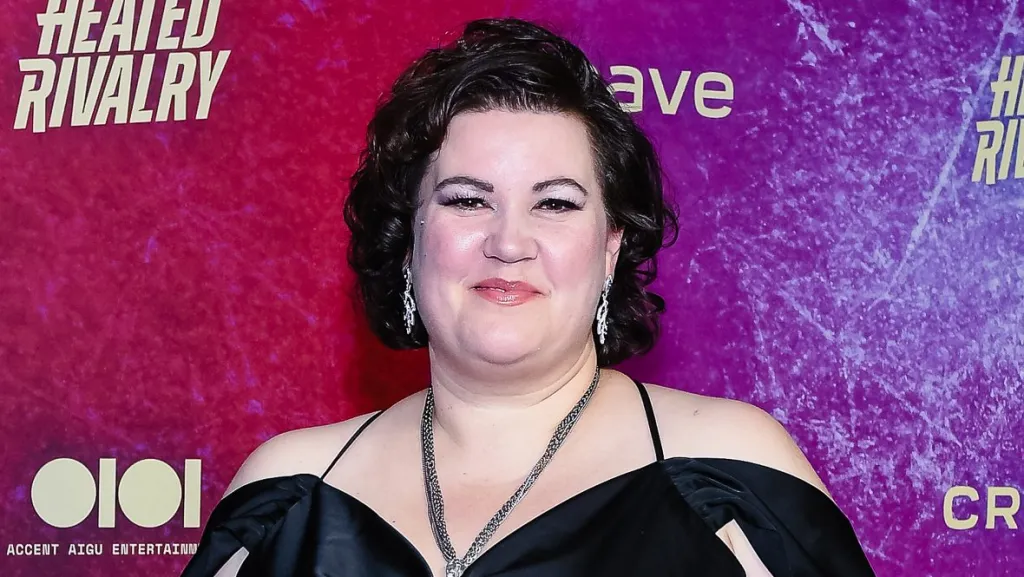
As Heated Rivalry hits the ice for another season with some new teammates, there’s bound to be some opinions about the casting choices for the book series’ beloved characters.
Following the news that Justice Smith and Charlie Gillespie have been cast in Season 2, author Rachel Reid appeared to respond to negative online reactions to the news that the actors will portray Harris Drover and Troy Barrett, respectively, the couple from Role Model, the fifth book in her bestselling Game Changer series.
“Thinking about all the people last summer who told me the casting for llya and Shane was wrong and bad…” wrote Reid on her Instagram Story with a side-eye selfie.
Based on the second book in the series, Season 1 of Heated Rivalry became an overnight hit largely due to Connor Storrie and Hudson Williams’ steamy performances as Ilya Rozanov and Shane Hollander, launching the actors’ profiles in Hollywood as well.
On Friday, Deadline reported that Smith and Gillespie have been cast as leads in Season 2 of the Crave Original, which is set to premiere in spring 2027. Production began on the sophomore season in Canada earlier this week.

In the Role Model book, Troy Barrett is a hockey player on Ilya’s team with a history of bullying, while Harris Drover is the team’s cheerful social media manager.
“Rachel Reid has given us two beautifully layered characters in Harris and Troy who you can’t help but root for,” said series creator Jacob Tierney and fellow executive producer Brendan Brady. “From the start of the casting process, we knew we were looking for actors who could create something truly special together and bring that same depth and heart to the screen. Justice and Charlie do exactly that. They immediately connected with the vulnerability and resilience at the core of these characters, bringing an instinctive understanding of who Harris and Troy are.”
>

How to watch Orioles vs. Rangers: TV channel and streaming options for August 8

How to watch Storm vs. Fire: TV channel and streaming options for August 8

How to watch Rays vs. Mariners: TV channel and streaming options for August 8
-

 movies3 months ago
Search For Canadian TV Actor Stewart McLean Now Homicide Investigation
-

 Fashion9 years ago
These ’90s fashion trends are making a comeback in 2017
-
Fashion9 years ago
According to Dior Couture, this taboo fashion accessory is back
-
Fashion9 years ago
Model Jocelyn Chew’s Instagram is the best vacation you’ve ever had
-
Fashion9 years ago
Your comprehensive guide to this fall’s biggest trends
-
Fashion9 years ago
9 Celebrities who have spoken out about being photoshopped
-
Fashion9 years ago
Emily Ratajkowski channels back-to-school style
-
Fashion9 years ago
A photo diary of the nightlife scene from LA To Ibiza