
Sports
What we learned from the Commanders’ preseason win over the Dolphins

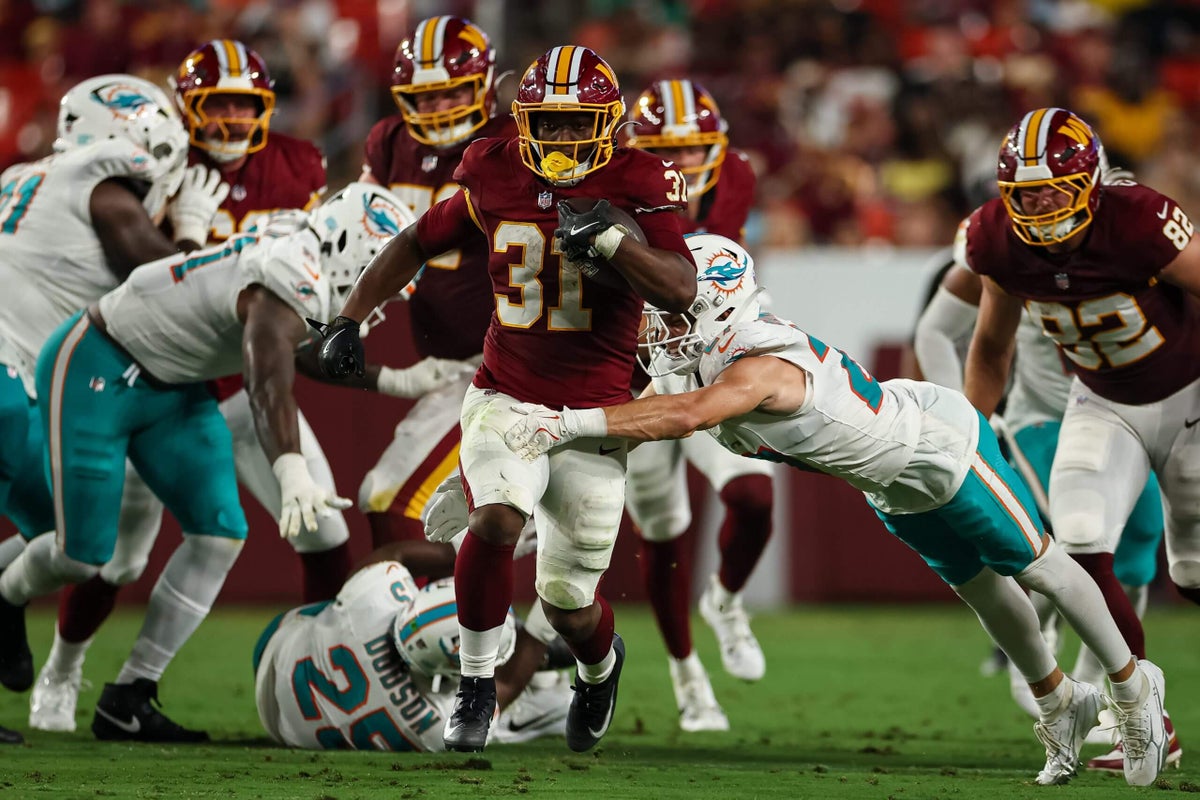
LANDOVER, Md. — Consider this the ramp-up period. The Commanders opened their preseason on Friday with a 20-7 win over the Miami Dolphins, a rebuilding team sorely lacking talent and depth on both sides of the ball.
The win may not directly foreshadow the Commanders’ season ahead, but there was plenty to glean as coach Dan Quinn and general manager Adam Peters continue to evaluate the roster.
Quinn has stressed competition throughout camp (and, really, throughout his two-plus seasons in Washington), but many starting jobs are clearly taken, leaving the uncertainty primarily with the reserves.
Washington sat 26 veteran players, most of whom are locks to start this season. Quarterback Jayden Daniels was among them, as were veteran receivers Terry McLaurin and Stefon Diggs.
The focus was on the twos and threes (and at some positions, the fours, fives, sixes and sevens) battling for roster spots. Here’s what we learned from the Commanders’ preseason opener.
Commanders feeling whiplash with addition of Diggs, loss of Tunsil
Nicki Jhabvala
Marcus Mariota got hurt
Washington’s backup quarterback was slated to play only one drive , but he left four plays into it with an apparent non-contact injury.
Mariota went down after handing the ball off to rookie running back Kaytron Allen on a first-and-10 from Miami’s 47-yard line. Mariota pointed to his right knee as athletic trainers ran onto the field, but he quickly popped up and walked off on his own.
Mariota was briefly examined in the medical tent, then walked back to the locker room with assistant head athletic trainer Mark McCracken.
Quinn said after the game that he did not have an update on Mariota’s status (teams are not required to disclose injuries in preseason) but expects to know more in the next couple of days. The team’s next practice with media availability is Tuesday.
Sam Hartman took over for Mariota and played the remainder of the first half, plus the first drive of the third quarter, before turning the offense over to undrafted rookie Athan Kaliakmanis. Hartman was 5-of-8 passing for 80 yards with one interception, while Kaliakmanis was 6-of-10 for 87 yards. Neither quarterback threw a touchdown.
A slow start but a quick rebound
The Dolphins opened with a 14-play, 93-yard scoring drive — after muffing the kickoff and getting flagged for holding on the return. It was hardly the showing Washington hoped for after overhauling its defense in the offseason.
The Commanders’ defensive line featured all reserves, but Sonny Styles and Leo Chenal started at linebacker, and the secondary included safeties Will Harris and Quan Martin, along with veteran corner Rasul Douglas. That they couldn’t stop a Miami team lacking in playmakers and depth was alarming, but Washington quickly regrouped.
After their opening score (a one-yard run by De’Von Achane), the Dolphins never made it past Washington’s 45-yard line and ended their subsequent drives with a turnover on downs, an interception, six consecutive punts and two interceptions.
Defensive tackles Johnny Newton and Ricky Barber stuffed quarterback Quinn Ewers on a fourth-down run in the first quarter, then Quan Martin picked him off for the first of Washington’s three interceptions. Linebacker Ale Kaho and safety Malik Spencer had the others.
Cornerback Antonio Hamilton also bounced back after getting flagged for pass interference on Miami’s scoring drive (the penalty was declined). He landed a huge hit on Jalen Reagor during a kickoff return, then knocked the ball loose when he hit Tahj Washington on a pass play in the final seconds of the first half.
Hamilton is among the corners fighting for a spot that may or may not exist on the initial 53-man roster. The top four at the position are presumably Trey Amos, Mike Sainristil, Amik Robertson and Douglas. If Washington keeps a fifth corner, or if injury necessitates a replacement, Hamilton may have a shot.
The young backs shined
Jacory “Bill” Croskey-Merritt, Rachaad White and Jeremy McNichols (quad injury) were all inactive, leaving Washington’s run game primarily in the hands of its two rookies, Kaytron Allen and Robert Henry Jr. And they didn’t disappoint.
Allen, a sixth-round draft pick, collected a game-high 85 rushing yards on 23 carries, including a one-yard touchdown run with 11 seconds left in the second quarter.
Allen began the game with a handful of short runs, but he broke free for a 16-yard carry late in the second quarter. The spark, he said, was watching his fellow rookie break away for Washington’s first touchdown earlier in the quarter.
“When Rob got a little run, I feel like he got me going,” Allen said. “Seeing him get one made me get one.”
Henry, an undrafted back out of UTSA, displayed his shiftiness, patience and vision behind the line, totaling 75 yards on 12 carries for an average of 6.3 yards per carry. Half of his yardage came on two runs in the second quarter, when he weaved through the middle of the line for a 15-yard gain, then capped the drive with a 22-yard touchdown run. Henry took the handoff from Hartman, faked going inside, then cut right and sprinted up the sideline for the score.
Henry also returned a kickoff 30 yards at the start of the third quarter.
His play Friday night was reminiscent of his final season at UTSA, when he topped 1,000 rushing yards and averaged 156 in the first four games.
“I liked the backs,” Quinn said. “They’re in shape. They were focused. They were ready. And like I said, when they came out to be a little shorthanded, there was no flinch. That was a good sign to me.”
Quan Martin has a strong showing
The Commanders’ initial depth chart, which Quinn joked is as valuable as preseason rankings, lists Jeremy Reaves and Martin as co-No. 1s at free safety.
Reaves was among the 26 inactive players on Friday, while Martin played the entire first half.
Martin’s place on the roster remains uncertain, despite starting 32 of the Commanders’ last 34 games. Last season, he had a 154.6 passer rating against, the fourth-highest among NFL defenders with at least 200 coverage snaps. He also missed 15 tackles, the second-most on the Commanders behind Frankie Luvu’s 21.
Martin was benched in the team’s Week 11 loss to the Dolphins in Madrid, and logged only six defensive snaps in the team’s season-ending loss to the Philadelphia Eagles.
Washington signed veteran safety Nick Cross as a free agent in March and has another year with Will Harris. Tyler Owens and Percy Butler are also back and, like Reaves, have been core special-teamers for Washington.
To say Martin needed a strong showing on Friday would be an understatement. He delivered, with a body-slamming tackle of Achane during Miami’s first drive, then the interception on a third-and-7 early in the second quarter.

Commanders safety Quan Martin celebrates after securing an interception in Washington’s preseason win over the Dolphins. (Scott Taetsch / Getty Images)
“I think in this profession, in life, I think we all kind of go through some things, but it’s all about our response, man,” he said. “I think I responded great, and I just kind of know what I want out of this season, and now I just want to have an impact on the team.”
Quinn said Reaves and Cross are expected to play in the second preseason game, and indicated it’s possible Martin will be inactive or take fewer defensive snaps.
A little bit of Style
First-round rookie Sonny Styles started and played only one series — the 14-play, 93-yard scoring drive by Miami. Styles’ sample size was miniscule, but he had a run stuff and flashed his speed. He also wore the green dot, as the on-field quarterback of the defense tasked with relaying plays in the huddle.
Styles said he and Chenal asked to play another series to flush the 14-play scoring drive by Miami, but Quinn didn’t veer from his plan.
Drew Stevens still leads
The undrafted rookie Stevens and incumbent kicker Jake Moody are still competing and alternated kicks and kickoffs on Friday. Although they had a field goal apiece, Stevens seems to have a strong lead over Moody, who has had a slew of misses in recent training camp practices.
Moody doinked a 29-yard attempt off the upright, but the ball went through. Stevens booted a 41-yarder and nailed an extra-point attempt.
Put 5 on it
I honestly thought I’d see way more of these jerseys at Northwest Stadium after Daniels dominated headlines because of the cease-and-desist letter he sent to LSU earlier this month. But nope. Just saw this guy.
Change of tune
Over the three years since Josh Harris and his group of 20 limited partners purchased the team from former owner Dan Snyder, the Commanders have paid tribute to the team’s past through nearly every facet of the organization, from the latest uniform change to the design of its future stadium in D.C. Last year, the team introduced a pregame show that aired in the stadium before kickoff and attempted to create more of an identity for the Commanders name, which it adopted in 2022 after 87 years as the Redskins.
During the rebranding process, former team president Jason Wright wrote on the team’s website that engaging with Native American leaders and individuals “demonstrated to us a consensus that moving forward with no ties to Native American imagery is the right path.” Although some fans preferred the nickname Warriors as a replacement for Redskins, Wright said that “an embrace of potentially Native-adjacent iconography and imagery would not represent a clear departure that many communities have so forcefully advocated for us to embrace, and that frankly, we set out to do when we started this process …”
But on Friday, the team not so subtly restored one piece of Native-adjacent imagery by restoring the line “Braves on a warpath” to its fight song. The line had been replaced with “Fight for our Commanders” after the name change.
The team changed the fight song lyrics back to say “Braves on the Warpath”.
The song sounds almost identical to the old one now. 🫡#RaiseHail pic.twitter.com/q1R6VCcKIv
— Chris Bryant (@HogfarmerChris) August 15, 2026
>
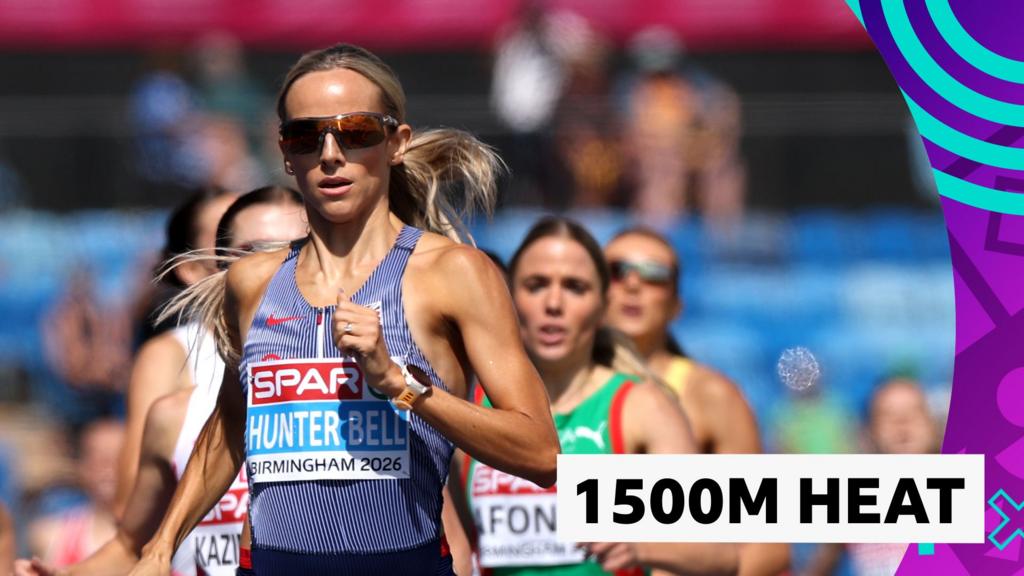
Georgia Hunter Bell wins her heat and is the only Brit to qualify for Sunday’s women’s 1500m final at the European Athletics Championships in Birmingham.
>
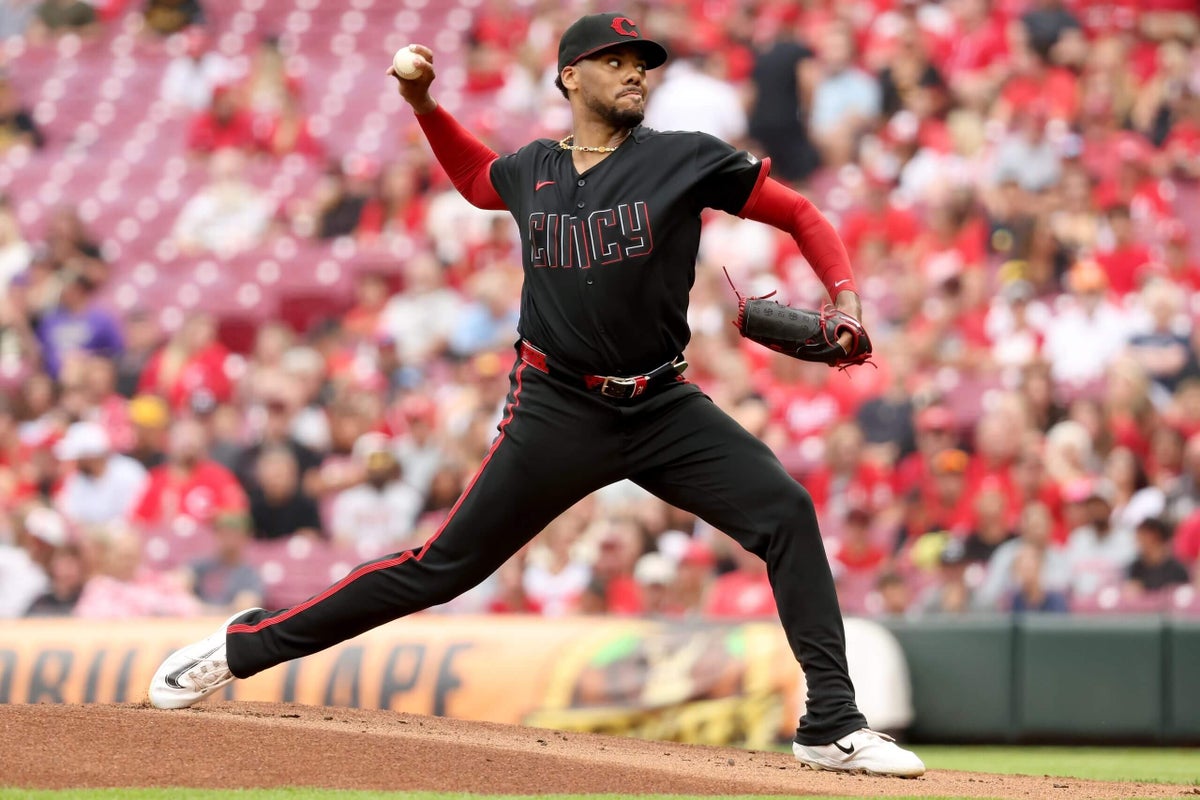
CINCINNATI — During the Cincinnati Reds’ last homestand, reliever Tejay Antone placed a hardback copy of his book, “The Tommy John Protocol,” on the chairs of each and every one of his teammates and coaches.
It was a gesture of goodwill, but since then, two teammates have undergone elbow surgeries: right-hander Hunter Greene and outfielder Blake Dunn.
Greene underwent his second Tommy John surgery Wednesday and could miss the 2027 season.
The success rate of players returning from a second Tommy John is not as high as those who have the procedure once, but the road back isn’t impossible. Greene doesn’t have to look farther than across the clubhouse at Great American Ball Park, where Antone’s locker resides.
In the unlikely event Greene didn’t know that Antone was there for him, the 32-year-old reached out to Greene this week.
“It’s not fun when you just get the news and you have to (undergo surgery) right off the bat and you’re in a really dark and not fun spot,” Antone said. “You want to be helping the team, and you’re not. You’re just broken. So I just reached out to him with some words of encouragement.”
Why are baseball catchers getting hit in the… groin so much more often?
Tifo Sports
Most big-league clubhouses are littered with guys who bear an inches-long scar on the inside of their throwing elbow, signifying their membership in the ever-expanding club of players who have had the surgery first performed by Dr. Frank Jobe on John in 1974. Antone joined the club as a minor leaguer in 2017, the year the Reds took Greene with the second pick in the draft out of a California high school.
Greene’s membership came in 2019, missing all of that season before he made his big-league debut in 2022. Antone, who debuted in 2020, underwent his second Tommy John surgery in 2021 and returned in 2023. Antone went under the knife for another revision of his elbow surgery in 2024.
Antone wrote his book while he was rehabbing from the third surgery on his elbow, in part to fill time, but also as a way to let it be known that not only is Tommy John surgery not a career-ending procedure, but also that a second or third operation doesn’t have to be one, either.
“There was no manual out there for me or for anyone,” said Antone, who is also having the book translated into Spanish. “Everyone has their own way of doing it. Every team has their own philosophies around it. I am not even saying my philosophy is the best, but I just wanted to provide something for even just high school kids, college kids that maybe don’t have the best direction of how they’re going to do it or the approach they’re going to take.”
Being a pitcher such as Greene, who has already had the surgery, presents its own set of challenges, Antone said.
“As an athlete, having gone through something like that before, you feel immediately like, ‘Oh, I’ll be able to do this one easier,’ or ‘I’ll be able to do it quicker,’” Antone said. “And it’s almost the opposite case, where you have to really take your time and just really slow down even more than you want to.”
Greene has been on the injured list in each of his five big-league seasons and started this season on the IL after March surgery to remove loose bodies from his right elbow. That surgery, like both of his Tommy John surgeries, was performed by Dr. Neal ElAttrache in Los Angeles. Greene will remain in Los Angeles for his first postoperative checkup with ElAttrache, then transfer his rehab to the Reds’ facility in Goodyear, Ariz., which Antone calls “home of the 115-degree summer.”
Antone’s experiences with Greene rehabbing at the same time give him confidence that Greene has as good a shot as anyone to come back after a second surgery just as strong as he was.
“He’s a workaholic — he loves showing up every day on time, doing the things that matter,” Antone said. “Honestly, anyone who plays at this level knows how to do that. That’s one of the foundations of returning from anything. I have all the hopes that Hunter’s going to return better than he was before.”
>
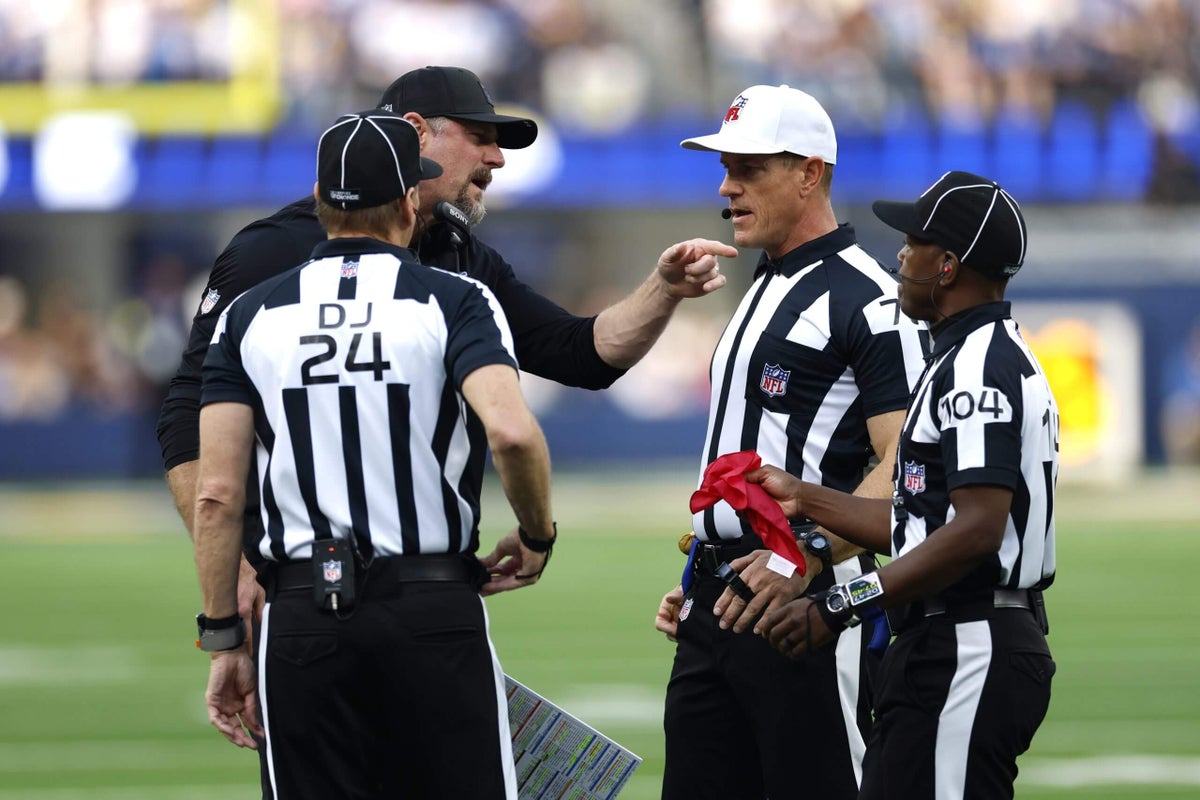
The NFL is changing its challenge system this season. Maybe instead, it’s time to challenge the challenges.
For the first time since the red flag challenge system was introduced in 1999, head coaches can now designate an assistant coach or staff member as the official flag bearer. It’s reasonable to wonder why we need them at all.
Before the two-minute warning, coaches have exclusive authority to force formal reviews over many ordinary plays. After the warning, that authority flips: coaches are barred from challenging, and the replay official alone decides what deserves another look. If the league trusts the booth when the stakes are highest, why not use the same system for the other 28 minutes?
When coaches first began tucking red flags in their socks and were instructed to throw them on the field whenever they were unhappy with the officiating, the world was panicking over a potential Y2K computer crash. That’s how long we’ve been doing this. Former coaches like Dick Vermeil, Ray Rhodes, Bruce Coslet and Mike Ditka were carrying red flags long before dating apps turned them into pop-culture slang.
Roger Goodell on technology and officials
Mike Jones
A lack of technology may have made them necessary back when replay review was antiquated and cumbersome. We have reached an age when NFL replay officials in New York can monitor every available broadcast angle from every game across the country within seconds.
Regardless of who is throwing the flag, the NFL requires teams to spot a mistake, grab a handkerchief, find an official before the ball is snapped again and wager one of their timeouts against whether the referees got a call wrong.
Coaches have essentially become trial attorneys: File the right motion, at the right time and on the correct grounds, or have the entire case thrown out.
Detroit Lions coach Dan Campbell correctly believed the Los Angeles Rams’ Colby Parkinson was down at the 4-yard line in a December game last year and challenged the spot when officials instead placed the ball at the 3.
But a spot is only reviewable when it impacts a first down or touchdown. Parkinson caught a short pass from Matthew Stafford on first-and-10 and turned it into a big play. Since the disputed yard did not affect whether the Rams gained a first down, officials ruled the spot was not challengeable and charged the Lions with a timeout. Replay assistance corrected the call, and officials placed the ball at the 4 anyway — but still took a timeout away from Detroit.
“I won the challenge, but I lost my timeout,” Campbell said.
Football is uniquely suited for an official-led system because every play is followed by a built-in review window. The play clock gives a replay official time to examine what just happened while teams huddle, substitute and prepare for the next snap. Correcting an obvious mistake during that window often wouldn’t require an additional stoppage.
More fundamentally, enforcing the rules should remain the league’s responsibility. A receiver’s foot was either out of bounds or it wasn’t. A runner’s knee was either down or it wasn’t. Those facts shouldn’t change because one coach had a timeout available, recognized the mistake or employed a better replay staff than his opponent.
The NFL already accepts that principle on scores, turnovers, failed fourth downs, and during the final two minutes. Those plays aren’t automatically reviewed because replay officials suddenly become more capable when the stakes rise. They’re reviewed because the league has decided those calls are too important to leave to coaching strategy. A mistake in the first quarter is no less wrong.
Keep automatic reviews for scores, turnovers and failed fourth downs. For other reviewable plays, transfer the authority to initiate corrections from coaches to the replay official. Give a dedicated replay decision-maker assigned to each game a limited window to correct clear, objective errors.
That would require one dedicated decision-maker for every game, rather than supervisors juggling several games at once. No problem. The NFL can afford the staffing.
If the replay official needs additional time to check an angle, he should have the authority to signal the referee and briefly delay the snap. The delay could be capped — maybe no more than 20 seconds. Replay should correct the obvious, not provide time for New York to launch an investigation.
Such a system might create an occasional brief delay, but it should eliminate most lengthy replay stoppages. The NFL is already monitoring every play.
Baseball offers a useful model for making the final decision: MLB’s replay umpire in New York makes the ruling and relays it to the crew chief. The on-field umpires don’t review the evidence themselves. The NFL doesn’t need to bring a tablet onto the field for an expedited correction. Make the call in New York, relay it to the referee and play on.
It would eliminate the coach-triggered formal reviews and sideline theater that occur when coaches run down the field with a flag while assistants scream into their headsets. Or moments such as Thursday night, when New England Patriots coach Mike Vrabel played long toss with his flag to protest a fumble call.
Why should coaches have to weigh whether a first-quarter officiating error is important enough to risk a timeout? Getting a call right shouldn’t depend on whether a coach is willing to make a bet.
The NFL has tried a booth-driven system before. From 1986 through 1991, replay supervisors decided which plays warranted review. The league dumped it amid complaints about delays and frustration that teams had no way to request a review.
Technology has evolved quite a bit since the late 1980s. Video was primitive, and the process was excruciatingly slow. Now replay officials can view synchronized, high-definition angles through Hawk-Eye Innovations and communicate directly with officials on the field. The concept wasn’t necessarily wrong; it just arrived about 35 years too soon.
Tennis has largely eliminated human line judges in favor of the same Hawk-Eye system for line calls. Soccer uses its own version of Hawk-Eye for goal-line technology and semi-automated offside technology.
The obvious objection is that the replay official may occasionally miss something a coach would have challenged. Of course that could happen. But the NFL already removes the coaches’ role during the final two minutes, precisely when a missed call can do the most damage. If booth-only authority is sufficient during a winning drive, it should be sufficient in the first quarter, too.
The speed at which these games are played makes perfect officiating impossible. No one is demanding perfection, but rather giving them a little help from the sky when they need it. We shouldn’t need a red flag to do it.
>

Hunter Bell glides into 1500m final

Hunter Greene faces familiar Tommy John road with an example of success beside him

What we learned from the Commanders’ preseason win over the Dolphins
-

 movies3 months ago
Search For Canadian TV Actor Stewart McLean Now Homicide Investigation
-

 Fashion9 years ago
These ’90s fashion trends are making a comeback in 2017
-
Fashion9 years ago
According to Dior Couture, this taboo fashion accessory is back
-
Fashion9 years ago
Model Jocelyn Chew’s Instagram is the best vacation you’ve ever had
-
Fashion9 years ago
Emily Ratajkowski channels back-to-school style
-
Fashion9 years ago
Your comprehensive guide to this fall’s biggest trends
-
Fashion9 years ago
9 Celebrities who have spoken out about being photoshopped
-
Fashion9 years ago
A photo diary of the nightlife scene from LA To Ibiza