
Maia Reficco in The Last Sunrise.
Prime Video


Don’t even ask Maia Reficco about Plan B, because that was never an option. She’s been too busy making Plan A a reality.
That’s partly because she “came out of the womb singing,” the 26-year-old actress quips during a recent chat with The Hollywood Reporter. “I just have literally never shut up. I’ve always sung since the second I was born. And my first word was my godfather’s name, who is a piano player, and he taught me how to play the piano.”
After moving from the U.S. to Argentina as a child, it was only a matter of time before Reficco figured out how to turn her dreams of singing and acting into a tangible career. She eventually got her start as a teen on the Nickelodeon Latin America series Kally’s Mashup, but it was her breakout role as Noa Olivar in Pretty Little Liars: Original Sin that launched her to new heights.
“I’ll forever be so grateful for that because it opened the doors for me to essentially have a career here in the U.S. and in a space where I never thought I’d be able to break through,” she says of the spinoff that ran for two seasons, from 2022-2024.
Reficco jokes that her Pretty Little Liars experience was “a bit like acting bootcamp,” which only prepared her for what’s to come — her first starring role in a romance film.
She’s playing Ry in the Prime Video adaptation of author Anna Todd’s bestseller The Last Sunrise, which releases on Aug. 26. The script really had Reficco “kicking my feet, giggling,” she admits, but the whole experience also touched on something much deeper for the actress.
“There was something about being so connected to the femininity within this role and within this story that made me feel good about myself,” she says of the coming-of-age romance. “And that helped me overcome a lot of my preconceived notions of how I would feel in a movie where it explicitly in the script requires me to be hot or stuff like that.”
Though Reficco has been having an onscreen moment the last few years, she’s never forgotten the “reason I was brought into the world,” which was music, she says. It took her some time, but she’s finally ready to let the world into her vulnerable side with the upcoming release of her debut EP.
“I’m terrified for people to know so much about my vulnerabilities because I’ve always been a very private person,” she tells THR. “That being said, it’s the music I love. And so I’m going to release it into the world and hopefully people can connect with it.”
Below, Reficco gets candid about her favorite moments from filming The Last Sunrise, the truth behind awkward chemistry reads, if she’s open to reprising her character Ry, what fans can expect from her new music and more.
With The Last Sunrise, how much did you lean into the script vs. the book material when developing your character Ry?
With book adaptations, it’s always such a fine line between honoring the pages and wanting to bring that character that’s so beloved by anyone who’s read the book to life, but at the same time creating something of our own with the team that we made the film with. So I definitely think it helped having Carly Thomas Anna Todd as a producer, because she obviously informed the decisions that we were making alongside Carlson Young, our director. And me as an actor, between all of us and having the source material and at the same time having our script, I think that’s where all the intersection happened of trying to find where we would honor the page heavily and where we would try and find room to play and create this new version of Ry. But it’s always such a fun challenge.
Maia Reficco in The Last Sunrise.
Prime Video
Do you have a favorite moment on set while you were filming?
I think it was maybe the top two shoots of my life. It really was very special. Fernando [Lindez] and I became really close through getting to explore the island [of Mallorca], so definitely going to hidden beaches all over with him. And we went out a lot. We went out and had fun.
I would say a favorite memory of mine is actually on the first Sunday that Fernando and I … we met for the camera read, but then when he got to New York, I was there already. And it took us a couple of days to actually get along, funny enough. We weren’t really vibing. And then on a Saturday, we went to this party together and we were like, “Yo, you rock. No, you rock.” And from then on, we became best friends. And the next day we hung out, had lunch and went to this random beach that was an hour away, and we did this whole ordeal. And I think that’s what really bonded us.
Did you and Lindez have a chemistry read prior to being cast and shooting?
I flew to Madrid a month out of shooting to read with a bunch of guys. And it was so funny because chem reads are always goofy. And I’d not done one in person in a while. … It was goofy because it was all these kissing scenes and stuff. And it was a parade of all these attractive men being all Spanish, big and er. I was just like, “What’s going on?” (Laughs.)
Fernando Lindez and Maia Reficco in The Last Sunrise.
Prime Video
Anna Todd is also looking to turn the book into a trilogy, so if Prime Video decides to adapt those, would you be open to reprising your character?
I have been trying to put pressure on Prime [Video] every interview I do. I’m like, “Let’s make the second one. Come on, let’s get to it.” I really would love to make a second one. We had so much fun during the first one. I would love to go back to New York. I would love to go back to shooting with Eva [Longoria] and with [Fernando]. I think it was all around pretty perfect as an experience.
Looking back, what did you take away from your experience on Pretty Little Liars: Original Sin and joining a spinoff of such a beloved show?
Pretty Little Liars was life-changing for me. I loved that show and I loved making it, and I’m forever grateful to Lindsay [Calhoon Bring] and Roberto [Aguirre-Sacasa], our showrunners, for giving me that opportunity. It was my first big job in the U.S. …. And I’ll forever be so grateful for that because it opened the doors for me to essentially have a career here in the U.S. and in a space where I never thought I’d be able to break through.
That being said, I was able to meet some of my favorite people in the world, truly the girls I absolutely adore, and I feel so lucky to still be friends with all of them. … I just feel really lucky that I was able to do something I loved and to be part of such a beloved IP. I loved Pretty Little Liars. Lucy Hale was one of the first girls I ever had a crush on. And I was like, wait, maybe I’m a little gayyyy (Laughs). …. It was super campy. It was so silly. And it was a bit like acting bootcamp.
Maia Reficco in Pretty Little Liars: Original Sin.
HBO Max
Having been born in the U.S. but growing up in Argentina, how do you feel that shaped the person who’ve grown into today who’s continuing to expand in their career?
Everything that I am is incredibly intertwined with the fact that I am a woman and the fact that I’m Argentine. So everything I am and do and feel and say and create is always going to be completely informed by these two things. … That being said, when I act and when I choose what stories to tell, it’s always from this perspective of my lived experience. So whether it is a PLL where I really fought for certain things about Noa’s identity or whether it’s a Hadestown where I asked if I could speak in Spanish and they were so eager about it. And I was speaking in Spanish in my favorite show on Broadway.
I always feel really proud to say where I am from and to drink my mate [an Argentine drink] every day and to loudly say that I’m Argentine, because I know I come from a country that, while it’s a third-world country and we have our struggles, we are so kind and we are incredibly welcoming.
You’re also going to be releasing your debut EP in August. How did you know now felt like the right time to return to music?
Hand on my heart, I think the reason I was brought into the world is to sing. There’s nothing I love more and nothing makes me feel more aligned with who I am as a person. And there’s been a wide plethora of reasons why I’ve not poured myself entirely into music yet. Some of them stemming from an identity crisis, to be completely frank, and others from logistical, practical, professional things that made it a little complicated to move forward. But that being said, I do think the timing of it is perfect, and I do believe in everything happens for a reason. And I definitely think this had to happen in the moment that it’s happening because I needed to grow a lot in order to finally face something I care about so deeply.
So now having my first song out, “Amapola,” being a song I love so dearly and being fun and not being too in my head and not being pretentious and trying to fall into the love I have for music alongside a visual world that I worked really hard to curate, I feel really lucky to be able to finally do this.
Did you have a specific sound and vibe that you were aiming for with your debut EP?
It’s a combination of a lot of influences I love while still being true to my own identity. Pop music is wonderful and great and sexy and fun and sad and devastating all in one. So I try to mix a pop approach to songwriting and a pop approach to certain production elements while still keeping an alternative twist on them, for lack of a better word. Sonically, especially with the latest stuff I’ve been doing, which is not in my first EP, I’ve really been gravitating towards a bit more of an alternative sound. But for the first EP, I wanted it to feel like six different worlds within the universe that I am as an artist and as a human.
What’s something you absolutely cannot live without?
My mate and my nebulizer. Literally these two. If you’re a singer, get yourself a portable nebulizer. It’s great. And my mate is [because] I’m Argentine. All I do is drink that (Laughs).
What might be surprising that fans don’t know about you?
I speak Italian. My favorite thing in the world is [Argentine soccer player Lionel] Messi and I’m really proud to be Argentine. I would say that my brother is my favorite person in the world and the best artist I know. The coolest thing about me is my brother (Laughs).
>

The Walt Disney Company today announced a new original content deal with popular scripted creator Dhar Mann. The agreement calls for an initial 20-episode order to be produced by Dhar Mann Studios for Disney. The content will be crafted for kids, tweens, teens and families.
Dhar Mann Studios has built one of the world’s largest digital audiences, with more than 170 million followers globally and nearly 300 million views each week across platforms. Recent videos posted to the company’s YouTube channel include those with titles such as “Girl Abandons Family After Getting Fame” and “Teacher Catches Teens Bullying Roblox Player.”
“Dhar has built a distinctive voice and an enormous global following, with stories that are uniquely his own,” said Asad Ayaz, Chief Marketing and Brand Officer, The Walt Disney Company, and Debra OConnell, Chairman, Disney Entertainment Television, in a joint statement. “He and his team have forged an extraordinary connection with their audience, and we believe their optimistic, deeply relatable storytelling will connect in a meaningful way with Disney fans.”
Mann struck a similar pact with Fox Entertainment in January. That one calls for an initial slate of 40 individual narrative videos. Dhar Mann Studios has also worked with with brands like Adobe, the NFL, and Gap. It produces original programming for distribution partners including: Samsung TV Plus, where it has a FAST channel.
The creator said the Disney deal has special meaning, however.
“For me, this is so much bigger than a content deal,” said Dhar Mann, founder of Dhar Mann Studios. “I grew up with Disney stories. Now I get to experience that same magic through the eyes of my own family, and the idea that we now have the opportunity to create stories for Disney for the next generation is incredibly meaningful to me.”
Mann continued, “We’ve spent years building a direct relationship with our audiences and learning what makes them laugh, cry, share and, most importantly, feel seen. Disney has spent generations creating stories and characters that become part of people’s lives. Bringing those two worlds together gives us an opportunity to dream much bigger about what these stories can become, where they can go and how many people they can impact.”
>
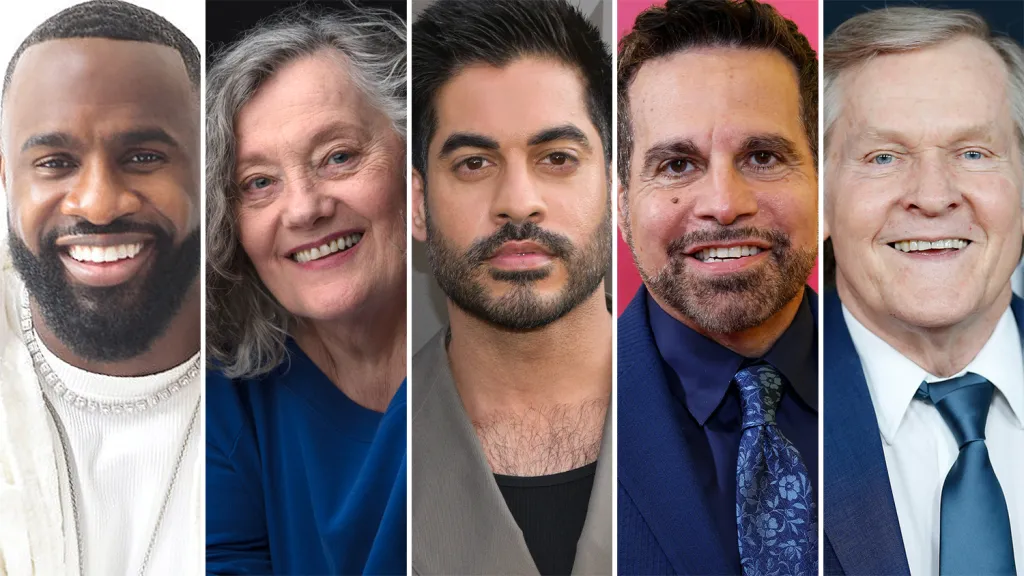
EXCLUSIVE: Terrence Terrell (Giants), Jayne Taini (Station 19), Sachin Bhatt (The Company You Keep), Mario Cantone (Sex And The City) and William Sadler (The Shawshank Redemption) are starring in dramedy The Summer They Came, which is in post-production.
America Young directs the seaside movie from writer and executive producer Nick Wauters. Principal photography took place this summer in New Milford, Connecticut, and the surrounding area.
The synopsis reads: “When a struggling Rhode Island seaside town unexpectedly becomes the summer’s newest LGBTQ+ destination, the arrival of thousands of visitors sets off a season of humor, heartbreak, romance and profound personal change that forever transforms the lives of its residents—and the future of the town itself.”
The film is based on William Storandt’s novel of the same name. Writer and executive producer Wauters has spent nearly two decades shepherding the project to the screen.
“This is a story I’ve been wanting to turn into a movie for almost twenty years,” explained Wauters. “It’s joyful, romantic and unapologetically crowd-pleasing—full of humor, love and the kind of big-hearted fun that comes from watching a community get turned upside down. I couldn’t be more excited to finally see it being realized.”
D.B. Levin serves as producer, with Wauters executive-producing through Man on the Moon Productions. Derek Caldwell, Jonathan Carkeek, and Greg Weiss produce from Curation Entertainment and Ewan Chung, Myke Furhman, and Alisandra M Rand serve as co-producers.
Terrell is repped by Insurge-Ent and Framework Entertainment; Taini is with SDB Partners and The Zachary Co; Bhatt is with Pakula/King & Associates and Prime Talent Media; Cantone and Sadler are with Insurge-Ent.
>

SPOILER ALERT! This post contains details from HBO‘s docuseries Monsters of God.
Eric Goode is no stranger to eclectic interview subjects. The director behind Chimp Crazy and Tiger King is even quite familiar with interviewees who are willing to look past the law. And yet, his latest docuseries Monsters of God might just have brought him face-to-face with his most daunting subjects yet.
The five-part HBO series explores the dark world of reptile smuggling around the world and, particularly, into the United States. The trade took off around the 1960s and has since ballooned into entire enterprises — both legal and illegal. Naturally, Goode was more interested in understanding the latter.
To do so, he sought out some of the world’s most notorious reptile traffickers. Michael Van Nostrand. Tom Crutchfield. Mario Tabraue. Anson Wong. Those names may not mean much to a layperson, but all have, at times, been sentenced to years in prison for international animal smuggling.
“I remember driving with Anson Wong, and he said something about his driver. The driver had done something he didn’t like, and he was dead now,” Goode told Deadline. “He mentioned, in a very casual way, how someone was now dead. I realized, ‘Okay, this guy is a serious guy, potentially.’”
After giving audiences the lay of the land in the first two episodes, Goode begins to dive deep into the criminal enterprises that have been born from this world in Episode 3 of Monsters of God, which aired Thursday night.
In the interview below, Goode sheds light on the years-long journey toward telling this particular story (which involves his former collaborator and recent Oscar nominee Josh Safdie), courting people who don’t necessarily want to be found, and promoting “consciousness” on all sides when it comes to protecting animals from illegal trade.
DEADLINE: I was curious about your journey to uncovering this story and being confronted with it for the first time, and how you got to this point with the documentary?
ERIC GOODE: I probably said it a few times out there in the world, but be careful what you give your kids. My parents gave me a tortoise when I was 6, and I never got rid of the fascination with reptiles from that point on. I grew up catching snakes, lizards, horned toads, horned lizards and turtles. I was fascinated with reptiles at a very young age, and I’ve had that interest ever since. It was indelible. As I got older, my mother, in high school, would say, ‘Eric, you can’t play God.’ I would keep them in my bedroom, and she never really liked that. She said, ‘You got to let them out, let them go. The animals should be in the wild, not in cages.’ That resonated with me as I got older. There was a certain point when I realized reptiles were very endangered, especially turtles and tortoises. I started an organization called The Turtle Conservancy when I realized just how endangered they were. It’s sort of neck-and-neck with primates as the most endangered group of vertebrates on the planet.
Eventually, I started traveling around the world. People would say, ‘Eric, you gotta film in Madagascar and Sulawesi,’ and I filmed badly. Then, I started realizing I needed a real film crew. I eventually started filming better with the Safdie brothers, who became real filmmakers later. Josh Safdie was up for an Oscar this year [for Marty Supreme]. It wasn’t until the book The Lizard King came out in 2008, when I tried to buy the rights to that book from Bryan Christy, the author, that I really became serious about doing a documentary about the reptile world. A few years later, I had Fisher Stevens, who’s also an Oscar-winning director and producer, read The Lizard King. I met with him at this very building in New York City and asked if we could adapt it into a documentary. He basically said, ‘How can you do it without getting killed?’ That was a bit discouraging. Nevertheless, I started filming seriously in 2014 with Josh Safdie in the beginning to make what ultimately became Monsters of God. So it took many years. Tiger King and Chimp Crazy got in the way. I spent a lot of time in your home state of Florida on all those projects. That’s the long story of how it all started.
DEADLINE: How do you find these people and convince them to be so forthcoming, particularly with their criminal dealings? Some of them come across as though maybe they were just so forthcoming to begin with.
ERIC GOODE: That’s a really good question, and it’s a difficult answer because everyone’s different. With all of these documentaries that I do, and probably many documentaries out there, it’s: How do you gain access? How do you gain access to drug lords? How do you gain access to human traffickers? How do you get access to whomever? It’s always about the access and how you navigate that. That is certainly the number one most important thing to making these documentaries: How can you get in with the smugglers? How do you get in with law enforcement? How do you get in with the big zoos? How do you get in with all these sides? They’re all very guarded, frankly, for different reasons. The collectors, smugglers and reptile dealers in this case are extremely guarded because they don’t want their animals stolen, and they’re very valuable. They don’t want people to know where they are. They don’t want law enforcement coming because they may have something illegal. They don’t want animal rights groups coming, and they don’t want journalists coming because journalists are going to write a bad story about them.
There were quite a few people who were never willing to talk — people we tried to get. There were others we just had to be incredibly patient with. It was very helpful for me being a reptile guy. It made it easier for me to gain access. I’m also part of the zoo community, and I’ve worked with law enforcement at the U.S. Fish and Wildlife Service for many decades, so I had a head start because of my position in the world. But it was still hard to gain access to all of these different sides of the story.
DEADLINE: What do you think makes the people involved in this world seemingly so susceptible to criminal dealings? What is it about their personalities, or who these people are, that creates a correlation between their personalities and their willingness to go off the deep end?
ERIC GOODE: You can point a finger at the smugglers or the reptile dealers and say they’re the ones who are crazy, the ones who need the dopamine rush — the high, if you will — of bringing in something and outsmarting the feds. But it is true that that is a high. ‘I got it through security at Miami Airport, and I got it in, and it’s worth $100,000.’ But there’s also a similar pathology and high that comes from going deep undercover for the animal cops and eventually catching their prize, which might be Anson Wong, Michael Van Nostrand or Tommy Crutchfield. It’s a similar pathology. ‘I’m after the bad guy.’
The reptile dealers are after the rarest reptile that’s worth a lot of money, and the zoos are after the coolest collection so they have a better reptile house than the next zoo. The collector — the guy like me who loves to have a cool reptile he’s never seen before — gets a total rush from getting this thing I’ve never seen before. The psychology and pathology are similar all around, not just with the reptile smuggler. For many of the reptile smugglers, like Anson Wong, Hank Molt or Tommy Crutchfield, it was the challenge, like the film Catch Me If You Can with Leonardo DiCaprio. It was: Can I outsmart the feds? Can I circumvent the laws? Can I get the rarest reptile? I’ll never forget asking Anson Wong, ‘Can you get a panda bear?’ And he says, ‘Yeah, I can get a panda bear.’ Panda bears are worth millions of dollars. If someone smuggles a panda bear out of China or shoots a panda bear, it’s an immediate death sentence. But he loved the challenge.
DEADLINE: How did you square the fact that everyone involved clearly cares about reptiles to some degree with the things that are harder to justify about these criminal enterprises, such as the danger to the animals and some of the abuse that is going on?
ERIC GOODE: There’s a dark side to all of this when it comes to wildlife smuggling. The bird-smuggling world — there was a famous case in Florida with a guy named Tony Silva. He did, I don’t know, eight years in prison for smuggling hyacinth macaws and different parrots into Florida, into the United States, in the ’90s [editor’s note: Silva served the majority of an 82-month sentence]. The mortality with bird smuggling is very high. The mortality with most wildlife is very high. You bring in 20 parrots, 10 of them die, five of them are on their last leg, and maybe three of them survive. Reptiles tend to travel and move more easily because they can live without food and water. They don’t scream and make noise like parrots or some mammals. People say they’re ‘wildlife with handles’ because reptiles can move through airports and on ships and sit in a box or suitcase for a very long period of time. Nevertheless, there’s a lot of mortality.
In the grocery store business, in the produce area, you call it spoilage when fruit or apples rot. You throw them aside. In this case, it’s living creatures that are dying. A lot of animals die once they get here. People buy them at reptile expos or exotic pet shops. They buy a snake, a gecko or a bearded dragon, and it dies in six months, and then they go out and buy another one. It’s kind of like a broken toy: It breaks, and the mommy goes and buys them another one. A lot of these animals don’t live long in this country. They’re what we call ‘disposable pets,’ which is a tragedy. We don’t do that with our pet dog. I don’t want you to think for a minute that — yes, some of these people really know a lot about reptiles and care about them, but they don’t really think about the collateral damage.
DEADLINE: What was your reaction to some of the more shocking things your interview subjects said throughout this process? I am thinking specifically about when you ask Dale Morant if he could take Mike Van Nostrand, and he says ‘they drop real quick when you take out the knees.‘
ERIC GOODE: Dale Morant was living in his car in a Walmart parking lot and doing a lot of oxycodone or other sedatives. He wasn’t in the best shape. A number of these people could probably be very dangerous under certain circumstances. I remember driving with Anson Wong, and he said something about his driver. The driver had done something he didn’t like, and he was dead now. He mentioned, in a very casual way, how someone was now dead. I realized, ‘Okay, this guy is a serious guy, potentially.’ Mario Tabraue is a serious guy. He was sentenced to 100 years in prison and got out early because he made a deal with the government. He must have known something really important. There were many moments that were really quite shocking. It’s hard for me to recall them all right now. There were just so many of them.
DEADLINE: You have worked across Tiger King and Chimp Crazy, with interview subjects who are bound to say something shocking. What are you thinking on the other side of the camera when a subject drops a line that is likely to leave a viewer speechless?
ERIC GOODE: There are some really shocking moments. I’ll never forget when I found out Joe Exotic was trying to kill Carole Baskin. That was a light bulb going off in my head, and it was so shocking, because I had been filming him for quite a few years. When that revelation came to me, and I realized what was going on, it was shocking. It was mind-boggling when we found out that Tonia Haddix and Jim Hamlett had kidnapped this chimpanzee when we thought that it had actually died.
In the case of Monsters of God, it was more exciting and interesting when someone was just willing to talk to us, at a certain point. Sometimes it took years of courtship to get someone to talk. I should point out that a number of these people we interviewed for 30, 40 or 50 hours. When you synthesize that much time, you find that, out of those 30 or 40 hours, you eventually get some pretty good stuff. We interviewed and filmed over 200 subjects for Monsters of God. I don’t even know what percentage made it into the show, but so many people and things were really interesting, and we just couldn’t fit it all in. We had over 1,500 hours of footage to go through. It was collecting a lot of interviews, interviewing certain people for 30, 40 or 50 hours many, many times over the course of filming this project, which took over 14 years to complete, and filming people at different times. There was a lot of content, so of course you get some amazing nuggets in there.
DEADLINE: Who among the interview subjects who eventually appeared in the documentary was the most challenging to land for an interview?
ERIC GOODE: I would certainly say Mario Tabraue took a long time. He appears in Tiger King as well. Anson Wong took a long time, and I literally had to take a flight to Malaysia when COVID finally broke in Southeast Asia and I could actually go. I almost had to ambush him. I had no guarantee that he would talk to me, and it took multiple people to figure out how to even get to him. People were very scared of him in Malaysia. No fixers in Malaysia really wanted to pursue finding him for me. He’s certainly a known entity in Penang, and people weren’t really interested in having me go and interview him. I remember how scared they were to even go up to his compound. The Malaysian fixers we had in Penang wouldn’t go with me. He was a hard one. Some of the law enforcement was very hard. Jeremy McBride, my partner in crime on this project, worked hard on getting Larry Lovelace and George Morrison to talk. That took a lot of time and trust — earning the trust within law enforcement to talk with us. Even the big zoos are guarded, and rightfully so. Animal-rights groups have been problematic at times with the zoos. There was a woman, Jeannie, in the film who took us two or three years to get to talk. It was just patience, frankly.
DEADLINE: What do you want to leave people thinking about at the end of this documentary when it comes to this industry?
ERIC GOODE: It’s a really good question. Number one, obviously, is to dispel the myth about reptiles being evil or dangerous — this culture of vilifying snakes and crocodiles and things that we don’t understand. Hopefully, people will understand that they’re an important part of the ecosystem. They play an important role. Snakes are great rodent control, and they do all kinds of important things. Number two, I would say that all sides of this story can do better. Law enforcement sometimes has the best intentions. They create laws and elevate the endangered status of certain reptiles, but sometimes that actually works against them. When you go to Southeast Asia, which has one of the largest consumer parts of the world for reptiles as pets, they advertise those reptiles with those laws. They say ‘critically endangered.’ That only makes the reptile more valuable, and people want the reptile even more than they did before. The laws often have the best intentions, but unintended consequences come from these things.
We need to be smarter. U.S. Fish and Wildlife is understaffed. They try the best they can, but they need to be better. We need to be more strategic. The zoos need to evolve and be better. I need to be better, personally. I’ve evolved through the course of my life in my relationship with reptiles. The reptile dealers need to be more conscientious, and there needs to be more captive breeding. I’m not trying to suggest that no one can have a reptile. In every case, I did feel strongly that people should not keep primates in captivity, especially a chimpanzee in solitary confinement in their basement. I felt very strongly that that was incredibly inhumane and horrible, and I felt the same about having 200 tigers in Joe Exotic’s backyard. In this case, I’m not trying to say that no one can have a pet ball python, leopard gecko or bearded dragon, or be able to learn and live with a reptile if they live in the right part of the country and the reptile is taken care of. But we tend to look at them as disposable pets, not the way we look at our pet dog. I guess consciousness all the way around would be the answer to your question. Just that we all can be better, and a lot of the things that we think are the right things to do are not always the right things to do.
>


Search For Canadian TV Actor Stewart McLean Now Homicide Investigation


These ’90s fashion trends are making a comeback in 2017
According to Dior Couture, this taboo fashion accessory is back
Model Jocelyn Chew’s Instagram is the best vacation you’ve ever had
Emily Ratajkowski channels back-to-school style
9 Celebrities who have spoken out about being photoshopped
Your comprehensive guide to this fall’s biggest trends
A photo diary of the nightlife scene from LA To Ibiza