
Anime
Episode 11 – Tomb Raider King

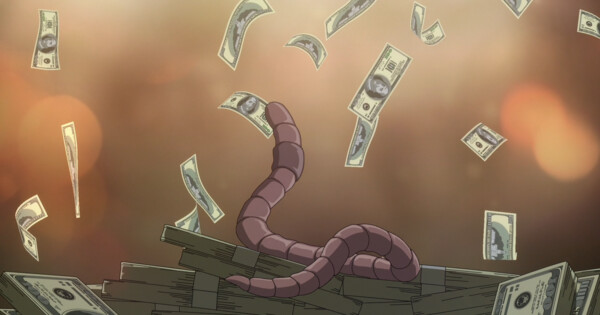

©3B2S, Yuns(REDICE STUDIO), SAN.G/Tomb Raider King Partners
Episode 11 of Tomb Raider King can’t quite maintain the highs of last week but it’s a solid enough entry nonetheless.
I once again find myself glad that there is a bit of a purpose to events, even if the heart isn’t necessarily there. Jooheon spends the early parts of the episode gambling and making his way into the caves for relic hunting, and at least there’s some connective tissue between these two events. A big issue I was having early on was that Jooheon was just making everyone look like an idiot and a buffoon for the reasons of getting ahead, and often seemingly without much reason other than… uh, he could. At least here when he outsmarts the gamblers it’s because he needs to use the money to flip and make for an exorbitant bridge with another relic. This is great for two reasons: it means that his ruthlessness has some method to its meanness, and it means there are situations where he can’t simply bulldoze all opposition. The fact that he even needed to use a cash exchange to get something done and didn’t grab the worm and force it to do what he wanted represents, you guessed it, a challenge. A challenge to be overcome! One that requires novel solutions and not the same thing over and over again! What a concept, and one I appreciate.
It also leads to a lot of novelty in this episode. The fight with the brainwashed kids was a good chance to have Jooheon resolve a conflict without resorting to maximum violence and mockery, though I think there was a missed opportunity here for him to show some humanity. The moment where he bribed the talking worm relic and there was a great shower of money everywhere had a pair of good comedic beats. Jooheon having to throw in his watch to seal the deal is a funny way to note that he had the right idea even if the execution was costlier than he planned for. And the sheer novelty and hilarious imagery of the earth worm being showered with money got a big laugh out of me. There’s some originality and levity that makes the experience worth watching – again, who could have guessed. The last comedy stinger of Seung-Woo and the gardening team having to tend to the tree relic got a reasonable chuckle too, which meant that for once the episode was three for three. Let’s hope we can end on a strong note.
Rating:
Tomb Raider King is currently streaming on
Crunchyroll.
Disclosure: Kadokawa World Entertainment (KWE), a wholly owned subsidiary of Kadokawa Corporation, is the majority owner of Anime News Network, LLC. One or more of the companies mentioned in this article are part of the Kadokawa Group of Companies.
The views and opinions expressed in this article are solely those of the author(s) and do not necessarily represent the views of Anime News Network, its employees, owners, or sponsors.
>
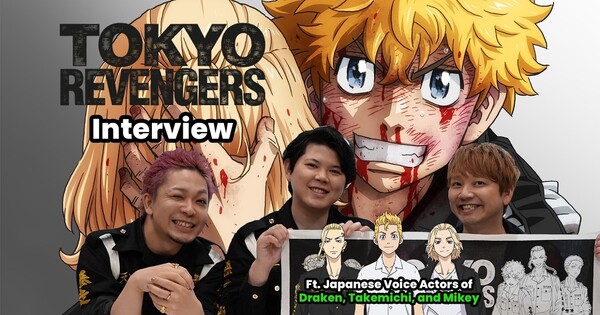

©Ken Wakui, KODANSHA / TOKYO REVENGERS Anime Production Committee.
The energy in the ballroom for the Tokyo Revengers panel at Anime Expo 2026 was already intense. The voice cast for the series’ three main characters, Takemichi, Mikey, and Draken, walked on stage wearing Tokyo Manji Gang jackets. Yūki Shin (Takemichi) and Yuu Hayashi (Mikey) gave their self-introductions with an enthusiastic intensity you don’t usually see at these panels, then Masaya Fukunishi (Draken) ran the full length of the stage to one end and back again, leading the crowd in a jubilant cheer. This dialed up the energy even further.
They covered some of their experiences being a part of the show. Hayashi talked about living through Mikey’s increasingly dark journey. Fukunishi described the appeal of Tokyo Revengers as watching beautiful but flawed young men refusing to quit after getting knocked down. And Shin promised that Takemichi would find true strength in the upcoming season.
We had the opportunity to interview the three intense yet jovial individuals, and rather than ask about their favorite scenes or memorable lines, we dug into how their understanding of their characters has evolved after spending so much time with them.
Below is our full interview with the cast.
Looking back across the series so far, what’s something about your character that surprised you as you continued performing them?
Masaya Fukunishi:
Playing the role, I thought it was very surprising that Draken is full of energy and likes to run around a lot. He comes off as a cool, collected character, but I realized that’s also just part of who he is. That would be the thing that surprised me about him.
Yūki Shin: For Takemichi, at first, he’s just very weak, and he’s always running away. So, as the story goes along, he does get stronger, but it’s not really physical strength; I was surprised at how psychologically stronger he became.
Yuu Hayashi: I personally would have to say [I was surprised by] Mikey’s dark side. At first, he was such a reliable leader, like someone – a friend – you could rely on all the time. But if you see the trailer for the next season, we think you’re going to see a very surprising, darker Mikey. When the darkness started taking over Mikey, it was when he still had some doubts in his life. But in the next season, you might be able to see a darker Mikey who has no hesitation about his dark side. So that would be the surprising part, but also for me personally, it makes me think, “What are you doing?! Why?!”
What do you think your character contributes to Tokyo Revengers that nobody else in the cast could?
Shin:
For me personally, I’m always very passionate about my work and whatever I do, so when I play Takemichi, being passionate is a very big part of his story, so I think it fits very well. I’m also very passionate. My role is captain, so I want to make sure everyone else looks good.
Hayashi: Mikey has three parts: the childish side, the very charismatic side, and also the dark side. Since he has so many sides, at first I thought I would, you know, change up my voice for each side. But of course, whenever I get really emotional, or any really emotional part, that part comes out. So now, whenever I put my whole heart into playing Mikey, I think all of that comes out naturally in my acting. I am absolutely the only one who can play Mikey. I am Mikey. It’s a story about Mikey. The main character is Mikey.
Shin: Hmm, that’s not quite right…
Fukunishi: There’s something in the beginning of the series when I was playing Draken that I tried to concentrate on, and that’s how physically resilient he is, and just how strong overall he is. I’m pretty confident in my vocal range. I think one of the reasons why I was chosen to play the role of Draken is the fact that I have that very strong, powerful voice that Draken has, which shows just how deep-rooted his strength is. And I think with just my voice, I’m that convincing, and I just become Draken.
Many protagonists earn people’s trust through competence, but Takemichi usually earns it through persistence instead. Why do you think so many people end up believing in him? And why do you think audiences respond so strongly to that?
Shin:
Just like everyone who’s watching or reading the series, Takemichi has a weak side. I think that naturally makes people resonate with him and want to support him because they can totally relate to how he’s feeling. He’s spent 26 years running away from things, but the fact that he’s able to change that is what people are rooting for him for as they watch the series. And the fact that he just never gives up.
Many fans debate whether Mikey’s greatest strength is his ability to inspire people or his ability to fight. What do you think is the real reason he has such a strong influence over others?
Hayashi:
This is sort of similar to what Shin-san was saying a second ago. [Mikey] has a weakness that he won’t show anyone. Basically, it’s sort of backward. He’s so good at fighting, and he comes off as very strong, so he can’t show his weakness to others. That’s also why he attracts so many fans and why he’s so appealing.
Draken has a certain maturity about him that other characters don’t quite have, which makes him feel older despite being the same age as the other characters. What do you think he understands about life that the other characters haven’t learned yet?
Fukunishi:
Draken basically understands that there are various stages, like a progression, in life. He has a very good understanding that everyone goes through different phases. He also understands that there are unchanging friendships, and exactly how precious it is to have those very close friends in your life. Even though the characters are around the same age, I don’t think the other characters have reached that level yet, but Draken is more mature and learned that earlier. In a character song for Draken, there’s a line that exactly talks about that. If you do a deep dive on that song, that’s the theme you get.
As you’ve spent more time with your characters, is there anything about the way you perform them now that you don’t think you would have done the same way from the beginning?
Fukunishi:
I was trying to see exactly what I could do to make Draken look as cool as he is. That was in the beginning, but now that I’ve played him for so long, I’ve realized that it’s really important for me to be able to actively portray how cool Draken is when he’s relaxed. When a lot of people think about “cool” people, they think of the most chill, relaxed people as the coolest. I think I can do that better now because of all the experience I’ve had to this point.
For Tokyo Revengers, of course, there’s the anime, the manga, the game, the spin-offs… I have so much experience voicing him across different media, which is how I got to where I am now.
Shin: I feel that I’ve also grown with Takemichi as I’ve recorded for this series. The reason I’m able to say this is because of how strong his will is. I feel like I was able to grow with Takemichi because of how big his heart is.
Fukunishi: Listening to Takemichi’s voice from the beginning compared to now, it seems like, not that the voice is deeper, but there’s so much depth to it now.
Shin: Yes!
Fukunishi: His pitch hasn’t changed this whole time; it’s the same voice. But because of the experience, there’s just so much more depth, and I think that’s because of Shin-san’s amazing acting.
Shin: Thank you.
Hayashi: So I’ve been voice acting since I was a child. Since then, I’ve played various characters, including Mikey, over the years. I’ve played some dangerous characters. All of that experience of those various characters makes up Mikey. I believe that basically, all the roles I’ve played up until now led up to this, and Mikey is basically all of those combined. So all of that experience is what made Mikey and brought him to life.
People naturally want to help others in need, but Takemichi takes that impulse a step further than almost anyone else in the series. What do you think is the quality that allows Takemichi to keep believing in people even after they’ve stopped believing in themselves?
Shin:
There’s something about him that just ends up drawing in and involving everyone around him. Takemichi is very human. He wants people to help him, but people want to help him as well. I think it’s the fact that those conflicting things are… What makes Takemichi amazing is that those two things are together.
Mikey often shifts between being playful and deeply unsettling. Is the challenge of playing him finding the balance between those qualities, or finding the thing that connects them?
Hayashi:
I don’t think you can balance those things. It’s not supposed to balance out. When he’s childish, he’s going to be as childish as can be. There’s also the darker, more dangerous side, but if I try to balance all of that, it would affect my acting. It all needs to be intense for each part of him. So this might be a slight spoiler, but Mikey, deep down, is just a pure and kind person. That’s also what makes the viewers and readers really conflate what’s going on, because why does his dark side and why his dangerous side exist when he’s such a good soul inside? Obviously, expressing all of that is very hard, but I know deep down that he’s very pure. So with that in mind, I’ll try to portray his dangerous and darker side as well as I can.
Which character’s life do you think is shaped the most by Draken’s presence, and what do you think Draken gives that person that nobody else could?
Fukunishi:
In [Tokyo] Revengers, right?
Hayashi: Emma.
Shin: I think it’s Mikey.
Hayashi: Taiju.
Fukunishi: Not that one, for sure.
Shin: It’s probably the 100 members of the Black Dragons!
Fukunishi: Personally, I’d like to say I don’t know. Depending on who Draken is interacting with, he can change. He can be very kind and endearing and embrace the person, or, you know, scold them and put them in their place. I’m also sort of like that myself. I think we don’t really want to change anyone at their core, really. He’s really someone who wants to respect whatever the person is, so I don’t think he’d like to think that he’s changed someone. So, as the one playing him, I just really don’t know- is what I would like to say.
Shin: I think it’s Mikey. He’s the one who’s having a good influence on Mikey. Talking about balance, and not having to take that balance is all because of Draken. At least that’s what I would like to think.
Shin: On the other hand, just like with what happened, I think there’s going to be different interpretations among the viewers and readers on who exactly that applies to.
>
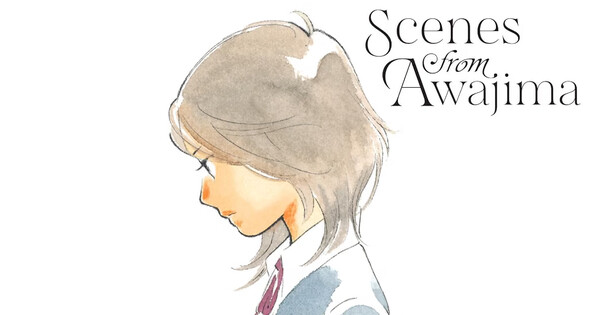
The craft and artistry of theater mean many different things to the many people who intersect with that world. Students, performers, writers, directors, and audience members each bring a different set of expectations and take away a different set of impressions. And like all art, theater can hurt as easily as it can heal. This past spring, the anime adaptation of Scenes From Awajima explored a kaleidoscope of perspectives as they filtered through the hallowed and haunted halls of its titular school. Here, we asked Scenes From Awajima‘s manga author Takako Shimura (Sweet Blue Flowers, Wandering Son) about the series’ origins, influences, and how it relates to her other works.

AWAJIMA HYAKKEI ©Takako Shimura 2015 / Ohta Publishing Co.
Congratulations on the anime adaptation of Scenes From Awajima (the anime is known as A Hundred Scenes of AWAJIMA). What was the pre-production phase like? Did you have any specific requests regarding the adaptation, or did you provide any feedback that influenced the staff’s approach?
Takako Shimura:
I didn’t have any specific requests for the adaptation. It was clear from the materials I received and from our meetings with the animation production team that they were working very meticulously and carefully.
Many students are exposed to the glamour and appeal of theater at an early age and aspire to become actors, and Awajima is portrayed as one such place. Do you have any personal connection to theater yourself? Also, was there a particular “spark” or moment in your childhood that inspired you to become a manga artist?
Shimura:
I’m a theatergoer rather than a performer. As a child, I saw plays that appeared in the story (much like Wakana Tabata, who narrates the anime), and I was influenced and wanted to pursue that path myself, but I never acted on it. Manga was something much more familiar to me, and as I read the manga my family owned, I gradually began wanting to become a manga artist myself. Unlike theater, all I needed to make manga was paper and a pencil, so I could start drawing in secret without making any noise, hiding it from my family.

AWAJIMA HYAKKEI ©Takako Shimura 2015 / Ohta Publishing Co.
The Takarazuka Revue holds a very important place in Japanese theater. To what extent was Awajima influenced by Takarazuka? And when creating the manga, did you have any specific stories or accounts related to Takarazuka in mind?
Shimura:
Takarazuka is such an iconic all-female music school that it’s often considered synonymous with the very idea. Rather than wanting to draw a story based on the Takarazuka Revue, I wanted to create a manga set in a specialized all-female school focused on a particular field. However, the Takarazuka Revue and Takarazuka Music School are such influential institutions that I may have been unconsciously drawn to them. Since the manga is set in a music school, I did turn to them as a reference in many cases, but because it’s so easy to make associations, I often racked my brain to try and avoid copying things wholesale.
Scenes From Awajima unfolds in an omnibus format, bringing together stories about students from different generations, which makes it quite different from a linear narrative. Could you tell us why you chose this structure and what you find appealing about it?
Shimura:
First and foremost, I wanted to write a story about people who aren’t geniuses or “chosen ones.” I wanted to write about what happens behind the scenes, or the families that support our heroines—things that would typically be subplots. So I started with that in mind.
You worked on Scenes From Awajima intermittently from 2011 to 2024, making it a project that spanned a significant part of your career. Did your intentions or approach to the work change over that time? And were there any aspects that you found particularly difficult to depict?
Shimura:
As my workload increased, I could no longer work at my previous pace, and as I got older, I became more prone to illness, which made it increasingly difficult to draw. At the same time, both society and I, in terms of our lifestyles and values, slowly began to change. In the early part of the story, I introduced characters like Okabe Emi, who left school in despair and suffered greatly, and Ibuki Keiko, who was the cause of that. I felt I couldn’t leave their story unresolved, so I decided to start working on the final chapter. I was reminded once again that each story I begin writing comes with responsibility, though looking back, I realize that delving into their relationship and bringing it to its conclusion was a difficult task for me.

AWAJIMA HYAKKEI ©Takako Shimura 2015 / Ohta Publishing Co.
In addition to writing and illustrating manga, you have also provided character designs or assisted with character design for works such as Aldnoah.Zero, Battery, and Overtake!. How does the character design process for these works differ from creating characters for your own manga?
Shimura:
When I work alone, the details of each character gradually come together as I draw, developing bit by bit alongside the story itself. However, when creating character designs for a client, I’m not starting from scratch; the client has already considered many of the details. What kind of personality do the characters have? What do they look like? In a way, working on those character designs is similar to a game of telephone or trying to find the correct answer on a quiz.
In the English-speaking manga community, your works are particularly highly regarded for their yuri and LGBTQ themes. What first inspired you to start creating these kinds of characters and stories?
Shimura:
It all started because my own gender identity was ambiguous. For a long time, I couldn’t accept my own femininity. Then, one day, I thought, “What if I created some characters based on my own thoughts at that time and drew a manga with them as the focus?”
Since the beginning of the 21st century, social awareness of LGBTQ people has changed significantly. Along with this, the market for manga with LGBTQ themes has also grown, particularly in the United States. Have these changes influenced what you depict in your works or the way you think about these themes?
Shimura:
I think they have. I’ve started to think about responsibility more deeply and seriously than I used to, and I’ve come to fear that my insistence on my own way of thinking could become a one-sided imposition and crush someone’s spirit. In my twenties, even though I was already an adult, I was still on the receiving end of what was given to me by “adult society,” and I could refuse or rebel against it. But as I’ve gotten older and become an adult myself, I worry that I could always
become a source of pressure and burden for the younger generation.

AWAJIMA HYAKKEI ©Takako Shimura 2015 / Ohta Publishing Co.
I recently came out as a transgender woman, and when I was struggling with my identity, Wandering Son was one of the works that gave me emotional support. (Shuichi) Nitori’s story in particular helped me sort through my own thoughts and experiences, and I’d like to thank you for that. More generally, do you ever think about how queer readers engage with your works?
Shimura:
This overlaps with my previous answer, but I keenly feel that the weight of words has changed significantly compared to 20 years ago. Wandering Son is a work I drew in my 20s and 30s, and it was something I could only have drawn at that time; it was a story for myself rather than for anyone else. If it did end up helping more than a few readers, I would be very honored; it helped me too. If I were to draw the same subject matter now that I’m in my 50s, I think my approach would be
completely different, and the perspective of an older generation would come into play. Social conditions and individual values have changed dramatically in 20 years. For example, Wandering Son deals with the issue of school uniforms, but in Japanese schools today, there are more options, if not all of them. There are even female students who wear slacks. That
alone changes the degree of freedom one has when drawing manga and creates new possibilities for what to draw. Though I think that male students who choose to wear skirts are still largely viewed critically. Today, we need stories that are relevant to the current times.
What kinds of stories would you like to tell in the future? Are there any genres you’d like to try or any new areas you’d like to experiment with?
Shimura:
I want to create universal stories that can be enjoyed by a wide range of people, from adults to children. I want to create comics that are a source of relaxation, something you unconsciously reach for even during hard times when it’s difficult to find enjoyment in life. Because I myself have been saved by works like that.
>

The official website for the anime of Mai Matsuda‘s Walking Home with You (Hōkago Kitaku Biyori) manga opened on Wednesday and confirmed the anime’s television format. The website also unveiled the anime’s teaser visual and April 2027 premiere on the NTV channel.

©松田舞/双葉社・ハイパー帰宅部
The tagline on the visual above reads, “The requirement for joining the club is walking home with me.”
Matsuda also drew a commemorative illustration:

©松田舞/双葉社
Digital manga publisher Omoi licensed the manga and describes the story:
Shun was the star of his middle school’s soccer team, until an injury forced him to give up on his dream. Now in high school, he’s adrift, with no real interests or passions … until he meets his oddball upperclassman Naoki. She ropes him into joining her unofficial “Hyper-Epic Heading Home Club,” a club with only one member dedicated to turning every walk home into an adventure. As Shun follows Naoki through her flights of fancy in search of elaborate detours, secret treasures, and anything else that catches her attention, can the Heading Home Club bring color back to his drab everyday life?
The manga’s anime adaptation was first announced in March 2025.
Matsuda launched the manga in Futabasha‘s Manga Action magazine in August 2023. Futabasha will publish the seventh volume on Thursday.
Matsuda launched the Hikaru in the Light! manga in Manga Action in May 2021, and ended it in August 2022. Futabasha published four compiled book volumes for the manga. Omoi (then Azuki) licensed the manga, and released all four volumes in English.
Sources: Walking Home with You anime’s website and X/Twitter account, Comic Natalie
>

Amy Hardcastle: Bradford Bulls Women appoint St Helens centre as new head coach

Another personal AI assistant has launched — Meet Tab, which emerged from stealth with a $300M valuation

Rob Burrow would be ‘laughing but proud’ about knighthood – Sinfield
-

 movies5 months ago
Search For Canadian TV Actor Stewart McLean Now Homicide Investigation
-

 Fashion9 years ago
These ’90s fashion trends are making a comeback in 2017
-
Fashion9 years ago
According to Dior Couture, this taboo fashion accessory is back
-
Fashion9 years ago
Model Jocelyn Chew’s Instagram is the best vacation you’ve ever had
-
Fashion9 years ago
Emily Ratajkowski channels back-to-school style
-
Fashion9 years ago
9 Celebrities who have spoken out about being photoshopped
-

 Anime4 months ago
Rurouni Kenshin: Hokkaido Arc Manga Takes 1-Issue Break – News
-

 Anime3 months ago
HIDIVE to Stream English Dubs for The World Is Dancing, The Forsaken Saintess and Her Foodie Roadtrip in Another World, The Dangers in My Heart: The Movie Anime – News