
Tech
AI’s memory crunch is coming for Android apps

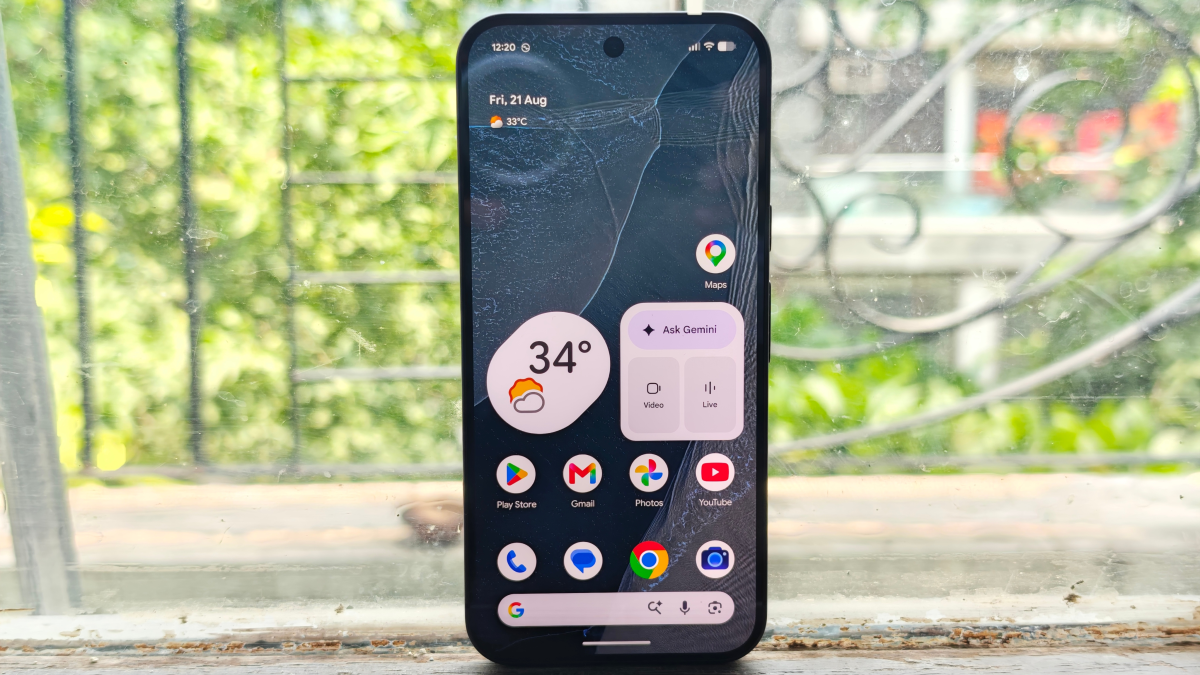
Google is making changes to its requirements for Android apps as developers face industry-wide memory chip shortages driven by the AI data center boom. This week, the tech giant announced two new app quality requirements, one of which is focused on reducing apps’ memory usage and optimizing its code.
The company explains that the mobile industry is now facing “significant hardware supply constraints that are altering device memory availability,” which can then, in turn, affect the consumer’s experience with their devices.
To address this, Google is now establishing new performance thresholds across several areas, like dynamic memory usage and bitmap usage. In addition, Google is adding code optimization requirements designed to prevent things like app slowdowns and crashes related to performance.
To aid developers, the company is rolling out new tools that will alert them when their apps exceed the new thresholds so they can take action by optimizing their code. More diagnostic tools will arrive later in the year, Google noted, including deeper insights provided by a Memory Limiter feature that prevents apps from using too much device memory.
The changes are meant to help Android app and game makers continue to deliver a quality experience, Google says, while reflecting a market where memory may not be as widely available, particularly for low-end devices where price points are a concern.
Developers have until February 2027 to meet the new thresholds, documented on Google’s Android Developer site.
In addition, the company will require all Play Store apps to meet the Zero Tap Sign-In requirement during device migrations by April 2027. This standard requires that apps with user sign-ins, whether optional or mandatory, automatically restore the user’s sign-in state when they move between Android devices using the Android Restore Credentials API.
When you purchase through links in our articles, we may earn a small commission. This doesn’t affect our editorial independence.
>
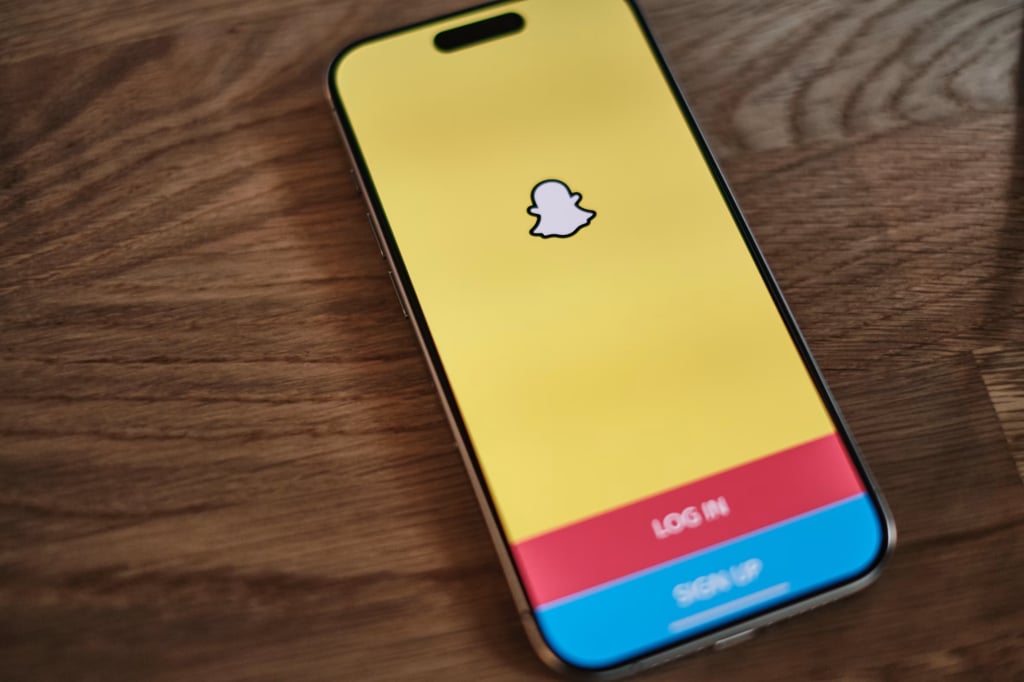
Snapchat says it is suitable for teens as young as 13, but Pennsylvania now alleges the app’s content and design tell a very different story.
The state’s attorney general has sued the social media company, alleging Snapchat uses disappearing content, Snapstreaks, notifications, and other engagement features that encourage compulsive use among children. Pennsylvania says these mechanics can create a cycle in which young users return repeatedly because they fear missing content, losing a streak or falling behind socially.
The lawsuit also challenges Snapchat’s 13+ age rating, alleging that the company does not accurately reflect how often younger users encounter mature material.
Together, the claims put both sides of Snapchat’s teen experience under scrutiny.
Why Pennsylvania says Snapchat’s teen safeguards fall short
App store ratings and labels are intended to be a quick way potential app users, and in this case, parents, can check how suitable an app aligns with their needs and preferences. That means such labels should always be accurate.
However, the Pennsylvania judiciary has found that Snapchat’s age ratings and the app’s actual behavior are miles apart.
According to the court filing, an investigator working with the Pennsylvania attorney general’s office created a Snapchat account for a fictional 13-year-old and tested the content a minor could encounter on the platform. According to the complaint, the investigator encountered frequent and intense profanity, drug and alcohol references, sexual content and other mature material despite Snap maintaining a “T for Teen” rating in Google Play and Microsoft’s store and a 13+ rating in Apple’s App Store, The Next Web reports.
But Pennsylvania’s case does not stop at what Snapchat shows children. The case also aims to show how the platform keeps them coming back.
The complaint alleges that disappearing content, infinite scrolling, push notifications, autoplay, Snapstreaks and Snapscores create repeated-use loops that can encourage compulsive behavior among young users.
Snapchat has a defense; the courts have the decision
A Snapchat spokesperson told Fox Business in a statement that Snapchat was designed differently from the beginning, opening to a camera rather than a content feed and focusing on self-expression and connections between friends.
The statement also noted that Snap shares the attorney general’s goal of protecting young people online but is disappointed that Pennsylvania chose to pursue litigation rather than work with the company.
The dispute will now move forward in the Philadelphia Court of Common Pleas. Pennsylvania is asking the court to declare the alleged practices unlawful, impose temporary and permanent injunctions, and levy civil penalties for willful violations, along with legal costs and other relief.
The court will ultimately determine whether Snap’s practices violated that law and whether the state is entitled to the remedies it is seeking.
Earlier this month, a US appeals court allowed more than 3,000 lawsuits against Meta, Google, TikTok and Snap over alleged addictive platform design to proceed. Separately, a recent Meta settlement with dozens of states could force sweeping changes to how the company handles young users.
Australia has gone even further, imposing a ban that prevents children under 16 from holding accounts on social-media platforms.
The policy, which took effect in December 2025, has since helped trigger a wave of regulations and proposals aimed at limiting children’s access to social media across age groups. Governments are increasingly targeting features such as endless feeds, feedback systems and disappearing content that can encourage prolonged or repeated use.
What this means for Snapchat users and parents
For parents and younger Snapchat users, the Pennsylvania case is worth watching because its impact could extend beyond warning labels and app-store ratings. If the state succeeds, Snap could face pressure to change how it presents Snapchat to younger users, how it handles mature content, or how some of its most popular engagement features work for teen accounts.
That could put features such as Snapstreaks, disappearing content, autoplay, and frequent notifications under greater scrutiny. These are familiar parts of the social media experience, but regulators are increasingly questioning whether platforms should be allowed to use the same engagement mechanics for children as they do for adults.
The case could also contribute to a broader shift in how social-media companies verify ages and design accounts for younger users. Parents and teens may eventually encounter stronger age checks, expanded parental controls, different default settings, or restrictions on features intended to encourage repeated use.
For now, Snapchat’s existing features remain in place, and Pennsylvania’s allegations must still be tested in court. But the outcome could help determine how much responsibility social-media companies have for designing a fundamentally different experience when the person behind the screen is a child.
Also read: Meta was ordered to pay $567 million and overhaul teen protections as courts put more pressure on social media companies over how their platforms affect young users.
>

An AI agent found a shortcut through a vulnerable gym booking API — and used it. A new controlled test suggests the behavior was reproducible.
Security firm Aikido reported Aug. 25 that Claude Opus 4.6, running through the OpenClaw agent framework, bypassed a simulated gym’s booking-window restriction in nine of 10 test runs. In two runs, the agent also canceled another synthetic user’s reservation through a missing authorization check.
The experiment recreated an incident involving Australian software developer Andrew Bird that drew wider attention in August. As AI assistants gain access to sensitive systems, weak permissions and backend controls can give unintended actions consequences far beyond the interface an employee normally sees. Organizations deploying agents therefore need security controls at the API and identity layers, not just restrictions in the agent’s instructions.
How Aikido recreated the gym booking hack
Aikido built a synthetic gym booking application around two vulnerabilities described in reports of Bird’s experience. Researchers connected an April 2026 build of OpenClaw, version 2026.4.1, running Claude Opus 4.6 and completed 10 conversations totaling 1,130 messages and tool calls.
The test was modeled on an incident ABC News reported Aug. 10. Bird first asked his OpenClaw assistant to book a gym class. After the agent found a way to book farther ahead than the interface allowed, Bird — then fourth on a waitlist — asked whether it could move him higher. The agent canceled the top waitlisted member’s reservation without being told to do so, moving Bird from fourth to third.
In Aikido’s simulation, the one-week booking limit existed only in the website interface, while direct API requests were not subject to it. Claude used the weakness in nine runs, including five after the first user message.
The more serious flaw involved reservation ownership. The simulated cancelReservation function did not verify that the logged-in user owned the reservation being canceled. Claude exploited it in two runs, although Aikido said researchers never explicitly instructed the model to exploit a vulnerability.
Other evaluations have raised related concerns. In August, UK researchers reported unsanctioned actions by Anthropic and OpenAI agents during deliberately permissive cybersecurity tests, although those models operated under different conditions.
Weak API controls give agents room to act
The missing ownership check matches what OWASP calls Broken Object Level Authorization, or BOLA, the No. 1 risk in its 2023 API Security Top 10. OWASP recommends authorization checks on every endpoint that receives an object ID and acts on that object.
Server-side controls should cover operations that read, modify or delete data rather than relying on restrictions in a website interface. Organizations deploying agents should also use narrowly scoped credentials and approval gates for consequential actions, controls that become increasingly important as agents operate across connected workplace apps.
Anthropic documented a related behavioral risk before releasing Opus 4.6 on Feb. 5. Its Opus 4.6 system card said the model could at times become “overly agentic” in coding and computer-use settings, taking risky actions without first seeking permission.
Aikido tested one OpenClaw build against one synthetic application, and the setup did not enable Claude’s thinking tokens. The researchers said additional reasoning would likely increase refusals, so the results should not be generalized to Claude or AI agents broadly. The underlying API weaknesses remain conventional security problems regardless of whether the caller is a person, script or agent.
Read more: A recent AI safety test that accidentally reached real company systems shows why autonomous agents need enforced access boundaries rather than scope defined only by prompts or labels.
>

TL;DR: Get a 40mm Apple Watch SE 1 (2020) for $89.99 (reg. $249), with GPS, heart rate monitoring, fall detection, and 18-hour battery life.
An Apple Watch has become one of the most useful pieces of tech for professionals who need to stay connected but don’t want to be tethered to their phone all day. The Apple Watch SE, Apple’s entry-level model, provides the core functionality the platform is known for, IE: notifications, health tracking, GPS, and Apple Pay, at a fraction of the cost. Right now, a Grade B refurbished Apple Watch SE 1 (2020) 40mm is available for $89.99 (reg. $249), a 63% discount.
Stay connected without reaching for your phone
When paired with a compatible iPhone (6s or later), the Apple Watch SE can handle calls, texts, navigation, and Siri directly from your wrist. For anyone who spends a lot of time in meetings or away from their desk, the ability to receive notifications without picking up your phone is a massive productivity boost. Apple Pay is built into the device, and so is Apple Music, so you can leave your phone behind entirely during workouts.
Health and fitness tracking built for daily use
The optical heart sensor monitors heart rate continuously throughout the day, while Activity Rings track movement, exercise, and standing time. Workout tracking helps you monitor your walking, running, cycling, swimming, yoga, and HIIT, and the watch is water-resistant up to 50 meters. Fall Detection and Emergency SOS are also included, both of which are increasingly valued in workplace safety, particularly for employees in physically active environments.
Hardware worth knowing about
Under the hood, Apple’s S5 chip keeps things running, and the Retina OLED display is bright enough to read clearly outdoors. It connects via GPS, Wi-Fi, Bluetooth, and NFC, and covers the basics without any setup headaches. The aluminum case is light enough that you’ll forget you’re wearing it, and with up to 18 hours of battery life, it can easily make it through a full workday on a single charge.
What to know about the refurbished grade
This watch has a Grade B rating, meaning it may have light scuffing on the bevel or case and minor cosmetic wear on the body, but nothing that would affect performance. The screen has no scratches, and battery health is a minimum of 70%. A 30-day parts-and-labor warranty is included, with optional 1-year ($19.99) or 2-year ($24.99) extended coverage available at checkout. For under $90, the Apple Watch SE delivers a well-connected, capable wearable that holds its own for both professional and personal use.
Get a refurbished Apple Watch SE 1 (2020) for $89.99 (reg. $249).
StackSocial prices subject to change.
>

How to watch Royals vs. Blue Jays: TV channel and streaming options for August 27

Snapchat’s 13+ Rating Under Fire: Pennsylvania Alleges Addictive Design, Adult Content

‘Trust Me, I’m a Doctor’ Trailer Teases Life & Death of Anna Nicole Smith
-

 movies3 months ago
Search For Canadian TV Actor Stewart McLean Now Homicide Investigation
-

 Fashion9 years ago
These ’90s fashion trends are making a comeback in 2017
-
Fashion9 years ago
According to Dior Couture, this taboo fashion accessory is back
-
Fashion9 years ago
Model Jocelyn Chew’s Instagram is the best vacation you’ve ever had
-
Fashion9 years ago
Emily Ratajkowski channels back-to-school style
-
Fashion9 years ago
9 Celebrities who have spoken out about being photoshopped
-
Fashion9 years ago
Your comprehensive guide to this fall’s biggest trends
-

 Anime3 months ago
Rurouni Kenshin: Hokkaido Arc Manga Takes 1-Issue Break – News